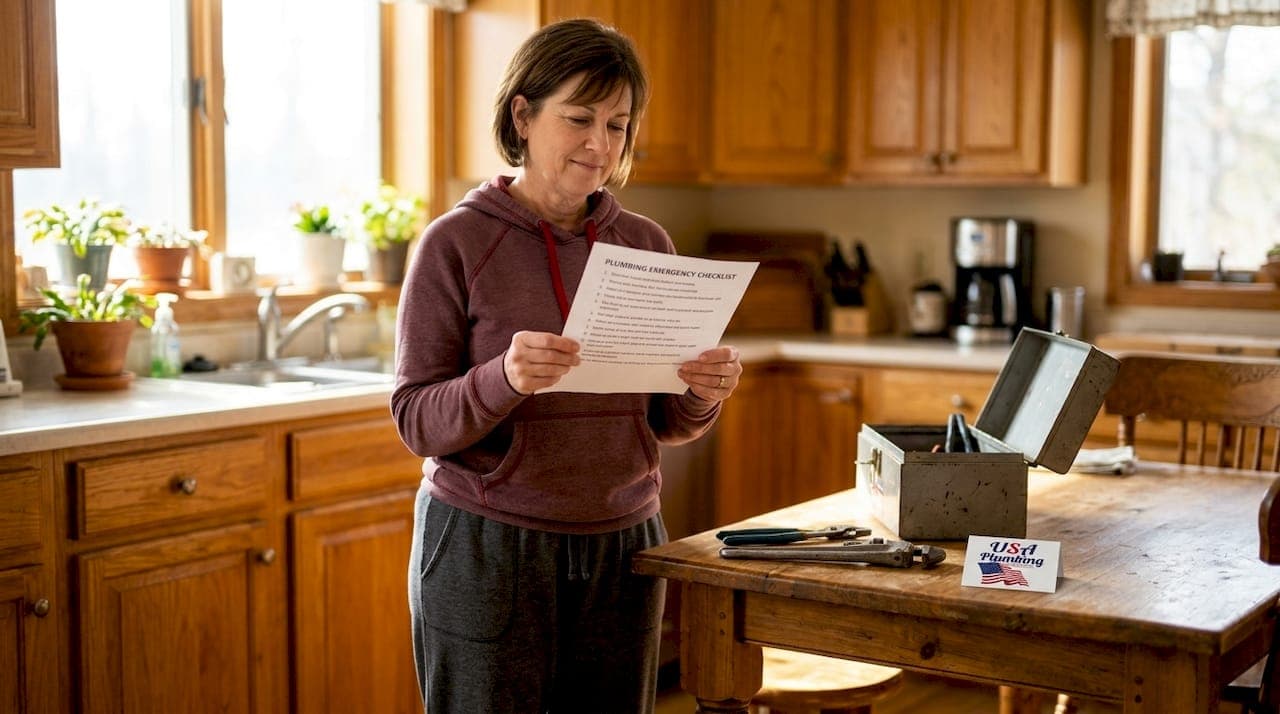
A 24 hour plumbing emergency checklist is a step-by-step plan that guides you through critical immediate actions to control damage, stay safe, and prepare for professional repairs. Following this plumbing crisis plan is the single most effective way to limit water damage, reduce health risks, and give your emergency plumber the information they need to fix the problem fast. This guide covers every step: shutting off water, handling sewage backups, managing water heater leaks, and communicating clearly with a licensed plumber. Keep it bookmarked before a crisis hits.
1. use your 24 hour plumbing emergency checklist first
The first item on any emergency plumbing response plan is knowing exactly what you are dealing with. Before you call anyone or touch anything, take 30 seconds to identify the source of the problem. Is water spraying from a pipe under the sink? Is a toilet overflowing? Is there a sewage smell coming from a floor drain? Naming the problem clearly helps you pick the right shutoff valve and gives your plumber accurate information from the start.
A plumbing emergency guide is only useful if you can act on it quickly. Walk through your home once before any emergency occurs and locate your main shutoff valve, your water heater, and your electrical panel. That one walk-through can save you thousands of dollars in damage.
2. shut off the right valve immediately
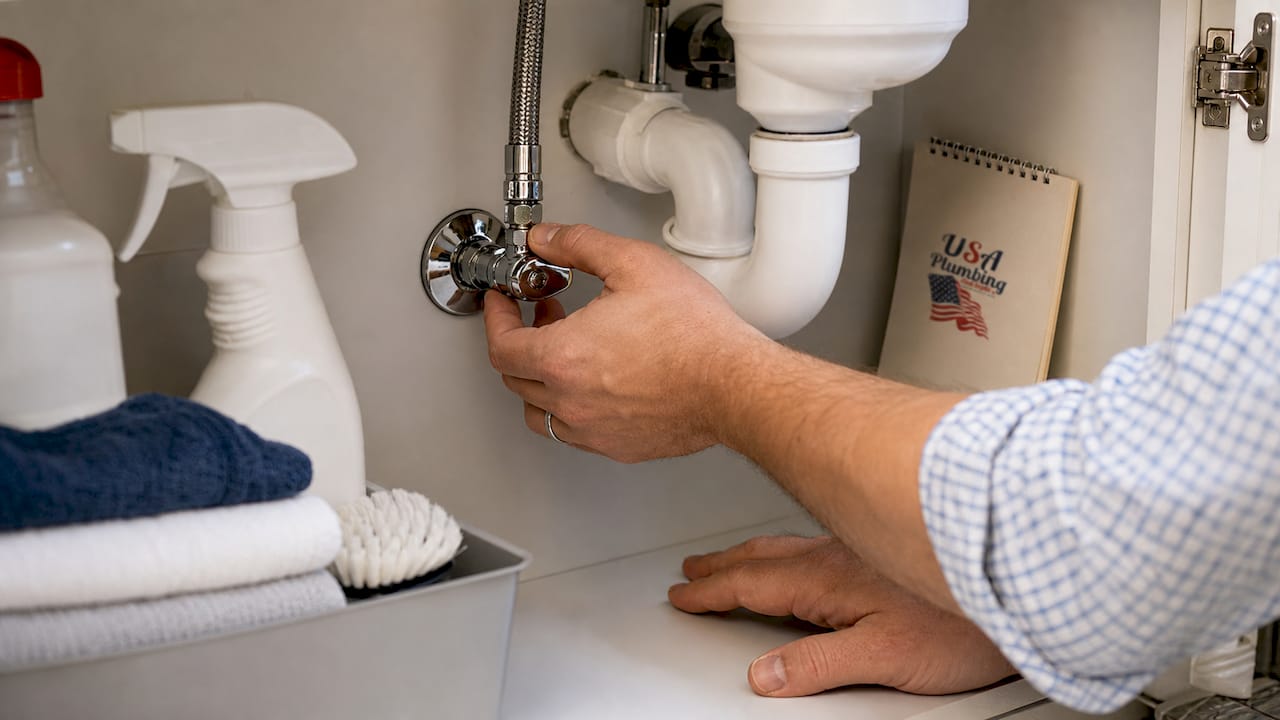
Stopping water flow by shutting off a local fixture valve or your home's main valve is the top priority in any plumbing emergency. Every second of water flow adds to the damage.
Fixture shutoff valves are located directly behind or beneath individual fixtures. You will find them under bathroom and kitchen sinks, behind toilets, and behind washing machines. Turn them clockwise to close. These are your first choice when the problem is isolated to one fixture.
The main shutoff valve controls all water entering your home. Common locations include:
- The basement or crawl space near the front wall
- The garage, close to where the water line enters
- Outside near the water meter in a ground-level box
- A utility closet on the ground floor
Turn the main valve clockwise until it stops. If it is a lever-style valve, turn it perpendicular to the pipe. Testing valves in advance and labeling them significantly improves your emergency response time. A valve that has not been turned in years may be stiff or corroded. Test yours today.
Pro Tip: Use a permanent marker or colored tape to label every shutoff valve in your home right now. Write "MAIN," "KITCHEN," "BATH 1," and so on. In a real emergency, you will not have time to guess.
Failing to shut off water promptly turns a manageable leak into a flooded room. Water damage spreads to flooring, drywall, and structural framing within minutes.
3. turn off your water heater
Turning off your water heater during any emergency involving leaks prevents further damage and eliminates serious safety risks. This step comes right after shutting off the main water supply.
For an electric water heater, go to your breaker box and flip the breaker labeled "water heater" to the off position. Do not skip this step if water is near the unit.
For a gas water heater, turn the control knob on the unit to the "pilot" or "off" position. Do not attempt to relight the pilot until a licensed plumber confirms the unit is safe. If you smell gas at any point, leave the house immediately and call your gas utility company from outside.
4. cut electricity if water is near outlets
Electricity should be turned off at the breaker box whenever water contacts or approaches electrical outlets, appliances, or wiring. Water and electricity together create a life-threatening shock hazard.
Go to your main electrical panel and shut off the breakers for any affected rooms. If the panel itself is in a flooded area, do not enter. Call your utility company and stay out of the space. This is a non-negotiable safety rule. If you are unsure whether an area is safe, treat it as unsafe and call a licensed electrician before re-entering.
5. open faucets and drains to relieve pressure
After the water supply is off, opening faucets and drains relieves pressure in the pipes and drains residual water still sitting in the system. This step reduces the chance of additional leaks from pressurized lines.
Open every faucet in the house, starting with the lowest floor. Flush toilets once to clear the bowl. Open outdoor spigots as well. This empties the pipes faster and reduces the volume of water that could still escape from a damaged section. Once the pipes are drained, close the faucets again before the plumber arrives.
6. contain and remove standing water
Standing water is your biggest enemy after a plumbing emergency. Mold can begin growing within 24–48 hours after water damage exposure. That timeline means you cannot wait for the plumber to arrive before starting cleanup.
Use towels, mops, and a wet/dry vacuum to remove as much standing water as possible. Move furniture and rugs out of the wet area. Open windows and run fans to increase airflow. If you have a dehumidifier, run it immediately. The goal is to reduce moisture before mold colonization begins, even if visible mold is not yet present.
- Remove soaked rugs and move them outside to dry
- Lift furniture legs off wet flooring using aluminum foil or wood blocks
- Place towels along doorways to contain water spread
- Run ceiling fans on high to accelerate drying
- Do not use a standard household vacuum on standing water
7. document all damage before cleanup
Documenting damage with photos and logs before cleanup is critical for insurance claims and professional assessments. Take this step before you move anything or start drying.
Use your phone to photograph every affected area from multiple angles. Record a short video walkthrough narrating what you see. Write down the time the emergency started, the steps you took, and the order you took them. This log becomes your evidence file for your homeowner's insurance claim. Insurers require proof of damage before cleanup, and a thorough photo record prevents disputes over what was damaged and when.
8. handle sewage backups with extreme caution
Sewage backups require a completely different response from standard water leaks. Stop all water use immediately during a sewage backup to avoid worsening the situation and forcing contaminated water deeper into your home's piping.
Do not flush toilets. Do not run faucets. Do not use the dishwasher or washing machine. Every drop of water you send down a drain during a backup pushes sewage further into your home.
Sewage contains bacteria, viruses, and pathogens that pose serious health risks. Never attempt to clean up sewage yourself. Professional sewage cleanup requires specialized equipment and training that no homeowner has on hand.
Keep children and pets completely out of the affected area. Ventilate the space by opening windows if possible, but do not enter the room without rubber boots and gloves at minimum. Call a licensed plumber and a professional restoration company immediately. This is one situation where DIY attempts always make things worse.
9. know when to call a 24 hour plumber right away
Some plumbing problems allow a short window to assess the situation. Others require you to call a 24 hour emergency plumber the moment you identify them. Communicating clearly with your plumber about the situation, the shutoff steps you have taken, and any safety concerns speeds up repairs and limits further damage.
Call immediately for:
- Burst pipes with active water flow you cannot stop
- Sewage backup or overflow in any fixture
- Gas smell near a water heater or any plumbing fixture
- Water flooding near your electrical panel
- A water heater that is leaking and making loud popping or rumbling sounds
When you call, provide your exact address, the type of emergency, which valves you have shut off, and whether electricity has been cut. This information lets the plumber arrive prepared with the right tools and parts. For homeowners in the Bullhead City and Fort Mohave area, local emergency plumbers are available around the clock for exactly these situations.
Pro Tip: Save your plumber's number in your phone under "PLUMBER EMERGENCY" before you ever need it. Searching for a reliable plumber while water is flooding your kitchen costs you precious minutes.
10. understand what you can fix temporarily vs. what needs a pro
Not every plumbing emergency requires you to stand still and wait. Some temporary fixes are safe and effective. Others are dangerous and will make the problem worse.
| Situation | Safe DIY Action | Requires a Licensed Plumber |
|---|---|---|
| Small pipe leak | Wrap with self-fusing silicone tape temporarily | Yes, for permanent repair |
| Toilet overflow | Shut off toilet supply valve | Only if clog persists |
| Dripping faucet | Turn off fixture shutoff valve | Yes, for valve or cartridge repair |
| Sewage backup | Stop all water use, ventilate | Yes, immediately, no exceptions |
| Burst main line | Shut off main valve | Yes, immediately |
| Gas water heater issue | Turn to pilot/off, evacuate if gas smell | Yes, before relighting |
| Mainline blockage | Do not attempt to clear | Yes, requires professional equipment |
Self-fusing silicone tape, available at hardware stores like Home Depot or Lowe's, can slow a small pipe leak temporarily. It does not fix the underlying problem. Treat it as a 30-minute solution while you wait for your plumber, not a permanent repair. Attempting to clear mainline blockages or sewage backups yourself spreads contamination and can damage pipes further. Know the line between a temporary hold and a job that needs professional tools.
Key takeaways
A complete plumbing emergency response requires shutting off water first, eliminating electrical and sewage hazards second, and documenting everything before cleanup begins.
| Point | Details |
|---|---|
| Shut off water immediately | Use fixture valves first, then the main valve if the source is unclear or widespread. |
| Cut power near water | Turn off breakers for any room where water contacts outlets or appliances. |
| Act within 24 hours | Mold growth begins within 24–48 hours, so remove standing water and document damage fast. |
| Never DIY sewage backups | Sewage cleanup requires professional equipment; attempting it yourself spreads contamination. |
| Give plumbers full details | Share your address, the emergency type, valves shut off, and any hazards when you call. |
What i've learned after years of plumbing emergencies
The homeowners who handle plumbing emergencies best are never the ones with the most tools. They are the ones who prepared before anything went wrong. I have seen families save their entire ground floor from water damage simply because someone had labeled the main shutoff valve the previous year. I have also seen the opposite: a burst pipe under a kitchen sink that flooded two rooms because no one in the house knew where the fixture valve was.
The most common mistake I see is hesitation. People stand in a flooded room trying to diagnose the problem before they stop the water. Stop the water first. Diagnose second. Every additional minute of flow multiplies the repair cost.
The second most common mistake is underestimating sewage backups. Homeowners instinctively reach for a plunger or try to run water to clear what they think is a simple clog. That instinct is wrong and dangerous. Stopping all water use is the counterintuitive but correct move. It feels passive, but it prevents contamination from spreading through your entire drain system.
Build your plumbing crisis plan before you need it. Walk your home, label your valves, save your plumber's number, and keep a wet/dry vacuum accessible. The checklist only works if you have done the prep work. And when the emergency arrives, stay calm, work through the steps in order, and call a professional the moment the situation exceeds a simple valve shutoff.
— JOHN
Usaplumbingseptic is ready when you need us
When a plumbing emergency hits your home in Bullhead City, Fort Mohave, Mohave Valley, or Laughlin, Usaplumbingseptic is available 24 hours a day, 7 days a week. We handle burst pipes, sewage backups, water heater failures, and every urgent plumbing issue on this checklist.

Our experienced team arrives prepared, works fast, and communicates clearly so you know exactly what is being fixed and why. Following your emergency checklist steps before we arrive helps us get straight to the repair. For immediate help with emergency plumbing services in your area, call us now. We are your reliable, local partner for every plumbing crisis, large or small.
FAQ
What is the first step in a plumbing emergency?
Shut off the water supply immediately, using the fixture shutoff valve for isolated problems or the main valve for widespread leaks. Stopping water flow is the top priority to prevent further damage.
How do i find my main water shutoff valve?
The main shutoff valve is typically located in the basement, garage, or near the water meter outside. Check along the front wall of your home's lowest level first.
When should i call a 24 hour emergency plumber?
Call immediately for burst pipes, sewage backups, gas smells near plumbing, or water flooding near your electrical panel. These situations require professional tools and cannot wait until morning.
Can i clean up a sewage backup myself?
No. Sewage contains harmful pathogens that require professional cleanup equipment and training. Stop all water use, keep people out of the area, and call a licensed plumber right away.
How quickly does mold grow after water damage?
Mold can begin growing within 24–48 hours after water exposure. Remove standing water and document damage as fast as possible to reduce the risk.
Recommended
- USA Plumbing and Septic LLC - Plumbers, Plumber, Plumbing, Emergency Plumber, Commercial Plumber, Local Plumber, Plumbing Company, Septic
- USA Plumbing and Septic LLC - Plumbers, Plumber, Plumbing, Emergency Plumber, Commercial Plumber, Local Plumber, Plumbing Company, Septic
- USA Plumbing and Septic LLC - Plumbers, Plumber, Plumbing, Emergency Plumber, Commercial Plumber, Local Plumber, Plumbing Company, Septic
- USA Plumbing and Septic LLC - Plumbers, Plumber, Plumbing, Emergency Plumber, Commercial Plumber, Local Plumber, Plumbing Company, Septic