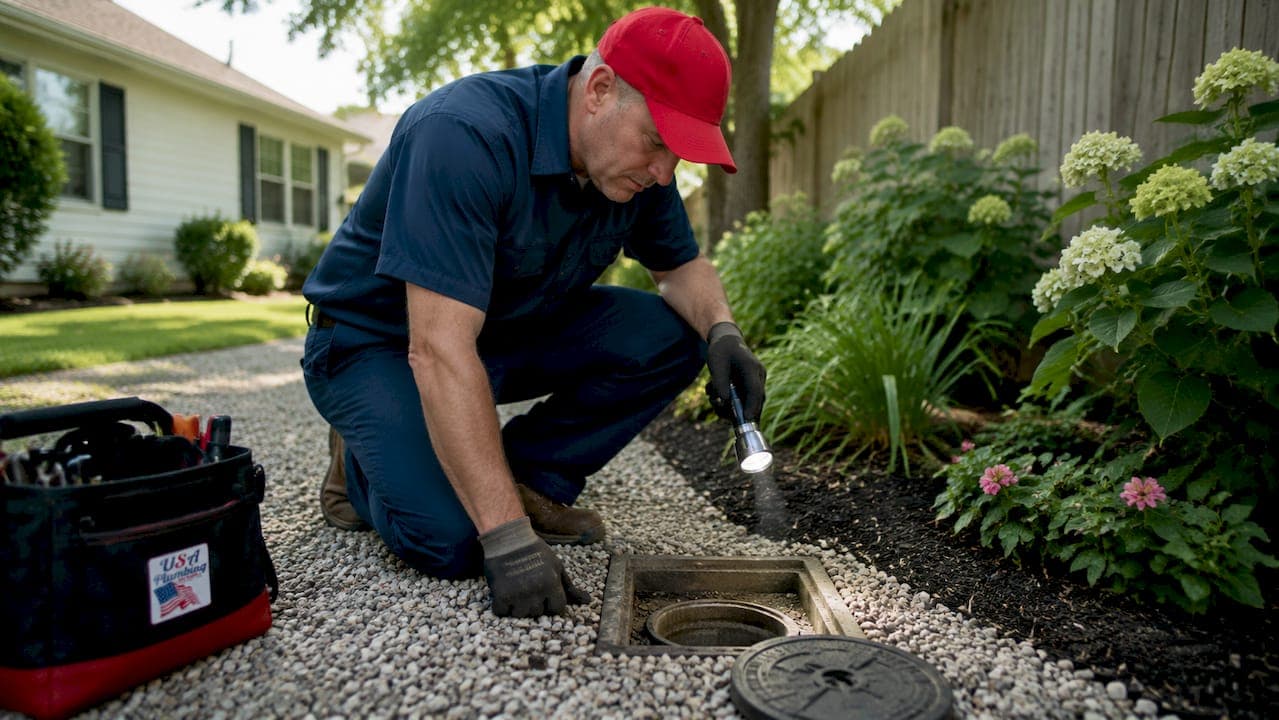
A cleanout is a capped fitting installed in your drainage system that gives plumbers direct access to sewer and drain lines without tearing out walls, floors, or fixtures. The industry term is "plumbing cleanout," and it refers specifically to a Y-shaped or combination wye-and-eighth-bend fitting sealed with a threaded plug. Confusing a plumbing cleanout with a property cleanout service is a common mistake. One is a pipe fitting inside your plumbing system. The other is a junk removal service. They share a name and nothing else.
Cleanouts are sized to match the pipe they serve. Main building drains use 3 to 4 inch fittings, while smaller fixture branches require at least 1.5 inches. Materials follow the host pipe: cast iron systems use brass or cast iron plugs, ABS and PVC systems use plastic plugs, and copper DWV systems use cast brass plugs with pipe-thread sealant. Understanding what cleanouts are and where yours are located is one of the most practical things you can do as a homeowner or property manager.
What is a cleanout in plumbing, and what types exist?
Cleanouts fall into two broad categories: indoor and outdoor. Each type serves the same core purpose but differs in placement, fitting style, and accessibility.
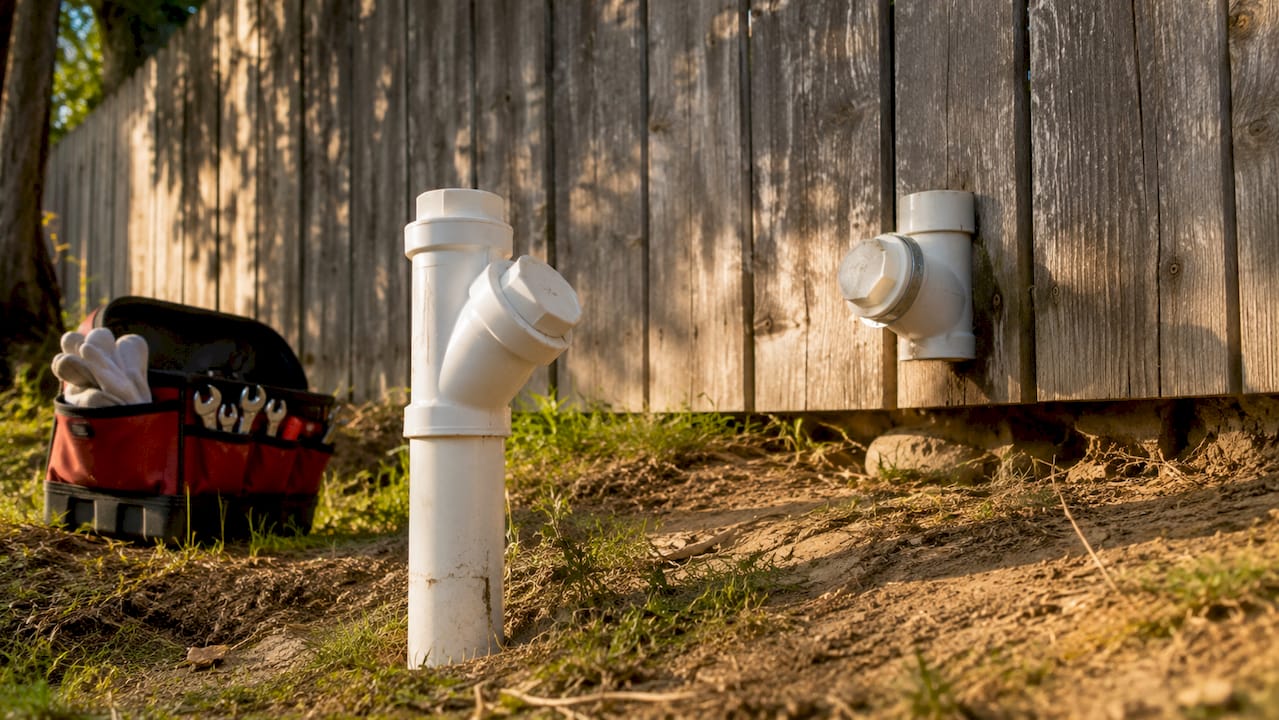
Indoor cleanouts are installed inside the structure, typically behind walls, under sinks, in basements, or beneath floor access panels. Indoor cleanouts are sized to the pipe served, with a minimum of 1.5 inches for fixture branches. Their placement inside the building means a plumber can access a clogged branch line without demolishing tile or drywall. That is the entire point.
Outdoor cleanouts sit at grade level in your yard or near the property line. They are often housed in a protective box flush with the ground. Two-way cleanouts are required where the building drain meets the building sewer, allowing a plumber to snake in either direction from a single access point.
Here is a quick comparison of the main cleanout types:
| Type | Location | Access Direction | Common Size |
|---|---|---|---|
| Indoor floor cleanout | Basement or utility room floor | Upstream only | 3 to 4 inches |
| Indoor wall cleanout | Behind wall panels or under sinks | Upstream only | 1.5 to 3 inches |
| Outdoor yard cleanout | Yard at grade, near foundation | Upstream only | 3 to 4 inches |
| Two-way cleanout | Building drain/sewer junction | Both directions | 4 inches |
| Property line cleanout | Near street or municipal connection | Both directions | 4 inches |
Pro Tip: If you have an older home built before 1980, your cleanout plugs may be cast iron with brass threads. These corrode and seize over time. Have a plumber inspect them before you need emergency access.
How to locate cleanouts on your property
Knowing where your cleanouts are before a clog hits is the difference between a quick fix and a costly emergency. Most homeowners discover their cleanouts for the first time while standing in a flooded bathroom.
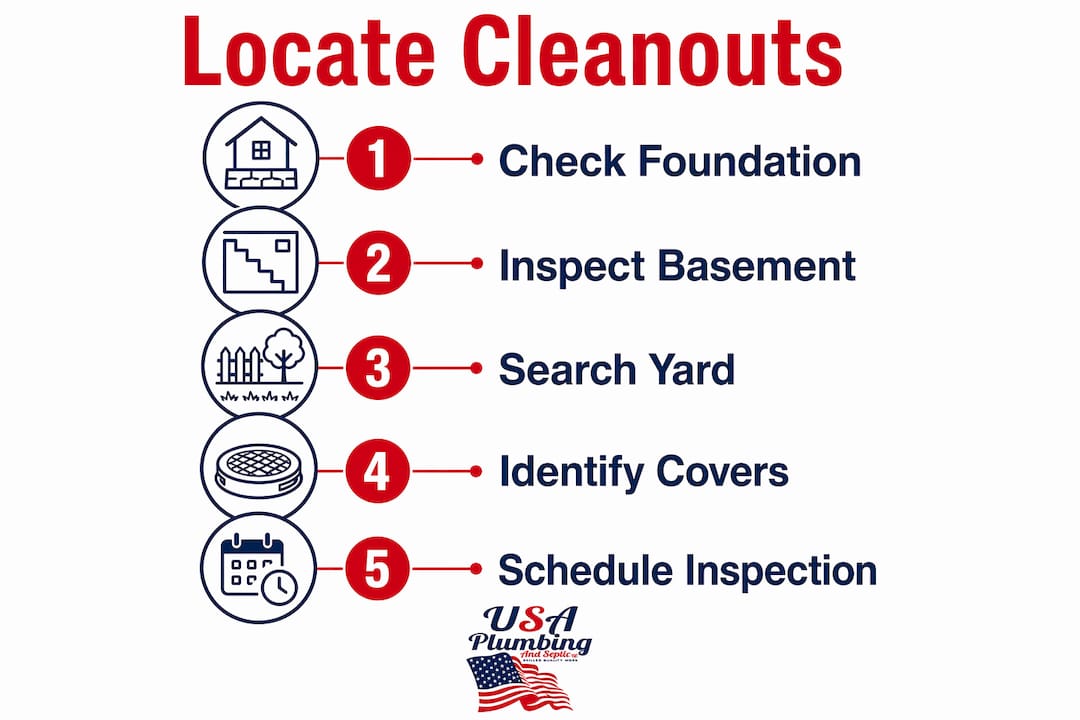
For residential properties, sewer cleanouts are often near the front of the house, particularly in homes built within the last 45 years. The logic is simple: the main drain exits toward the street or a septic system, and the cleanout sits close to that exit point. Start your search along the exterior foundation wall facing the street.
Common locations to check include:
- Along the exterior foundation wall, usually within 3 feet of grade
- In the basement or crawl space, near where the main drain exits the building
- In the yard, flush with the ground inside a green or black plastic box
- Near the property line, where your sewer connects to the municipal line
- Under a sink or behind an access panel in a bathroom or utility room
- At the base of a soil stack inside the building
Some cleanouts are buried under soil, mulch, or even paved surfaces. Outdoor cleanouts may be hidden within a protective box covered by soil, which is why a metal detector or a call to your local plumber can save significant time. For commercial properties, cleanout placement follows the same code logic but at larger scale, with multiple access points serving different zones of the building.
For more on plumbing system basics specific to Mohave County properties, Usaplumbingseptic has published a practical local guide worth reading before your next inspection.
What is the purpose of cleanouts in plumbing maintenance?
The cleanout purpose is direct access. Without one, clearing a clogged drain line means either removing a toilet, cutting into a wall, or digging up a yard. With one, a plumber inserts a snake or hydro-jet nozzle directly into the pipe and clears the blockage in minutes.
Regular drain cleaning through cleanouts prevents costly plumbing repairs by catching blockages early before they become full obstructions or cause pipe damage. That is the maintenance argument for cleanouts in plain terms: early access equals lower repair bills.
Here is how cleanouts support plumbing maintenance in practice:
- Pipe inspection. A plumber feeds a camera through the cleanout to inspect pipe condition, identify root intrusion, and locate partial blockages before they become complete failures.
- Drain snaking. A mechanical snake is inserted through the cleanout to break up or retrieve clogs. No fixture removal required.
- Hydro-jetting. High-pressure water is pushed through the cleanout to scour pipe walls clean of grease, scale, and debris. This is the most thorough cleaning method available.
- Emergency response. During a sewer backup, a plumber can access the main line through the outdoor cleanout and relieve pressure immediately. Knowing its location cuts response time significantly.
- Routine scheduled maintenance. Commercial properties and older homes benefit from annual cleanout inspections to catch slow-developing problems like root infiltration or grease buildup.
Pro Tip: Schedule a cleanout inspection every 18 to 24 months if your home is more than 20 years old or has mature trees near the sewer line. Root intrusion is the leading cause of sewer line failure in established neighborhoods.
Common cleanout problems and how to maintain them
Cleanouts fail in predictable ways. Knowing what to look for keeps your access points functional when you need them most.
The most common problems include:
- Buried or paved-over cleanouts. Landscaping, concrete work, or years of mulch accumulation can cover outdoor cleanouts entirely. A plumber may need to excavate to restore access, which adds cost and time to any repair.
- Corroded or seized plugs. Cast iron and brass plugs corrode over decades. Paint applied during home renovations can seal threads shut. Routine maintenance includes checking caps for corrosion, cleaning threads, and re-applying pipe-thread sealant after every service to keep plugs removable.
- Missing cleanouts at code-required locations. Older homes built before modern plumbing codes were adopted often lack cleanouts at required intervals. The International Plumbing Code (IPC) and Uniform Plumbing Code (UPC) require cleanouts every 100 feet on horizontal piping 4 inches and smaller, at every direction change over 45 degrees, and at stack bases. A home without these access points forces destructive repairs when problems arise.
- Cracked or missing caps. A missing cleanout plug allows sewer gases to enter the building. This is both a health hazard and a code violation. Replace damaged caps immediately.
- Improper plug material. Using the wrong plug material for the pipe type causes leaks and accelerates corrosion. ABS and PVC systems need plastic plugs. Cast iron needs brass or cast iron. Mixing materials creates failure points.
Adding missing cleanouts or replacing buried caps is a standard plumbing service that varies in cost based on location and the amount of excavation required. For most residential properties, installing a new outdoor cleanout is a straightforward job. For commercial properties, what is a commercial cleanout installation often involves larger diameter fittings and deeper excavation, which increases both time and cost.
Key takeaways
A plumbing cleanout is the single most important access point in your drain system, and knowing its location and condition before a problem occurs is what separates a quick repair from an expensive emergency.
| Point | Details |
|---|---|
| Cleanout definition | A capped Y-fitting installed in drain lines for direct pipe access without fixture removal. |
| Types and sizes | Main drains use 3 to 4 inch fittings; fixture branches use at least 1.5 inches; two-way cleanouts allow bidirectional access. |
| Where to look | Check near the foundation, in the basement, at grade in the yard, and near the property line. |
| Maintenance matters | Inspect caps for corrosion, clean threads, and reapply sealant after every service to keep plugs removable. |
| Code compliance | IPC and UPC require cleanouts every 100 feet, at direction changes over 45 degrees, and at stack bases. |
Why cleanout awareness is the most underrated part of home ownership
Most homeowners I talk to have never seen their cleanout. They know they have a sewer line somewhere underground, but the access point that makes that line serviceable is invisible to them. That is a problem waiting to happen.
The confusion between a plumbing cleanout and a property cleanout service trips people up more than you would expect. I have seen homeowners call a junk removal company when they needed a plumber, and vice versa. The terminology overlap is real, and it costs people time and money when they are already dealing with a stressful situation.
My honest advice: walk your property this week and find your outdoor cleanout. If you cannot locate it, call a plumber and ask them to identify it during your next service visit. Write down its location. Take a photo. If you manage a commercial property, make sure your maintenance team has a diagram showing every cleanout access point in the building. When a sewer backs up at 11 PM on a Friday, that diagram is worth more than any warranty.
The other thing I would push back on is the idea that cleanouts are only relevant during emergencies. Scheduling regular drain maintenance through your cleanout access points is the most cost-effective plumbing habit you can build. Catching a partial blockage during a routine inspection costs a fraction of what a full sewer backup repair runs. The cleanout makes that early detection possible. Treat it like a smoke detector. You hope you never need it urgently, but you absolutely want it working when you do.
— JOHN
Let Usaplumbingseptic handle your cleanout inspection and repair
Cleanouts only protect your plumbing when they are accessible, functional, and properly maintained. Usaplumbingseptic serves homeowners and property managers across Bullhead City, Fort Mohave, Mohave Valley, and Laughlin with 24/7 professional plumbing services that include cleanout inspection, installation, and emergency sewer line access.
Our experienced plumbers locate buried cleanouts, replace corroded plugs, install missing access points, and clear blockages fast using drain snaking and hydro-jetting. If your cleanout has not been inspected recently, or if you are dealing with a slow drain or sewer backup right now, do not wait. Contact our Golden Valley plumbing team today or explore our sewer line solutions to schedule service and protect your property before a small problem becomes a costly repair.
FAQ
What is a cleanout in plumbing?
A plumbing cleanout is a capped fitting, typically Y-shaped, installed in a drain or sewer line to provide direct access for inspection, snaking, and hydro-jetting without removing fixtures or cutting into walls.
How do I find the cleanout on my property?
Check along your exterior foundation wall facing the street, in your basement near the main drain exit, and in your yard at grade level inside a plastic access box. Sewer cleanouts are often near the front of the house in homes built within the last 45 years.
How long does it take to install a new sewer cleanout?
Installing a new sewer cleanout takes 2 to 5 hours for straightforward cases, though complex projects involving deep excavation or difficult site conditions can take longer.
What is a commercial cleanout and how does it differ from residential?
A commercial cleanout serves the same access function as a residential one but typically uses larger diameter fittings, handles higher flow volumes, and may require multiple access points across different building zones to meet code requirements.
Why is my cleanout plug stuck or missing?
Stuck plugs are almost always caused by corrosion or paint sealing the threads shut over years of neglect. Missing plugs allow sewer gases into the building and must be replaced immediately. A plumber can extract a seized plug and re-dope the threads to prevent the problem from recurring.