
Common restaurant kitchen plumbing issues are primarily caused by grease buildup, clogged drains, faulty fixtures, and design errors that disrupt operations and trigger health code violations. In commercial plumbing, these problems fall under a category professionals call foodservice drainage failures. Every restaurant kitchen runs high volumes of water, food waste, and fats, oils, and grease (FOG) through its pipes daily. That load is far greater than any residential system handles. Without a proactive maintenance plan, even a single blocked floor drain can shut down service during your busiest hour. This article covers the most frequent problems, their root causes, early warning signs, and the maintenance practices that keep your kitchen running and your health inspector satisfied.
1. common restaurant kitchen plumbing issues: grease buildup
Grease buildup is the primary cause of plumbing failures in commercial kitchens, producing recurring sewer blockages and grease trap overflows that lead to fines or forced closures. Grease coats the inside of pipes over time, steadily narrowing the effective diameter until flow slows to a trickle. Most operators do not notice until the drain backs up completely during a dinner rush.
- Grease trap overflows occur when traps are not pumped on schedule, sending FOG directly into the sewer line.
- Recurring clogs reappear within weeks when a plumber only snakes the drain instead of clearing the full pipe circumference.
- Sewer line blockages build up far downstream from the kitchen, making them harder and more expensive to clear.
Pro Tip: Schedule grease trap pumping based on your kitchen's volume, not a fixed calendar date. A high-volume burger restaurant may need service every two weeks, while a low-volume café may go monthly.
2. clogged drains from food scraps and FOG
Clogged drains are the most visible restaurant plumbing problem, and food scraps combined with FOG are the direct cause. Floor drains, prep sink drains, and dishwasher drains all receive a constant mix of solids and grease. Without drain screens and proper scraping habits, solids accumulate fast.
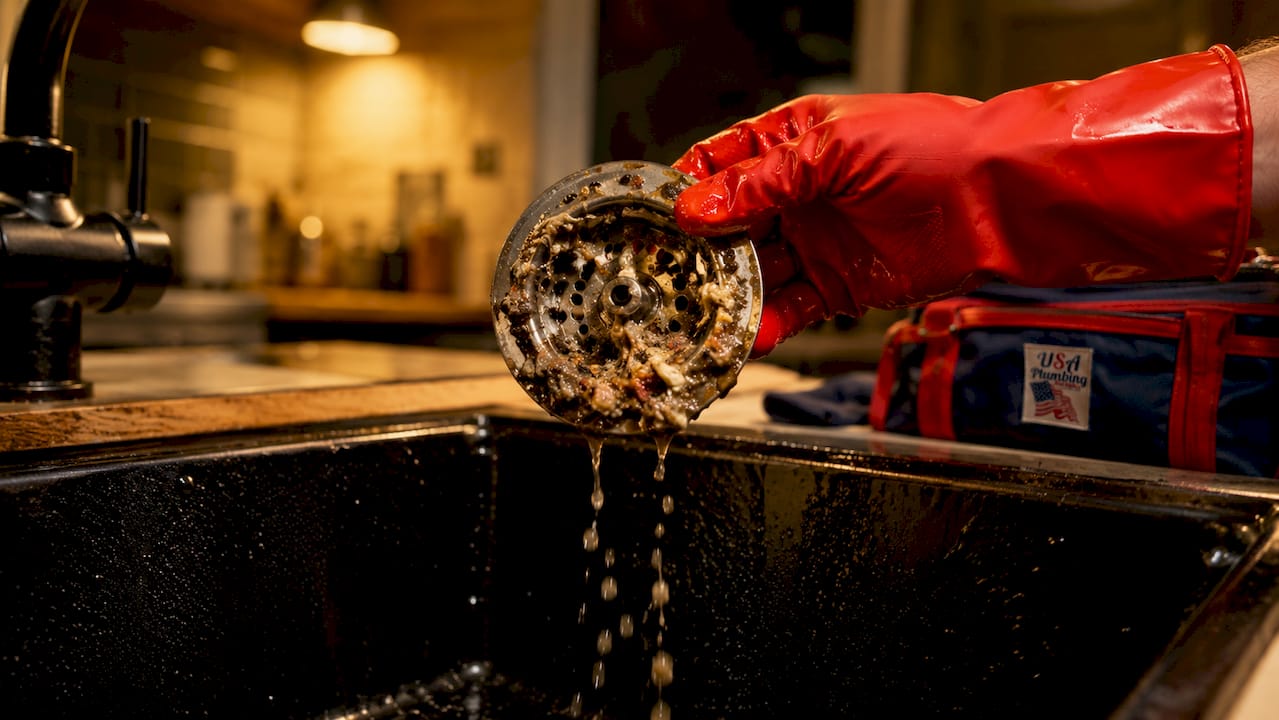
The problem compounds when staff pours hot grease down the sink. Hot grease flows freely, then cools and solidifies inside the pipe, trapping food particles and building a plug. Fixing clogged drains in a commercial kitchen requires more than a plunger. It requires removing the blockage and cleaning the pipe wall completely.
3. leaks and dripping faucets wasting water and money
Commercial kitchen leaks at faucets, supply lines, and under-sink connections waste significant water and create slip hazards on kitchen floors. A dripping faucet in a commercial setting loses far more water per day than a residential one because commercial faucets run at higher pressure and longer hours. Unaddressed minor water leaks add up on your utility bill and can saturate subfloor materials, leading to mold and structural damage.
Supply line connections behind dishwashers and ice machines are frequent leak points. These connections loosen from vibration over time. A quarterly visual inspection of all supply connections catches most leaks before they cause serious damage.
4. faulty or overflowing grease traps
A grease trap that overflows or fails to capture FOG is both a plumbing failure and a regulatory violation. Most local health codes require grease traps to be cleaned and inspected on a documented schedule. Failure to maintain records is itself a violation, separate from the physical condition of the trap.
Grease traps fail for three main reasons: they are undersized for the kitchen's output, they are not pumped frequently enough, or the baffles inside the trap are broken or missing. An undersized trap fills quickly and passes grease directly into the sewer. Replacing an undersized trap is a capital expense, but it costs far less than repeated fines and emergency service calls.
5. design and installation errors that cause recurring problems
Many drainage failures are design or installation errors like improper drain slopes, undersized pipes, and missing air gaps, often unnoticed until costly retrofits are required. These are kitchen plumbing common mistakes that show up years after construction, making them hard to trace back to their source.
| Installation Error | Consequence | Correct Standard |
|---|---|---|
| Improper drain slope | Standing water and recurring clogs | Minimum 1/4 inch drop per foot of run |
| Undersized pipe diameter | Backups during peak service | Size pipes for commercial flow volume |
| Missing air gap | Sewage backflow into food prep areas | Required by most health codes |
| Poorly positioned grease trap | Trap bypassed by fast-flowing water | Install per manufacturer and code specs |
High-volume kitchens require plumbing designs suited for heavier flow, including larger diameter pipes, to avoid recurring issues. A pipe sized for a residential kitchen will fail quickly under restaurant conditions.
Pro Tip: If your kitchen was built or renovated more than 10 years ago, schedule a camera inspection of the main drain lines. Pipe bellies, root intrusion, and corroded sections are common in older infrastructure and invisible without a camera.
6. missing or improper air gaps
Air gaps in indirect waste systems are critical for inspection compliance. Missing them risks sewage backflow contaminating food or ice. This is one of the most common causes of health inspection failures, especially after new equipment is installed.
An air gap is the physical space between a water outlet and the flood rim of a receiving fixture. Without it, a drop in water pressure can siphon contaminated water back into a clean water supply or food prep surface. Ice machines are particularly vulnerable because their drain lines are often connected improperly during installation. Every new equipment installation should be reviewed by a licensed commercial plumber before the health inspector arrives.
7. improper drain venting causing odors and gurgling
Drain venting problems produce two unmistakable symptoms: gurgling sounds from floor drains and a persistent sewer odor in the kitchen. Vents allow air into the drain system so water flows freely. When a vent is blocked or missing, negative pressure pulls water out of P-traps, breaking the seal that keeps sewer gases out of the kitchen.
Blocked vents are often caused by debris, bird nests, or improper installation. A kitchen that smells like sewage even after cleaning is almost always a venting problem, not a cleaning problem. A licensed plumber can locate the blocked vent with a smoke test and clear it quickly.
8. equipment-specific clogs: dishwashers and ice machines
Dishwashers and ice machines generate their own category of common sink issues in eateries because they drain high volumes of water rapidly and repeatedly. Dishwasher drain lines clog with food particles and detergent residue. Ice machine drain lines clog with mineral scale and biofilm.
Both types of equipment require dedicated drain lines sized for their output. Connecting a commercial dishwasher to an undersized shared drain line guarantees backups during peak service. Ice machine drain lines should be flushed and inspected at least twice per year to prevent scale buildup that restricts flow.
9. early warning signs of plumbing failure
Slow drainage is an early warning sign that pipe diameter has been compromised by grease buildup, and treating it as a non-emergency leads to full sewer backups during peak service. Catching these signs early is the difference between a $200 service call and a $2,000 emergency repair.
Watch for these warning signs:
- Slow-draining sinks or floor drains, especially when multiple fixtures slow down at the same time.
- Gurgling sounds from drains after water runs, indicating a venting or blockage issue.
- Recurring clogs that return within days or weeks of being cleared.
- Foul odors from floor drains or grease traps, signaling a full trap or broken vent seal.
- Water pooling on kitchen floors during peak service hours.
- Dishwasher or ice machine drainage errors showing up on equipment displays.
Pro Tip: Train your opening shift staff to do a 60-second drain check every morning. Running water in each sink and watching the drain speed takes less than a minute and catches slow drains before they become full blockages.
10. immediate actions during a plumbing emergency
During a plumbing emergency like a floor drain backup, stop water use immediately and isolate the water supply if possible to prevent contamination spread. Continued water flow spreads sewage-contaminated water across kitchen floors, raising bacterial contamination risk and triggering health code violations.
Follow these steps in order:
- Stop using all affected fixtures immediately. Do not run dishwashers, sinks, or floor drains connected to the backed-up line.
- Locate and shut the water supply valve to the affected area if the backup is worsening.
- Call a licensed commercial plumber right away. This is not a situation for DIY fixes.
- Avoid chemical drain cleaners. Chemical drain cleaners can worsen problems by softening pipes and creating hardened sludge plugs that complicate later professional cleaning.
- Contain and sanitize any sewage-contaminated surfaces before reopening that area.
- Document the incident for your health inspection records and insurance.
For more guidance, review these plumbing emergency steps before a crisis hits.
11. maintenance practices that prevent plumbing problems
Routine plumbing maintenance including grease trap cleaning and professional drain inspections effectively prevents costly emergency repairs. Neglected systems require expensive after-hours repairs and cause revenue loss from closures.
| Maintenance Task | Recommended Frequency | Benefit |
|---|---|---|
| Grease trap pumping | Every 2–8 weeks (volume-based) | Prevents overflows and fines |
| Hydro jetting drain lines | Every 6–12 months | Clears full pipe circumference |
| Camera drain inspection | Annually | Detects bellies, cracks, root intrusion |
| Supply line inspection | Quarterly | Catches leaks before water damage occurs |
| Staff FOG disposal training | At onboarding and annually | Reduces grease entering drain system |
Hydro jetting cleans the full pipe circumference and is preferred over snaking for long-term reliability in commercial kitchens. Snaking only punches a hole through a grease clog. Hydro jetting removes the grease coating the entire pipe wall, which is what prevents the clog from returning in two weeks.
A commercial plumber service contract locks in scheduled maintenance visits and gives you priority response during emergencies. For a busy restaurant, that priority access alone is worth the contract cost.
Key takeaways
Preventing restaurant plumbing failures requires consistent grease trap maintenance, hydro jetting over snaking, and trained staff who recognize early warning signs before a slow drain becomes a shutdown.
| Point | Details |
|---|---|
| Grease is the top cause | Grease buildup narrows pipes and causes recurring clogs that snaking alone cannot fix. |
| Design errors compound problems | Improper slopes, undersized pipes, and missing air gaps create failures that require costly retrofits. |
| Slow drains are urgent | Slow drainage signals grease buildup that will cause a full backup if not addressed promptly. |
| Hydro jetting outperforms snaking | Hydro jetting clears the full pipe wall and prevents clogs from returning within weeks. |
| Maintenance prevents shutdowns | Scheduled grease trap pumping and camera inspections catch problems before they close your kitchen. |
What i've learned after years of commercial kitchen plumbing
Restaurant owners consistently underestimate slow drains. I have seen it dozens of times. A manager notices the prep sink draining slowly, decides it is not urgent, and two weeks later the kitchen floods during a Saturday dinner service. The slow drain was the warning. The flood was the consequence.
The hidden cost of ignoring early signs is not just the repair bill. It is the lost revenue from closing early, the staff overtime for cleanup, and the health inspection that follows a sewage backup. Those costs dwarf the price of a scheduled hydro jetting visit.
The other thing I see constantly is over-reliance on chemical drain cleaners. Kitchen staff reach for them because they are fast and available. But those products do not clear grease from a commercial pipe. They soften the outer layer and push the problem further down the line, where it hardens into a plug that takes a professional twice as long to remove.
My honest advice: build a relationship with a reliable commercial plumber before you need one in a crisis. Know who you are calling at 10 p.m. on a Friday. Have a service contract that includes scheduled inspections. The kitchens I see that run without plumbing problems are not lucky. They are maintained.
— JOHN
Keep your kitchen running with professional plumbing support
Restaurant plumbing problems do not wait for a convenient time to surface. Usaplumbingseptic provides 24/7 commercial plumbing services for restaurant kitchens in Bullhead City, Fort Mohave, Mohave Valley, and Laughlin. Our experienced team handles grease trap maintenance, hydro jetting, drain camera inspections, and emergency sewer line repairs. We know commercial kitchens run on tight schedules, and we show up ready to work.
Whether you need a scheduled maintenance visit or an emergency response right now, our commercial plumbing team is ready. We also offer sewer line solutions designed specifically for high-volume commercial kitchens. Call us today and get your kitchen back to full operation fast.
FAQ
What causes most drain clogs in restaurant kitchens?
Grease buildup combined with food scraps is the leading cause of drain clogs in commercial kitchens. FOG coats pipe walls over time and traps solids until the drain blocks completely.
How often should a restaurant grease trap be cleaned?
Grease trap cleaning frequency depends on kitchen volume, but most commercial kitchens require service every two to eight weeks. Waiting for overflow is too late and risks health code violations.
Is hydro jetting better than snaking for restaurant drains?
Hydro jetting is the preferred method for commercial kitchen drains because it clears the full pipe circumference, not just a central channel. Snaking leaves grease on the pipe walls, so clogs return quickly.
What are the first signs of a serious plumbing problem in a kitchen?
Slow-draining sinks, gurgling floor drains, and recurring clogs are the earliest signs of a serious plumbing issue. Treating these as urgent prevents full backups and costly emergency repairs.
Can chemical drain cleaners damage commercial kitchen pipes?
Chemical drain cleaners can soften pipe walls and create hardened sludge plugs deeper in the line. Licensed commercial plumbers advise against using them in restaurant kitchen drains.