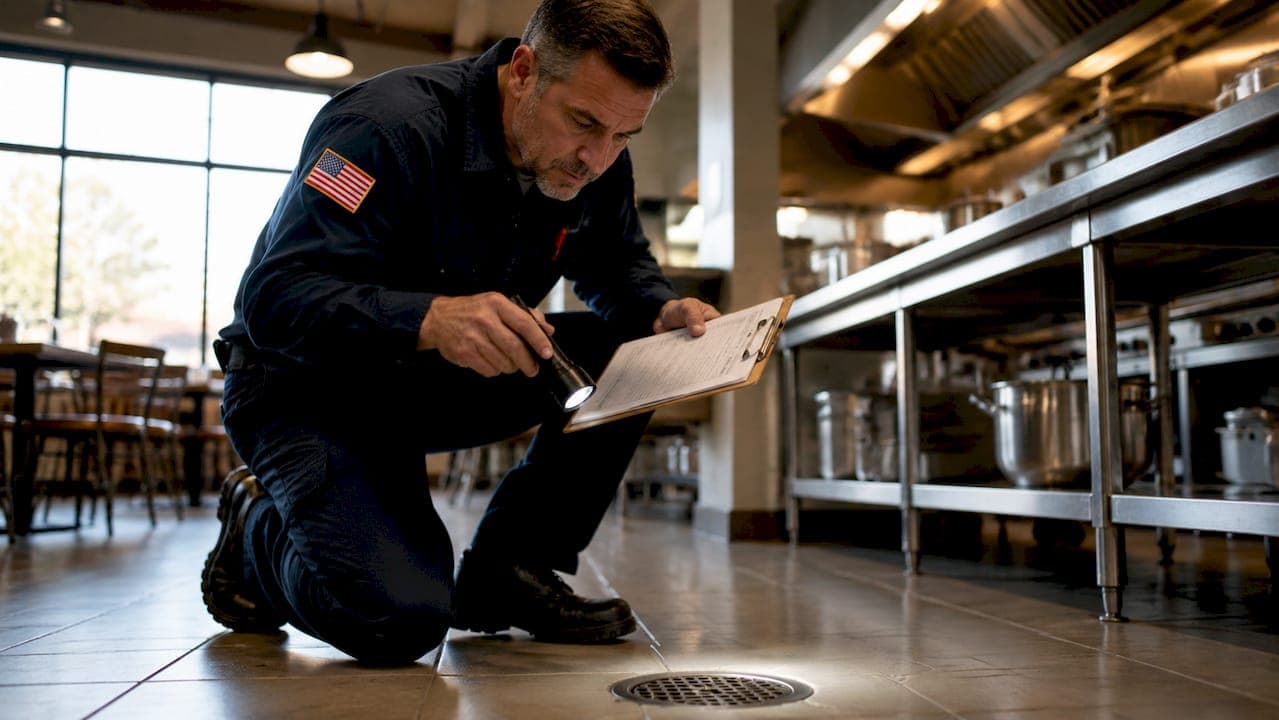
Commercial drain maintenance is the planned, systematic upkeep of drainage infrastructure in business properties to prevent blockages, protect regulatory compliance, and avoid costly emergency repairs. The industry term for this practice is preventive drain maintenance, and it covers far more than clearing a blocked pipe. A structured program includes scheduled inspections, high-pressure hydro-jetting, grease trap cleaning, CCTV camera surveys, and detailed written documentation. Facility managers and business owners who understand how commercial drain maintenance works gain a direct advantage: lower operating costs, fewer compliance violations, and drainage systems that perform reliably year-round.
How does commercial drain maintenance work step by step?
A complete commercial drain maintenance program follows four repeatable stages: inspect, clean, verify, and document. Each stage builds on the last, and skipping any one of them turns a scheduled service into an incomplete fix.
-
Scheduled visual inspection. A technician walks every access point, floor drain, and cleanout on the property. The goal is to identify slow-draining lines, odors, visible grease buildup, and any signs of structural damage before they escalate.
-
Cleaning. The two most common methods are hydro-jetting and drain snaking. Hydro-jetting uses water at pressures up to 4,000 PSI to scour pipe walls clean of grease, scale, and debris. Drain snaking is better suited for soft blockages or older pipes that cannot handle high pressure. Grease trap cleaning runs parallel to line cleaning and is treated as a separate task with its own schedule.
-
CCTV camera survey. A camera is fed through the line to assess pipe condition after cleaning. Annual CCTV surveys identify root intrusion, line collapse, and grease buildup before failures occur. This step converts guesswork into documented evidence.
-
Verification. Professional standards require that commercial drain cleaning restores pipes to at least 95% of their original hydraulic capacity. Technicians confirm this through flow tests before closing the work order.
-
Documentation. A written report is produced after every visit. This record becomes the foundation for compliance audits, insurance claims, and future maintenance planning.
Pro Tip: Schedule maintenance visits during off-hours. Off-hours scheduling avoids lost revenue and eliminates the service rate surcharges that come with emergency call-outs during business hours.
Grease traps and septic systems: how do they work together?
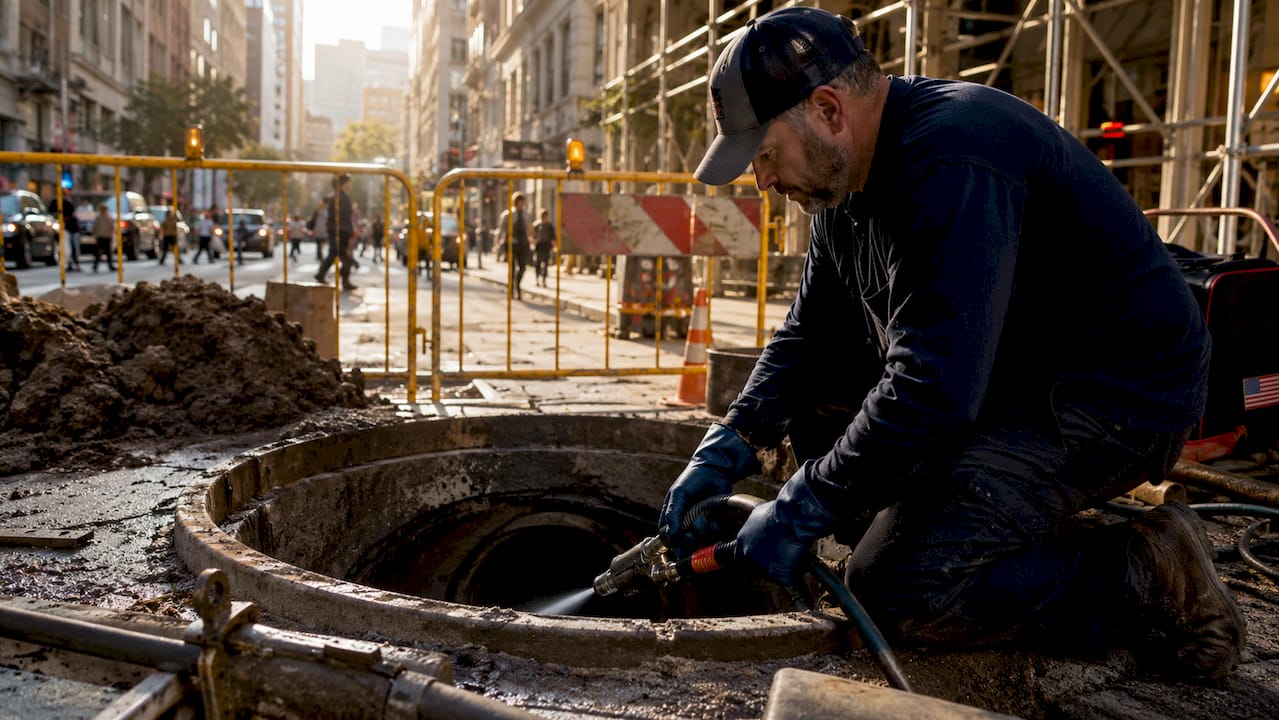
Grease traps and commercial septic systems are separate components, but they depend on each other to function correctly. Confusing their maintenance schedules is one of the most common and costly mistakes facility managers make.
A grease trap sits between kitchen drains and the main sewer or septic line. Its job is to intercept fats, oils, and grease (FOG) before they reach the septic tank or municipal sewer. Grease traps must be cleaned every 30–90 days, depending on kitchen volume. Septic pumping, by contrast, occurs every 2–3 years. These are not interchangeable tasks.
Commercial septic systems handle far greater wastewater volumes than residential systems. Offices generate 15–25 gallons per day per employee, while fast-food restaurants produce 50–70 gallons per seat per day. That volume demands pretreatment units, larger tank capacity, and regulatory sampling that residential systems never require.
When FOG bypasses a neglected grease trap, it migrates into the septic tank and coats the biological treatment layer. This kills the anaerobic bacteria that break down waste. The result is a septic system failure that costs far more to remediate than routine grease trap cleaning ever would.
- Grease trap cleaning frequency: every 30–90 days based on usage
- Septic tank pumping frequency: every 2–3 years
- FOG violations can trigger fines of $1,500 to $5,000 or more
- Commercial septic systems require pretreatment units not found in residential setups
- Grease interceptors are non-negotiable for any food service operation connected to a septic system
Pro Tip: Always schedule grease trap cleaning before septic pumping. Cleaning the trap first prevents a surge of accumulated FOG from entering the tank during the pumping process, which would disrupt biological treatment.
What are the financial benefits of preventive drain maintenance?
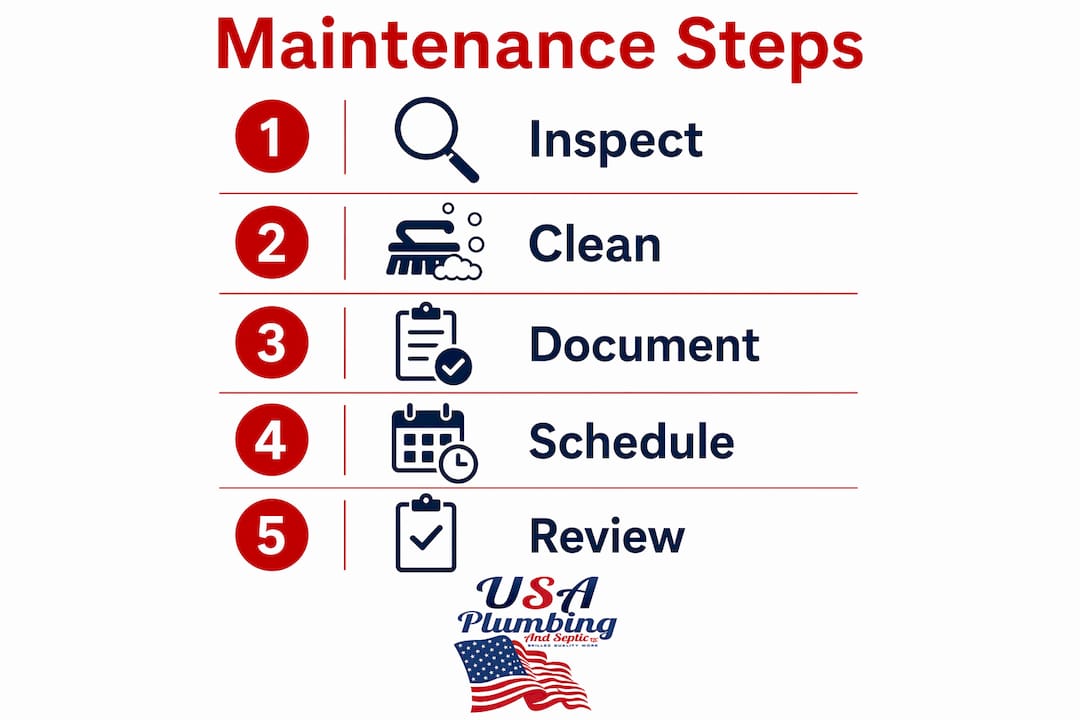
Preventive maintenance converts drainage from an unpredictable liability into a budgeted line item. The numbers make the case clearly.
A structured maintenance program reduces per-visit costs by 20–35% compared to emergency repairs. That gap widens when you factor in the premium labor rates, after-hours surcharges, and collateral damage that come with unplanned failures. A single drain collapse in a restaurant kitchen can shut down service for an entire day, a loss that no emergency repair bill captures.
Regulatory fines add another layer of financial risk. Improper FOG management draws fines of $1,500 to $5,000 or more from municipal authorities. A preventive maintenance contract that includes scheduled grease trap cleaning costs a fraction of that exposure.
"Planned preventive maintenance converts drainage from unpredictable liabilities into budgeted operational expenses with guaranteed emergency response and priority scheduling."
Maintenance contracts also include priority scheduling and guaranteed emergency response windows of 2–4 hours. That guarantee matters when a blocked drain threatens a health inspection or a lease compliance review.
| Approach | Cost Profile | Compliance Risk | Disruption Level |
|---|---|---|---|
| Reactive (emergency only) | High and unpredictable | Elevated fine exposure | Unplanned shutdowns |
| Preventive (scheduled program) | 20–35% lower per visit | Documented due diligence | Scheduled off-hours work |
| No maintenance | Lowest short-term spend | Highest regulatory risk | System failure and closure |
The table above shows why the middle row is the only defensible choice for a commercial facility. The "no maintenance" row is not a cost-saving strategy. It is a deferred emergency.
Why does documentation matter as much as cleaning?
Maintenance is more than clearing drains. Documentation and inspections are equally critical to satisfy insurance requirements and municipal compliance standards. Facility managers who treat a cleared drain as a closed matter are leaving themselves exposed.
A complete maintenance report includes the date of service, every access point inspected, CCTV survey findings, defect identification, corrective actions taken, and photographic evidence. Detailed reports support compliance audits and provide proof of due diligence in the event of a pollution complaint or insurance claim. Without that paper trail, you have no defense.
Photographic and video records from CCTV surveys also serve a forward-looking function. Comparing footage from successive annual surveys shows exactly how pipe condition is changing over time. That data drives smarter capital planning. You can schedule a pipe lining project two years out instead of reacting to a collapse.
For landlord and local authority audits, organized records demonstrate that the facility has met its duty of care. This matters especially in food service, healthcare, and multi-tenant commercial buildings where drainage failures carry public health implications.
Pro Tip: Store maintenance reports in a shared digital folder accessible to your facilities team, your insurer, and your contractor. A reliable plumbing contractor should provide digital copies of every report within 24 hours of each visit.
Consider also upgrading floor drain seals. P-trap water seals evaporate within 2–3 weeks of disuse, allowing sewer gases and pests into the building. Waterless silicone valves reduce inspection needs by 75–90%. That upgrade alone cuts the labor hours your team spends on routine trap recharging throughout the year.
Key takeaways
A preventive commercial drain maintenance program reduces costs, protects compliance, and keeps drainage systems performing at or near original capacity through scheduled inspection, cleaning, and thorough documentation.
| Point | Details |
|---|---|
| Preventive vs. reactive costs | Scheduled maintenance reduces per-visit costs by 20–35% compared to emergency repairs. |
| Grease trap and septic coordination | Clean grease traps every 30–90 days and pump septic tanks every 2–3 years on separate schedules. |
| 95% hydraulic capacity standard | Professional cleaning must restore pipes to at least 95% of original flow capacity, verified by flow tests. |
| Documentation as compliance proof | Every maintenance visit needs a written report with CCTV findings and photographic evidence for audits. |
| Waterless seal upgrades | Replacing P-trap seals with silicone valves reduces inspection frequency by 75–90% in low-traffic drains. |
What i've learned after years of commercial drain work
Most facility managers call us after something has already gone wrong. A grease trap overflows the night before a health inspection. A floor drain backs up during peak service hours. These are not bad luck events. They are the predictable result of treating drainage as a background system that only needs attention when it fails.
The single biggest shift I've seen in well-run facilities is the move from ad-hoc repairs to planned maintenance contracts. Once a facility commits to scheduled visits, the emergency call volume drops sharply. Budgeting becomes predictable. Compliance audits become routine rather than stressful.
One thing most people overlook is the waterless trap seal upgrade. Swapping out P-traps for mechanical silicone valves in low-traffic areas is a one-time cost that eliminates a recurring inspection task. I've seen facilities cut their routine drain inspection hours nearly in half with that single change.
My honest advice: choose a contractor who provides transparent, detailed reporting after every visit. If your current provider hands you a work order with three lines of notes and no camera footage, you do not have a maintenance program. You have a clearing service. Those are not the same thing, and the difference shows up in your compliance record and your repair bills.
— JOHN
Keep your commercial drains running with Usaplumbingseptic
Usaplumbingseptic provides 24/7 commercial plumbing and drain services across Bullhead City, Fort Mohave, Mohave Valley, and Laughlin. Our team handles scheduled drain maintenance, grease trap cleaning, CCTV inspections, and emergency response for commercial facilities of all sizes.
We offer maintenance contracts with off-hours scheduling, fixed service rates, and priority emergency response. Whether you manage a restaurant, office building, or multi-tenant property, we build programs around your operational hours and compliance requirements. Explore our commercial plumbing services and learn more about sewer system health to keep your facility protected year-round. Call us today to schedule your first maintenance visit.
FAQ
What does commercial drain maintenance include?
Commercial drain maintenance includes scheduled visual inspections, hydro-jetting, grease trap cleaning, CCTV camera surveys, and written documentation. A complete program restores pipes to at least 95% of their original hydraulic capacity and produces a detailed report after every visit.
How often should grease traps be cleaned?
Grease traps in commercial kitchens require cleaning every 30–90 days depending on usage volume. This schedule is separate from septic tank pumping, which occurs every 2–3 years.
What fines can a business face for poor drain maintenance?
Improper fats, oils, and grease (FOG) management can result in municipal fines of $1,500 to $5,000 or more. Documented maintenance records are the primary defense against these penalties during regulatory audits.
Why is CCTV survey part of drain maintenance?
A CCTV survey provides visual evidence of pipe condition after cleaning, identifying root intrusion, line collapse, or grease buildup that cannot be detected from the surface. Annual surveys enable planned repairs and prevent unexpected system failures.
How does preventive maintenance save money?
A structured preventive maintenance program reduces per-visit costs by 20–35% compared to emergency repairs. It also eliminates after-hours surcharges, reduces regulatory fine exposure, and converts unpredictable drain failures into scheduled, budgeted service visits.