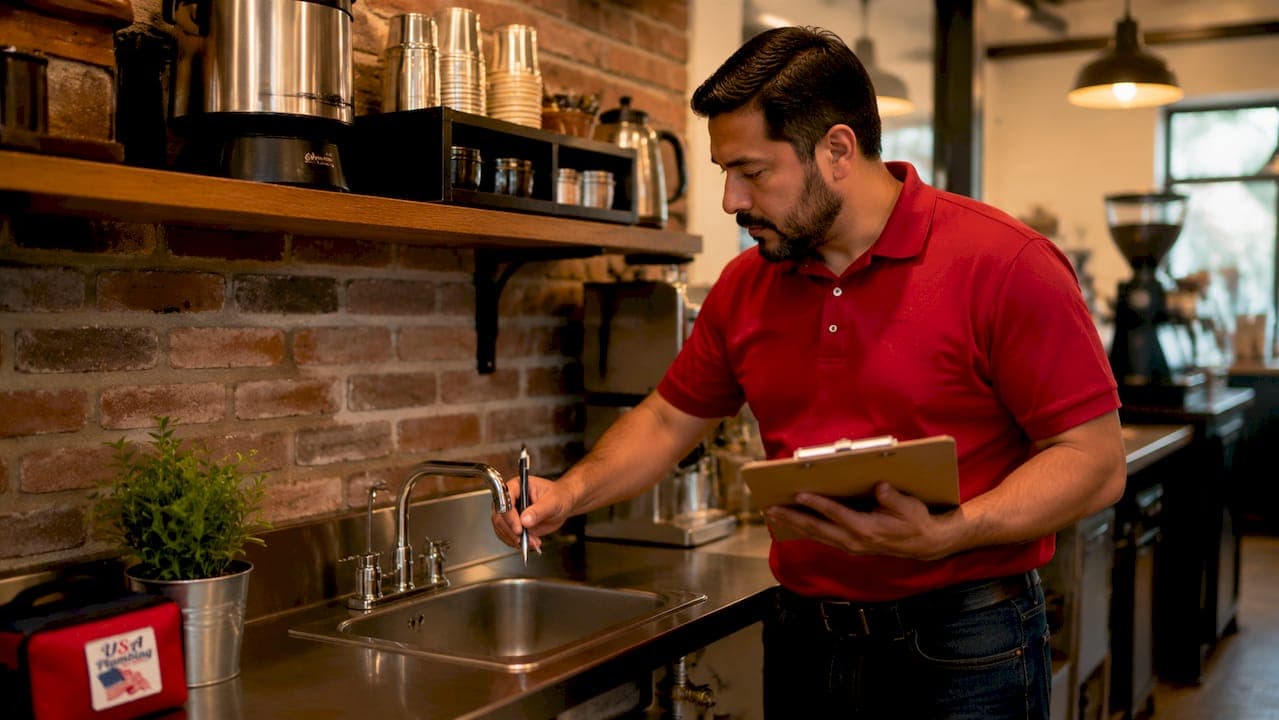
Passing a plumbing health inspection for your business means your facility meets the sanitation and operational safety standards required by the Arizona Department of Health Services and local health authorities. This is not the same as passing a standard plumbing code inspection. Health inspections focus on sanitation, water safety, and functional fixtures that protect employees and customers. Failing one can shut your doors immediately. This guide covers Arizona-specific plumbing health regulation requirements, the three mandatory inspection stages, the most common failure points, and exactly how to prepare before the inspector walks through your door.
What are the plumbing health inspection requirements for Arizona businesses?
Arizona health departments enforce specific plumbing standards as conditions of your operating license. These go beyond building code compliance and target sanitation directly.
The core requirements inspectors check include:
- Functional handwashing stations: Arizona health departments require hand sinks with verified water temperature and adequate flow as a licensing condition. Missing or non-functional hand sinks trigger immediate shutdown.
- Grease interceptors: Restaurants and food service businesses must have correctly sized grease traps based on menu capacity, with documented maintenance logs. Grease trap compliance failure causes an automatic failed health inspection regardless of other plumbing code compliance.
- Restrooms and floor drains: Adequate restroom facilities and properly placed floor drains are required. Drain placement affects sanitation and drainage efficiency during cleaning.
- Backflow prevention: Backflow prevention devices must be tested annually and documented to pass commercial plumbing health inspections. This protects the public water supply from contamination.
- Water supply safety: Water temperature must meet health code standards. Hot water at handwashing stations must reach the required minimum temperature consistently.
The specific requirements vary by business type. A restaurant in Bullhead City faces stricter grease interceptor and hand sink standards than a retail office in Fort Mohave. Know your business category before your inspection date.
Pro Tip: Request a pre-inspection checklist directly from your local Mohave County health department. Each jurisdiction may add requirements on top of state minimums, and knowing those specifics in advance saves you from surprises on inspection day.

How do the three stages of plumbing inspections work?
IRC Section P2503 mandates three inspection stages: underground rough-in, above-ground rough-in, and final inspection. Each stage requires approval before work can proceed to the next. This applies to new construction and major renovations affecting your commercial plumbing system.
- Underground rough-in inspection: Inspectors verify all underground pipes before any concrete or flooring covers them. Water supply systems must be pressure tested at 50 psi for 15 minutes or 1.5 times the working pressure if above 80 psi. This stage catches pipe slope errors, improper materials, and drain placement problems before they become buried problems.
- Above-ground rough-in inspection: Inspectors check pipe slope, venting, pipe sizing, and pressure testing for supply lines. This is where vent stack placement and hanger spacing get verified. Errors here affect drainage performance and can cause sewage gas issues inside your building.
- Final inspection: Inspectors confirm all fixtures are installed, functional, and code-compliant. This includes verifying water temperature at sinks, checking that toilets flush correctly, and confirming all drains flow without backup.
The table below shows what each stage covers and what a failure means for your timeline:
| Inspection stage | What inspectors check | Consequence of failure |
|---|---|---|
| Underground rough-in | Pipe slope, materials, drain placement, pressure test | Work halts; pipes cannot be covered |
| Above-ground rough-in | Venting, pipe sizing, hanger spacing, pressure test | Walls cannot be closed; rework required |
| Final inspection | Fixture function, water temperature, drainage, backflow | Certificate of occupancy withheld |
Skipping a required stage and covering pipes prematurely leads to costly stop-work orders and expensive deconstruction for belated inspections. That is not a risk worth taking on a commercial property.
Pro Tip: Take dated photographs at every stage before covering any work. Virtual inspection portals require high-quality photographic evidence including vent pipe sizing and hanger spacing. Good photos protect you if a virtual inspection reviewer questions your work.
What are common reasons businesses fail plumbing health inspections?
Most Arizona businesses that fail a health inspection for plumbing do so for predictable, preventable reasons. Understanding these failure points is the fastest way to avoid them.
- Confusing code compliance with health inspection standards: Business owners often confuse plumbing code inspections with health inspections, causing delays and unexpected failures. A building that passed its construction plumbing inspection can still fail a health inspection for missing hand sinks or improper water temperature.
- Non-functional hand sinks: A hand sink that lacks hot water, has low flow, or is blocked by storage fails immediately. Health inspectors treat hand sink access as non-negotiable.
- Grease interceptor problems: Incorrect sizing or missing maintenance logs are two of the most common restaurant inspection failures in Arizona. Inspectors want to see a documented service history, not just a working unit.
- Missing backflow prevention documentation: Having a backflow preventer installed is not enough. You need annual test records on file. Inspectors check documentation, not just hardware.
- Hidden leaks and sewage backups: A plumbing inspection is a point-in-time condition assessment; visual checks without pressure testing or camera inspections can miss hidden issues that cause failures later. A sewage backup discovered during inspection creates an immediate violation.
The businesses that pass on the first visit are almost always the ones that treated the health inspection like a business audit, not a formality. They had their documentation ready, their fixtures tested, and a licensed plumber verify the system before the inspector arrived.
What steps should Arizona business owners take to prepare for a plumbing inspection?
Preparation is the single biggest factor in passing your commercial plumbing checks on the first attempt. Follow these steps before your scheduled inspection date.
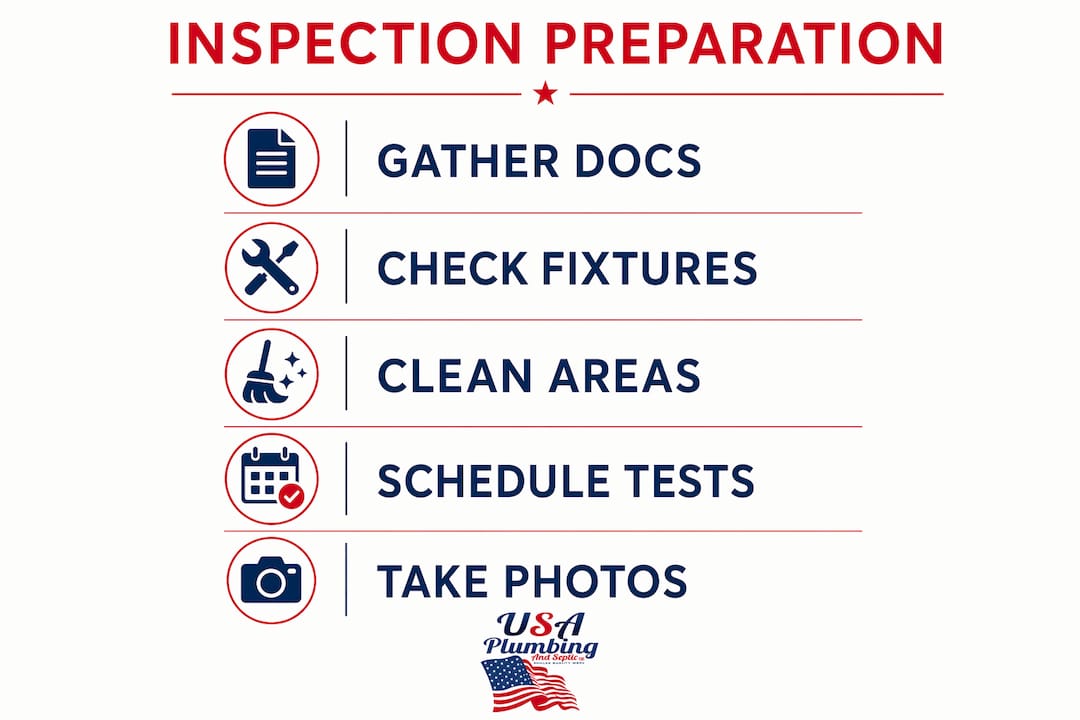
- Schedule a professional pre-inspection. Hire a licensed commercial plumber to walk through your facility and identify any issues before the official inspector arrives. Professional pre-inspection with documented as-built drawings and photographs significantly reduces the risk of inspection failures and speeds approvals.
- Gather your maintenance documentation. Collect grease trap service logs, backflow prevention test certificates, and any repair records. Inspectors in Arizona expect to see a paper trail, not just a functional system.
- Test every fixture for temperature and flow. Run hot water at every hand sink and verify it reaches the required temperature. Check all toilets, floor drains, and mop sinks for proper function and drainage speed.
- Photograph all plumbing work before it is concealed. If you have done any recent renovations, confirm you have dated photos of pipe slopes, vent locations, and hanger spacing. This matters for both in-person and virtual inspections.
- Coordinate with a licensed plumber for code compliance review. Review your Mohave County plumbing essentials and confirm your system meets current Arizona health code standards, not just the standards from when your building was originally constructed.
- Prepare for emergency repairs. Identify your licensed emergency plumber in advance. If the inspector finds a violation, you may need same-day repairs to avoid a shutdown.
The table below compares businesses that prepare versus those that do not:
| Preparation factor | Prepared business | Unprepared business |
|---|---|---|
| Documentation | Grease logs, backflow certs on file | Missing or outdated records |
| Fixture testing | Verified before inspection | Discovered failures during inspection |
| Professional review | Pre-inspection completed | First review by health inspector |
| Emergency plan | Licensed plumber on call | Scrambling after violation notice |
Pro Tip: Review the business cleaning compliance guide for general best practices on maintaining documentation and sanitation records. The principles apply across states even if specific codes differ.
What should you do if you fail a plumbing health inspection?
Failing a health inspection for plumbing is serious, but it is recoverable if you act fast and follow the right steps.
- Read the violation notice carefully. Every failed inspection comes with a written list of violations. Prioritize any item flagged as an immediate threat to your operating license, such as a non-functional hand sink or sewage backup.
- Contact a licensed emergency plumber immediately. Emergency plumbing failures such as sewage backups, loss of hot water, or non-functional hand sinks directly threaten business licenses and require prioritized emergency services. Do not wait for a scheduled appointment.
- Document every repair. Photograph the problem before repair and after. Get a written invoice from your plumber that describes the work performed. This documentation goes to the health department with your re-inspection request.
- Consider a sewer scope inspection. Sewer scope inspections, usually costing $150 to $350, are specialized checks not included in standard inspections but important for identifying internal pipe damage. If your inspector flagged drainage issues, a camera inspection finds the root cause before your re-inspection.
- Schedule your re-inspection promptly. Contact your local health department as soon as repairs are complete. Delays extend the period your business operates under a violation notice, which creates additional risk.
- Consider a commercial plumber service contract. Regular professional maintenance contracts including scheduled grease trap servicing and drain cleaning can prevent many inspection failures and costly emergency repairs. A contract keeps your system maintained year-round, not just before inspection season.
Key Takeaways
Passing a plumbing health inspection requires documented maintenance, functional fixtures, and a clear understanding of the difference between health code standards and construction plumbing codes.
| Point | Details |
|---|---|
| Health vs. code inspections | Health inspections focus on sanitation and fixture function, not just construction standards. |
| Three mandatory stages | Underground rough-in, above-ground rough-in, and final inspection each require approval before proceeding. |
| Documentation is required | Grease trap logs, backflow test certificates, and repair records must be on file before inspection day. |
| Pre-inspection preparation | A professional plumbing review before the official inspection significantly reduces failure risk. |
| Emergency response plan | Know your licensed emergency plumber in advance so violations can be corrected the same day. |
What I have learned about plumbing health inspections in Arizona
After working with commercial properties across Bullhead City, Fort Mohave, and Mohave Valley, the pattern is clear. The businesses that struggle most with health inspections are the ones that treat plumbing as a set-it-and-forget-it system. They assume that because nothing is visibly broken, everything is compliant. That assumption is expensive.
The distinction between a plumbing code inspection and a health inspection trips up even experienced property managers. A building can be fully code-compliant from its construction permit and still fail a health inspection because a hand sink was repurposed for storage or a grease trap was never serviced after the original owner left. Health inspectors are not checking your permit history. They are checking what is functioning right now.
The businesses I have seen pass on the first attempt share one habit: they treat the inspection like a scheduled audit and prepare accordingly. They schedule a professional walkthrough, pull their maintenance records, and test every fixture a week before the inspector arrives. That preparation turns a stressful event into a straightforward process.
Proactive documentation and regular maintenance are not just good practices. They are the difference between a passed inspection and a shutdown notice. If your business operates in Arizona and you have not reviewed your plumbing system recently, now is the right time to start.
— JOHN
How Usaplumbingseptic helps Arizona businesses stay inspection-ready
Running a business in Bullhead City, Fort Mohave, or Mohave Valley means staying ahead of health inspection requirements, not reacting to them after a violation notice arrives.
Usaplumbingseptic provides commercial plumbing services built for business owners who cannot afford downtime. Our licensed plumbers handle pre-inspection assessments, grease trap servicing, backflow prevention testing, and emergency repairs, all with the documentation your health department requires. We are available 24/7 because plumbing failures do not follow business hours. Whether you need a full commercial plumbing inspection or emergency support before a re-inspection deadline, we are ready to help. Contact Usaplumbingseptic today and protect your operating license before the inspector does it for you.
FAQ
What is the difference between a plumbing code inspection and a health inspection?
A plumbing code inspection verifies construction standards during building or renovation. A health inspection evaluates sanitation, fixture function, and water safety as ongoing operational requirements. Passing one does not guarantee passing the other.
How often do Arizona businesses need backflow prevention testing?
Backflow prevention devices must be tested annually and the results documented. Health inspectors check for current test certificates, not just the presence of the device.
What happens if a hand sink fails during a health inspection?
A non-functional hand sink is an immediate violation that can result in business shutdown. Arizona health departments treat handwashing facilities as a non-negotiable licensing condition.
How much does a sewer scope inspection cost for a commercial property?
Sewer scope inspections typically cost $150 to $350 and use camera technology to detect internal pipe damage and root intrusions not visible during a standard plumbing inspection.
Can I pass a plumbing health inspection without a licensed plumber?
You can request an inspection without hiring a plumber, but a professional pre-inspection review significantly reduces your risk of failure. Licensed plumbers identify code and sanitation issues before the health inspector does, saving you time and potential shutdown costs.