Plumbing code compliance is the legal requirement to meet established standards governing the design, installation, and maintenance of plumbing systems. The industry term for this practice is "code compliance," and it applies to every pipe, fixture, and fitting in your home or development project. In Arizona, the governing frameworks include the Uniform Plumbing Code (UPC), the International Plumbing Code (IPC), and local amendments adopted by jurisdictions like Mohave County and Bullhead City. Plumbing codes define minimum standards to prevent health hazards, water contamination, and property damage. Every permit you pull and every inspection you pass is a direct record of that compliance.
What is plumbing code compliance and why does it apply to you?
Plumbing code compliance means your plumbing work meets the minimum legal standards set by your local authority having jurisdiction (AHJ). The AHJ is the city, county, or municipal body that reviews permits, schedules inspections, and enforces the adopted code in your area. In Arizona, this could be the Mohave County Building Department, the City of Bullhead City, or the Town of Fort Mohave, depending on your property location.
The UPC and IPC serve as the national baseline. Local jurisdictions adopt and modify these codes with amendments tailored to regional conditions, climate, and infrastructure. Arizona's desert climate, for example, influences requirements around pipe insulation, water pressure management, and backflow prevention due to the state's reliance on municipal water systems and irrigation infrastructure.
Compliance is not optional. Property owners who skip permits or inspections may face fines, project delays, or termination of water and sewer services. Violations can escalate into civil citations that grow more expensive with each day they go unresolved.
What are the key inspection stages in plumbing compliance?
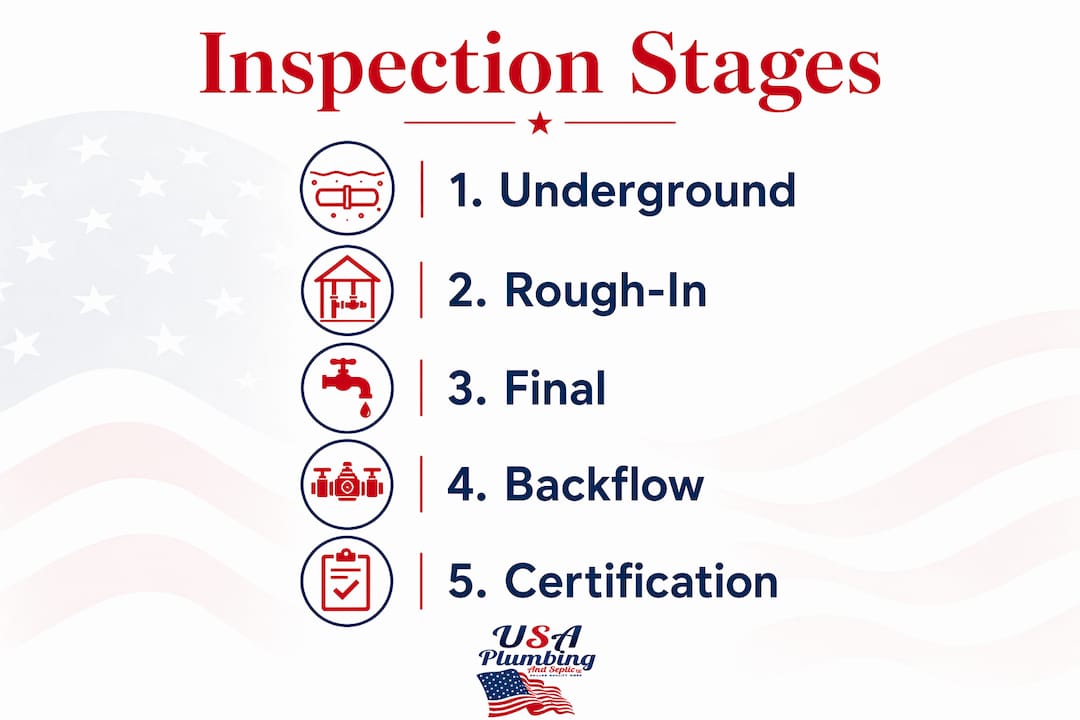
The plumbing inspection process involves three mandatory stages: underground rough-in, above-ground rough-in, and final inspection. Each stage requires you to notify your AHJ and receive approval before moving to the next phase of construction. Skipping a stage is not a shortcut. It is a compliance failure that can stop your project entirely.
Here is what inspectors review at each stage:
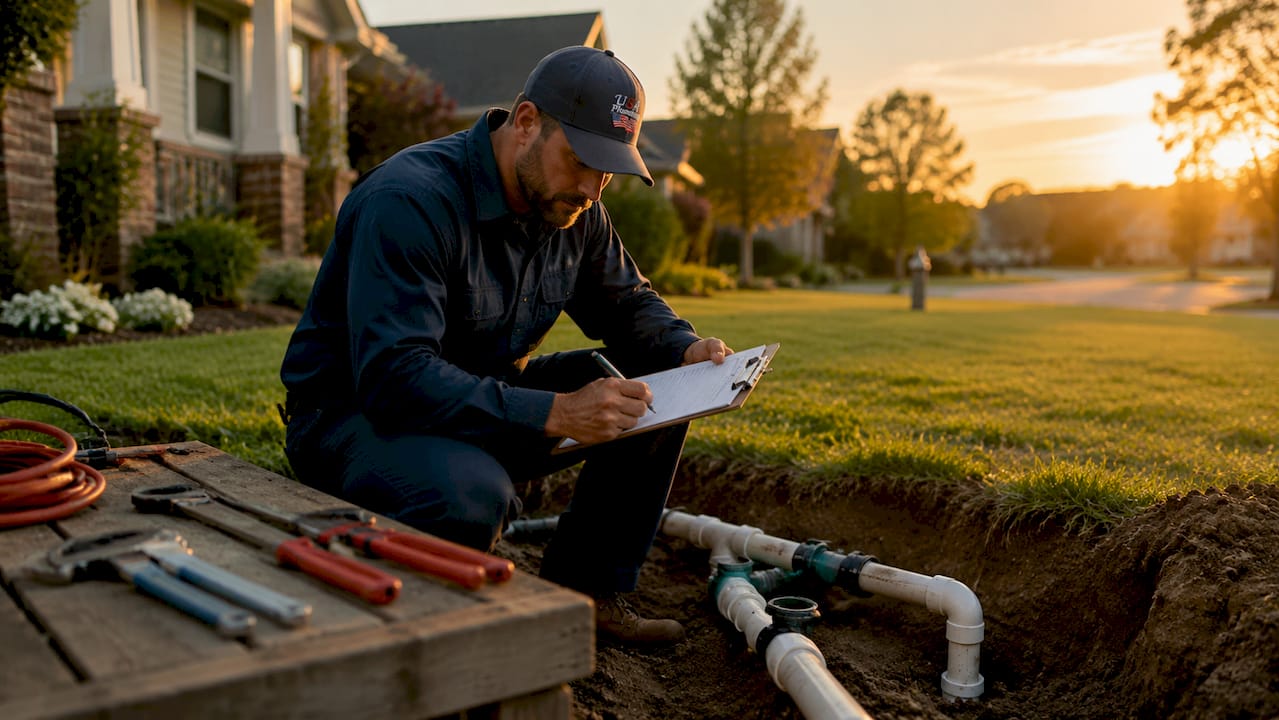
- Underground rough-in: Inspectors check pipe slope, material type, joint connections, and depth before the trench is backfilled. This is your only opportunity to correct buried work without excavation.
- Above-ground rough-in: Inspectors verify pipe sizing, hanger spacing, vent configurations, and pressure testing results before walls are closed. Inspectors check pipe slopes, vent types, and pressure testing protocols at this stage that cannot be verified after drywall goes up.
- Final inspection: Inspectors confirm all fixtures are properly installed, supply lines are connected, and the system performs under normal operating conditions.
Closing walls before rough-in inspections is one of the most expensive mistakes a homeowner or developer can make. Inspectors cannot verify concealed work, which forces you to remove drywall or tile at your own cost.
Pro Tip: Schedule your rough-in inspection before ordering drywall delivery. That one scheduling step prevents the most common and costly inspection failure in residential renovations.
What are common plumbing code violations in arizona projects?
Common plumbing code violations include unauthorized work without permits, improper venting that causes sewer gas odors, missing backflow preventers that risk water contamination, and unsafe water heater installations. Many older homes in Arizona's Mohave Valley and Fort Mohave areas carry outdated plumbing configurations, like drum traps, that do not meet current UPC or IPC standards.
The most frequent violations Usaplumbingseptic encounters in residential and development projects include:
- Unpermitted work: Any plumbing installation or repair completed without a permit is a violation. This blocks property sales and triggers retroactive permit requirements.
- Improper venting: Vent pipes that are undersized, incorrectly routed, or missing entirely cause negative pressure, which pulls water out of traps and allows sewer gas into living spaces.
- Missing backflow preventers: Required on irrigation systems, hose bibs, and commercial connections to prevent contaminated water from flowing back into the supply line.
- Incorrect water heater installation: Violations include missing seismic straps, improper T&P relief valve discharge piping, and inadequate clearances.
- Pipe material mismatches: Mixing incompatible pipe materials without transition fittings leads to galvanic corrosion that causes failures within years. This is an immediate cause for inspection failure.
A critical point most homeowners miss: perfectly functioning plumbing is not automatically compliant. Hidden factors like missing ejector pumps or improper venting can block property sales or trigger retroactive permits even when the system works fine day to day.
Pro Tip: Before listing your Arizona property for sale, have a licensed plumber audit your plumbing system for permit gaps and code violations. Discovering these issues before a buyer's inspector does saves you negotiating leverage and closing delays.
How do plumbing codes differ across arizona jurisdictions?
The UPC, IPC, and National Standard Plumbing Code (NSPC) set the national baseline, but no Arizona jurisdiction applies them without modification. Local amendments reflect regional priorities, and you should never assume national codes apply without verifying with your local building department first.
The table below shows how code authority varies across common Arizona jurisdictions served by Usaplumbingseptic:
| Jurisdiction | Adopted Base Code | Key Local Considerations |
|---|---|---|
| Mohave County | UPC with Arizona amendments | Septic system setback rules, water pressure standards |
| Bullhead City | UPC with City amendments | Backflow prevention on irrigation, permit fee schedules |
| Fort Mohave | Mohave County AHJ oversight | Contractor licensing verification required at permit stage |
| Mohave Valley | Mohave County AHJ oversight | Rural water system connections, well and septic coordination |
Plumbing codes are revised every three years to integrate new materials and sustainability standards. That cycle means a code that applied to your last renovation may not apply to your current project. Always confirm the active code edition with your AHJ before starting work.
For a practical overview of local requirements, the Mohave County plumbing essentials guide covers permit expectations and common local requirements in detail.
Why does plumbing compliance matter beyond legal requirements?
Plumbing code compliance protects three things that matter most to Arizona homeowners and developers: public health, property value, and project timelines. These are not abstract benefits. They show up in real dollars and real risks.
"Compliance is not a bureaucratic hurdle. It is the documented proof that your plumbing system will not contaminate your water supply, flood your structure, or harm the people inside it." — Usaplumbingseptic
Non-compliant plumbing creates direct health risks. Improper backflow prevention allows irrigation water, chemicals, or sewage to enter your drinking supply. Missing vent pipes allow hydrogen sulfide and methane to accumulate in enclosed spaces. These are not theoretical risks in Arizona's high-temperature environment, where pressure fluctuations in municipal systems are more frequent.
Maintaining detailed inspection and repair records helps demonstrate compliance and resolves violations faster. That documentation becomes a legal asset when you sell, refinance, or face an insurance claim. Licensed professionals fix issues faster and at lower cost than homeowners attempting retroactive corrections after the fact.
Compliance also protects your renovation timeline. A stop-work order issued mid-project can freeze your schedule for weeks while you wait for re-inspection approvals. The cost of that delay, in contractor standby time and carrying costs on a development loan, far exceeds the cost of doing it right the first time.
For more on how undetected issues compound over time, the impact of minor water leaks in Bullhead City properties is a useful reference for local homeowners.
How can arizona homeowners ensure plumbing code compliance?
Compliance does not happen by accident. It requires deliberate steps at every phase of your project. Follow this sequence to stay on track:
- Hire a licensed Arizona plumber. Verify the contractor's license with the Arizona Registrar of Contractors before signing any agreement. A licensed plumber knows the current local amendments and pulls permits as part of the job. For guidance on selecting the right professional, review how to choose a plumber service contract before committing.
- Pull permits before work begins. No permit means no legal protection. If a contractor offers to skip the permit to save money, that is a red flag, not a benefit.
- Schedule inspections at each phase. Notify your AHJ before backfilling trenches and before closing walls. Do not allow work to proceed past an inspection stage without written approval.
- Keep all documentation. Store permit approvals, inspection sign-off sheets, and contractor invoices in a dedicated file for the property. This record is your proof of compliance for future sales, insurance claims, or disputes.
- Do not cover work before inspection. This single rule prevents the most expensive compliance failures in residential renovation. If your contractor pressures you to skip ahead, stop the project and call your AHJ.
- Verify material compatibility. Confirm that all pipe materials, fittings, and fixtures meet the current code edition for your jurisdiction. Ask your plumber to document material specifications on the permit application.
Understanding both the literal code language and the intent behind plumbing codes empowers professionals to make defensible decisions and anticipate inspection concerns. As a homeowner or developer, you do not need to memorize the UPC. You do need to ask the right questions and verify that your contractor does.
Key takeaways
Plumbing code compliance requires permits, phased inspections, and licensed workmanship at every stage of installation or renovation to protect health, property, and legal standing.
| Point | Details |
|---|---|
| Three mandatory inspection stages | Underground rough-in, above-ground rough-in, and final inspection each require AHJ approval before proceeding. |
| Local amendments override national codes | Arizona jurisdictions like Mohave County and Bullhead City modify the UPC with local requirements you must verify before starting work. |
| Common violations block sales and trigger fines | Unpermitted work, improper venting, and missing backflow preventers are the most frequent causes of inspection failure and civil citations. |
| Documentation is a legal asset | Permit approvals and inspection records resolve violations faster and protect your property value during sales and refinancing. |
| Licensed professionals reduce total cost | Retroactive corrections by homeowners cost more than hiring a licensed plumber to do compliant work from the start. |
What i've learned about compliance after years in arizona plumbing
The most common misunderstanding I see from homeowners is the belief that if the plumbing works, it must be compliant. That assumption costs people real money. A system can function perfectly for years while still carrying violations that surface the moment a buyer's inspector or a building department audit gets involved.
The second mistake is treating inspections as a formality. Inspectors are not there to slow you down. They are your last line of defense against work that looks fine but will fail in five years. I have seen beautiful renovations in Bullhead City and Fort Mohave that required full wall demolition because a contractor skipped the rough-in inspection. The homeowner paid twice for the same work.
My honest advice: plan your inspection schedule before you plan your finish schedule. Know your AHJ's lead times for inspection appointments in your area. In Mohave County, that can be several business days. Build that into your project timeline from day one. Compliance is not a cost. It is the investment that protects every other dollar you put into your property.
— JOHN
Usaplumbingseptic: your trusted partner for code-compliant plumbing in arizona
Staying compliant with Arizona plumbing codes takes more than good intentions. It takes a licensed team that knows the local amendments, pulls the right permits, and shows up for every required inspection.
Usaplumbingseptic serves homeowners and developers across Bullhead City, Fort Mohave, Mohave Valley, and Laughlin with professional plumbing services built around code compliance from day one. Our experienced plumbers handle everything from new installations and rough-in inspections to water heater replacements and sewer system repairs that meet current UPC standards. We are available 24/7 because plumbing problems do not wait for business hours. Call us today and get it done right the first time.
FAQ
What is plumbing code compliance in simple terms?
Plumbing code compliance means your plumbing work meets the legal standards set by your local authority having jurisdiction. These standards cover pipe materials, fixture installation, venting, and backflow prevention to protect health and safety.
What are the most common plumbing code violations in arizona homes?
The most common violations include unpermitted work, improper venting, missing backflow preventers, and incorrect water heater installations. Mixing incompatible pipe materials without transition fittings is also a frequent cause of inspection failure.
Do i need a permit for every plumbing repair in arizona?
Minor repairs like replacing a faucet or fixing a leaking trap typically do not require a permit. Any new installation, pipe rerouting, or fixture addition generally requires a permit and inspection from your local AHJ.
Can non-compliant plumbing affect my property sale in arizona?
Yes. Unpermitted plumbing work and open code violations can block a property sale, require retroactive permits, or reduce your negotiating position significantly. A pre-sale plumbing audit by a licensed professional helps identify and resolve these issues early. You can also review mold and inspection prep considerations that often surface alongside plumbing compliance issues during property transactions.
How often do arizona plumbing codes change?
Plumbing codes are revised on a three-year cycle at the national level. Local Arizona jurisdictions then adopt updates on their own schedule, which means the active code edition in your area may differ from the most recently published national standard. Always confirm the current edition with your local building department before starting a project.
Recommended
- USA Plumbing and Septic LLC - Plumbers, Plumber, Plumbing, Emergency Plumber, Commercial Plumber, Local Plumber, Plumbing Company, Septic
- USA Plumbing and Septic LLC - Plumbers, Plumber, Plumbing, Emergency Plumber, Commercial Plumber, Local Plumber, Plumbing Company, Septic
- USA Plumbing and Septic LLC - Plumbers, Plumber, Plumbing, Emergency Plumber, Commercial Plumber, Local Plumber, Plumbing Company, Septic
- USA Plumbing and Septic LLC - Plumbers, Plumber, Plumbing, Emergency Plumber, Commercial Plumber, Local Plumber, Plumbing Company, Septic