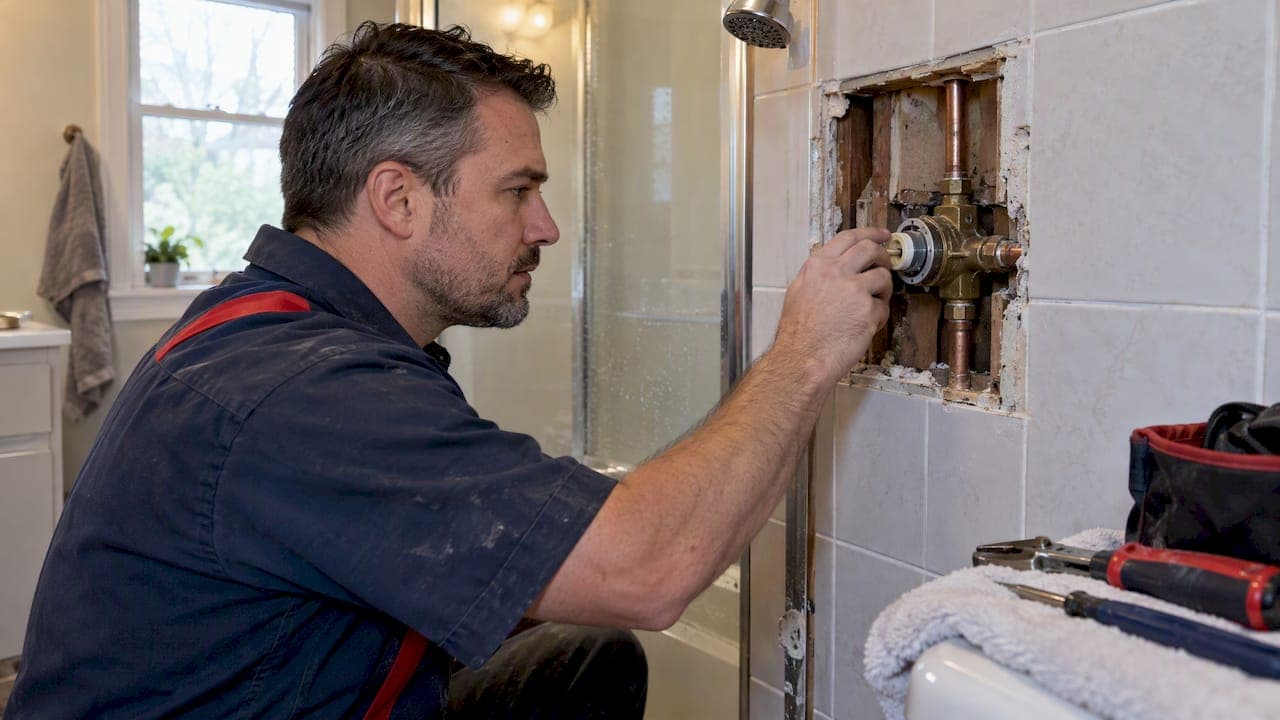
A cartridge swap typically runs in the low hundreds, often $100 to $400, while a full valve replacement commonly lands between $150 and $550 or more once wall or tile repair enters the picture, according to national cost benchmarking. The single biggest wildcard is access: hidden damage behind the wall, a seized part, or old tile that has to come out can push any quote higher. Expect a call-out or minimum service fee on top of parts and labor, no matter how small the job looks.
TL;DR:
- Cartridges generally cost between $10 and $80, but specialty or thermostatic models can be at the higher end of this range.
- Labor for a simple cartridge swap usually falls between $90 and $270, with additional call-out fees adding $50 to $200 depending on the market.
- Full valve replacements typically cost $150 to $550 or more, especially when wall or tile repair is necessary due to older or concealed plumbing conditions.
- Access issues, valve corrosion, parts availability, and retrofit complexity significantly influence the final costs beyond initial quotes.
- DIY replacement is feasible only for straightforward jobs with clear access, while complex or code-regulated valves require a licensed plumber.
Table of Contents
- Line-item cost breakdown and example quote builds
- Site conditions and valve-specific factors that raise or lower cost
- When DIY makes sense and when to hire a licensed plumber
- Typical job durations and how scheduling affects cost
- Onsite checks and homeowner prep from a local plumbing service
- Publisher perspective on transparent pricing and authorization for added work
- How to book a diagnostic visit with a local plumbing service
- Sources
- FAQ
Line-item cost breakdown and example quote builds
Most shower valve invoices come down to three things: the part, the labor, and the fee a plumber charges just to show up. A replacement cartridge usually costs $10 to $80 depending on the brand and style, and that number can climb for specialty or discontinued parts. Labor for a straightforward swap runs $90 to $270, and call-out or minimum service charges typically add another $50 to $200 depending on the market, per the same cartridge replacement cost data.
Run the numbers on a common scenario: a $100 call-out fee, a $60 cartridge, and $180 in labor adds up to a $340 invoice, a figure consistent with published national examples. A full valve swap costs more because the part itself is pricier and the labor stretches longer, especially when the old valve body has to be cut out of a wall.
- Cartridge: $10 to $80, with specialty or thermostatic cartridges at the top end.
- Labor: $90 to $270 for a standard cartridge job.
- Call-out or minimum fee: $50 to $200, charged even for quick repairs.
- Full valve replacement: commonly $150 to $550 or higher when wall or finish work is needed.
Homeowners comparing quotes should ask whether the call-out fee is credited toward labor or charged separately. Our broader plumbing repair cost guide breaks down similar fee structures across other common jobs.
Site conditions and valve-specific factors that raise or lower cost
A quote that looks reasonable on the phone can grow once a plumber actually opens the wall. The factors below are the usual reasons.
- Access: Tile or drywall removal, especially behind a one-piece surround, adds demolition and patch work most phone quotes do not include.
- Valve condition: A seized cartridge or a corroded valve body often converts what should be a simple swap into a full replacement, which cost-guide case notes flag as the most common cause of invoice surprises.
- Parts availability: Older or discontinued valves sometimes force a full retrofit because the original manufacturer no longer makes a matching cartridge.
- Retrofit complexity: Multi-valve shower systems, trim upgrades, or older galvanized plumbing all add time and parts beyond the base job.
Pro Tip: Ask your plumber for a written list of likely add-ons before work starts, and confirm whether they need your sign-off before charging for anything beyond the original quote.
A reputable plumber will walk you through a pre-authorization policy so a $300 estimate does not become an $800 bill without warning. Our faucet replacement cost guide covers similar cost-driver patterns for related fixtures.
When DIY makes sense and when to hire a licensed plumber
A simple cartridge swap with clear access is one of the more approachable plumbing repairs. Tools and parts for a DIY job typically run $50 to $120, consistent with consumer cost guides, though buying the wrong cartridge or needing a specialty puller can erase that savings fast.

Thermostatic and pressure-balancing valves carry code requirements under the International Plumbing Code, which calls for ASSE or ASME compliant valves with a temperature limit stop set to 120 degrees Fahrenheit. Getting that wrong is a scald risk, not just an inconvenience.
Call a licensed plumber when you run into:
- A cartridge that will not budge or a valve body that looks corroded.
- Trim or valve parts hidden behind tile with no visible access panel.
- A multi-fixture shower system or unlabeled, older hardware.
- Any valve that needs to meet current temperature-limiting code.
Before hiring anyone, ask what the quote includes, whether wall repair is part of the price, and how they handle work that goes beyond the original estimate.
Typical job durations and how scheduling affects cost
A diagnostic visit usually takes 30 to 60 minutes. A straightforward cartridge swap with good access often wraps up in 30 to 90 minutes, while a full valve replacement can take anywhere from 2 to 8 or more hours depending on access and whether wall repair is involved.
- Minimum labor charges often cover the first hour or less, so a fast job still carries that base fee.
- Jobs that uncover hidden damage may need a return visit for parts or tile work.
- Ask upfront for a time estimate and whether wall or tile repair is included in that window, not billed separately later.
Onsite checks and homeowner prep from a local plumbing service
When a plumber arrives on a shower valve call, common first steps include confirming the shutoff location, running the water to reproduce the leak or temperature issue, pulling the trim to inspect the cartridge, and checking for a pressure differential that points to a failing valve rather than just a worn part, a sequence consistent with standard on-arrival diagnostics. A cartridge job can escalate to a full valve replacement often enough that homeowners should budget for the possibility, particularly on older hardware.
A little prep speeds things up and keeps the quote accurate:
- Know where your main shutoff valve is before the plumber arrives.
- Clear the area around the shower so there is room to work.
- Have photos of the trim or valve handle ready if you have had past leak issues.
- Mention any previous repairs or leaks at that fixture.
Publisher perspective on transparent pricing and authorization for added work
This guide was built around a standard of no work beyond the original estimate without your sign-off. Some local plumbing companies offer 24/7 emergency availability and price every job before beginning work, providing written scope for any unexpected issues discovered during diagnostics.
Any homeowner vetting a plumber should ask three things: is the call-out fee credited toward labor, what triggers a change order, and is the estimate itemized by part, labor, and any wall repair. Getting clear answers to these questions is important when choosing a plumbing company.
— JOHN
How to book a diagnostic visit with a local plumbing service
A diagnostic visit from a local plumber typically includes a full inspection of the valve and trim, a leak test, and a written estimate before any repair work begins. That estimate should clarify whether wall or tile repair is included to avoid surprises in the final cost.
If you are dealing with a dripping shower, a stuck handle, or water temperature that will not hold steady, book a diagnostic visit and get a written scope before any work starts. Homeowners in Needles can find local details on our Needles plumbing page, and those near Kingman can check our Kingman service page for the same straightforward estimate process. Confirm with any plumber, us included, that the quote you receive covers parts, labor, and wall repair before you sign off.
Sources
The EPA WaterSense leak-testing guidance outlines how to verify a fixture leak and why fixing one lowers water waste and utility bills. The IPC code summary details temperature-limiting requirements for shower valves. For a closer look at reducing household water waste, LeakSense covers practical steps homeowners can take.
- How much does shower cartridge replacement cost? — ThePricer
- 2021 IPC Significant Changes — Individual shower valves (ICC)
FAQ
How much will a plumber charge to change a shower valve?
Most cartridge swaps fall between $100 and $400, while a full valve replacement commonly runs $150 to $550 or more when wall repair is needed, based on national pricing data. The final number depends heavily on access and whether the valve body itself needs replacing.
Do I need a plumber to replace a shower valve?
Not always. A simple cartridge swap with easy access is a reasonable DIY project for a confident homeowner, but seized parts, hidden plumbing, or code-regulated thermostatic and pressure-balancing valves are better left to a licensed plumber because of the temperature-limiting requirements in the plumbing code.
How long should it take to replace a shower valve?
A cartridge swap with good access usually takes 30 to 90 minutes, while a full valve replacement can take 2 to 8 or more hours depending on wall access and whether tile repair is required. A diagnostic visit alone typically takes 30 to 60 minutes.
Can I replace a shower valve myself?
Yes, if the job is a straightforward cartridge swap with visible access and you have the right tools, which typically cost $50 to $120 in parts according to consumer cost guides. A seized cartridge, a corroded valve body, or any work behind tile is a strong signal to call a licensed plumber instead.