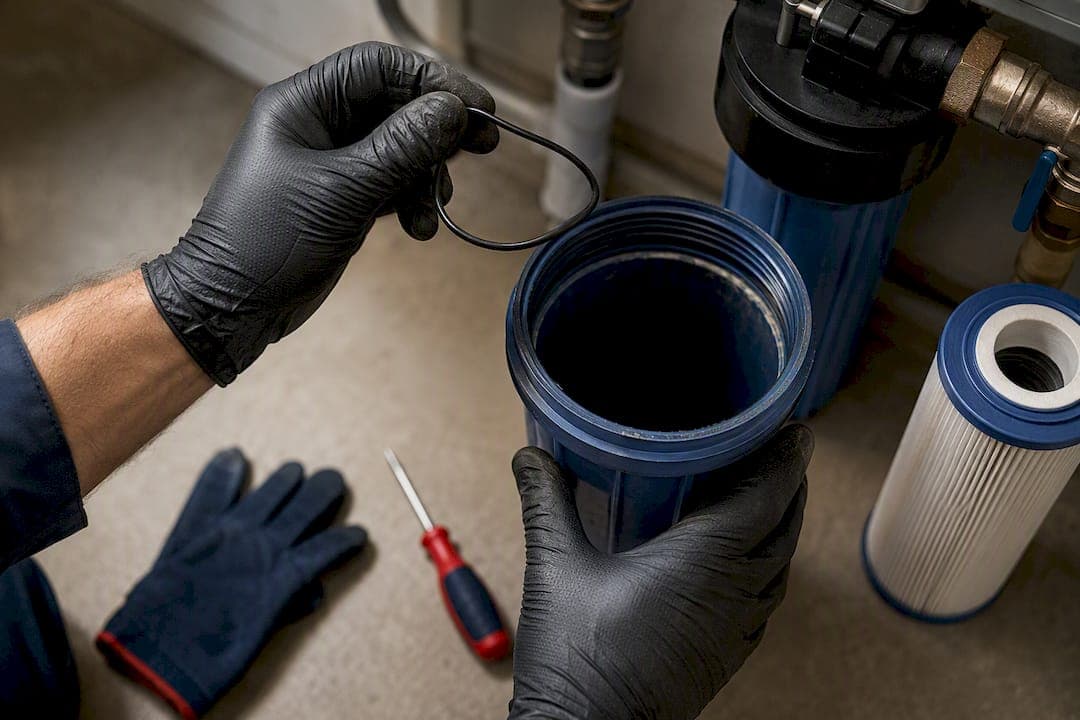
Timely cartridge replacement is the single biggest factor in keeping a water filtration system working. Watch pressure and check for leaks between changes. Sediment cartridges last 3 to 6 months, carbon stages run 9 to 12 months, RO membranes need attention roughly every 24 months, and UV lamps get replaced yearly. Today, check your main shutoff and pressure reading, or swap the sediment cartridge if it's been more than six months.
TL;DR:
- Quarterly replacement of sediment filters is recommended unless you use well water, which may require more frequent changes.
- Reverse osmosis membranes typically need replacement every 24 months, with better performance if you monitor the total dissolved solids.
- Always re-seat and lubricate the O-ring when changing a whole-house filter to prevent leaks, avoiding over-tightening the housing.
- Pressure drop is the most reliable early warning sign to replace filters, rather than relying solely on calendar intervals.
- DIY cartridge swaps are manageable in about 10 minutes with the right tools, but professional service is advisable for electrical issues, bacterial risks, or complex systems.
Table of Contents
- Building Your Water Filtration Maintenance Checklist
- Maintenance Differs by System Type
- How Do You Change a Whole-House Filter Cartridge?
- When Should You Replace Filters Instead of Waiting?
- Troubleshooting Common Filtration Problems
- What Tools Do You Need for Filter Maintenance?
- What Does Water Filtration Maintenance Cost Over Time?
- When Should You Call a Plumber Instead of DIY?
- A Plumber's Honest Take on Filter Upkeep
- Keep Your Filtration System Running With Usaplumbingseptic
- Sources
- FAQ
Building Your Water Filtration Maintenance Checklist
A written calendar beats memory every time. Setting monthly reminders and sticking to a quarterly cartridge rhythm keeps replacement timing tied to how your household actually uses water, not guesswork.
Monthly: Look at the housing for cloudiness or cracks. Run a quick taste and odor check at the tap. Scan connections for drips.
Quarterly: Swap the sediment filter. Inspect O-rings for flattening or cracking. Cycle any bypass or shutoff valves so they don't seize up.
Every 6 to 12 months: Replace carbon media. Check the UV lamp and sleeve if you have one. Swap RO pre-filters.
Annually: Sanitize housings, get a professional inspection, and review your notes. Adjust intervals based on what you actually saw.
- Monthly: visual check, taste/odor test, leak scan
- Quarterly: sediment change, O-ring check, valve exercise
- 6 to 12 months: carbon swap, UV lamp/sleeve check, RO pre-filter change
- Annually: sanitize, professional inspection, schedule review
Pro Tip: Keep a small notebook or phone note logging every cartridge change with the date and water condition. After a year, you'll know your household's real replacement rhythm instead of relying on the box label.
Maintenance Differs by System Type
Every filtration setup has its own quirks, and treating them all the same is how homeowners end up with a system that quietly underperforms for months before anyone notices.
Sediment filters need a visual check on the housing for a cloudy or brownish tint, which signals normal wear. The 3 to 6 month baseline works for most municipal supplies, but well water changes the math fast.
Carbon filters often shed a bit of fine black dust on the first flush after installation. That's normal and rinses clear within a few minutes. Stick to a 9 to 12 month replacement cycle, and flush the new cartridge for a minute before use to clear loose carbon fines.
Reverse osmosis systems carry more moving parts. Pre-filters need changing per the manufacturer's schedule, the storage tank needs its air pre-charge checked periodically, and the membrane itself typically lasts around 24 months depending on use. If you monitor total dissolved solids, a rising reading is your cue the membrane is losing efficiency.
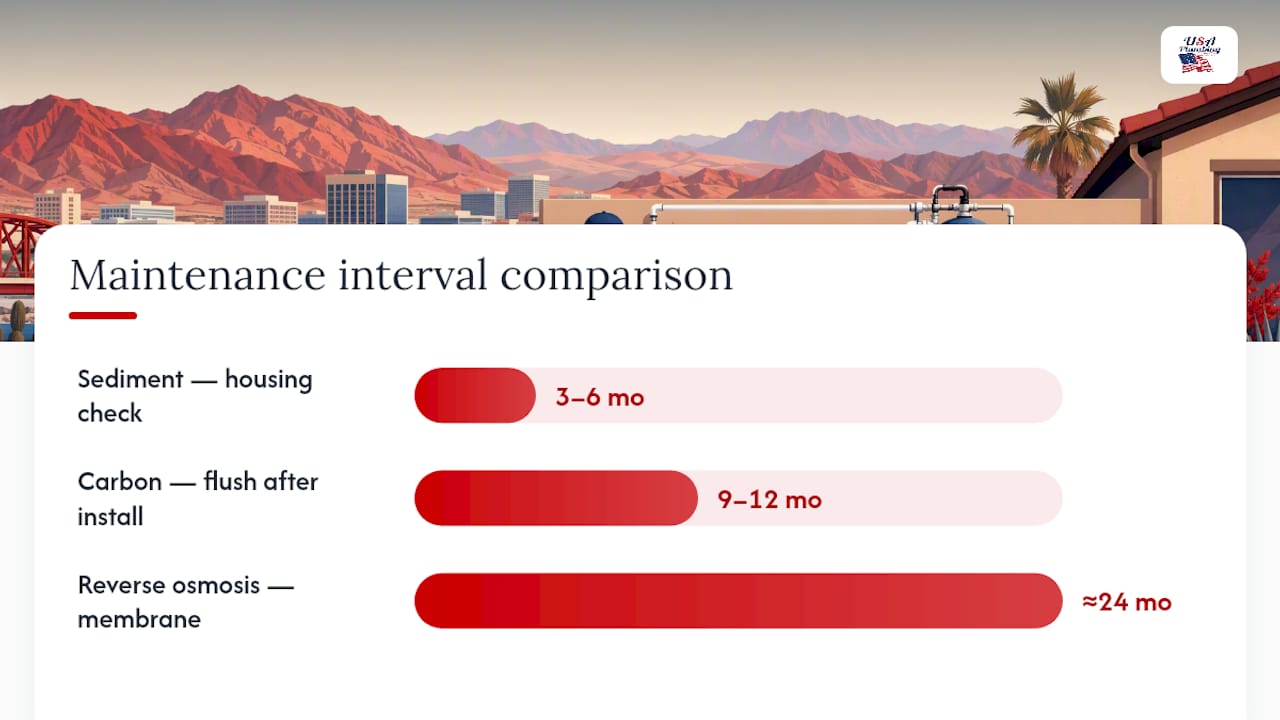
UV systems rely on a clean quartz sleeve to pass ultraviolet light through the water. Wipe the sleeve during each annual lamp change, and always cut power before opening the housing since UV components carry live electrical connections.
Whole-house media tanks and softeners run on backwash or regeneration cycles rather than cartridge swaps. Check the control valve's cycle timing once a year, and watch for channeling or reduced softening capacity that signals the resin bed needs re-bedding.
- Sediment: 3 to 6 months, shorter for well water
- Carbon: 9 to 12 months, flush after install
- RO: pre-filters per manufacturer, membrane near 24 months
- UV: lamp yearly, sleeve cleaned at each change
- Softeners/media tanks: check regeneration cycle annually
If your home runs on well water, budget for tighter intervals across the board. Well water carries more particulate and iron than treated municipal supplies, which shortens sediment filter life and puts more strain on softening media.
How Do You Change a Whole-House Filter Cartridge?
Changing a whole-house cartridge is a job most homeowners can handle in about 10 minutes once they've done it once, especially with a bypass valve installed. Here's the sequence that avoids the two most common mistakes: skipping the pressure release and over-tightening the housing.
- Locate your main shutoff or bypass valve and close it.
- Open a downstream faucet to relieve residual pressure in the line, or press the housing's pressure release button if it has one.
- Use a housing wrench to loosen the canister, then lift out the old cartridge into a bucket to catch drips.
- Inspect the housing for cracks and check the O-ring for flattening or nicks.
- Wipe the housing clean, then lightly grease the O-ring with food-grade silicone rather than skipping this step, since an unseated or dry O-ring is the most common cause of post-service leaks.
- Seat the new cartridge in the correct orientation and hand-thread the housing back on.
- Open the shutoff slowly and let the system re-pressurize gradually, then check every joint for drips before walking away.
Pro Tip: Never crank the housing wrench with full force to "make sure it's sealed." A properly greased O-ring seals fine with a firm hand-tighten, and over-torquing is what cracks housings.
If a leak shows up after startup, shut the water back off, back out the housing, and re-seat the O-ring. It's almost always the fix.
When Should You Replace Filters Instead of Waiting?
Manufacturer intervals are a starting point, not a deadline carved in stone. Sediment cartridges typically run 3 to 6 months and carbon stages run 9 to 12 months, but a household of six on well water will burn through cartridges faster than a couple on city water.
The most reliable early warning isn't the calendar. It's pressure. Installing a gauge before and after the filter housing lets you catch a gradual pressure drop as the filter clogs, regardless of what the box label says.
Watch for these signals that override any schedule:
- Noticeable pressure drop, especially with multiple fixtures running
- Off taste or odor returning between scheduled changes
- Visible sediment or discoloration at the tap
- A pressure differential gauge trending downward over several weeks
Households with heavy water use, larger families, or well water sources should default to the shorter end of every interval range.
Troubleshooting Common Filtration Problems
Most filtration complaints trace back to one of four issues, and you can rule out three of them before ever picking up the phone.
Low pressure throughout the house: Confirm the bypass valve is fully open, not partially closed. Check whether the pre-filter is clogged. Run water at two fixtures at once to see if pressure drops further, which points to a supply-side issue rather than the filter.
Leaks right after a service visit: Nine times out of ten this is an unseated O-ring or over-tightened housing threads. Hand-tighten only, and re-pressurize slowly.
Off-taste or odor: Flush the carbon stage for a minute. If the taste persists after a fresh cartridge, and you're on well water, get the water tested rather than guessing.
- Low pressure: check bypass, pre-filter, multi-fixture draw
- Post-service leaks: re-seat O-ring, hand-tighten only
- Bad taste: flush carbon, replace if it persists
- Black or gray fines: flush a new carbon cartridge; if it continues, the media itself may be failing
What Tools Do You Need for Filter Maintenance?
Half the frustration homeowners report with filter changes comes down to not having the right part on hand when the old cartridge comes out. Keep these on a shelf near your utility area, not in a garage drawer three rooms away.
- Housing wrench sized to your filter canister
- Bucket for catching drip-off
- Spare O-rings matched to your housing model
- Food-grade silicone grease
- Replacement cartridges for your next scheduled change
- Disposable gloves
A pressure gauge kit for before and after the housing is optional but worth the small cost. So is a spare housing if yours shows hairline cracks.
Pro Tip: Buy your next cartridge when you install the current one, not when you notice pressure dropping. Filter housings sit in odd sizes, and a mismatched part on a Sunday afternoon turns a 10-minute job into a delayed one.
Always shut off water and relieve pressure before opening any housing, cut power before touching UV components, and dispose of used cartridges in regular trash unless local guidance says otherwise.
What Does Water Filtration Maintenance Cost Over Time?
Budgeting a little each year beats an expensive surprise later. Sediment cartridges typically run in the low double digits per swap, carbon cartridges cost somewhat more, RO membranes are the priciest single component, and UV lamps fall in the middle range. Set aside an annual maintenance budget rather than treating each change as a one-off expense.
- Sediment cartridges: lowest cost, most frequent swap
- Carbon cartridges: moderate cost, changed less often
- RO membranes: highest single-part cost, changed roughly every 2 years
- UV lamps: moderate cost, changed yearly
DIY handles most cartridge swaps fine. Complexity, not cost, is what should push you toward a professional visit: multi-stage systems, well water disinfection, or any electrical work around a UV unit. Consistent maintenance extends system life and avoids the bigger repair bills that come from ignoring a slow pressure drop for a year.
When Should You Call a Plumber Instead of DIY?
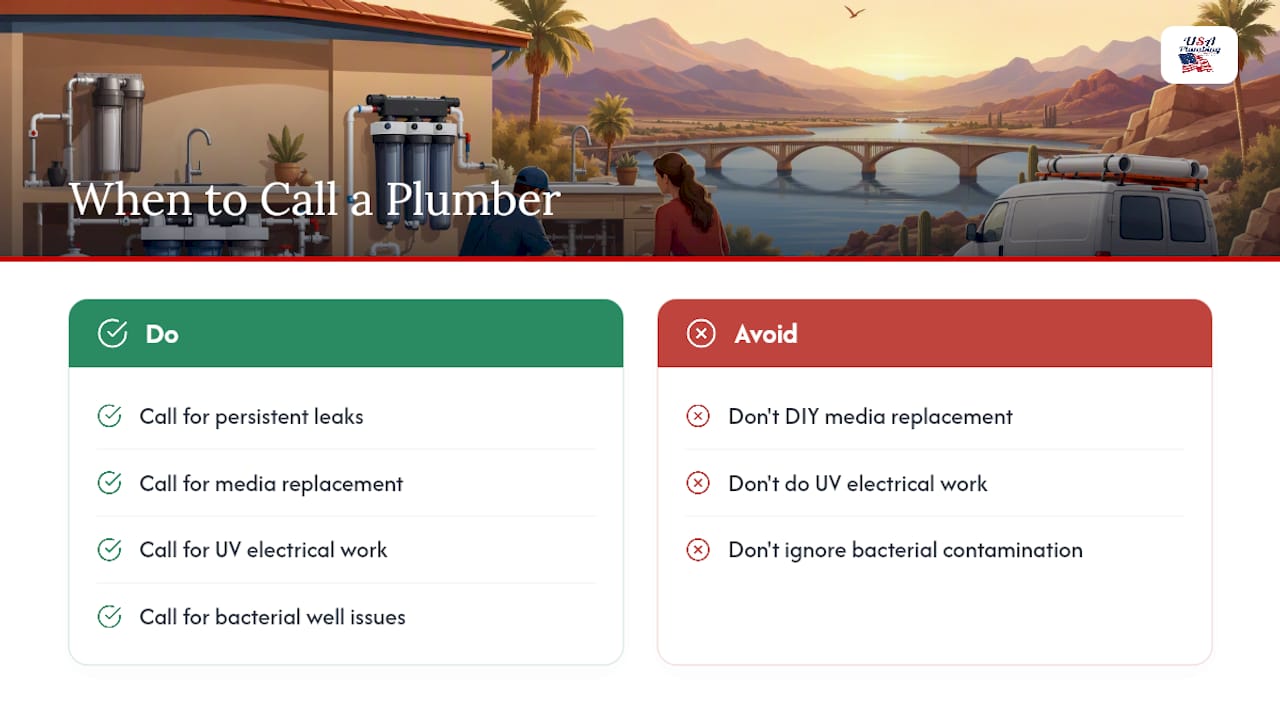
Certain situations call for a professional, full stop: a leak that won't resolve after re-seating the O-ring, media replacement in a multi-stage or whole-house system, any electrical work on a UV unit, or bacterial concerns in well water that need proper disinfection protocol.
A typical service visit covers pressure testing before and after each stage, housing sanitization, media and cartridge inspection, valve exercising to confirm the bypass still works, and written documentation of what was checked. Usaplumbingseptic provides 24/7 availability throughout Bullhead City, Fort Mohave, Mohave Valley, and Laughlin for exactly these calls, along with routine water softener and filtration maintenance visits that catch problems before they become repairs.
A Plumber's Honest Take on Filter Upkeep
Most filtration failures I hear about didn't start with bad equipment. They started with a homeowner who meant to change the cartridge "next month" for four months running, or who cranked a housing wrench down hard because tight felt safer than seated. The habits that actually work are boring: a calendar reminder, a spare O-ring and cartridge already on the shelf, and re-pressurizing slowly instead of cranking the shutoff wide open. None of that requires special skill. It just requires doing it before the pressure gauge tells you it's overdue.
— JOHN
Keep Your Filtration System Running With Usaplumbingseptic
Professional plumbing services offer an alternative to guessing your way through filter maintenance or letting a small pressure drop turn into a system failure. Technicians check pressure differential, inspect media condition, and document exactly what your system needs going forward.

Beyond routine filtration and softener upkeep, professional plumbers handle emergency repairs, water heater installation, drain and sewer line work, and well water equipment throughout Bullhead City, Fort Mohave, Mohave Valley, and Laughlin, available 24/7 when a filter problem turns into something bigger. If your system is overdue for a look or you want a maintenance plan built around your actual water use, visit our plumbing service page to book a visit, or check our water softening and filtration services for a maintenance plan tailored to your household.
Sources
- Water filter replacement schedule — AllFilters
- How to change whole house water filter — WaterFilterAdvisor
- How to maintain your reverse osmosis system — Culligan
- How often should you replace the carbon in your filter — Industrial Odor Control
FAQ
How Often Should I Replace My Water Filter Cartridges?
Sediment cartridges typically need replacement every 3 to 6 months, carbon stages every 9 to 12 months, RO membranes roughly every 24 months, and UV lamps once a year.
What's the Best Sign a Filter Needs Changing Right Now?
A falling pressure reading before and after the filter housing is a more reliable signal than any calendar date, since it reflects actual clogging rather than an estimate.
Can I Change a Whole-House Filter Myself?
Yes. Most cartridge swaps take about 10 minutes with a bypass valve, a housing wrench, and a properly greased O-ring, though multi-stage systems and UV electrical work are better left to a professional.
Does Well Water Need More Frequent Filter Maintenance?
Yes. Well water often carries more sediment and iron than municipal supplies, which shortens sediment filter life and calls for closer monitoring overall.
When Should I Call a Professional Instead of Doing It Myself?
Call a professional for persistent leaks after a cartridge change, multi-stage media replacement, UV electrical issues, or bacterial concerns in well water. Professional plumbing services offer filtration and softener maintenance service across Bullhead City and the surrounding Tri-State area.