
For most U.S. homeowners, a contractor-channel storage tank or a heat-pump hybrid delivers the best balance of reliability, efficiency, and long-term value. Here are the top picks by category, based on DOE energy guidance and field-tested installer experience:
- Storage tank (gas or electric): Bradford White AeroTherm RE2H50S6-1NCTT or Rheem ProTerra for contractor-grade durability and parts availability
- Tankless/on-demand: Rinnai REHP50 or Navien NWP500-50 for continuous hot water and long service life
- Heat pump/hybrid: GE Profile GeoSpring PH50S10BPY, A.O. Smith ProLine XE Voltex HPTS-50 200, or Stiebel Eltron Accelera 300E for the lowest operating costs
- Condensing gas: Navien NWP500-50 for high-efficiency condensing with built-in recirculation
- Solar: Sanden SanCO2 for specialized, ultra-high-efficiency installs where the system is available
Correct sizing and professional installation matter more to long-term reliability than any model's marketing claims. Usaplumbingseptic serves homeowners across Bullhead City, Fort Mohave, Mohave Valley, and Laughlin with licensed water heater installation and repair, including permit handling and rebate assistance.
Table of Contents
- What are the best water heaters for homes right now?
- What types of residential water heaters should you know about?
- How do you size a water heater for your household?
- Which specs and features actually matter when comparing models?
- What do water heater installation and purchase costs actually look like?
- How long do water heaters last, and what maintenance do they need?
- How were these recommendations selected?
- When should you hire a pro, and what should you ask?
- What's your decision checklist before buying a water heater?
- Key Takeaways
- What installers see that spec sheets never show
- Usaplumbingseptic installs and services water heaters across Bullhead City
- Useful sources
- FAQ
What are the best water heaters for homes right now?
The shortlist below reflects contractor-channel availability, installer field experience, plumber recommendations, and DOE/ENERGY STAR efficiency guidance. Contractor-channel models (Bradford White, State, Ruud Professional Series) are distributed through licensed plumbers only. Warranty coverage on those units typically requires professional installation. Retail-channel models (A.O. Smith, Rheem, GE Profile, LG, Bosch) are available at big-box stores but often carry shorter labor warranties unless installed by a certified contractor.
| Model / Brand | Best For | Type | Fuel | Efficiency (UEF) | Capacity / FHR or GPM | Upfront Cost (Product) | Install Cost (Typical) | Warranty / Lifespan |
|---|---|---|---|---|---|---|---|---|
| Usaplumbingseptic | Local AZ homeowners needing licensed install + permit handling | Service provider | All types | Varies by unit installed | Sized on-site | N/A (service) | Included in quote | Labor warranty; 24/7 availability |
| Bradford White AeroTherm RE2H50S6-1NCTT | Long-term homeowners wanting contractor-grade hybrid | Heat pump/hybrid | Electric | UEF in the 3.3–4.1 range | 50 gal / high FHR | $1,000–$2,000 | $400–$900 | 10-yr tank, 6-yr parts |
| Rheem ProTerra Hybrid | Broad model selection, local parts | Heat pump/hybrid | Electric | UEF in the 3.3–4.1 range | 50 gal | $1,000–$2,000 | $400–$900 | 10-yr tank |
| A.O. Smith ProLine XE Voltex HPTS-50 200 | Budget-conscious retail hybrid buyers | Heat pump/hybrid | Electric | UEF in the 3.3–4.1 range | 50 gal | $1,000–$1,400 | $400–$900 | 10-yr tank, 6-yr parts |
| Rinnai REHP50 | Continuous hot water, tankless longevity | Heat pump / tankless | Electric | UEF in the 3.3–4.1 range | 50 gal HP | $1,000–$2,000 | $500–$1,000 | 12-yr tank |
| Navien NWP500-50 | High-efficiency condensing + recirculation | Condensing tankless | Gas | UEF ~0.97 | Up to 11 GPM | $1,000–$1,400 | $800–$2,000 | 15-yr HX, 5-yr parts |
| Noritz | Condensing tankless reliability | Condensing tankless | Gas | UEF 0.90–0.97 | Varies by model | $700–$1,000 | $800–$2,000 | 12-yr HX |
| Bosch GreenTronic T50 Hybrid | Reliable hybrid with known brand engineering | Heat pump/hybrid | Electric | UEF in the 3.3–4.1 range | 50 gal | $1,000–$2,000 | $400–$900 | 10-yr tank |
| EcoSmart | Small homes, point-of-use electric tankless | Electric tankless | Electric | UEF 0.90–0.97 | 1.5–8 GPM | — | — | Lifetime on heating elements |
| Ruud Professional Ultra Series RUH50T2RU | Contractor-recommended pro-grade storage | Storage tank | Gas/electric | UEF 0.58–0.70 | 50 gal | $400–$900 | $300–$700 | 12-yr tank |
| GE Profile GeoSpring PH50S10BPY | Homeowners with unconditioned space for heat pump | Heat pump/hybrid | Electric | UEF in the 3.3–4.1 range | 50 gal | $1,000–$1,400 | $400–$900 | 10-yr tank |
| LG APHWC501M | Smart controls, appliance brand warranty | Heat pump/hybrid | Electric | UEF in the 3.3–4.1 range | 50 gal | $1,000–$2,000 | $400–$900 | 10-yr tank |
| American Standard Hybrid Heat Pump | HVAC-integrated water heating | Heat pump/hybrid | Electric | UEF in the 3.3–4.1 range | 50 gal | $1,000–$2,000 | $400–$900 | 10-yr tank |
| Sanden SanCO2 | Specialized ultra-high-efficiency installs | CO2 heat pump | Electric | UEF ~5.0+ | 30–80 gallons | $3,000–$5,000 | $1,000–$2,500 | 7-yr system |
| Stiebel Eltron Accelera 300E | Compact, efficient heat pump, larger capacity | Heat pump/hybrid | Electric | UEF in the 3.3–4.1 range | 80 gal | $1,500–$2,000 | $500–$1,000 | 7-yr tank |
| Stiebel Eltron Accelera 300E | Compact heat pump, smaller household | Heat pump/hybrid | Electric | UEF in the 3.3–4.1 range | 30–80 gallons | $1,000–$2,000 | $500–$1,000 | 7-yr tank |
| State | Contractor-installed supply-house alternative | Storage tank | Gas/electric | UEF 0.58–0.70 | 30–80 gallons | $600–$1,000 | $300–$700 | 6–12-yr tank |
Contractor-channel note: Bradford White, State, and Ruud Professional Series units are sold exclusively through licensed plumbing contractors. Purchasing outside that channel typically voids the manufacturer warranty. Retail-channel models from A.O. Smith, Rheem, GE Profile, LG, and Bosch are widely available but many are rebadged versions of professional product lines with different fitting specs and shorter standard warranties.
Contractor favorites for storage tanks: Professional plumbers consistently recommend Bradford White, Rheem, and A.O. Smith for residential tank installs because of contractor-channel availability, durable construction, and strong parts networks. Rinnai and Navien lead for tankless. For heat-pump hybrids, GE Profile GeoSpring, A.O. Smith Voltex, and Rheem ProTerra are the most frequently installed retail-accessible options.
What types of residential water heaters should you know about?
Understanding the five main types helps you match a heater to your home's fuel source, space, and hot-water demand before you ever look at a model number.
- Storage tank: The most common type. Keeps a reservoir of hot water (30–80 gallons) ready at all times. Gas models recover faster; electric models cost less upfront. Lifespans run 8–12 years.
- Tankless (on-demand): Heats water only when a tap opens. Tankless units are typically 8–34% more energy efficient than storage heaters and can save homeowners an estimated $100 or more per year in energy costs. They last 15–20 years but cost more to install.
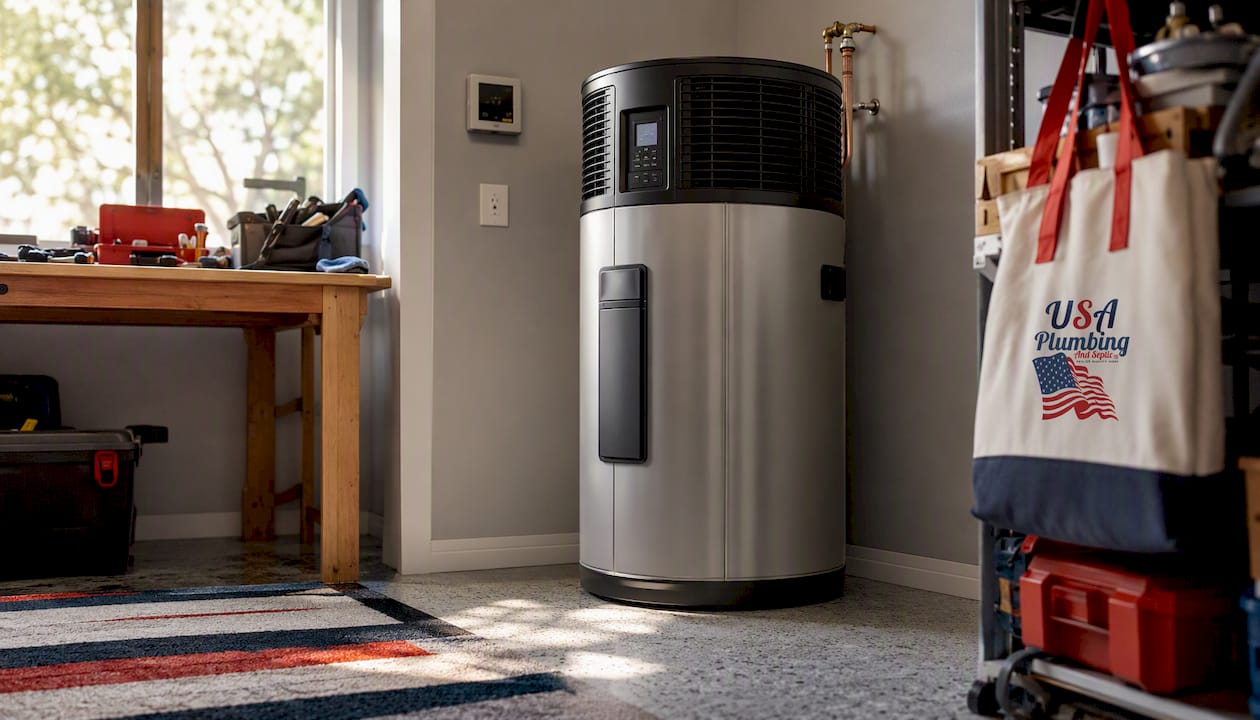
- Heat pump/hybrid: Pulls heat from surrounding air rather than generating it directly. Top models carry a UEF in the 3.3–4.1 range, making them the most efficient electric option by a wide margin. They need adequate air volume and a condensate drain, so installation site matters.
- Condensing gas: Uses a secondary heat exchanger to capture exhaust heat, pushing efficiency above standard gas tanks. Navien and Noritz lead this category. Requires a condensate drain line.
- Solar: Uses roof-mounted collectors with a storage tank backup. Highest upfront cost, lowest long-term operating cost in sunny climates. Sanden SanCO2 uses a CO2-based heat pump loop rather than traditional solar panels, achieving UEF values above 5.0 in suitable conditions.
Efficiency by type: Heat pump/hybrid electric units consistently deliver the highest UEF scores. ENERGY STAR-certified heat pump water heaters can reduce electricity use significantly compared to standard electric resistance models. Condensing gas follows, then standard tankless, then conventional storage tanks.
Pro Tip: Heat pump water heaters need 700–1,000+ cubic feet of surrounding air volume to operate efficiently. A cramped utility closet will force the unit into resistance-only mode, erasing the efficiency advantage entirely. If your mechanical room is tight, a standard tank or tankless unit is usually the more practical choice.
How do you size a water heater for your household?
Sizing a tank heater should focus on first-hour rating (FHR) rather than tank gallons alone. FHR tells you how many gallons the heater delivers in the first hour of heavy use, which is what actually matters during a morning rush. A 50-gallon tank with a low FHR can run cold before a 40-gallon tank with a high recovery rate does.
For tankless units, the key number is peak GPM demand. Add up the flow rates of every fixture that might run simultaneously (shower at 2 GPM, dishwasher at 1.5 GPM, faucet at 1 GPM) and match that total to the unit's rated output at your incoming water temperature. Cold groundwater in northern states reduces effective GPM output, so always check the manufacturer's performance curve at your local inlet temperature.
| Household Size | Recommended Tank Capacity | Target FHR | Tankless GPM Target |
|---|---|---|---|
| 1–2 persons | 30–40 gallons | 50–60 gallons/hr | 4–6 GPM |
| 3–4 persons | 40–50 gallons | 60–80 gallons/hr | 6–8 GPM |
| 5+ persons | 50–80 gallons | 80–100+ gallons/hr | 8–11 GPM |
The DOE's sizing guidance recommends calculating peak-hour demand by listing every hot-water use that typically overlaps in your household and totaling the gallons consumed. That number is your minimum FHR target. Going one size up on FHR costs little and prevents the most common complaint homeowners have: running out of hot water mid-shower.
Which specs and features actually matter when comparing models?
Not every feature on a spec sheet affects your daily life. These are the ones worth comparing:
- UEF (Uniform Energy Factor): — The standardized efficiency rating. Higher is better. Heat pump hybrids score 3.3–5.0+; condensing gas scores 0.90–0.97; standard tanks score 0.58–0.70.
- Leak detection and auto-shutoff: Smart leak detection features can prevent major water damage by sending immediate alerts to your phone. Worth the premium on any unit installed in a finished space.
Warranty comparison: Tank warranties range from 6 years (entry-level retail) to 12 years (contractor-grade Bradford White, Rinnai REHP50). Heat exchanger warranties on condensing tankless units (Navien: 15 years) are often longer than the tank warranties on storage units. Always ask whether the warranty requires professional installation to remain valid.
Pro Tip: Ask your installer whether the specific model you're buying requires a licensed contractor install for warranty validation. Contractor-channel units from Bradford White and State almost always do. Buying one at retail and self-installing typically voids coverage from day one.
What do water heater installation and purchase costs actually look like?
Product prices vary widely by type, and installation adds a meaningful amount on top. Here's a realistic breakdown:
- Basic storage tank (gas or electric): $400–$900 for the unit; $300–$700 for a straightforward swap installation
- Tankless (non-condensing): $500–$1,000 for the unit; $800–$1,500 for installation, which often includes new gas line work or electrical upgrades
- Condensing tankless (Navien, Noritz): $900–$1,400 for the unit; $1,000–$2,000 for installation including PVC venting and condensate drain
- Heat pump/hybrid: $1,000–$2,000 for the unit; $400–$1,000 for installation when the site is already suitable
- Solar / CO2 heat pump (Sanden SanCO2): $3,000–$5,000 for the system; $1,000–$2,500 for installation
Installation for a tankless or heat-pump unit can run two to three times the cost of a basic tank swap when electrical panel upgrades, new gas lines, or venting changes are required. That gap is where homeowners most often underestimate total project cost.
Permits and inspections: Most jurisdictions require a permit for water heater replacement. Permit fees typically run $50–$200 depending on your municipality. A licensed plumber handles the permit pull and schedules the inspection, which protects you if you sell the home.
Rebates and tax credits: ENERGY STAR-certified heat pump water heaters may qualify for federal tax credits and utility rebates. Check the ENERGY STAR rebate finder for programs in your ZIP code. Usaplumbingseptic can help Bullhead City-area homeowners identify applicable rebates before the installation quote is finalized.
How long do water heaters last, and what maintenance do they need?
Expected lifespans by type:
- Storage tank (gas or electric): 8–12 years
- Tankless: 15–20 years
- Heat pump/hybrid: 10–15 years
- Condensing gas: 15–20 years
Annual maintenance tasks that directly extend service life:
- Flush the tank: Sediment buildup reduces efficiency and accelerates corrosion. Flush annually, more often in hard-water areas.
- Check the anode rod: Inspect every 2–3 years; replace when more than 50% depleted. This is the single most effective step for extending tank life.
- Descale tankless units: Mineral scale on heat exchanger surfaces reduces output and can cause overheating. Flush with a descaling solution annually in hard-water regions.
- Inspect venting: Blocked or corroded venting on gas units is a carbon monoxide risk. Check annually.
- Flush the condensate drain: On heat pump and condensing gas units, a clogged condensate line causes water damage and unit shutdowns.
Warning signs to watch for: rumbling or popping noises (scale buildup), rusty or discolored water (tank corrosion), inconsistent temperatures (failing thermostat or element), and visible moisture around the base (early tank failure). If you notice any of these, diagnosing the issue early prevents a full emergency replacement.
Pro Tip: In hard-water areas like Bullhead City, a water softener or filtration system is one of the most cost-effective ways to extend heater lifespan. Scale buildup is the leading cause of premature tankless heat exchanger failure and accelerates tank corrosion. Usaplumbingseptic offers water softening and filtration services specifically for the Tri-State area.
How were these recommendations selected?
These picks reflect a combination of sources and selection criteria applied consistently across all entrants:
- Sources used: — DOE/ENERGY STAR efficiency guidance, Consumer Reports water heater testing methodology, field reviews from licensed plumbing contractors with high install volumes, and manufacturer-published specifications and warranty documents
When should you hire a pro, and what should you ask?
Water heater installation involves gas lines, electrical panels, venting, and permits. DIY installation on most units voids the manufacturer warranty and may fail inspection. Here's what to ask before hiring:
- Are you licensed and insured in this state?
- Will you pull the permit and schedule the inspection?
- Can you source the contractor-channel model I want, or are you limited to retail stock?
- What does your labor warranty cover, and for how long?
- Do you have references from similar installs (same unit type, same home layout)?
Red flags to avoid:
- Offers a significant discount for skipping the permit
- Cannot or will not source contractor-channel models when requested
- Provides no written labor warranty
- Quotes a price without visiting the site for a heat-pump or tankless install (both require site assessment)
After installation, verify these on-site before the installer leaves: proper venting connection and clearances, condensate line routed to a drain (heat pump and condensing gas), seismic strapping where required by local code, and a leak test at all connections. Knowing what a plumber covers helps you ask the right questions and confirm the job is done correctly.
What's your decision checklist before buying a water heater?
Work through these six checks before committing to a model:
- Rebate eligibility: — Check the ENERGY STAR rebate finder before buying. A qualifying heat pump unit may offset a significant portion of the price difference.
Next steps: contact a licensed plumber for an on-site sizing assessment, request itemized quotes that include installation details and warranty validation, and ask specifically about rebate assistance. Usaplumbingseptic provides on-site quotes for homeowners in Bullhead City, Fort Mohave, Mohave Valley, and Laughlin.
Key Takeaways
Heat pump/hybrid water heaters deliver the lowest operating costs of any electric option, but correct sizing and professional installation determine long-term reliability more than any model's brand name.
| Point | Details |
|---|---|
| Size by FHR, not gallons | First-hour rating predicts real-world performance; target FHR matches your household's peak-hour demand. |
| Heat pump UEF advantage | Top hybrid models carry a UEF of 3.3–4.1, far above standard electric tanks at 0.58–0.70. |
| Contractor-channel matters | Bradford White, State, and Ruud Professional units require licensed installation to keep warranty coverage valid. |
| Rebates reduce upfront cost | ENERGY STAR-certified heat pump units may qualify for federal tax credits; check the ENERGY STAR rebate finder before buying. |
| Usaplumbingseptic for local installs | Usaplumbingseptic handles licensed installation, permits, and rebate assistance across Bullhead City and surrounding areas. |
What installers see that spec sheets never show
The most common cause of premature water heater failure is not a bad unit. It's a bad install. Improper venting on gas units is a safety issue and a reliability killer. Undersizing a tankless unit for a household's actual peak demand leads to cold-water complaints within weeks of install. Hard water, which is a real factor in the Bullhead City area, destroys heat exchanger surfaces on tankless units and accelerates anode depletion in storage tanks faster than most homeowners expect.
Trade-offs that come up on-site are rarely visible in a product comparison. A homeowner wants a heat pump hybrid, but the utility closet is 200 square feet with no nearby drain. The practical answer is a high-efficiency gas tank or a condensing tankless unit, not the heat pump. A homeowner wants a condensing tankless unit, but the electrical panel is already at capacity and the gas line is undersized. Adding both upgrades can push the total project cost well past the budget for a simple tank swap.
The brands that hold up best in the field are the ones with strong parts networks and contractor support. When a Bradford White or Rheem unit needs a part two years after install, a licensed plumber can usually source it within a day. Obscure retail-only brands sometimes leave homeowners waiting weeks for a heating element or thermostat. That's the real-world difference between a contractor-grade pick and a bargain-shelf unit.
Usaplumbingseptic installs and services water heaters across Bullhead City
Choosing the right unit is only half the job. A licensed, experienced installer who handles permits, validates your warranty, and sizes the unit correctly for your home is what turns a good product into a reliable system.

Usaplumbingseptic provides residential water heater installation and repair across Bullhead City, Fort Mohave, Mohave Valley, and Laughlin. We handle on-site sizing assessments, permit pulls, inspection scheduling, and rebate identification for qualifying heat pump and condensing units. Whether you're replacing a failed tank on an emergency basis or planning a switch to a heat pump hybrid, our team is available 24/7. For plumbing essentials in Mohave County and a no-pressure installation quote, contact us today.
Useful sources
- Selecting a New Water Heater — U.S. Department of Energy
- Super-Efficient Water Heater — ENERGY STAR
- Sizing a New Water Heater — Energy.gov
- ENERGY STAR Rebate Finder
- Federal Tax Credits: Heat Pump Water Heaters — ENERGY STAR
- Heat Pump Water Heater Design Considerations — ENERGY STAR
- Water Heater Buying Guide — Consumer Reports
- Rheem Tankless Water Heater Review — BobVila
FAQ
What type of water heater is best for a home?
For most homes, a heat pump/hybrid electric or a contractor-grade gas storage tank offers the best combination of reliability and efficiency. Heat pump models carry a UEF of 3.3–4.1, making them the most efficient electric option, while gas storage tanks from Bradford White or Rheem suit homes where natural gas is available and installation space is limited.
What water heater do plumbers recommend?
Licensed plumbers most frequently recommend Bradford White, Rheem, and A.O. Smith for storage tanks because of contractor-channel availability and strong parts networks. For tankless installs, Rinnai and Navien are the most consistently recommended brands based on reliability and dealer support.
What is the Biden rule on water heaters?
The Department of Energy updated minimum efficiency standards for residential water heaters, pushing manufacturers toward higher-efficiency condensing gas and heat pump electric models. These standards affect new units entering the market but do not require existing homeowners to replace a working heater. Check the DOE's current guidance for the specific standards that apply to units purchased today.
How much does water heater installation typically cost?
A basic tank swap runs $300–$700 for installation on top of the unit cost. Tankless and heat pump installs cost more, often $800–$2,000, when electrical upgrades, new gas lines, or venting changes are required. Usaplumbingseptic provides on-site quotes that include all installation details for homeowners in the Bullhead City area.
Does a heat pump water heater work in a small utility closet?
No. Heat pump water heaters need 700–1,000+ cubic feet of surrounding air volume to operate in heat-pump mode. A small closet forces the unit into electric resistance mode, which eliminates the efficiency advantage. If your space is tight, a standard tank or condensing tankless unit is the more practical choice.