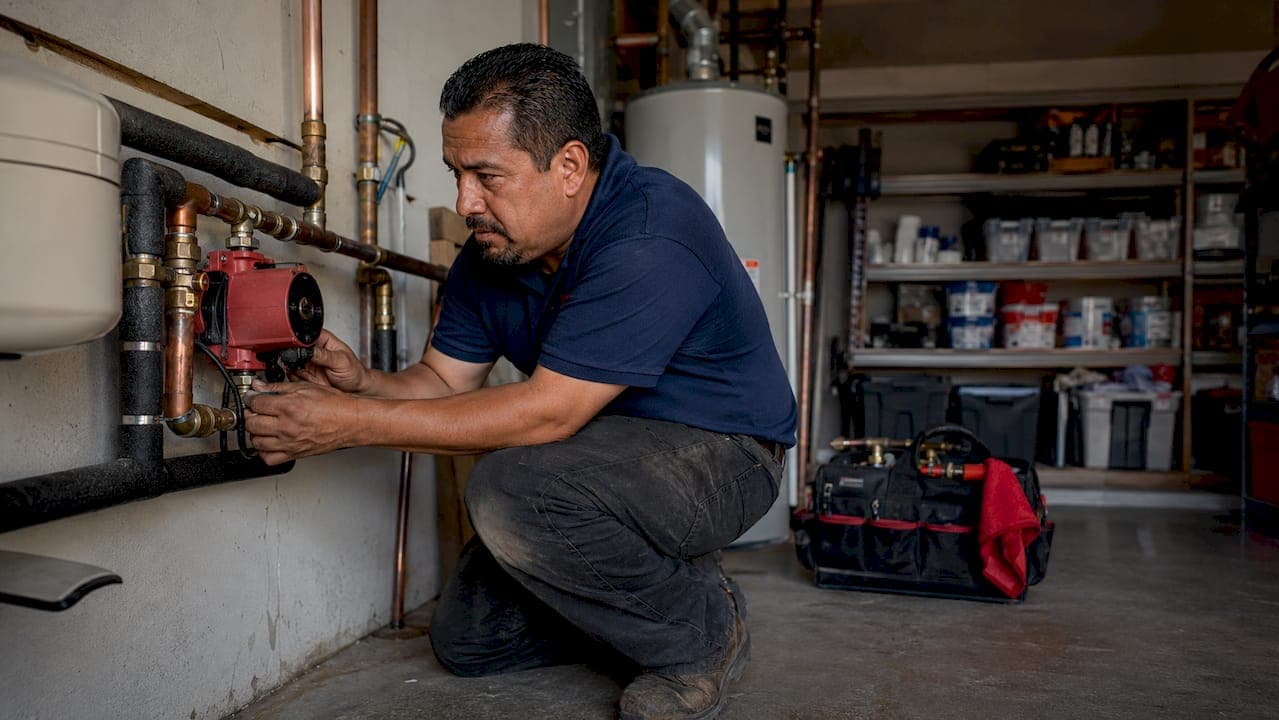
A hot water recirculation system is a plumbing configuration that keeps heated water moving through your pipes so hot water arrives at faucets and showers in seconds, not minutes. Without one, water waste per draw event runs 0.5 to 2 gallons as you wait for cold water to clear the line. That adds up to 30 to 50 gallons of wasted water per household each day, according to EPA WaterSense data. For homeowners in warm climates like Bullhead City, Fort Mohave, and Laughlin, where water conservation matters year-round, a recirculation system delivers real, measurable value.
What is a hot water recirculation system and how does it work?
A recirculation system creates a closed loop between your water heater and your fixtures. Hot water travels out from the heater through your supply pipes, and a pump pushes any cooled water back to the heater through a dedicated return line or a bypass valve. The result is that hot water sits ready at every tap, not stranded in a long pipe run cooling down.
The core components are straightforward:
- Water heater: The source of heated water, gas or electric
- Circulation pump: A small motor, typically rated between 1/25 and 1/40 HP, that keeps water moving
- Return line or bypass valve: The path cooled water takes back to the heater
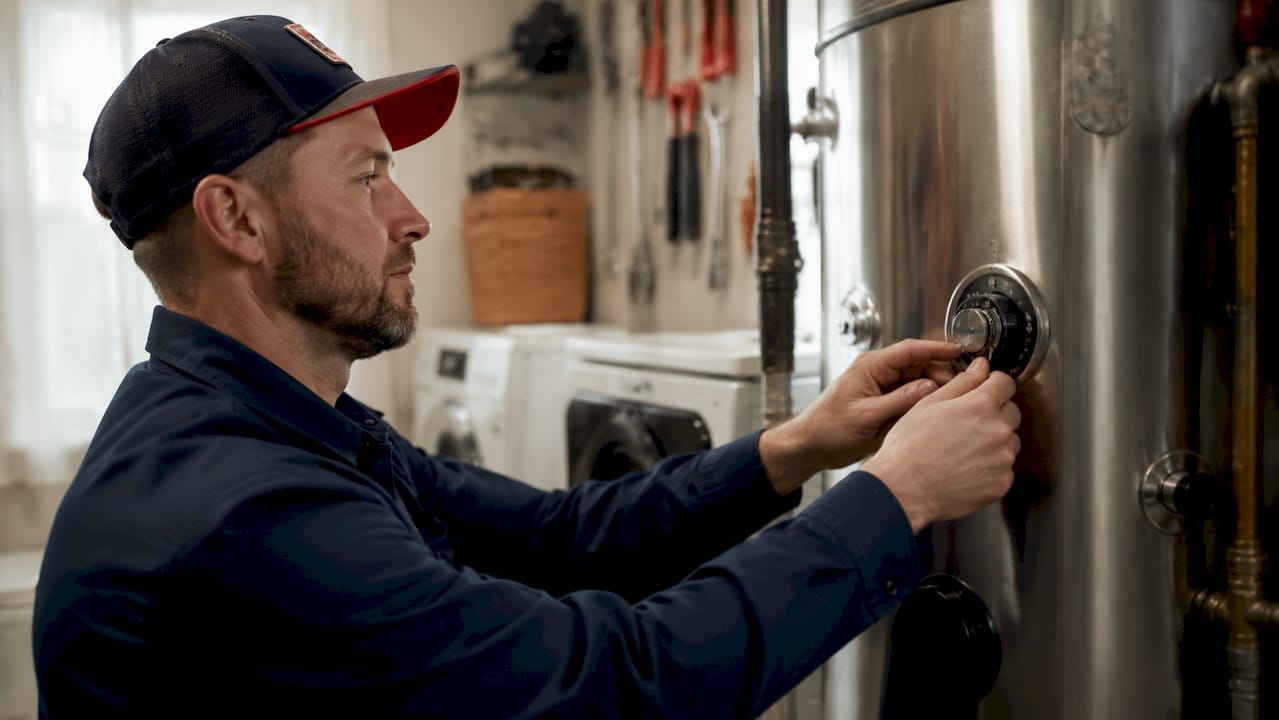
- Aquastat: A temperature sensor that tells the pump when to run and when to stop
The aquastat is the part most homeowners overlook. It monitors pipe temperature and controls standby heat loss by cycling the pump only when water drops below a set threshold. Without it, the pump runs constantly and wastes energy. With it, the system maintains consistent pipe temperature without burning electricity around the clock.
Pro Tip: Set your aquastat between 110°F and 120°F. That range keeps water hot enough for immediate use while limiting the thermal load on your pipes and heater.
What types of hot water recirculation systems are available?
System architecture matters more than pump brand or model. Choosing the right structure based on your plumbing layout determines how well the system performs and how much it costs to install.
Dedicated return line (full-loop) systems
A dedicated return line runs a separate pipe from the farthest fixture back to the water heater. This is the cleanest, most reliable setup. Dedicated return line systems are strongly recommended for new construction or major renovations because they avoid the lukewarm water problem entirely and deliver consistent performance at every tap.
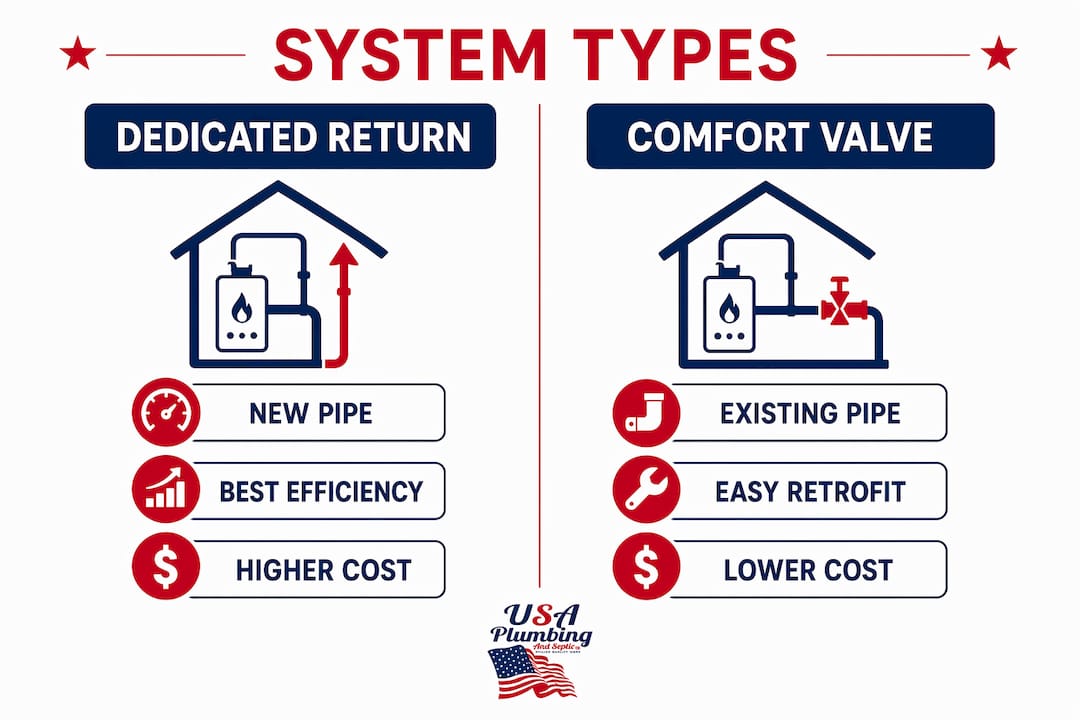
Comfort valve (crossover) systems
A comfort valve, also called a crossover valve, installs under the sink at the farthest fixture. It uses the existing cold water line as the return path. This makes it a popular retrofit option because no new pipe is needed. The tradeoff is real: comfort valve systems push cooled water into the cold line, which means you may briefly get lukewarm water from the cold tap until the loop clears. For most homeowners, that is a minor inconvenience compared to the cost of running new pipe through finished walls.
On-demand (demand-controlled) systems
On-demand systems activate the pump only when you press a button or trigger a motion sensor near the fixture. The pump runs just long enough to bring hot water to that tap, then shuts off. This approach uses the least energy of any type and avoids the lukewarm cold water issue. The wait time is slightly longer than a full-loop system, typically a few seconds, but the energy savings are significant.
| System type | Installation cost | Water savings | Energy use | Best for |
|---|---|---|---|---|
| Dedicated return line | High | Highest | Moderate (with controls) | New builds, renovations |
| Comfort valve | Low | High | Moderate | Retrofit, existing homes |
| On-demand pump | Low to moderate | High | Lowest | Energy-conscious homeowners |
| Tankless with built-in recirc | Varies | High | Depends on controls | Tankless heater upgrades |
Pro Tip: If your home is already built and you want to avoid opening walls, start with a comfort valve system. It installs in under an hour and delivers most of the convenience at a fraction of the cost.
What are the advantages and potential drawbacks of hot water recirculation?
The advantages of hot water recirculation are concrete and easy to measure. Wait times drop from over 30 seconds to under 10 seconds at most fixtures. Water waste falls by 30 to 50 gallons per day per household. For a family of four in a warm climate running multiple showers and faucets daily, that is a meaningful reduction in both water bills and environmental impact.
The drawbacks are real but manageable:
- Energy cost: Demand-type pumps consume 25 to 85 watts, adding roughly $15 to $40 per year in electricity when managed with timers or aquastats
- Standby heat loss: Continuous circulation keeps pipes warm, which means your water heater works harder to maintain temperature
- Lukewarm cold water: Comfort valve systems push cooled water into the cold line temporarily
- Pump sizing: Incorrect sizing based on pipe diameter and run length causes inefficiency or early failure
The energy tradeoff deserves a direct look. Annual energy use for a residential recirculation system runs between 200 and 350 kWh. That figure can offset your water savings if the pump runs continuously without controls. Smart controls, timers, and aquastats are not optional extras. They are what make the system worth running.
Pump lifespan is a genuine advantage. Well-maintained pumps last 10 to 15 years. Knowing the expected service life helps you plan for replacement and budget accordingly. For guidance on keeping your water system in good shape, the team at Usaplumbingseptic covers pump maintenance and care for homeowners across the region.
How can homeowners in warm climates get the most from their system?
Warm climate homeowners face a specific challenge: the ambient temperature in attics and wall cavities is already high, which reduces standby heat loss compared to colder regions. That is actually an advantage. It means your pipes lose less heat between pump cycles, so the system runs less often and uses less energy.
Here is how to get the most out of your setup:
- Use a timer: Program the pump to run only during peak morning and evening hours. A pump running 4 to 6 hours a day instead of 24 cuts energy use dramatically.
- Set the aquastat correctly: Keep the target temperature between 110°F and 120°F. Higher settings waste energy; lower settings risk Legionella growth in stagnant sections.
- Match the system to your layout: Homes with long pipe runs to master baths benefit most from full-loop or on-demand systems. Smaller homes with compact layouts may see adequate results from a comfort valve alone.
- Size the pump correctly: Pump sizing depends on pipe diameter and total run length. A pump that is too small cannot overcome friction in long runs; one that is too large wastes electricity and creates noise.
- Consider smart controls: Wi-Fi-enabled pump controllers let you adjust schedules from your phone and integrate with home automation systems for hands-free convenience.
Professional installation matters most at the sizing and layout stage. A plumber who understands your home's specific pipe configuration will choose the right architecture and pump rating from the start, avoiding the common pitfalls that lead to water heater problems down the line.
Pro Tip: In warm climates, schedule your pump to run 30 minutes before your typical morning shower time. You get instant hot water when you need it without the pump running all night.
Key Takeaways
A hot water recirculation system saves 30 to 50 gallons of water per day while delivering hot water in under 10 seconds, but smart controls are required to keep energy costs in check.
| Point | Details |
|---|---|
| System architecture first | Choose dedicated return line, comfort valve, or on-demand before selecting a pump. |
| Water savings are significant | Households save 30 to 50 gallons daily by eliminating cold water purge at fixtures. |
| Energy costs need controls | Annual pump energy runs 200–350 kWh; timers and aquastats keep costs at $15–$40 per year. |
| Pump lifespan is 10–15 years | Proper sizing and maintenance are the two factors that most affect pump longevity. |
| Warm climates have an edge | Higher ambient temperatures reduce standby heat loss, making recirculation more efficient. |
What I've learned after years of seeing these systems installed
Most homeowners ask me whether a recirculation system is worth it. My honest answer is: it depends almost entirely on how it is designed, not whether you have one.
I have seen comfort valve systems installed in large two-story homes where the master bath is 80 feet from the water heater. The homeowner still waits 20 seconds for hot water because the pump is undersized and the cold line return path is too long. The system exists, but it does not work. That is a design failure, not a product failure.
The misconception I run into most often is that any pump will do the job. Homeowners buy a pump online, install it themselves, and then wonder why the cold water runs warm for two minutes every morning. The answer is almost always a mismatch between pump capacity and pipe run length. Proper pump sizing based on pipe diameter and distance is the single most important technical decision in the whole installation.
My recommendation for warm climate homeowners is to start with an on-demand system if you are retrofitting. It is the lowest-risk option, the easiest to install, and the most energy-efficient. If you are building new or doing a major renovation, put in a dedicated return line. You will never regret having it, and you will never deal with lukewarm cold water at the kitchen sink.
Weigh the upfront cost against what you actually use. A family that runs three showers before 8:00 AM will recover the installation cost in water savings within a couple of years. A single person who showers once a day may take longer. The math is simple once you know your household's actual usage pattern.
— JOHN
Professional recirculation system installation from Usaplumbingseptic
Getting a recirculation system right the first time starts with a professional assessment of your home's plumbing layout, pipe diameters, and fixture distances. Usaplumbingseptic serves homeowners across Bullhead City, Fort Mohave, Mohave Valley, and Laughlin with experienced plumbers who size, install, and maintain hot water recirculation systems correctly from day one.

Our team handles everything from comfort valve retrofits to full dedicated return line installations for new builds. We also provide ongoing maintenance to keep your pump running at peak efficiency for its full 10 to 15 year lifespan. If you are ready to stop wasting water and start getting hot water on demand, contact our local plumbing team today. We are available 24/7 and ready to help you find the right system for your home.
FAQ
What is a hot water recirculation system in simple terms?
A hot water recirculation system is a pump and pipe setup that keeps hot water moving through your home's plumbing so it arrives at faucets in seconds instead of minutes. It eliminates the cold water purge that wastes water while you wait.
Is hot water recirculation worth it for warm climate homes?
Yes. Warm climates reduce standby heat loss in pipes, which makes recirculation systems more efficient than in colder regions. Households save 30 to 50 gallons of water per day, and energy costs stay low with a timer or aquastat.
How long does a recirculation pump last?
A well-maintained recirculation pump lasts 10 to 15 years. Correct sizing at installation and annual checks are the two factors that most affect lifespan.
What is the difference between a comfort valve and a dedicated return line?
A comfort valve uses the existing cold water line as the return path and requires no new pipe, making it ideal for retrofits. A dedicated return line runs a separate pipe back to the heater and delivers better performance without the brief lukewarm cold water issue.
How much does it cost to run a recirculation pump?
A demand-type pump consuming 25 to 85 watts adds roughly $15 to $40 per year in electricity when controlled by a timer or aquastat. Running the pump continuously without controls increases that cost significantly.