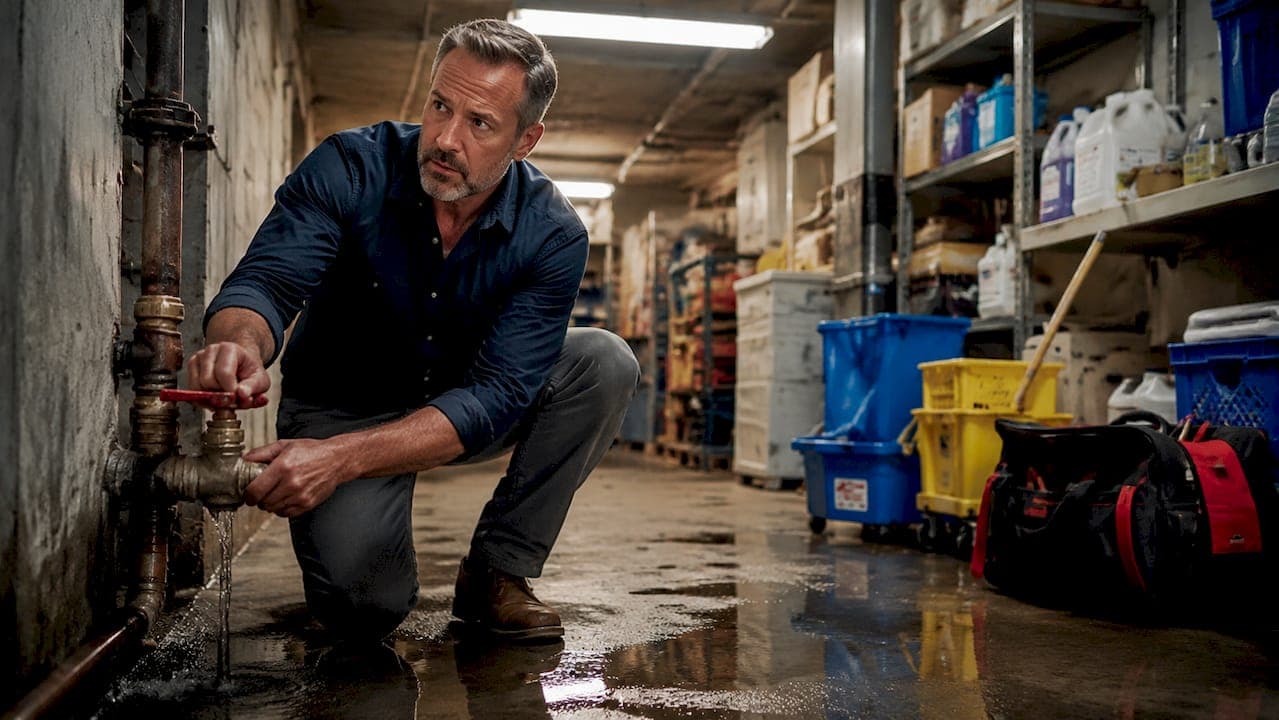
A plumbing emergency at a commercial property is defined as any active water event, sewer failure, or gas-related incident that threatens safety, property integrity, or business operations. To handle a plumbing emergency at a commercial property effectively, you need a systematic response: isolate the source, protect people and assets, document the damage, and call a licensed professional immediately. Property managers in Bullhead City who follow this sequence consistently reduce repair costs and downtime. The difference between a contained incident and a catastrophic loss almost always comes down to preparation and speed.
What counts as a plumbing emergency in commercial properties?
Not every dripping faucet is a crisis. A true commercial plumbing emergency is any condition that poses immediate risk to safety, structural integrity, or business continuity. Knowing the difference helps you act fast when it matters and avoid unnecessary panic when it does not.
These situations require immediate response:
- Active flooding from burst pipes, failed joints, or fixture failures that cannot be stopped with a simple shutoff
- Sewer backups producing sewage overflow into occupied spaces, which create serious health hazards under OSHA and local health codes
- Complete loss of water supply to the building, which can halt food service, restroom access, and fire suppression systems
- Gas line leaks detected by smell or a gas meter reading, requiring immediate evacuation and utility contact
- Ceiling or wall water intrusion from a burst pipe above, which can compromise electrical systems and structural materials
Calling a professional immediately can prevent minor repairs from escalating into major structural failures. That principle applies even when you are unsure whether the situation qualifies as an emergency. If you are asking the question, the answer is usually yes.
Commercial plumbing systems carry far more daily load than residential ones. A single restroom in a retail center may serve hundreds of people per day. That volume accelerates wear on valves, seals, and drain lines. Commercial systems require more rigorous maintenance than residential systems to cope with higher usage and complexity. Recognizing early warning signs, such as slow drains across multiple fixtures, recurring water pressure drops, or unexplained wet spots on ceilings, gives you a window to act before a full emergency develops.
Step-by-step immediate actions when a plumbing emergency hits
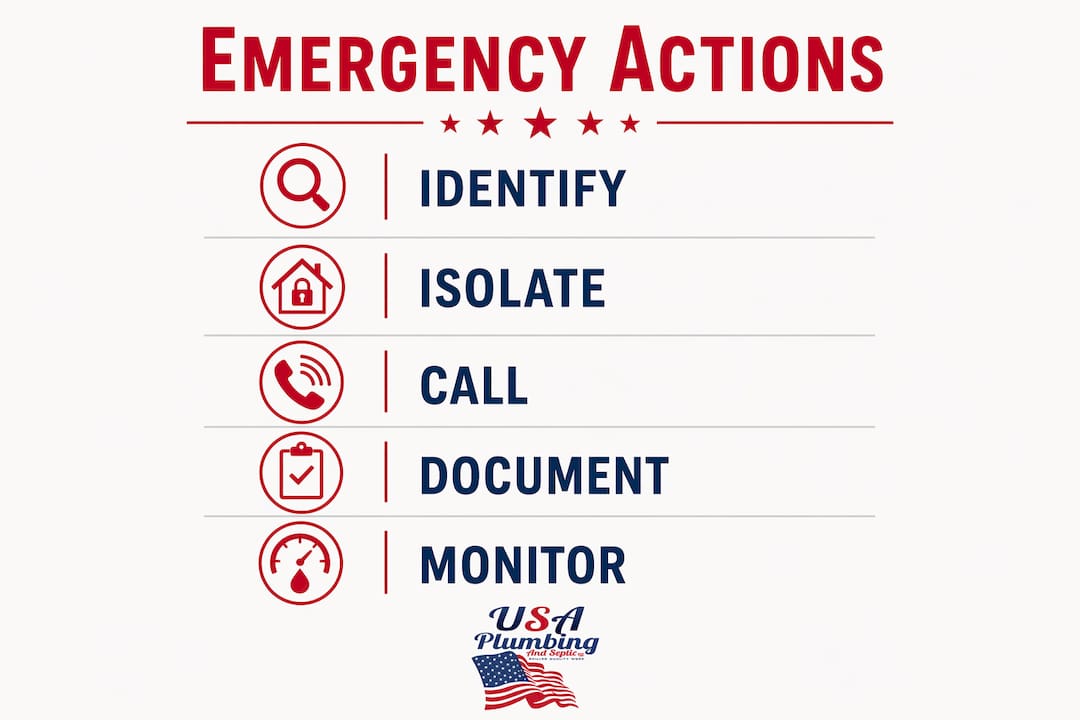
Speed and order matter. The first five minutes of your response determine how much damage your property sustains. Follow these steps without skipping.
-
Shut off the water supply. Locate the affected fixture's shutoff valve first. If the source is unclear or the valve is inaccessible, shut off the building's main water supply. Isolating water valves immediately is the single most effective action to limit flooding damage.
-
Cut electrical power to affected areas. Water and live electricity are a lethal combination. If water is near electrical panels, outlets, or equipment, shut off the breaker for that zone before anyone enters the area.
-
Evacuate the affected zone. Clear staff, tenants, and customers from the immediate area. Post someone at entry points to prevent re-entry until the area is confirmed safe.
-
Protect inventory and equipment. Move portable equipment, stock, and documents away from the water source. Use plastic sheeting or tarps to cover fixed assets you cannot relocate.
-
Document everything before cleanup begins. Take photos and videos of all visible damage. Thorough documentation with photos including date, time, and damage details accelerates insurance claims and long-term repair planning. Do not start cleanup until you have a complete visual record.
-
Call your emergency plumber. Provide your address, the type of failure, the pipe material if known (copper, PEX, or cast iron), and whether the water is still flowing. Specific details about pipe materials and failure type help technicians arrive prepared, which shortens repair time.
-
Notify stakeholders. Contact your property owner, insurance carrier, and any tenants affected. Early communication prevents misunderstandings and starts the claims process faster.
Pro Tip: Keep a laminated emergency contact card posted near your main electrical panel and water shutoff valve. Include your plumber's number, your insurance carrier's claims line, and your property manager's cell number. When stress is high, people forget numbers they know by heart.
What tools and plans should commercial property managers have ready?
Preparation before an emergency is the only thing that makes the emergency manageable. Property managers who walk into a crisis without a plan spend the first critical minutes searching for information instead of acting on it.
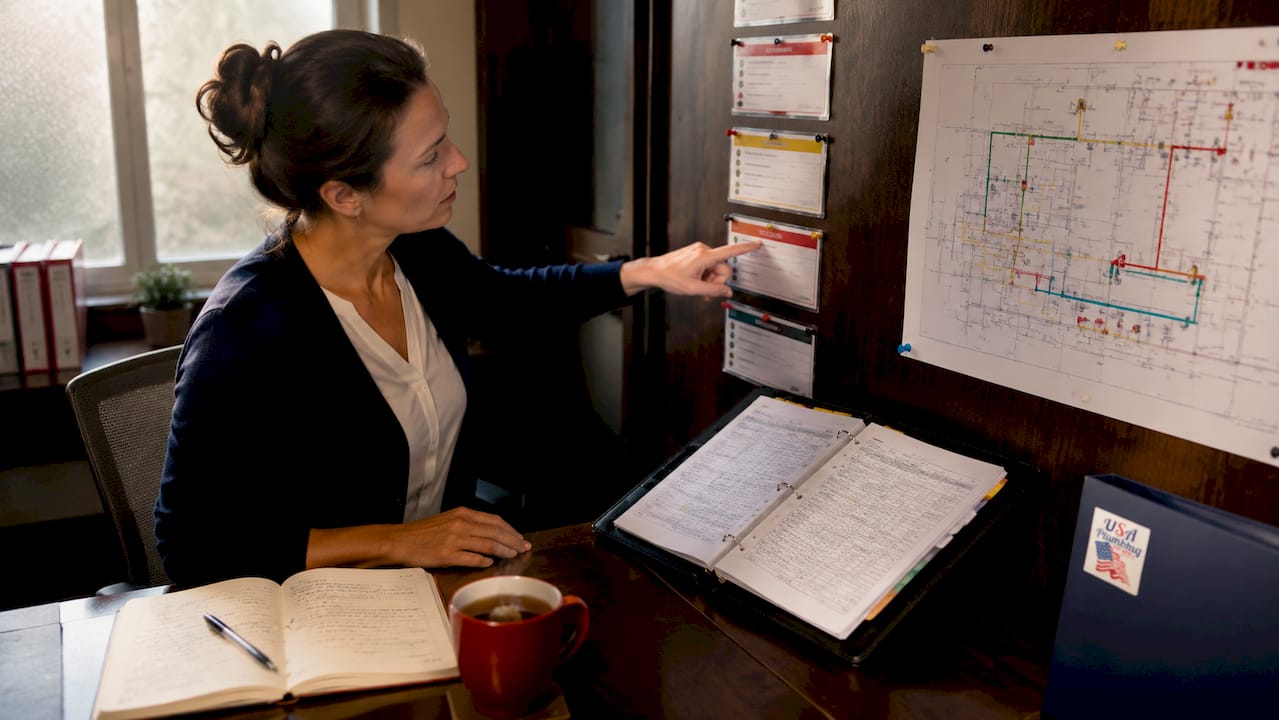
Maintaining a clearly labeled map of all shutoff valves can save 15–30 minutes during an active emergency. That time directly translates to less water damage and lower repair costs. Post valve maps near the main mechanical room and share digital copies with your facilities team.
A written emergency response plan should cover the following:
- Names and direct numbers for your licensed commercial plumber, electrician, and property insurance contact
- Location of main and sub-shutoff valves, electrical panels, and gas shutoffs with labeled diagrams
- Step-by-step staff roles during an emergency, including who calls the plumber, who manages evacuation, and who handles documentation
- A list of critical equipment and inventory that requires priority protection
- Tenant notification procedures and templates
Beyond the plan, keep these physical supplies on hand for first response:
- Adjustable pipe wrenches and a pipe repair clamp kit for temporary containment
- Wet/dry vacuum for rapid water removal from floors
- Plastic sheeting and waterproof tape to protect equipment
- A waterproof flashlight for inspecting dark mechanical spaces
Pro Tip: Schedule a 15-minute walkthrough with your facilities team every six months. Walk every shutoff valve location and confirm labels are still accurate. Pipes get rerouted, labels fade, and new staff never know what the old staff knew.
Scheduled preventive maintenance catches small issues before they become costly failures. A commercial plumbing maintenance schedule is the most cost-effective investment a property manager can make against emergency repair bills.
| Preparation item | Why it matters |
|---|---|
| Labeled valve maps | Reduces containment time by 15–30 minutes during active flooding |
| Written emergency response plan | Gives staff clear roles so no one freezes or duplicates effort |
| Emergency contact list | Eliminates search time when every second counts |
| Pipe repair clamp kit | Provides temporary containment until the plumber arrives |
| Preventive maintenance schedule | Catches failing components before they cause emergencies |
How do you choose and work with a commercial plumber for emergencies?
The worst time to find a plumber is during an active flood. Building a relationship with a trusted commercial plumber before an emergency occurs means you receive priority scheduling during peak or after-hours events. Established customers consistently get faster callbacks and earlier arrival windows than first-time callers.
When evaluating a commercial plumbing service, look for these qualities:
- 24/7 availability with a direct emergency line, not just a voicemail box
- Commercial experience specifically, not just residential work. Commercial systems involve backflow preventers, grease traps, and larger-diameter drain lines that require different skills.
- Licensing and insurance current in Arizona, covering both plumbing and any excavation work
- Documented response time. Emergency commercial plumbers typically arrive within 60–90 minutes of dispatch. Any service that cannot commit to that window is not a reliable emergency partner.
- Familiarity with your building. A plumber who has visited your property before can navigate it faster during a crisis.
When you call during an emergency, give the dispatcher these details immediately: your property address, the type of failure (burst pipe, sewer backup, no water), the pipe material if known, and whether the water is still flowing or has been shut off. Clear communication with emergency plumbers during a crisis minimizes damage and shortens the repair window.
After the repair, request a written report that includes the cause of failure, the repair method used, and any recommended follow-up work. That document supports your insurance claim and helps you plan future preventive plumbing measures. Recurring issues in the same area often signal deeper infrastructure problems that require camera inspection rather than repeated spot repairs.
Key Takeaways
Effective plumbing disaster management at a commercial property requires preparation before the crisis, fast containment at the moment of failure, and a trusted professional relationship that delivers priority service when you need it most.
| Point | Details |
|---|---|
| Isolate water immediately | Shut off the fixture valve or building main as the first action to limit flooding. |
| Document before cleanup | Photos and videos with timestamps accelerate insurance claims and repair planning. |
| Prepare valve maps in advance | Labeled shutoff maps save 15–30 minutes during active emergencies. |
| Pre-establish your plumber relationship | Established customers receive priority scheduling during after-hours emergencies. |
| Invest in preventive maintenance | Routine inspections catch failing components before they cause costly shutdowns. |
What I've learned from watching managers handle commercial plumbing crises
Most property managers I've spoken with share one regret after a serious plumbing event: they did not know where their shutoff valves were. Not because they were careless, but because no one ever made valve location a formal part of their onboarding or facilities training. That single gap routinely turns a 20-minute containment into a two-hour flood.
The second mistake I see consistently is delaying the call to a professional. Managers try to assess the situation themselves, hoping it will resolve or that a maintenance tech can handle it. Every hour of delay on a burst pipe or sewer backup compounds the repair cost and the health risk. The call should happen at the same moment you shut off the water, not after.
The property managers who handle these events best share one habit: they treat their commercial plumber like a business partner, not a vendor they call when something breaks. They schedule annual walkthroughs, share building plans, and check in after maintenance visits. When a crisis hits at 2 a.m., those managers get a callback in minutes. The ones who call a stranger from a search result wait hours.
Preventive maintenance is not a line item to cut when budgets tighten. It is the only investment that reliably reduces the frequency and severity of plumbing emergencies. A camera inspection of your main drain lines every two years costs a fraction of one sewer backup cleanup and business closure. The math is not complicated.
— JOHN
Usaplumbingseptic: your 24/7 commercial plumbing partner in Bullhead City
Commercial property managers in Bullhead City, Fort Mohave, and Mohave Valley need a plumbing team that picks up the phone at any hour and arrives ready to work. Usaplumbingseptic provides 24/7 emergency plumbing services for commercial properties across the region, covering everything from burst pipe response and sewer line repairs to scheduled preventive maintenance programs.

Our licensed plumbers carry the tools and materials to handle active flooding, sewer backups, gas line detection, and water heater failures on the first visit. We work with your insurance documentation process and provide written repair reports after every job. Establishing a relationship with us before an emergency means you get priority response when it counts. Call us now or reach out via our website to get your commercial property on our service list.
FAQ
What is the first thing to do in a commercial plumbing emergency?
Shut off the water supply to the affected area immediately, either at the fixture valve or the building main. Then isolate electrical power in the affected zone before anyone enters.
How fast should an emergency plumber arrive?
Emergency commercial plumbers typically arrive within 60–90 minutes of dispatch under current industry standards. If a service cannot commit to that window, it is not a reliable emergency option.
Should I document damage before the plumber arrives?
Yes. Photograph and video all visible damage with timestamps before any cleanup begins. That documentation is required for insurance claims and helps the plumber assess the full scope of the failure.
How do I reduce the risk of future plumbing emergencies?
Scheduled preventive maintenance and regular camera inspections of drain lines catch failing components before they cause shutdowns. A formal maintenance schedule is the most cost-effective protection for any commercial property.
What information should I give the emergency plumber when I call?
Provide your address, the type of failure, the pipe material if known (copper, PEX, or cast iron), and whether the water is still flowing or has been shut off. Specific failure details allow the technician to arrive with the right parts and equipment.