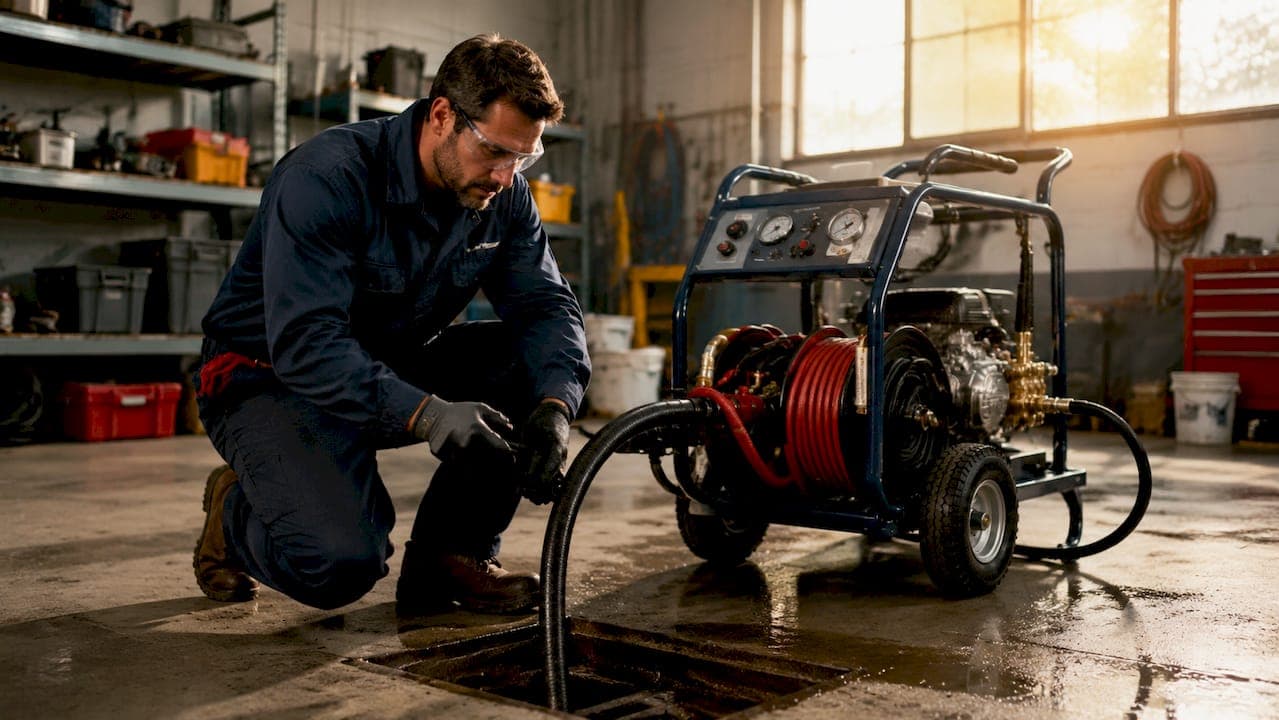
Hydro jetting is defined as a drain cleaning method that fires high-pressure water through a specialized nozzle to scour the full interior surface of a pipe and flush all debris out completely. Understanding how hydro jetting clears commercial drains matters because it is the only technique that removes grease, scale, and sludge from pipe walls rather than simply punching a hole through a clog. Facility managers and commercial property owners who rely on traditional snaking are often surprised when slow drains return within weeks. Hydro jetting solves that problem at the source.
How does hydro jetting clear commercial drains step by step?
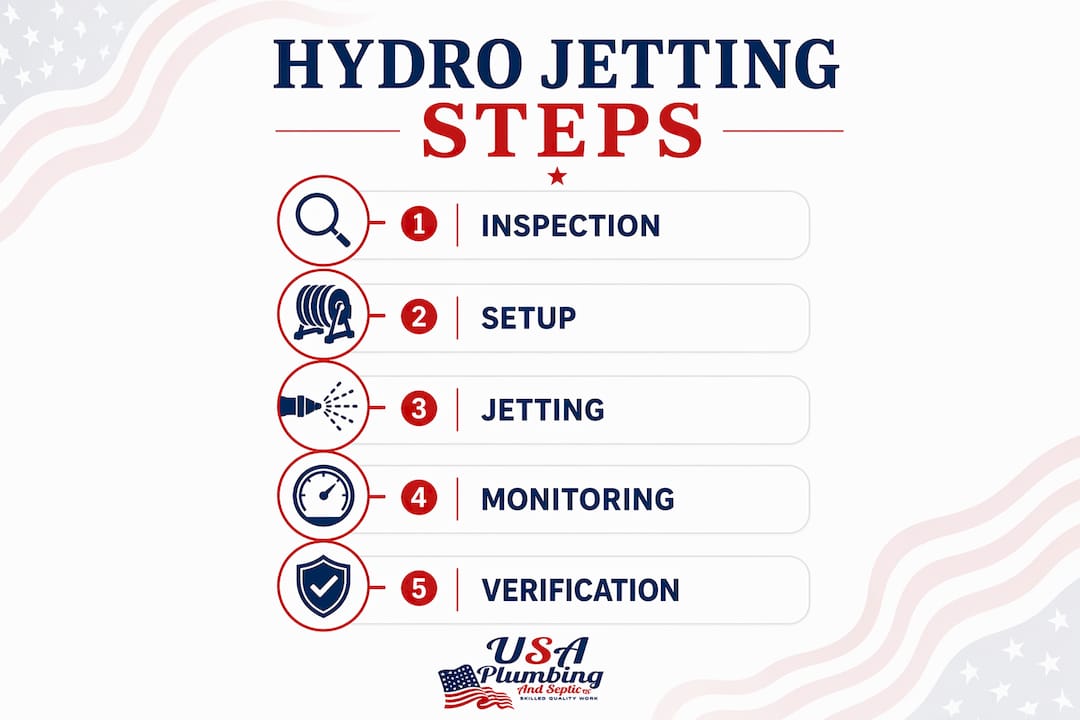
The hydro jetting process follows a defined workflow, and skipping any step reduces both safety and results. Camera inspection comes first, every time. A plumber feeds a small camera through the cleanout to locate blockages, identify buildup type, and confirm the pipe is structurally sound enough to handle high pressure. Jetting fragile or cracked pipes without this step risks a collapse.
Once the pipe passes inspection, the process moves through four clear stages:
- Access the cleanout. The plumber locates the nearest cleanout fitting and inserts the jetting hose. No excavation is needed for most commercial lines.
- Insert the nozzle and start the jet. The specialized nozzle uses forward-facing jets to break through material and angled rear jets to propel the hose deeper while flushing debris back toward the cleanout.
- Move the nozzle through the line. The plumber pulls the hose back slowly, letting the rear jets scour the pipe walls 360 degrees as the nozzle retreats. This pass removes buildup that snaking never touches.
- Conduct a post-jet camera inspection. A second camera pass verifies the line is fully clean and confirms no damage occurred during jetting.
Pro Tip: Always request the post-jet camera footage from your service provider. That video is your proof of a complete clean and your baseline for the next scheduled service.
The full process typically takes one to three hours depending on pipe length and blockage severity. For commercial kitchens with heavy grease accumulation, a plumber may make multiple nozzle passes before the post-jet inspection shows a clear line.
What pressure and equipment do commercial hydro jetting systems use?
Commercial hydro jetting equipment operates at significantly higher specifications than residential units. Commercial jetting pressure commonly ranges from 3,000 to 4,000+ PSI to cut through grease, mineral scale, and compacted sludge in larger diameter pipes. Residential units typically run at 1,500 to 2,000 PSI. That gap in force is why commercial-grade equipment is non-negotiable for facility drain systems.
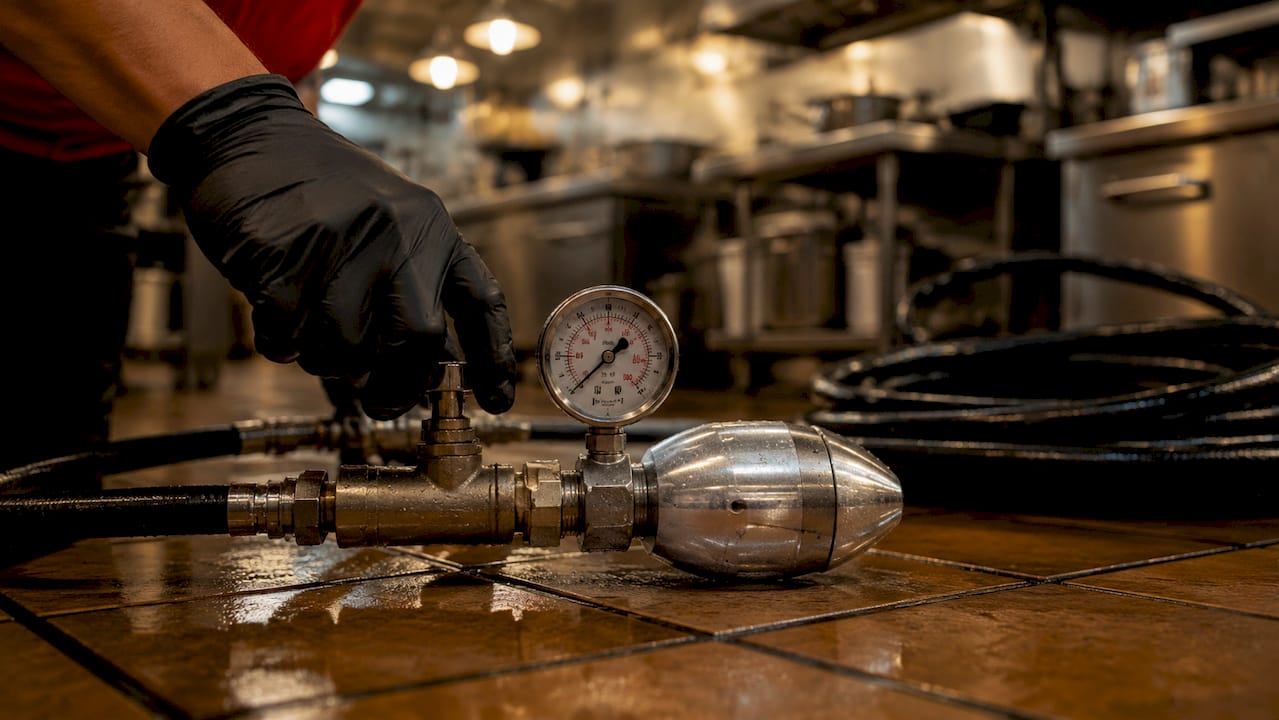
Flow rate, measured in gallons per minute (GPM), is equally critical and often overlooked. Pressure breaks the blockage. Flow rate carries the debris out of the pipe. Large-diameter sewer lines require flow rates of 12–18 GPM or more to transport debris effectively. Without sufficient GPM, loosened material can resettle downstream and create a new clog.
Nozzle selection determines what the jet actually does inside the pipe:
- Penetrating nozzles concentrate forward force to break through dense clogs, including compacted grease or root intrusions.
- Flushing nozzles spread water in a wide rear pattern to scour pipe walls and carry debris toward the cleanout.
- Rotating nozzles spin to clean the full circumference of the pipe, ideal for mineral scale and biofilm.
- Root-cutting nozzles use hardened tips to sever small root intrusions before flushing.
| Blockage Type | Recommended PSI | Nozzle Type |
|---|---|---|
| Grease and FOG | 3,000–3,500 PSI | Flushing or rotating |
| Mineral scale | 3,500–4,000+ PSI | Rotating |
| Root intrusion | 3,500–4,000+ PSI | Root-cutting |
| Sediment and sludge | 3,000 PSI | Flushing |
Pro Tip: Ask your plumbing contractor to specify the PSI and GPM settings used on your lines. If they cannot provide those numbers, they are not calibrating equipment to your pipe conditions.
Nozzle type and pressure calibration should always match the blockage type and pipe material. A single nozzle setting does not work equally well on grease, roots, and scale. Experienced plumbers adjust between passes based on what the camera shows.
Hydro jetting vs traditional drain cleaning: which works better for commercial properties?
Snaking, also called mechanical rodding, is the most common alternative to hydro jetting. It works by inserting a rotating metal cable into the drain to break apart or pull out a clog. Snaking restores flow quickly, but it leaves grease and residue on pipe walls. That residue becomes the foundation for the next clog, which is why many commercial facilities call for drain service repeatedly on the same lines.
Hydro jetting scours the full pipe interior, restoring near-original flow capacity. The difference in longevity is significant for commercial operations where a backup during peak hours carries real financial and health code consequences.
Chemical drain cleaners are the other common option. They dissolve some organic material but leave behind mineral scale and do not address root intrusions. They also introduce corrosive agents into the plumbing system and the municipal sewer. Hydro jetting uses only water, making it the environmentally responsible choice with no chemical residue.
| Method | Removes Wall Buildup | Chemical-Free | Lasts Long-Term | Handles Roots |
|---|---|---|---|---|
| Hydro jetting | Yes | Yes | Yes | Yes |
| Snaking | No | Yes | No | Partially |
| Chemical cleaners | Partially | No | No | No |
The practical result for facility managers is fewer emergency service calls and lower long-term maintenance costs. Jetting produces longer-lasting results with fewer emergency repairs compared to snaking or chemical methods. For a restaurant, hotel, or office building, that reliability directly protects operations.
When and how often should commercial properties schedule hydro jetting?
Recurring slow drains and persistent odors are the two clearest signs that a commercial drain system needs jetting, not just snaking. Slow drainage that returns within a few weeks of a previous service call indicates wall buildup that snaking did not remove. Odors from floor drains or sink lines in commercial kitchens typically signal FOG (fats, oils, and grease) accumulation that is fermenting inside the pipe.
A practical maintenance schedule for commercial properties looks like this:
- Commercial kitchens: Schedule jetting every 3–6 months to manage FOG buildup before it hardens and causes a backup. High-volume kitchens may need quarterly service.
- Restaurants and food service: Pair jetting with grease trap cleaning on the same visit to address the full FOG pathway from drain to sewer.
- Office buildings and retail: Annual jetting is typically sufficient unless recurring slow drains indicate a specific problem line.
- Hotels and hospitality: Semi-annual jetting for kitchen and laundry lines, annual for guest room drain stacks.
Scheduled jetting for commercial kitchens targets FOG buildup before it hardens, reducing backups and costly interventions. Preventive jetting costs a fraction of emergency drain repair or pipe replacement. For facility managers, building jetting into a commercial drain maintenance contract is the most cost-effective approach.
Pro Tip: Track every drain service call by location and date. If the same line needs service more than twice a year, that is a signal for camera inspection to rule out structural damage or a design problem, not just buildup.
Inspection-based decision making protects older pipes from jetting pressure that could cause damage. A plumber who skips the pre-jet camera inspection is cutting corners that could cost you a pipe replacement. Always require it as part of the service. For restaurant kitchen plumbing specifically, the combination of regular jetting and grease trap maintenance is the most reliable way to stay ahead of FOG-related failures.
Key Takeaways
Hydro jetting clears commercial drains by scouring full pipe walls with high-pressure water, removing buildup that snaking leaves behind and delivering longer-lasting results.
| Point | Details |
|---|---|
| Pre-jet inspection is required | Camera inspection before jetting confirms pipe condition and prevents damage from high pressure. |
| Pressure and flow both matter | Commercial jetting needs 3,000–4,000+ PSI and 12–18 GPM to break buildup and flush debris out. |
| Jetting outperforms snaking long-term | Snaking leaves residue on pipe walls; jetting scours the full interior and reduces repeat clogs. |
| Kitchen drains need jetting every 3–6 months | FOG buildup in commercial kitchens hardens quickly and requires scheduled jetting to prevent backups. |
| Post-jet camera verification is non-negotiable | A second camera pass confirms the line is clean and undamaged before the job is closed out. |
What I've learned from watching facility managers choose drain cleaning services
Facility managers consistently underestimate the difference between a plumber who owns a jetter and a plumber who knows how to use one correctly. I have seen commercial kitchens get "jetted" with residential-grade equipment running at 1,500 PSI on a 4-inch grease line. The drain flowed for three weeks, then backed up worse than before. The problem was not the method. It was the wrong equipment and no post-jet verification.
The most common mistake I see is accepting a service call without asking for the PSI and GPM specifications. Those two numbers tell you immediately whether the equipment matches your pipe diameter and blockage type. A vendor who cannot answer that question is not calibrating to your system.
Confined space entry regulations add real complexity when jetting involves manholes or wet wells. Not every plumbing contractor is equipped or certified for that work. If your commercial property has below-grade access points, confirm your contractor's confined space certification before scheduling.
My honest advice: treat hydro jetting as a maintenance line item, not an emergency response. The cost difference between scheduled jetting and an emergency drain backup during a dinner service or a hotel checkout rush is not close. Build it into your service contract, require camera documentation before and after, and specify minimum PSI and GPM in writing.
— JOHN
Professional hydro jetting services for commercial properties in Mohave County
Commercial drain systems in Bullhead City, Fort Mohave, Mohave Valley, and Laughlin face heavy demands from restaurants, hotels, and retail operations. Usaplumbingseptic provides professional hydro jetting and commercial drain cleaning services built around pre-jet and post-jet camera inspection, calibrated pressure settings, and full documentation.
We are available 24/7 for emergency drain response and scheduled maintenance contracts across Mohave County. Our team carries commercial-grade jetting equipment rated for the pressure and flow rates your lines require. Whether you manage a commercial kitchen, a hotel, or a multi-tenant building, we tailor every service to your pipe conditions and schedule. Contact Usaplumbingseptic today to set up a maintenance plan or request emergency service.
FAQ
What is hydro jetting for drains?
Hydro jetting is a drain cleaning method that uses high-pressure water, typically 3,000–4,000+ PSI in commercial applications, to scour pipe walls and flush debris completely out of the line.
How does hydro jetting work differently from snaking?
Snaking breaks through a clog but leaves grease and residue on pipe walls. Hydro jetting scours the full pipe interior, removing buildup and restoring near-original flow capacity for longer-lasting results.
How often should commercial kitchens schedule hydro jetting?
Commercial kitchens should schedule hydro jetting every 3–6 months to manage FOG buildup before it hardens and causes a backup. High-volume operations may require quarterly service.
Can hydro jetting damage commercial pipes?
Jetting at incorrect pressure can damage fragile or deteriorated pipes. A pre-jet camera inspection confirms pipe condition and allows the plumber to adjust pressure settings to a safe level before starting.
What GPM is needed for commercial hydro jetting?
Large-diameter commercial sewer lines require flow rates of 12–18 GPM or more to transport loosened debris out of the pipe effectively alongside high-pressure water.
Recommended
- How Commercial Drain Maintenance Works: 2026 Guide
- How Drain Cleaning Works: A 2026 Homeowner Guide
- USA Plumbing and Septic LLC - Plumbers, Plumber, Plumbing, Emergency Plumber, Commercial Plumber, Local Plumber, Plumbing Company, Septic
- USA Plumbing and Septic LLC - Plumbers, Plumber, Plumbing, Emergency Plumber, Commercial Plumber, Local Plumber, Plumbing Company, Septic