
Permit requirements for commercial plumbing work mandate that any project affecting water supply lines, drainage systems, gas connections, or new fixture installations must receive an approved permit before work begins. Arizona contractors and business owners who skip this step face fines, forced demolition of finished work, and denied insurance claims. The Uniform Plumbing Code (UPC) and the International Plumbing Code (IPC) set the baseline standards, but local Arizona jurisdictions in Bullhead City, Fort Mohave, and Mohave Valley layer additional requirements on top. Understanding the full permit process protects your project, your license, and your bottom line.
When and why are permits required for commercial plumbing in Arizona?
Building departments require permits not for bureaucratic reasons but to prevent plumbing failures that cause floods, gas leaks, and serious health hazards. That purpose shapes exactly which types of work trigger a permit requirement.
The following commercial plumbing tasks require a permit in virtually every Arizona jurisdiction:
- New plumbing installations: Any new water supply line, drain, waste, or vent system in a commercial building.
- Repiping: Replacing a significant portion of existing supply or drain lines.
- Gas line additions or modifications: Any work on natural gas or propane lines serving commercial equipment.
- Water heater replacements: Water heater swaps require permits because of gas connections, venting requirements, and safety device inspections, even for like-for-like units.
- Fixture relocations: Moving a sink, toilet, floor drain, or grease trap to a new location.
- Sewer line repairs or replacements: Any work on the building's main sewer connection.
Minor repairs generally do not require a permit. Replacing a faucet cartridge, fixing a leaking P-trap, or swapping a toilet flapper falls into the "maintenance" category most Arizona municipalities exempt. The line between maintenance and alteration is where contractors get tripped up. If the scope of work changes the configuration, capacity, or routing of a plumbing system, a permit is required.
Pro Tip: When in doubt about whether a specific task needs a permit, call your local building department before scheduling the job. A two-minute phone call costs nothing. An unpermitted installation can cost thousands.
Arizona municipalities do vary. Phoenix, Kingman, and Bullhead City each have their own fee schedules and submittal portals. Always verify requirements with the specific jurisdiction where the project sits. For a deeper look at Arizona plumbing compliance, local code references are a reliable starting point.

How do you obtain a commercial plumbing permit in Arizona?
The permit application process follows a consistent sequence across most Arizona cities, though the specific portal or office varies by jurisdiction.
- Prepare your plumbing plans. Submit detailed drawings showing pipe routing, fixture locations, pipe sizes, and materials. Vague terms like "plumbing repair" are not acceptable. Plans must include fixture counts, pipe specifications, and BTU ratings for any gas lines.
- Compile contractor documentation. Include your Arizona contractor license number, proof of insurance, and the license of the qualifying party. Missing license numbers are a leading cause of application rejection.
- Complete the permit application form. Most Arizona cities now offer online submittal portals. Some jurisdictions still accept in-person submittals at the building department counter.
- Schedule a pre-application meeting if the project is complex. Pre-application meetings let you review requirements with city representatives before submitting plans, which significantly lowers rejection risk. Many Arizona building departments offer this option for large commercial projects.
- Pay the permit fee. Fees are structured as flat rate, fixture-count based, or valuation based depending on the jurisdiction.
- Await plan review. Standard commercial plan reviews in Arizona typically take one to three weeks. Large or complex projects may require additional engineering review.
- Receive your permit and post it on site. The permit must be visible at the job site for the duration of the project.
Understanding permit fee structures
Fee structures vary, but typical plumbing permit fees in 2026 range from $75 to $400 for standard projects, with complex commercial jobs costing significantly more. The table below shows common fee ranges by permit type.
| Permit Type | Typical Fee Range |
|---|---|
| Water heater replacement | $75–$250 |
| Sewer line repair | $150–$400 |
| New commercial installation | $200 and up |
| Gas line addition | $100–$300 |
Pro Tip: Ask the building department whether your project qualifies for expedited review. Many Arizona jurisdictions offer a faster track for an additional fee, which can save days or weeks on a time-sensitive commercial project.
For a broader look at how the permit application process works across different project types, the general steps apply consistently to commercial plumbing work as well.
What happens during commercial plumbing inspections?
The commercial plumbing permit process universally requires three mandatory stages: permit acquisition, a rough-in inspection before wall closure, and a final inspection after fixture installation. Each stage is a checkpoint that protects the project and the building's occupants.
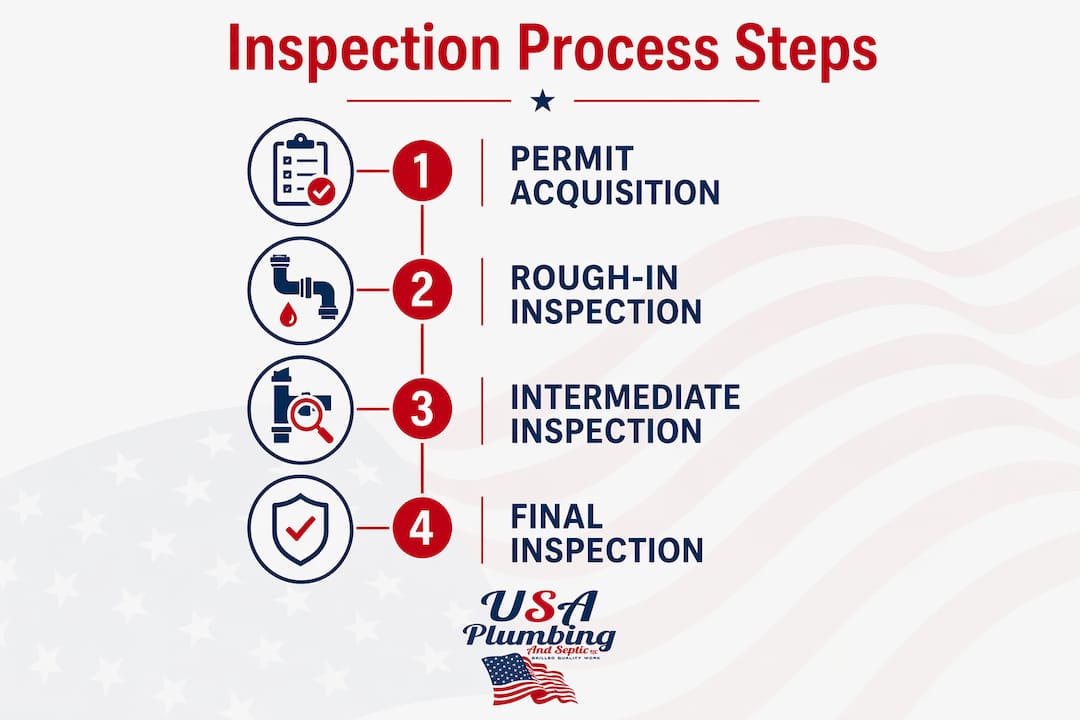
The three key inspection stages
Rough-in inspection happens after all pipes are installed but before walls are closed. The inspector checks pipe routing, slope on drain lines, support hangers, and proper venting. Failing to schedule this inspection before drywall goes up forces contractors to reopen walls, which is expensive and causes serious project delays.
Intermediate inspection applies to larger commercial projects with multiple systems or phases. Not every jurisdiction requires this stage, but complex builds with grease interceptors, backflow preventers, or medical gas lines typically trigger it.
Final inspection occurs after all fixtures are installed and the system is operational. Inspectors verify that every fixture matches the approved plans, that gas connections are leak-free, and that all safety devices function correctly.
Inspectors look for the following during commercial plumbing inspections:
- Correct pipe material for the application (copper, PVC, CPVC, or cast iron as specified)
- Proper slope on drain lines (typically 1/4 inch per foot for horizontal runs)
- Secure pipe supports at required intervals
- Correct venting configuration to prevent siphoning
- Compliant gas line connections and pressure testing results
- Backflow prevention devices where required by code
Coordinate inspection scheduling as soon as each phase is complete. Do not assume the inspector will be available the next day. In busy Arizona markets, inspection slots can book out several days in advance. Build that lead time into your project schedule from the start. For guidance on passing plumbing inspections the first time, preparation before the inspector arrives makes the difference.
What are the most common permit mistakes commercial contractors make?
The most common reason for permit denial is incomplete or vague application data, including missing fixture details, unspecified pipe sizes, or absent contractor license numbers. Knowing the pitfalls in advance keeps your project on schedule.
- Submitting vague plans. Writing "install plumbing" on a plan sheet guarantees rejection. Every pipe size, material, and fixture location must be specified.
- Missing contractor license documentation. Arizona requires the license number of the qualifying party on every commercial permit application. Omitting it stops the application immediately.
- Starting work before permit approval. This is the single most costly mistake. Unpermitted commercial plumbing work increases liability risk, can result in denied insurance claims, and may require inspectors to force costly reopening of finished walls.
- Skipping the rough-in inspection. Closing walls before the rough-in inspection passes is a guaranteed rework order. Schedule the inspection before any drywall or insulation goes up.
- Underestimating plan review timelines. Contractors who assume same-week approval and schedule crews accordingly end up paying for idle labor. Build review time into the project schedule.
Pro Tip: Assign one person on your team to own the permit file. That person tracks submittal dates, review status, and inspection scheduling. Projects with a single point of accountability move through the permit process faster than those where everyone assumes someone else is handling it.
Working with a licensed plumbing contractor who knows local Arizona codes removes most of these risks. A contractor familiar with Mohave County requirements knows exactly what the building department expects and submits complete applications the first time. Understanding commercial plumbing maintenance schedules also helps contractors plan permit-required work well in advance rather than reacting to failures.
Key Takeaways
Commercial plumbing permit compliance in Arizona requires complete documentation, scheduled inspections at every phase, and permit approval before any work begins.
| Point | Details |
|---|---|
| Permits before work | Never start commercial plumbing work without an approved permit in hand. |
| Complete applications win | Include fixture counts, pipe specs, BTU ratings, and license numbers to avoid rejection. |
| Three mandatory inspections | Rough-in, intermediate (if applicable), and final inspections are all required checkpoints. |
| Fees vary by project type | Expect $75–$400 for standard work; complex commercial projects cost significantly more. |
| Unpermitted work is costly | Denied insurance claims and forced wall reopening make skipping permits far more expensive than the permit itself. |
What I've learned from years of watching permit problems derail good projects
Most permit problems I see are not caused by difficult building departments. They are caused by contractors who treat the permit as an afterthought rather than the first task on the project checklist.
The contractors who move fastest through the permit process are the ones who call the building department before they submit anything. They ask one question: "What does your department need to approve this specific type of project?" That conversation takes 15 minutes and saves weeks. Pre-application contact is the single most underused tool in commercial plumbing project management.
The second thing I've noticed is that business owners often don't realize they share liability for unpermitted work. If a contractor pulls no permit and something fails, the building owner can face code enforcement action, insurance denial, and difficulty selling or refinancing the property. The permit protects the owner just as much as it protects the contractor.
My honest advice: treat the permit process as part of your project scope, not a separate administrative burden. Build permit fees into your bid. Build review timelines into your schedule. Assign someone to track inspection milestones. Projects that do this run cleaner, close faster, and never end up with a stop-work order posted on the door.
— JOHN
How Usaplumbingseptic supports your commercial permit compliance
Commercial plumbing permit work in Arizona requires licensed professionals who know local code requirements and building department expectations. Usaplumbingseptic serves contractors and business owners across Bullhead City, Fort Mohave, Mohave Valley, and Laughlin with experienced commercial plumbing services built around full code compliance.

Our team handles complex commercial installations, gas line work, sewer line repairs, and fixture relocations with the documentation and technical detail that Arizona building departments require. We work with you from the planning stage through final inspection so your project stays on schedule and on the right side of local regulations. Contact our commercial plumbing team today to get your project started the right way.
FAQ
What work requires a commercial plumbing permit in Arizona?
New installations, repiping, gas line additions, water heater replacements, fixture relocations, and sewer line repairs all require a permit. Minor maintenance like replacing a faucet or fixing a P-trap typically does not.
How much does a commercial plumbing permit cost in Arizona?
Permit fees typically range from $75 to $400 for standard work, with larger or more complex commercial projects costing significantly more depending on the fee structure used by the local jurisdiction.
What happens if I do commercial plumbing work without a permit?
Unpermitted work can result in denied insurance claims, stop-work orders, and inspectors requiring you to open finished walls for verification. Code enforcement fines and project delays add to the cost.
How long does the commercial plumbing permit process take in Arizona?
Standard plan review in most Arizona jurisdictions takes one to three weeks. Expedited review options are available in many cities for an additional fee, which can reduce that timeline significantly.
Do I need a licensed contractor to pull a commercial plumbing permit in Arizona?
Yes. Arizona requires a licensed contractor's name and license number on every commercial plumbing permit application. Unlicensed individuals cannot legally pull commercial permits in the state.
Recommended
- How to Pass a Plumbing Health Inspection for Your Business
- Plumbing Code Compliance for Arizona Homeowners
- USA Plumbing and Septic LLC - Plumbers, Plumber, Plumbing, Emergency Plumber, Commercial Plumber, Local Plumber, Plumbing Company, Septic
- USA Plumbing and Septic LLC - Plumbers, Plumber, Plumbing, Emergency Plumber, Commercial Plumber, Local Plumber, Plumbing Company, Septic