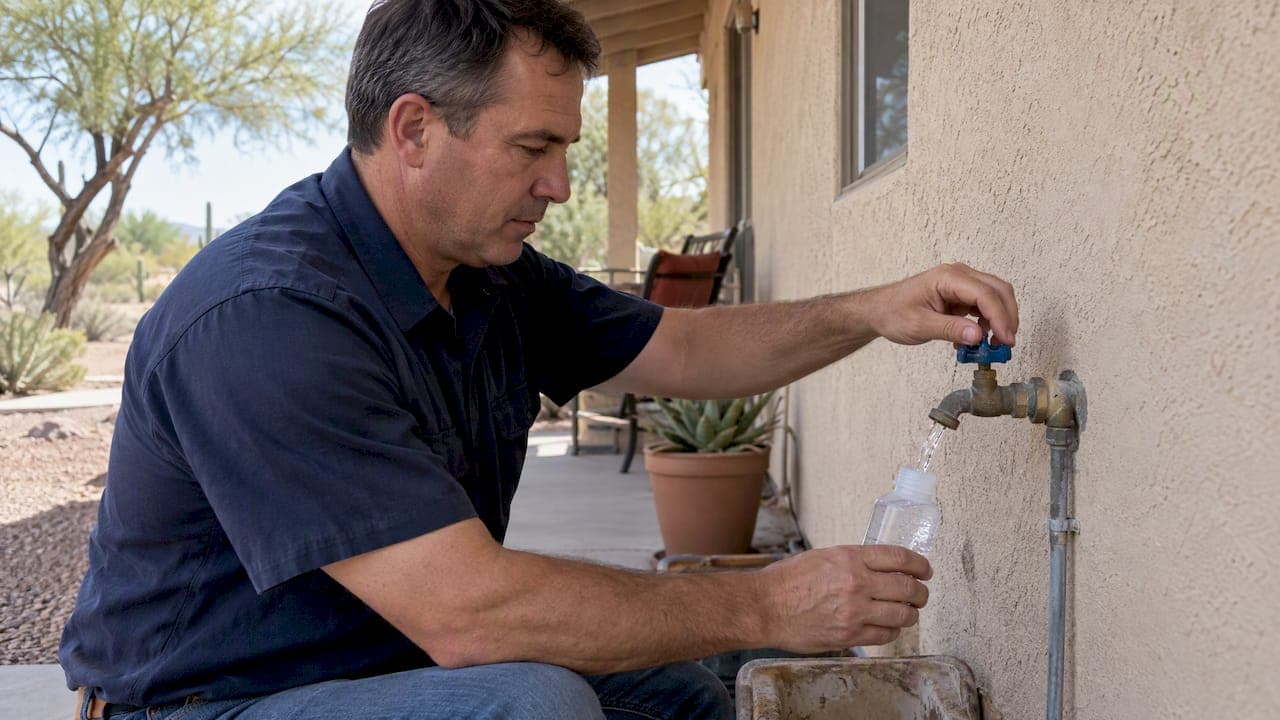
A basic bacteria test runs about $10 to $50, a standard homeowner panel typically costs $50 to $150, and comprehensive or PFAS testing can reach $200 to $600 or more. Before you order anything, call your county health department or a state-certified lab first, since many offer free or subsidized basic testing. DIY kits exist and have their place, but they're best used for preliminary screening, not for decisions that matter.
TL;DR:
- Private well owners should test annually for total coliform, nitrates, total dissolved solids, and pH, with additional bacteria and nitrate tests after flooding.
- Test metals every 3 to 5 years, or sooner for older wells; consider VOCs or PFAS when nearby land use creates exposure risks.
- Home kits costing $10 to $100 can screen pH or hardness, but certified lab results are needed for treatment, legal, and real estate decisions.
- Call your county health department before ordering privately, because programs often provide free or inexpensive basic screening and can identify certified laboratories.
- Deliver bacteria samples promptly and follow the laboratory's collection instructions; mishandling can invalidate results and force you to pay for another test.
Table of Contents
- What different price bands actually cover
- Per-test pricing and when each one matters
- DIY kits vs. certified labs: cost, accuracy, and when each makes sense
- Where to get your water tested
- Sampling steps, turnaround time, and fees that add up
- Budgeting and cost-saving checklist
- Why we treat water testing as preventive maintenance
- How we help after you get your test results
- FAQ
- Sources
What different price bands actually cover
Water testing costs break down into three general tiers, and knowing which one you need keeps you from overspending.
A basic bacteria-only test checks for total coliform and E. coli, and it's the cheapest option because the lab process is simple. A standard homeowner package goes further, adding nitrate, pH, and total dissolved solids (TDS) to the bacteria screen, which is why the CDC and EPA recommend this combination annually for every private well. Comprehensive panels, which screen for heavy metals, volatile organic compounds (VOCs), or PFAS, cost more because they require specialized equipment and chemists trained to run them.
- Basic bacteria test: often priced on the lower end of the scale, and sometimes free through county health programs.
- Standard homeowner panel (coliform, E. coli, nitrate, pH, TDS): usually costs a moderate amount reflecting multiple analytes.
- Comprehensive metals, VOC, or PFAS panels: more expensive, reflecting the broader range of tests and specialized equipment required.
Published fee schedules confirm just how wide that range can get. The Wisconsin State Lab of Hygiene lists homeowner packages between $42 and $450, with some comprehensive panels reaching $1,015. If you've just bought a property, moved into a first-time well, or dealt with flooding or a nearby spill, that's when a comprehensive baseline test earns its cost. Otherwise, stick with the basics and expand only if something specific points to a risk.
Per-test pricing and when each one matters
Not every test needs to happen every year, and matching the test to your actual risk keeps your budget under control.
Bacteria and nitrate tests are the cheapest and the most urgent, especially for households with infants, pregnant women, or anyone with a compromised immune system, since nitrate exposure poses direct health risks to those groups. Lead and arsenic testing costs more because it usually requires metals analysis equipment, and it matters most for older wells with aging plumbing or properties near old orchards or mining activity. VOC testing applies if you're near a gas station, dry cleaner, or industrial site, and PFAS testing, while pricier, is worth asking about if you live near a military base, airport, or manufacturing facility with a known PFAS history.
- Bacteria and nitrate: test annually, especially after heavy rain or flooding.
- Lead, arsenic, and other metals: test every 3 to 5 years, or sooner for older wells.
- VOCs and PFAS: test once as a baseline, then only if nearby land use changes.
PFAS panels typically cost $150 to $300 and require specialized lab methods capable of detecting dozens of compounds at very low concentrations, which explains why they cost more than a standard panel.
Annual testing for coliform bacteria, nitrates, TDS, and pH is the minimum standard the CDC and EPA recommend for every private well owner, regardless of how long the well has been in service.
DIY kits vs. certified labs: cost, accuracy, and when each makes sense
Retail test strips and home kits cost $10 to $100 and give you a same-day read on pH, hardness, or basic bacteria presence. They're useful for a quick gut check, but they don't carry the lab quality assurance that a certified result needs.
- Use a retail kit for a preliminary screen, like checking hardness before deciding on a softener.
- Use a certified lab, priced from $10 to $600 or more depending on scope, when the result needs to hold up for treatment decisions, a real estate closing, or a legal dispute.
- Choose a certified lab outright for PFAS or metals testing, since home kits generally can't detect these reliably.
Retail kits are fine for rough screening, but they shouldn't be the basis for legal, medical, or real estate decisions. A certified lab result carries the documentation and quality control that those situations require.
Pro Tip: If a test result might lead to an expensive decision, like installing a treatment system or negotiating a home sale, spend the extra money on a certified lab from the start.
Where to get your water tested
Your county health department is usually the best first call, because many counties run free or low-cost bacteria and nitrate testing programs and can point you toward certified labs for anything more involved.
- County health departments: often free or under $20 for basic bacteria and nitrate screening.
- State-certified labs: fee schedules vary widely by state, so check the published price list before you order.
- Private mail-in labs and local certified labs: convenient, but kit and shipping costs add to the base test price.
The EPA doesn't test individual residential water supplies directly; it directs homeowners to state certification programs and lists of approved labs instead. That makes your state's environmental or health agency website the most reliable place to confirm who's certified near you.
Sampling steps, turnaround time, and fees that add up
How you collect a sample affects both the cost and the validity of your results, so skipping the instructions can mean paying twice.
- Bacteria samples are time-sensitive. Delays or improper handling can invalidate results, so get the sample to the lab quickly after collection.
- Lead testing often requires a first-draw sample taken after the water has sat in the pipes overnight, which captures accurate lead exposure.
- Rush processing costs extra, so build in a few extra days if your budget is tight.
- Follow the lab's sampling kit instructions exactly, since a contaminated or mishandled sample means paying for a retest.
Budgeting and cost-saving checklist
A realistic annual plan keeps testing affordable without cutting corners on safety.
- Budget for bacteria, nitrate, and pH/TDS testing every year, and save comprehensive panels for a baseline test or after a specific risk event.
- Call your county health department before ordering from a private lab. It's often the cheapest valid option available.
- Compare published fee schedules between labs, and ask about hidden kit or shipping charges before you commit.
- Hire a professional to collect your sample when the protocol is strict or when a positive result could trigger costly remediation.
Pro Tip: If a test comes back positive for something serious, don't let a second opinion wait. Confirm the result with a certified lab before spending money on a treatment system.
Why we treat water testing as preventive maintenance
Testing routinely catches small problems before they become expensive repairs or health concerns. When a sample points to a system issue rather than a water source problem, a plumbing team can help collect a valid sample and read the result in context of your pipes, pressure tank, or well equipment. Start with your county health department, then bring in a trusted technician if remediation is indicated.
— JOHN
How we help after you get your test results
If your results point to a well equipment issue, filtration need, or plumbing problem, that's where we come in. We handle water well equipment repair, filtration and softening system maintenance, and on-site sample collection assistance when a test calls for strict handling.
If flooding, a failed inspection, or a property transfer is driving your test, we can also help you understand what a positive result means for your plumbing system before you spend money on a fix you don't need. A failed septic or sewage inspection can also affect a property sale, and sellers facing that situation sometimes consider repair-or-sell-as-is options rather than a full remediation. When the fix is on our side, from a well pump that's drawing in sediment to a softener that needs servicing, visit our services page to schedule a visit.
This article is general information, not a substitute for advice from a qualified doctor. Consult a qualified healthcare professional about your own circumstances before acting on anything here.

FAQ
Can I test my own water quality?
Yes, retail test strips and home kits let you screen for things like pH, hardness, or bacteria presence on your own. They're useful for a quick check, but they lack the sensitivity and quality assurance of certified lab testing, so don't rely on them for treatment, legal, or real estate decisions.
Does Home Depot still offer free water testing?
Retail home improvement stores have offered water testing promotions in the past, but availability and scope change by location and season. Your county health department is a more consistent source for free or low-cost basic testing, so check there first.
What are signs of poor water quality?
Common signs include unusual taste, odor, cloudiness, staining on fixtures, or a change in water pressure or clarity after rain. These signs don't confirm a specific contaminant, though, so a lab test is the only way to know what's actually in your water.
Is water quality testing legit?
Yes, when it's done through a state-certified lab using EPA-approved methods, the results are reliable enough for health, legal, and real estate purposes. The EPA directs homeowners to state certification programs to confirm which labs near you are properly certified.
How often should private well owners test their water?
The CDC and EPA recommend annual testing for total coliform bacteria, nitrates, TDS, and pH at minimum. Additional tests, like metals or VOCs, depend on local land use and specific risk factors near your property.
Sources
- Assessment of private well water safety and recommendations (PMC)
- Guidelines for testing well water | CDC
- Public Environmental and Water Testing Prices | Wisconsin State Lab of Hygiene
- Protect your home's water | US EPA