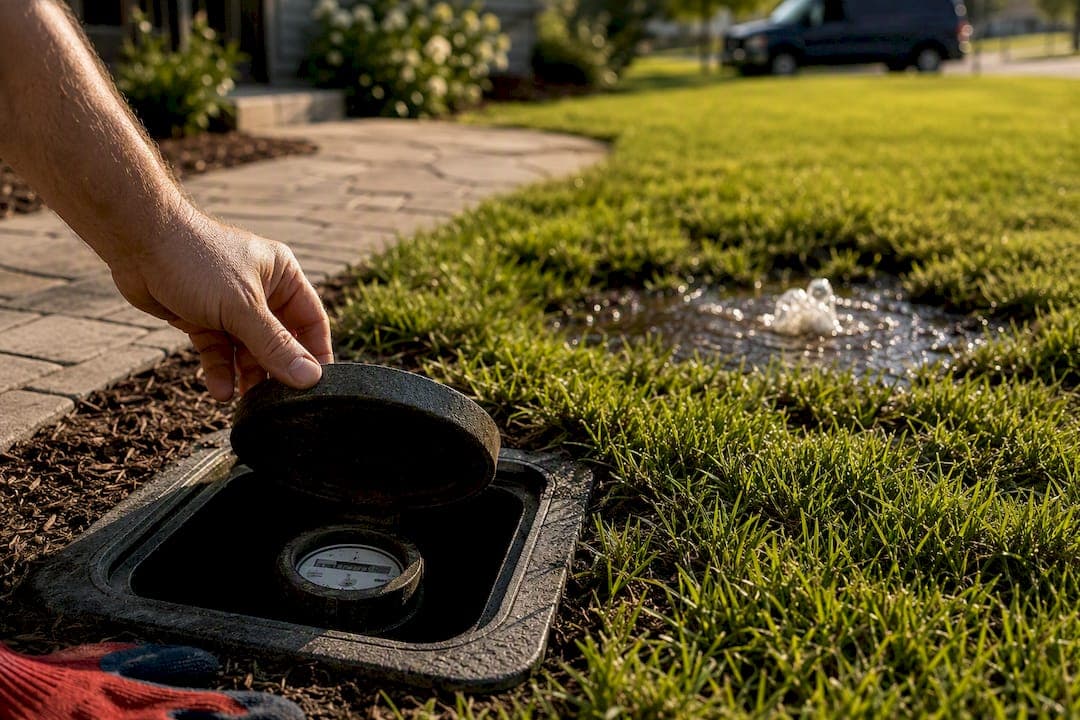
Most yard leaks trace back to one of three culprits: a broken irrigation line, a cracked private supply pipe between your meter and house, or a sewer and drainage problem. The priority right now is simple. Turn off your irrigation system, check your water meter, and stay off soggy soil until you know what you are dealing with. If the meter keeps moving with everything inside shut off, or you smell sewage, call a licensed plumber immediately.
TL;DR:
- Most yard leaks are caused by broken irrigation lines, cracked supply pipes, or sewer and drainage problems, requiring different diagnostic approaches.
- Turning off the irrigation system and checking the water meter can help identify if the leak is within the yard or inside the house.
- A leaking private supply line or sewer backup often presents with a spinning meter, foul odors, or persistent wet spots that do not respond to irrigation shutdown.
- Repair costs vary widely depending on pipe material, location, and process, with trenchless methods reducing landscaping costs for supply-line issues.
- Effective prevention includes seasonal checks, monitoring water bills, avoiding tree roots near pipes, and installing leak-detection devices; professional diagnosis often involves acoustic, gas, thermal, and camera inspections.
Table of Contents
- What's Causing the Water Leak in Your Yard?
- How Do You Diagnose a Water Leak in Your Yard?
- What Should You Do Right Now to Limit Damage?
- When Should You Call a Professional?
- What Does It Cost to Fix a Yard Water Leak?
- How Can You Prevent Future Yard Leaks?
- How Do Professionals Actually Diagnose a Yard Leak?
- Can a Yard Water Leak Create Health Risks?
- What's the Environmental Cost of a Yard Leak Left Unfixed?
- How Much Damage Can a Yard Leak Do Over Time?
- A Publisher's Take on Acting Fast
- Get Your Yard Leak Diagnosed the Right Way
- Sources
- FAQ
What's Causing the Water Leak in Your Yard?
Not every wet patch means the same thing, and figuring out which system failed determines who you call and how fast.
Irrigation and sprinkler breaks usually correlate with your watering schedule. You will notice bubbling or a soggy patch only when a specific zone runs, and the grass along that line often looks greener or grows faster than the rest of the yard, since it is getting fed extra water.
Private supply or main-line leaks behave differently. The wet spot stays wet even with irrigation off, your water pressure inside the house may drop, and your meter keeps spinning even when every fixture is closed. Localized bubbling combined with a spinning meter and a spiking water bill is one of the clearest tells of a main-line break.
Sewer or drainage failures come with a distinct warning: foul odor. Discolored water pooling near a cleanout, gurgling drains, or slow backups inside the house point to a sewer line problem, and this category needs urgent professional attention rather than a wait-and-see approach.
Groundwater and drainage issues show up as widespread soggy ground after rain, not a single isolated wet spot. These are graded and drainage problems, not pressurized pipe leaks, and they get fixed with regrading or French drains instead of pipe repair.
How Do You Diagnose a Water Leak in Your Yard?
You do not need special equipment to narrow down the source. You need a systematic sequence, and about twenty minutes.
- Shut off every indoor fixture (faucets, toilets, ice makers, washing machine) and watch your water meter's flow indicator. If it is still spinning or ticking, you have an active leak somewhere on your private side.
- Close your home's main shutoff valve and check the meter again. If the flow stops now, the leak is inside your house. If it keeps moving, the leak is between the meter and the shutoff, which usually means the yard.
- Turn off your irrigation controller entirely for a day. If the wet spot disappears or stops reappearing, irrigation is your answer. If the ground stays saturated, suspect the supply line or a groundwater issue instead.
- Walk the property and check valve boxes, backflow devices, and pop-up sprinkler heads for cracks or standing water. Listen near suspected areas for hissing or a faint rushing sound, which often means a pressurized line failure close to the surface.
Municipal utility guidance backs this exact sequence, and it remains the fastest way to figure out whether the problem is yours to fix or the utility's.
Pro Tip: Do the meter test twice, once in the morning and once at night. Irrigation timers often run overnight, so a leak that looks intermittent during the day can be constant once you account for scheduled watering.
What Should You Do Right Now to Limit Damage?
Before anyone digs a shovel into that soggy patch, take these steps:
- Turn off irrigation valves and any outdoor hose bibs feeding the affected area.
- Stay off saturated soil. Underground leaks erode soil and create hidden voids, and walking or driving over a weakened spot can cause a sudden collapse.
- Take timestamped photos of the wet area, note whether bubbling only happens when specific zones run, and pull your last two water bills to spot the exact month usage jumped.
- Call 811 before any digging. Utility locates are free, and hitting a gas or electrical line while investigating a water problem turns a repair job into an emergency.
- If your meter spins with the indoor main shut off, or you smell sewage anywhere near the site, stop troubleshooting and call a licensed plumber the same day.
When Should You Call a Professional?
Your meter test tells you who to call. If the leak sits on the street side of the meter, or several curb boxes nearby show the same symptoms, that is your water utility's problem, not yours. Utility responsibility typically ends at the meter, with everything beyond it belonging to the property owner.
Call a licensed plumber when the private-side test points to a buried supply leak, when soil undermining threatens a walkway or foundation, or when there's any sewage smell. Professional teams often use specialized construction software for plumbers to manage workflow and ensure efficient detection and repair. Professional leak detection goes well beyond guesswork:
- Acoustic correlators pick up the distinct sound pressurized water makes escaping a pipe underground.
- Tracer gas gets injected into the line and detected at the surface once it escapes through a crack.
- Infrared thermal imaging reveals temperature differences in the soil above a leak.
- Sewer camera inspections locate root intrusion, offset joints, or collapsed sections inside drain lines.
- Pressure testing confirms whether a suspected section is actually losing pressure over time.
These methods each have documented, standardized applications for underground pipeline leak detection, and a competent contractor will explain which one fits your situation before recommending repairs. Our own breakdown of how leak detection actually works walks through what each tool sees and misses.
Pro Tip: Ask for the locate marks and photos before any excavation starts. A reputable contractor documents the exact leak location on the ground and shows you the evidence, not just a verbal "it's here."
What Does It Cost to Fix a Yard Water Leak?
Repair cost depends heavily on what broke and how deep it sits. Irrigation fixes are the cheapest category: a cracked sprinkler head or a severed lateral line is often a same-day repair, since the pipe usually sits just a few inches below grade.
Private supply-line repairs cost more and vary widely. A spot repair on a shallow, accessible section runs far less than a full line replacement. Trenchless methods, like pipe bursting or pipe relining, avoid tearing up an entire yard and can reduce landscaping restoration costs, though the trenchless equipment itself carries its own price premium. Sewer line problems follow a similar pattern: camera diagnosis first, then a decision between relining a section or replacing it outright, with contamination risk pushing more failures toward full replacement.
Several factors swing the estimate significantly:
- Pipe material (older galvanized or clay lines fail more often and cost more to match)
- Depth and access (a line under a driveway costs more than one under open lawn)
- Tree root intrusion, which frequently forces full replacement instead of a spot fix
- Number of separate breaks found once excavation starts
- Permit requirements and any roadway or sidewalk restoration
Treat any quote as a range, not a guarantee, and get more than one written estimate before committing. A detailed look at private-side underground leak repairs covers the trade-offs between spot repair and full replacement in more depth. If you want a sense of what a small leak left alone can quietly cost you over time, our breakdown of minor leak costs in Bullhead City is worth a read before you decide to wait it out.
How Can You Prevent Future Yard Leaks?
A handful of recurring checks catch most problems while they are still cheap to fix.
- Walk your sprinkler heads, valve boxes, and backflow device once a season and keep an as-built irrigation diagram so you know what's buried where.
- Check your meter reading and compare it against your water bill every month. A quiet, unexplained increase is often the first sign of a slow leak.
- Winterize exposed outdoor lines before the first hard freeze if you live somewhere temperatures drop below freezing.
- Keep large-root trees away from known pipe routes, and have older or clay sewer lines camera-inspected every few years rather than waiting for a backup.
- Consider a smart leak-detection device or a smart irrigation controller that flags abnormal flow, since both catch problems days or weeks before you'd notice a wet spot on your own.
Pro Tip: Mark your irrigation valve boxes and main shutoff location on a simple yard sketch and keep it taped inside a cabinet. It sounds basic, but it saves real time when you're trying to isolate a leak under pressure.
How Do Professionals Actually Diagnose a Yard Leak?
A licensed plumber follows a sequence that starts exactly where your own troubleshooting did: confirming the meter test, then running controlled zone tests, then moving to acoustic locating, tracer gas, or thermal imaging if the source still isn't obvious. Sewer-related symptoms get a camera inspection before anyone touches a shovel.

Before any digging, a competent crew calls 811 for utility locates and sets up shoring or dewatering if the excavation goes deep. When you're screening a contractor, ask directly about licensing, insurance, trenchless repair experience, warranty terms, expected timeline, and cleanup responsibility, and ask for references from recent yard-leak jobs specifically. A reputable contractor hands you a written estimate, a marked locate on the ground, before-and-after photos, and a clear warranty in writing, not a verbal promise.
Can a Yard Water Leak Create Health Risks?
Standing water in your yard is more than a nuisance. It's a breeding ground for mosquitoes within days, and a sewer-related leak carries genuine contamination risk from bacteria and pathogens in wastewater.
If the wet area smells like sewage, treat that soil and any nearby standing water as contaminated. Keep kids and pets away until a professional confirms the source and clears it. Mold and mildew growth around a chronically wet foundation wall or crawl space can trigger respiratory irritation for people already sensitive to allergens, especially in warmer climates where a soggy yard rarely dries out on its own between waterings.
There's also a slip and structural hazard tied to the same soil erosion that causes sinkholes. A void forming under a walkway or patio slab isn't just a repair cost. It's a fall risk for anyone crossing it, particularly kids and older adults who may not notice the ground has softened. If a soggy patch develops a sudden depression or the grass around it starts sinking underfoot, stay off it and treat it the same way you'd treat thin ice.
What's the Environmental Cost of a Yard Leak Left Unfixed?
A running leak doesn't pause when you're not looking at it. It wastes treated, pressurized water around the clock, water that took energy to pump and chemicals to treat before it ever reached your yard. Multiply that by weeks or months of an unnoticed leak, and the waste adds up to a meaningful drain on a shared municipal resource, not just your own bill.
Pools and pool equipment are a specific case worth flagging here, since even a small pool leak can lose a surprisingly large volume of water annually, and pool-specific leak detection is a specialized service separate from general plumbing. In drought-prone regions, that waste isn't abstract. Municipal conservation programs exist specifically because unnoticed outdoor leaks are one of the largest sources of avoidable residential water loss, and fixing yours promptly is a small but real contribution to easing pressure on local water supply during dry seasons.
Runoff from a sewer-related leak carries its own environmental weight too, since untreated wastewater reaching soil or nearby storm drains can affect local groundwater quality. That's one more reason sewer odor gets treated as an emergency rather than something to monitor for a few days.
How Much Damage Can a Yard Leak Do Over Time?
The real cost of an ignored yard leak rarely shows up where the water first appeared. It shows up months later, in places you weren't watching. Saturated soil against a foundation wall gradually loses its load-bearing strength, and slab foundations sitting on chronically wet clay soil are especially prone to shifting, which shows up as cracked drywall or doors that suddenly stick.
Landscaping damage compounds quietly too. Grass drowns in the saturated zone while everything around it dries out normally, and mature trees near a leaking line can develop root rot from constant saturation, killing a tree that took decades to grow. Hardscape features suffer the same fate as structures: a patio, walkway, or driveway slab sitting over an eroding void will eventually crack or sink, and by the time that happens, the fix is no longer "repair a pipe." It's repair a pipe and then replace a slab.
The eroded-void problem is the one homeowners underestimate most. Soil washed away by a slow underground leak leaves a hidden cavity that can collapse without warning, sometimes long after the original leak has been fixed, if the void itself wasn't addressed. That's the core argument for acting on a soggy spot in week one instead of month six. The pipe repair is almost always the cheap part. What it damages on the way is not.
A Publisher's Take on Acting Fast
Small leaks rarely stay small. In our experience, the yard leaks that turn into slab or foundation repairs almost always started as a spot someone meant to check "next weekend." Do the meter test today, snap a few photos, and if your symptoms match an emergency signal, get a diagnostic visit scheduled this week, not next month. The pipe is cheap. The waiting is not.
— JOHN
Get Your Yard Leak Diagnosed the Right Way
If your meter test points to a private-side leak, or that sewage smell won't go away, there are services that run acoustic locating, camera inspection, and both trenchless and open repair under one licensed crew, so you're not coordinating between three different specialists to get one yard leak fixed.

Before your visit, gather the basics: photos of the wet area, your last two water bills, and the results of your own meter shutoff test. That saves time on-site and helps us give you an accurate scope faster. Homeowners in Bullhead City, Fort Mohave, Mohave Valley, and Laughlin can schedule a diagnostic visit with our local plumbing team directly, and if you're in the Fort Mohave area specifically, our Fort Mohave service page has the details you need to book.
Sources
- Homeowner responsibility — Denver Water
- Outdoor leaks | City of Phoenix
- Look for leaks: outdoors — Cal Water
- Standard test procedures for evaluating various leak detection methods — US EPA
FAQ
What should you do first if you find a water leak in your yard?
Turn off your irrigation system, run the indoor shutoff and meter test to confirm the leak is active, and photograph the wet area before calling a plumber or your water utility based on the results.
Does homeowners insurance cover a water leak outside?
Coverage varies by policy and insurer, but many standard homeowners policies exclude gradual underground leaks and focus on sudden, accidental damage instead, so check your specific policy language rather than assuming coverage.
Who is responsible for a water leak in your yard?
Responsibility splits at the water meter: the utility covers the main line up to the meter, and the homeowner is responsible for every pipe, valve, and fixture beyond it, including irrigation lines.
How much does it cost to fix a water leak in your yard?
Cost depends on what failed and how deep it sits. Sprinkler head or lateral repairs are typically inexpensive and quick, while supply-line or sewer repairs cost significantly more depending on pipe material, depth, and whether trenchless or open excavation is required. Get multiple written estimates before committing.