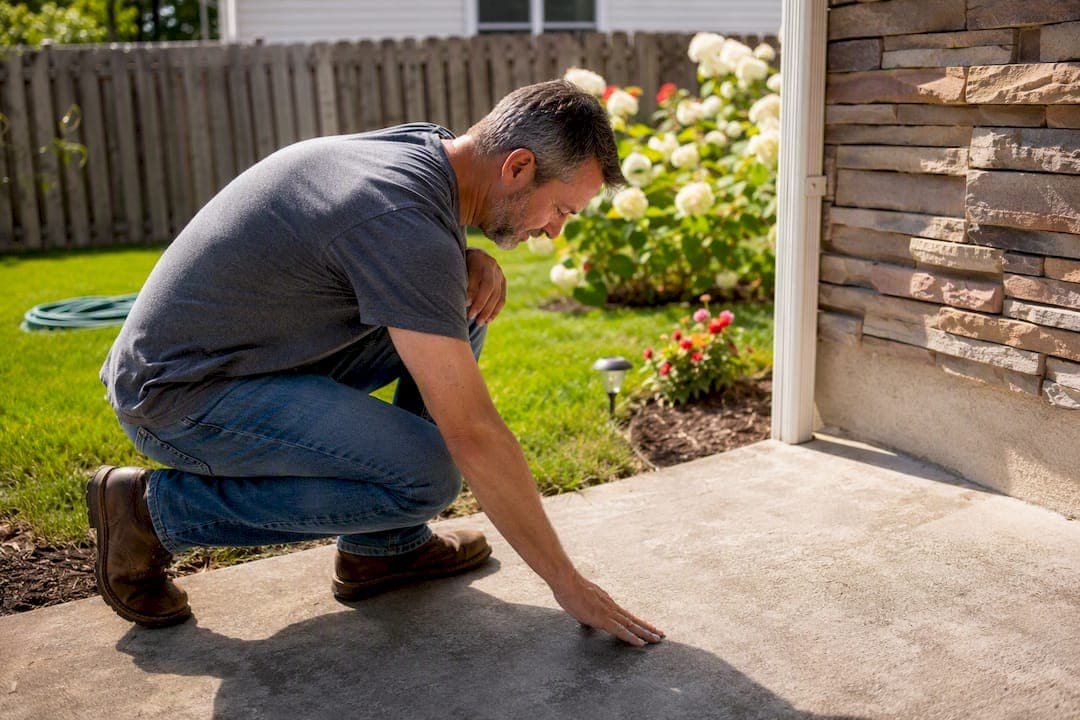
If your water bill jumped for no reason, you hear running water when every faucet is off, or one patch of floor feels warm to the touch, you're likely dealing with a slab leak. Two or more of these signs together are a strong signal: an unexplained water-bill increase, a moving water meter with fixtures off, warm or hot floor spots, running-water sounds, damp or warped flooring, low pressure throughout the house, musty odors, and new cracks near the slab.
- Water bill up significantly with no new usage
- Water meter dial creeping when everything is off
- Warm or hot patches on the floor, especially barefoot in the morning
- Hissing or whooshing sounds with fixtures off
- Damp carpet, warped wood, or pooling near the foundation
- Low pressure at every fixture, not just one
- Musty smell or mold at floor level
- New cracks in flooring, grout, or walls near the slab
Your next move: shut off every fixture and irrigation line, check your water meter, and if it moves, call a licensed plumber right away.
Key Takeaways
Two or more slab leak warning signs occurring together, especially a moving water meter paired with a warm floor spot, justify an immediate call to a licensed plumber rather than a wait-and-see approach.
| Point | Details |
|---|---|
| Run the meter test first | Shut off every fixture and irrigation line, then check for movement over 15 to 120 minutes. |
| Track your water bill | A significant unexplained jump over a normal month is a common early signal. |
| Check floors barefoot in the morning | A patch 5 to 10 degrees warmer than the rest often points to a hot-side leak. |
| Watch for co-occurring signs | Damp flooring, musty smells, or new cracks alongside a moving meter mean act now, not later. |
| Call in the pros for confirmation | Usaplumbingseptic's licensed plumbers use acoustic, thermal, and tracer-gas detection to pinpoint leaks before any coring. |
Table of Contents
- What Is a Slab Leak, and Why Does It Cost So Much?
- How To Spot the Most Common Slab Leak Warning Signs
- Three Checks You Can Run Yourself Before Calling Anyone
- When a Slab Leak Needs a Licensed Plumber
- Why Field Experience Changes How You Read These Signs
- A Straight Answer on What Actually Matters Here
- Get a Slab Leak Confirmed and Fixed Without Guesswork
- Sources
- FAQ
What Is a Slab Leak, and Why Does It Cost So Much?
A slab leak is a break or crack in a water pipe running underneath your home's concrete foundation. In most residential construction, hot and cold supply lines get embedded directly in or under the slab when the house is built, and those pipes are essentially invisible until something goes wrong.
A handful of things typically cause the failure:
- Pipe corrosion, especially in older copper or galvanized lines
- Soil shifting or foundation settling that puts stress on rigid pipe
- Poor installation, including pipes laid too close to gravel or rebar
- Abrasion from the pipe rubbing against the slab over years of minor vibration
The cost problem isn't really the leak itself. It's what a hidden leak does while nobody's looking. Water pools under flooring, softens subfloor material, and works its way into drywall and framing. Left alone long enough, it undermines the structural support the slab is supposed to provide, and mold sets in well before most homeowners notice a smell. That's why catching the warning signs early matters more with a slab leak than almost any other plumbing issue in the house.
How To Spot the Most Common Slab Leak Warning Signs
Slab leaks rarely announce themselves with a dramatic puddle in the living room. They show up as small, easy-to-dismiss oddities that add up. Here's what to actually check.
1. A water bill that jumps without an obvious reason
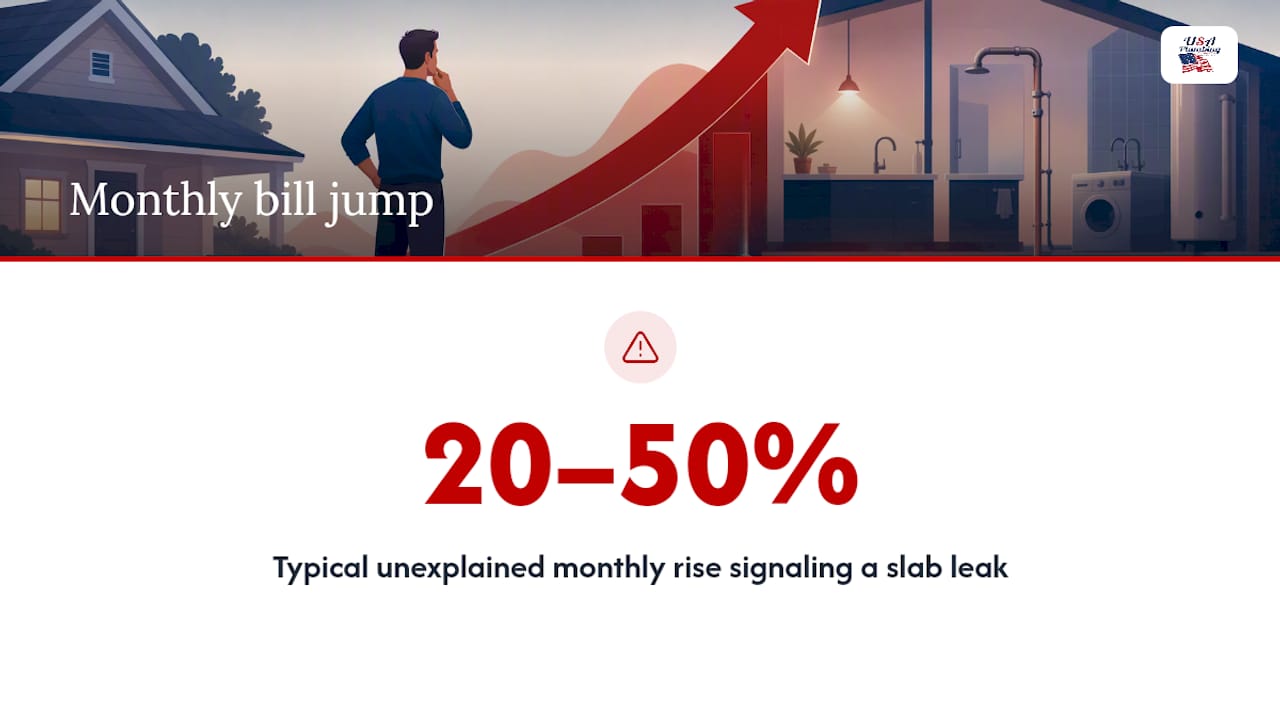
If your bill climbs 20% to 50% over a normal month with no new houseguests, no filled pool, and no extra laundry, that's worth investigating. Professionals who track this pattern regularly point to that same range as a common signature of an active slab leak affecting monthly usage. Pull your last 12 months of bills and look for the month usage started climbing without a clear cause.
2. A water meter that keeps moving with everything off
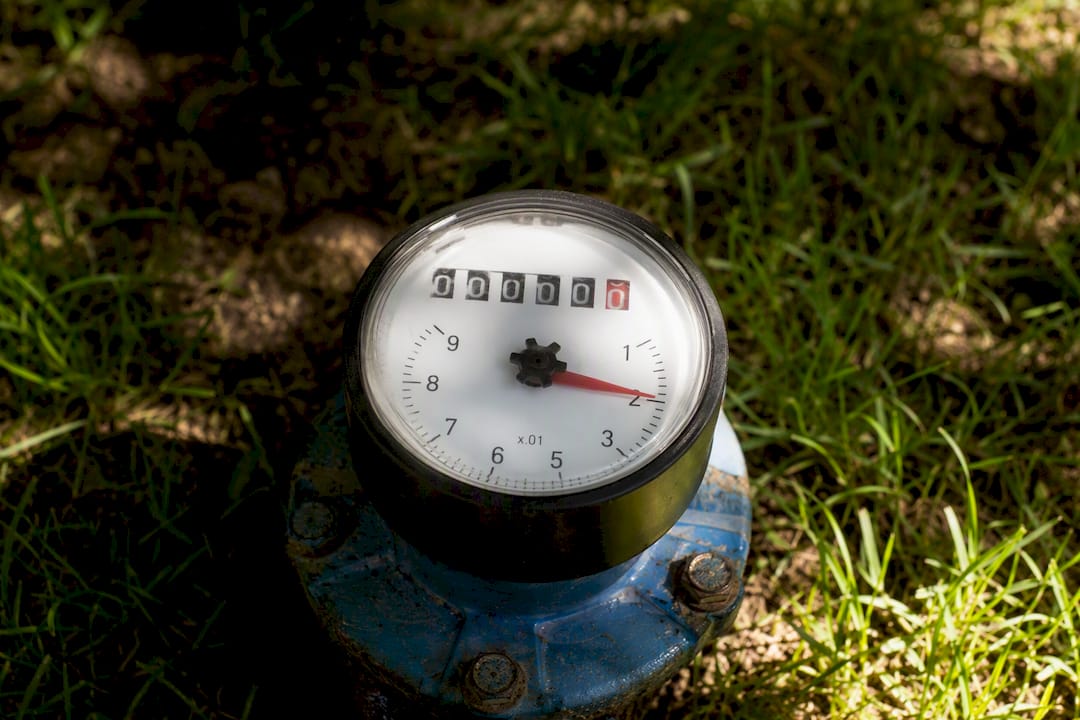
This is the single most reliable DIY confirmation test available to you. Shut off every fixture, appliance, and irrigation zone, then watch the meter. If the dial or digital readout keeps ticking, water is moving somewhere it shouldn't be, and a moving meter with fixtures off points to an active leak on your side of the line.
3. The sound of running water when nothing is running
A hissing or faint rushing sound coming from the floor or walls, especially noticeable at night when the house is quiet, often means water is escaping under pressure somewhere close by. Walk the house room by room and note where the sound gets louder or fainter. That alone can narrow the search area before anyone opens up a wall.
4. Warm or hot spots on the floor
This is one of the most useful signs you can check with nothing but your own feet. A hot-water line leaking under the slab warms the concrete above it, and the affected patch can run 5 to 10 degrees warmer than surrounding flooring. Walk the house barefoot early in the morning, before the sun heats the floor or the AC kicks on, and pay attention to any patch that feels noticeably warmer than the rest.

Pro Tip: If your dog or cat has started camping out on one specific patch of floor for no reason, check that spot first. Pets often find a warm hot-water leak before their owners do.
5. Damp carpet, warped wood, or water pooling near the foundation
Look for carpet that stays damp days after any spill, hardwood that's started cupping or buckling, vinyl that's curling at the seams, or water collecting near an exterior wall with no clear source. A simple check: press a dry paper towel against a suspicious spot and see if it comes away damp. Moisture trapped under flooring rarely comes from anywhere other than a plumbing failure or a grading and drainage problem worth ruling out before you assume it's the slab.
6. Low water pressure throughout the entire house
There's a real difference between one weak shower head and a house-wide pressure drop. A single fixture losing pressure is usually a clogged aerator or a failing cartridge, but a system-wide pressure loss, especially across multiple hot-water fixtures at once, points toward water escaping somewhere upstream of all of them.
7. Musty odors or visible mold near the floor
Mold doesn't wait around. It can begin developing within 24 to 48 hours of sustained moisture exposure, which means a musty smell at baseboard level often shows up before you ever see visible growth. Treat the smell itself as an early-warning sign, not just a confirmation of something you already suspected.
Beyond these seven, watch for new cracks in flooring, tile grout, or interior walls near door frames, and pay attention if your water heater has started cycling on more often than usual. Both can accompany a slab leak that's been running for a while, and neither should be dismissed as normal settling or an aging heater without a closer look.
Three Checks You Can Run Yourself Before Calling Anyone
- Run the full water meter test. Turn off every fixture and appliance, and shut down irrigation too. Note the exact reading, wait 15 to 120 minutes without using water, then check again. Any movement means an active leak somewhere on your property.
- Isolate hot from cold at the water heater. Shut the valve on the cold inlet or hot outlet one at a time and watch how the meter behaves with each isolated. This tells you whether you're chasing a hot-side or cold-side leak, which changes where you look next.
- Listen room by room, at the quietest time of day. Early morning or late night works best, with the HVAC and appliances off. Move slowly and note where any hiss or trickle sound gets stronger.
Pro Tip: A barefoot floor check works well for hot-side leaks, but it's nearly useless on cold-side leaks since there's no temperature differential to feel. If the meter test confirms a leak but your floors feel normal everywhere, assume it's on the cold line and skip straight to a listening check or a professional acoustic scan.
Skip the meter test during an active irrigation cycle, and if you've had recent ice-melt runoff or heavy HVAC condensate drainage nearby, factor that in before you draw conclusions from a damp spot outside.
When a Slab Leak Needs a Licensed Plumber
Call a professional right away if you see any of these combinations: the meter moves and you've found a warm spot, water is pooling and mold has already started, or your bill is climbing fast with no other explanation. Waiting on a combination like that usually costs more than the service call would.
Once a pro is on site, expect tools your barefoot test can't match: acoustic listening equipment, tracer gas for lines that don't hold pressure well, thermal imaging to confirm a hot-side leak, and line tracing to map the pipe's path. Before anyone cuts into the slab, a good technician scans for rebar and post-tension tendons to avoid a far more expensive mistake than the leak itself.
Repairs generally fall into three categories: a targeted spot repair through minimal coring, rerouting the line above the slab or through the attic, or a full repipe for a home with widespread pipe failure. Each trades off disruption, cost, and long-term durability differently, and a plumber who's actually looked at your specific pipe age and layout is the one who can tell you which makes sense.
Before your appointment, pull together your last 12 water bills, a rough timeline of when symptoms started, notes on which rooms show warm or damp spots, and any record of prior slab repairs on the home.
Why Field Experience Changes How You Read These Signs
Warm spot plus a moving meter is the pattern our technicians see more than any other combination, and it's rarely a coincidence when both show up together. A homeowner calls about one warm patch near the hallway, the meter test confirms active flow, and hot/cold isolation at the water heater narrows it to the hot line before anyone touches the floor.
- 24/7 emergency response across Bullhead City, Fort Mohave, Mohave Valley, and Laughlin
- Licensed plumbers experienced in slab leak detection and minimally invasive repair
- Full leak detection guidance available for readers who want the deeper technical picture
A Straight Answer on What Actually Matters Here
Most advice on slab leaks buries the useful part under a long list of possible symptoms, as if every sign carries equal weight. It doesn't. A single warm patch of floor, on its own, tells you almost nothing. Floors run warm for plenty of boring reasons. What actually matters is convergence: the meter test confirming active flow, paired with a physical sign like heat or dampness in one specific spot.
The conventional wisdom oversells thermal cameras and undersells the humble water meter test. A camera is a narrowing tool, not a diagnosis, and it's genuinely weak on cold-side leaks. The meter, by contrast, costs nothing and tells you in under two hours whether you have an active leak at all. Start there, every time. Isolate hot from cold second. Only then does it make sense to bring in acoustic or thermal equipment, because now you're pointing that equipment at a confirmed problem instead of a hunch.
Get a Slab Leak Confirmed and Fixed Without Guesswork
Usaplumbingseptic gives you what a barefoot test and a flashlight can't: acoustic listening gear, thermal imaging, and tracer-gas detection in the hands of licensed plumbers who work slab leaks across Bullhead City, Fort Mohave, Mohave Valley, and Laughlin every week.

If your own meter test came back positive, or you've spotted a warm patch and a climbing water bill, that's exactly the pattern our team resolves fastest, because minimal coring based on confirmed data beats guessing at wall locations. You get an accurate read on whether you're facing a spot repair or something bigger, before anyone touches your slab. Learn more about how minor leaks add up in cost if you're on the fence, or go ahead and book a diagnostic visit through our main service page today.
Sources
- Slab leak warning signs: 10 ways to catch it before the foundation goes
- Signs you might have a foundation slab leak
- Pinpoint the slab leak before you break the floor
- Water leak under concrete symptoms: Top signs of a slab leak
FAQ
Will homeowners insurance pay for a slab leak?
Most policies cover the sudden, accidental damage a slab leak causes to your home, such as flooring and drywall, but they typically exclude the cost of locating and repairing the pipe itself. Check your specific policy language, since coverage varies by carrier.
Is a slab leak a big deal?
Yes. Left unaddressed, it can undermine your foundation, drive mold growth within days, and quietly waste enough water to spike your bill by 20% to 50%.
How long can a slab leak go undetected?
A slow leak can run for months or longer if none of the warning signs are checked, which is why tracking your water bill and running a periodic meter test matters even without an obvious symptom.
Is a slab leak an emergency?
Any combination of a moving water meter with a warm floor spot, active pooling, or visible mold counts as an emergency that warrants an immediate call to a licensed plumber rather than a wait-and-see approach.