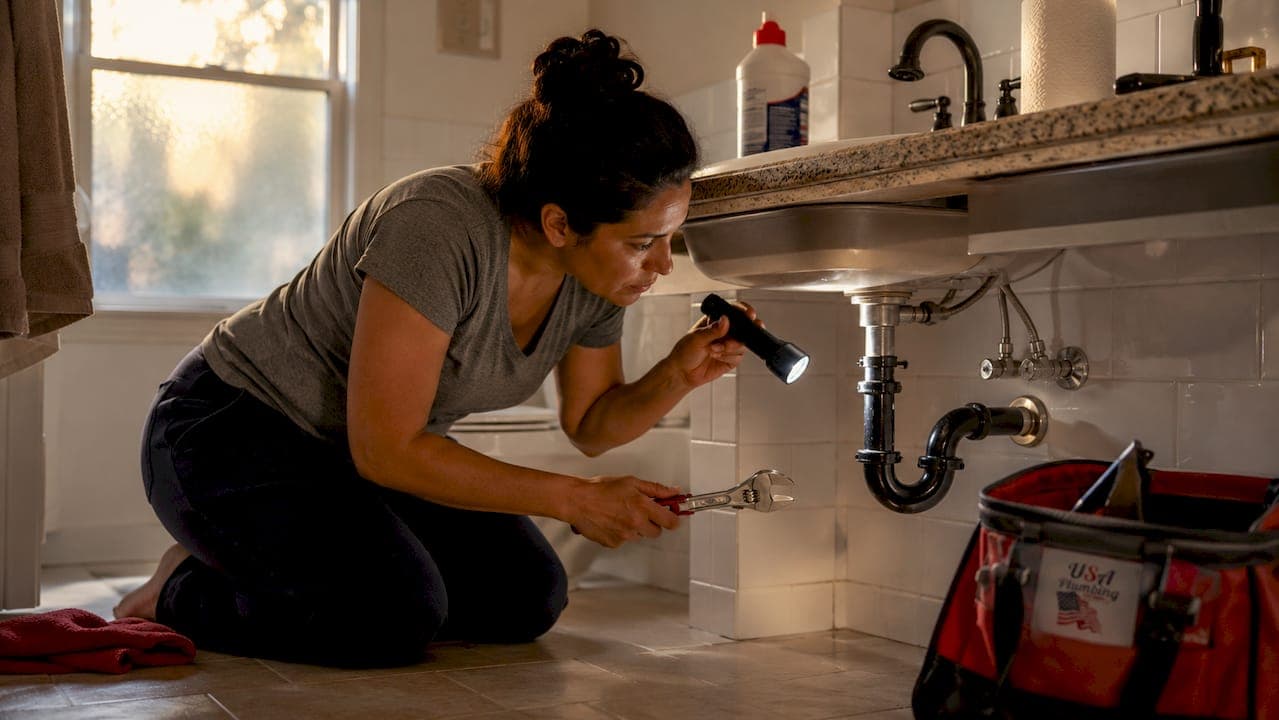
Slow drainage, recurring clogs, foul odors, gurgling sounds, and drain flies are the clearest signs drains need professional cleaning. These symptoms point to pipe buildup, partial blockages, or main sewer line problems that DIY fixes cannot fully resolve. Industry guidance recommends scheduling professional cleaning every 12 to 24 months for most households. Ignoring early warning signs leads to hardened debris, costly main-line blockages, and potential mold damage. Recognizing these indicators early is the most reliable way to protect your home's plumbing.
1. Signs drains need professional cleaning: slow draining water
Slow drainage is the most common and most ignored clogged drain warning sign. Water that takes more than 30 seconds to drain from a sink or tub signals that buildup is narrowing the pipe. Most homeowners assume it will clear on its own. It rarely does.
The three main causes of slow drainage are:
- Grease and cooking oil that cools and hardens inside kitchen drain pipes
- Soap scum that bonds with minerals in hard water and coats pipe walls
- Hair accumulation that mixes with soap residue to form dense, sticky clogs in bathroom drains
Each of these materials builds up gradually. The pipe does not clog overnight. That slow build is exactly why ignoring gradual slowdowns results in expensive main-line blockages that require far more than a simple cleaning.
Pro Tip: Track your drain speed once a month. Fill the sink, pull the stopper, and time how long it takes to empty. If the time increases month over month, buildup is progressing and a professional cleaning is overdue.
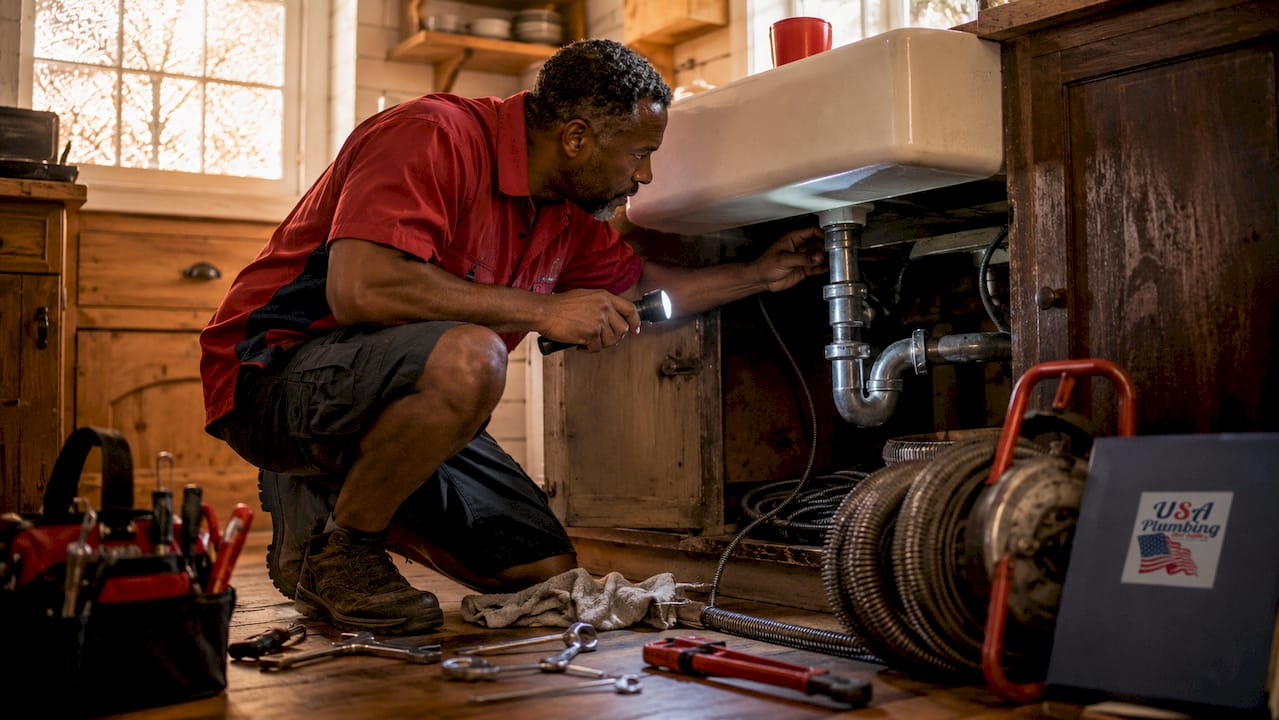
Professional cleaning removes sludge from the full pipe diameter, not just the surface layer. That is a critical difference between a plunger and a hydro-jet or snake.
2. Recurring clogs: why frequent blockages mean it's time for expert help
A single clog is a nuisance. A clog that returns within days or weeks is a symptom of a deeper, persistent obstruction. Recurring clogs are one of the clearest indicators of drain problems that go beyond what a plunger or store-bought drain snake can fix.
Here is how to tell the difference between an isolated clog and a recurring one:
- Isolated clog: Clears with a plunger and does not return for months
- Recurring clog: Returns within days, weeks, or after every heavy use
- Widespread recurring clog: Affects multiple fixtures at the same time, pointing to the main sewer line
Plunging alone pushes the blockage further down the pipe without removing it. The debris compacts, and the clog returns faster each time. Chemical drain cleaners damage PVC and chrome traps, often fail on solid clogs, and leave harmful residues that complicate later professional interventions.
Tree root intrusion is another major cause of recurring clogs, especially in homes over 30 years old. Roots follow moisture into small pipe cracks and grow until they block the line entirely. A plunger cannot remove roots. Professional methods like hydro-jetting and camera inspection are the only reliable solutions for that level of obstruction.
If you are plunging the same drain more than once a month, that drain needs professional attention. Waiting longer does not make the problem cheaper to fix.
3. Foul odors and gurgling sounds as indicators of deep drain problems
Foul odors coming from a drain are not just unpleasant. They are a direct signal that decomposing organic matter or sewer gas is trapped inside your pipes. Both are serious drain maintenance signs that require professional attention.
Gurgling sounds follow a specific pattern that helps identify the problem:
- Single fixture gurgling: Usually a partial clog or venting issue local to that drain
- Gurgling after flushing the toilet: Points to a blockage further down the shared drain line
- Gurgling in multiple fixtures simultaneously: Indicates a main sewer line obstruction
Sewer gas contains hydrogen sulfide, which smells like rotten eggs. It also contains methane. Both gases are harmful in enclosed spaces. A drain that consistently smells after cleaning is not just dirty. It is venting sewer gas into your home.
Gurgling noises and foul odors are among the clearest signals that professional drain cleaning is required. These signs point to partial blockages or venting failures that allow trapped gases to escape into living spaces, creating both health and structural risks.
If bad odors persist after scrubbing the drain cover and running hot water, the source is inside the pipe wall or further down the line. That is not a surface problem. A professional with a camera can locate the exact source and clear it correctly.
4. Drain flies and other pests: overlooked signs of organic sludge buildup
Drain flies signal early-stage organic sludge buildup inside pipes, often before a full blockage forms. Most homeowners treat drain flies as a minor annoyance. They are actually a reliable early warning system.
Drain flies breed in the thin film of organic material that coats pipe walls. Their lifecycle depends on that sludge. Key facts about what their presence tells you:
- Active breeding means the sludge layer is thick enough to sustain a population
- Repeated return after surface cleaning means the organic film extends deep into the pipe
- Presence near floor drains or slow fixtures confirms the sludge is concentrated in those lines
The sludge that supports drain flies is the same material that eventually hardens into a full clog. Addressing it early through professional cleaning removes the breeding ground and prevents the blockage from forming.
Pro Tip: Place a piece of clear tape over the drain opening overnight. If drain flies are present, you will find them stuck to the tape by morning. This confirms the source and tells you exactly which drain needs attention.
Pipe hygiene matters beyond just flow rate. A pipe coated in organic sludge is also a pipe that corrodes faster and holds odors longer. Professional cleaning restores the pipe interior and eliminates the conditions that attract pests.
5. When multiple drains back up or water appears in unusual places
Multiple drains backing up at the same time is the most urgent symptom of dirty drains on this list. It means the main sewer line is blocked or severely restricted. Every fixture in the house shares that line, so a blockage there affects everything downstream.
The table below shows which combinations of symptoms point to main sewer line problems versus localized issues.
| Symptom combination | Most likely cause | Recommended action |
|---|---|---|
| One slow drain, no odor | Local buildup in branch line | Schedule professional cleaning |
| One drain gurgling, mild odor | Partial clog or venting issue | Professional inspection |
| Two or more drains backing up | Main sewer line obstruction | Urgent professional service |
| Water in floor drain when flushing | Main line blockage or root intrusion | Emergency professional service |
| Sewage smell throughout home | Sewer gas from main line breach | Emergency professional service |
Tree roots cause recurring main-line clogs in homes over 30 years old, and mechanical snaking alone does not remove them. Hydro-jetting uses high-pressure water to cut through roots and flush debris from the full pipe diameter. It is the standard professional method for main-line restoration.
DIY fixes fail at this level because they address only the nearest point of resistance. The actual obstruction may be 20 to 50 feet down the line. A sewer line cleanout gives professionals direct access to the main line for both inspection and clearing. If your home does not have an accessible cleanout, a licensed plumber can add one during the service visit.
Camera inspections provide diagnostic clarity by revealing buildup type, root intrusion, and pipe damage. That information ensures the right cleaning method is used the first time, avoiding repeat service calls.
Key takeaways
Slow drainage, recurring clogs, foul odors, gurgling sounds, and drain flies are all confirmed signs that professional drain cleaning is overdue, and acting on any one of them early prevents far more expensive repairs.
| Point | Details |
|---|---|
| Slow drainage signals buildup | Track drain speed monthly; worsening speed means pipe narrowing requires professional cleaning. |
| Recurring clogs need expert clearing | Clogs that return within weeks point to deep obstructions that plunging cannot remove. |
| Odors and gurgling mean trapped gas | Sewer gas in living spaces is a health risk, not just a nuisance. |
| Drain flies confirm organic sludge | Their presence means buildup is thick enough to breed pests and will harden into a full clog. |
| Multiple backups signal main line issues | Simultaneous fixture backups require urgent professional service, not DIY fixes. |
What I've learned from watching homeowners wait too long
Most homeowners call a plumber after the problem becomes undeniable. A toilet overflows. A shower backs up completely. Water appears on the floor. By that point, the repair cost is three to five times what a routine cleaning would have cost six months earlier.
The pattern I see most often is this: a homeowner notices slow drainage in one bathroom sink, pours a bottle of chemical cleaner down it, and considers the problem solved. The drain runs a little faster for a week. Then it slows again. The cycle repeats for months. By the time a professional arrives, the pipe has a hardened clog that requires mechanical clearing, and sometimes a camera inspection reveals corrosion or cracking underneath.
Chemical cleaners are the most common mistake I see. They feel like a fix because they produce a visible result. But chemical cleaners damage pipe materials and fail on solid obstructions. They also make professional cleaning harder because the residue coats the pipe wall and interferes with tools.
The advice I give every homeowner is simple. Act on the first sign, not the last one. A slow drain costs far less to fix than a collapsed sewer line. Older homes with cast iron or galvanized pipes may need professional cleaning twice a year because those materials accumulate buildup faster than modern PVC. If your home was built before 1990, annual service is not optional. It is the baseline.
Camera inspections changed how I think about drain maintenance. Before video diagnostics, cleaning was somewhat guesswork. Now a plumber can see exactly what is inside the pipe, choose the right method, and confirm the result. If a plumber is not offering camera inspection as part of a recurring clog diagnosis, ask for it.
— JOHN
Usaplumbingseptic is ready when your drains need attention
When your drains show any of these warning signs, Usaplumbingseptic is available 24/7 to help homeowners in Bullhead City, Fort Mohave, Mohave Valley, and Laughlin. Our experienced plumbers use advanced tools including hydro-jetting and camera inspection to clear blockages completely and protect your pipes long term.
We handle everything from slow bathroom drains to full sewer line solutions and main-line clearing. Professional drain cleaning extends pipe life, prevents mold, and avoids the costly emergency repairs that follow ignored warning signs. Contact Usaplumbingseptic today to schedule an inspection or same-day cleaning service. We go the extra mile to keep your plumbing running right.
FAQ
How often should drains be professionally cleaned?
Most households need professional drain cleaning every 12 to 24 months. Older homes with cast iron or galvanized pipes benefit from annual or twice-yearly service.
Can I use chemical drain cleaners instead of calling a plumber?
Chemical cleaners damage PVC and chrome traps and fail on solid clogs. They are not a substitute for professional cleaning on recurring or slow-draining issues.
What does gurgling in my drains mean?
Gurgling means air is being pushed through a partial blockage or a venting failure. When multiple fixtures gurgle at once, the main sewer line is likely obstructed.
Why do drain flies keep coming back after I clean the drain?
Drain flies breed in organic sludge deep inside the pipe, not just on the drain cover. Professional cleaning removes the sludge layer that sustains them.
When is a drain problem a plumbing emergency?
Multiple fixtures backing up simultaneously, sewage smell throughout the home, or water appearing in floor drains when you flush the toilet all require immediate professional attention.