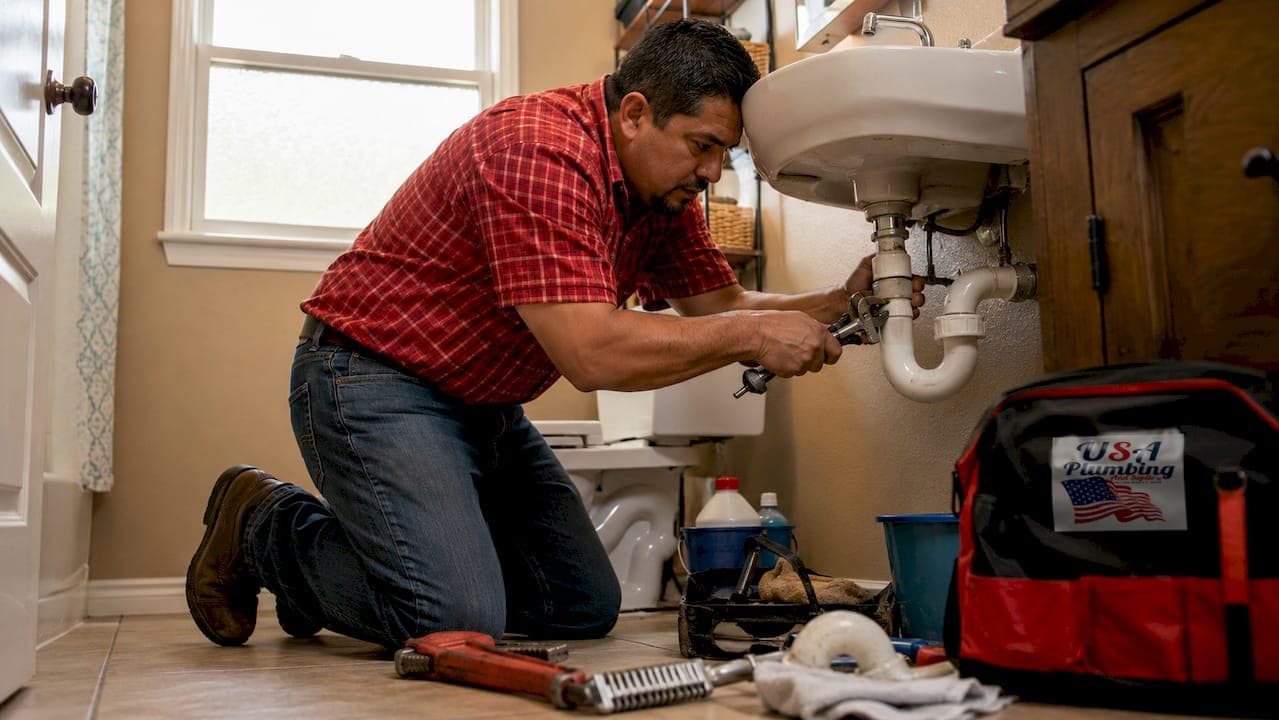
Slow bathroom drainage is defined as any condition where water pools in a sink, tub, or shower instead of clearing within seconds. The root cause is almost always physical buildup inside the pipe. Hair combined with soap scum and personal care product residue is the leading culprit, progressively narrowing pipe diameter until water flow drops to a trickle. Secondary causes include blocked vent stacks, corroding pipes, and main sewer line obstructions. Knowing which problem you have determines whether a $5 zip tool fixes it or whether you need a licensed plumber on site.
What are the most common causes of slow bathroom drains?
Hair is the single biggest reason why bathroom drains slow. It does not dissolve in water. Instead, it catches on the drain stopper or pipe walls and acts like a net, trapping soap residue, conditioner, shampoo, and toothpaste until the buildup forms a dense, sticky mass. That mass shrinks the pipe opening over weeks or months, and one day the water just stops moving.
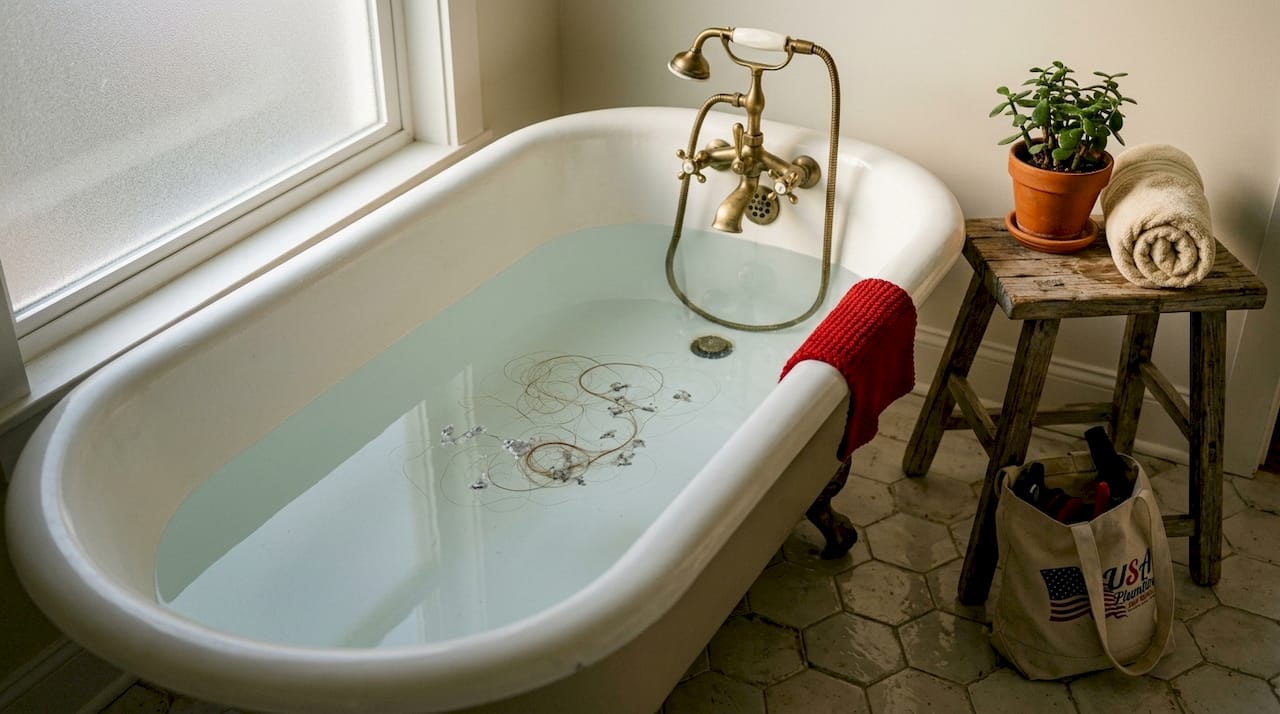
Soap scum makes the problem worse. Bar soap contains fats that bind to pipe walls and to trapped hair. Body wash and shampoo leave behind surfactant residue that does the same thing. Personal care products like conditioner and shaving cream add an oily layer that holds debris in place. The result is a blockage that grows a little denser every shower.
Less common causes include:
- Corroding or aging pipes. Older galvanized steel pipes develop rough interior surfaces that catch debris faster than smooth PVC.
- Hard water mineral deposits. In areas with high calcium and magnesium content, mineral scale builds up inside pipes and reduces flow over time. Hard water filtration can address this at the source.
- Blocked vent stacks. Every drain in your home needs an air supply to flow freely. Leaves, bird nests, or debris blocking the roof vent stack create negative pressure that slows every drain in the house.
- Main sewer line obstruction. Tree roots, grease buildup, or pipe collapse in the main line affects all fixtures at once.
Multiple slow drains or gurgling sounds indicate a systemic issue, not a single fixture clog. That distinction matters because the fix is completely different.
How can you safely and effectively fix a slow bathroom drain yourself?
Most bathroom drain blockages respond to mechanical removal. Physical tools pull the clog out rather than pushing it deeper or dissolving it with chemicals. A plastic drain zip tool costs under $5, reaches about two feet into the pipe, and hooks hair and debris on its barbed edges. Insert it, rotate it slowly, and pull straight up. You will likely pull out a surprising amount of material on the first pass.
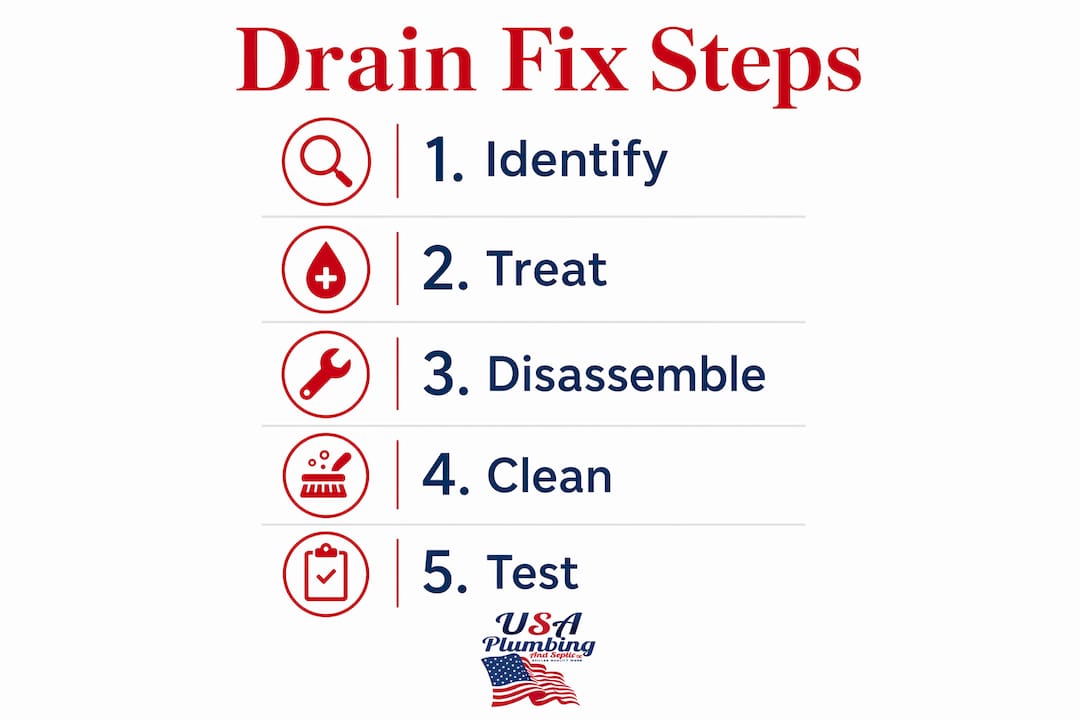
For tub drains, follow these steps in order:
- Remove the drain cover or stopper. Most unscrew counterclockwise or lift straight out.
- Insert the zip tool and rotate it to catch hair. Pull out all debris before moving on.
- Run hot water for 30 seconds to flush loosened residue.
- If water still drains slowly, move to plunging.
- Cover the overflow plate with a wet rag to seal it. Sealing the overflow forces plunging pressure through the drain pipe instead of escaping through the overflow channel.
- Plunge with firm, steady strokes for 20–30 seconds.
- Run hot water again to test flow.
Pro Tip: For sink drains, try a baking soda and vinegar flush before plunging. Pour half a cup of baking soda down the drain, follow with half a cup of white vinegar, wait 15 minutes, then flush with hot water. This works well on mild soap scum buildup.
If the clog persists, the P-trap is the next place to check. The P-trap is the curved pipe section directly under the sink. It holds standing water to block sewer gases, and it also catches debris. Place a bucket under the P-trap before loosening the slip nuts, and take a photo of the assembly first. Reassemble it exactly as it was to prevent leaks.
One firm rule: avoid chemical drain cleaners. They can damage concrete, clay, cast iron, and PVC pipes, especially when the liquid sits trapped in a pipe bend. Mechanical debris removal is safer and more effective for residential bathroom drains. Chemical products often push clogs deeper and leave you with the same problem plus a pipe that is now weaker.
How to recognize when a slow drain signals bigger plumbing problems
A single slow drain almost always means a localized clog. Two or more slow drains at the same time means something is wrong further down the system. Knowing the difference saves you hours of wasted DIY effort.
Watch for these warning signs of a systemic problem:
- Multiple slow drains. If the bathroom sink, tub, and toilet all drain slowly at once, the issue is in the shared drain line or main sewer.
- Gurgling sounds. A gurgling toilet or drain after you run the sink means air is being pulled through the water trap, which points to a venting problem.
- Sewage odors. A dry P-trap lets sewer gas into the home, but persistent odors with no dry trap usually mean a main line issue.
- Water backing up in unexpected places. Running the washing machine and seeing water back up into the tub is a classic main sewer line symptom.
A simple test: run water in the sink and watch the toilet. If the toilet gurgles or the water level in the bowl rises, you have a venting or main line problem, not a fixture clog.
Blocked vent stacks and main sewer obstructions require specialized inspection tools like a sewer camera to diagnose accurately. Tree roots are a common cause of main line blockages in older neighborhoods. Stop DIY attempts at this point. Continuing to plunge or snake a main line obstruction without knowing what you are dealing with can make the problem worse. Check the 24-hour plumbing emergency checklist to know exactly when to call a professional.
What maintenance practices prevent slow bathroom drains?
Prevention costs almost nothing compared to a service call. Treating slow drains early prevents full blockages and avoids expensive emergency plumbing interventions. The habits below take less than five minutes a week and keep pipes clear year-round.
- Use a drain strainer. A mesh strainer over the shower or tub drain catches hair before it enters the pipe. Empty it after every shower. This single habit eliminates the majority of bathroom drain blockages.
- Flush with hot water weekly. Run the hottest tap water for 60 seconds once a week. Hot water softens soap residue and moves it through the pipe before it hardens.
- Monthly baking soda and vinegar treatment. Consistent monthly flushes with baking soda and vinegar reduce organic debris and soap scum accumulation without damaging pipes.
- Clean drain stoppers regularly. Pop-up stoppers in bathroom sinks collect hair and soap scum on their underside. Pull the stopper out monthly, clean it with an old toothbrush, and rinse it before replacing it.
- Keep non-dissolvable items out of drains. Cotton swabs, dental floss, and wipes do not break down in pipes. They catch on existing buildup and accelerate clog formation.
- Address hard water. If you live in an area with hard water, mineral scale builds up inside pipes over time. A water softener or filtration system reduces scale and extends the life of your plumbing.
Pro Tip: Clean the P-trap under bathroom sinks twice a year. It takes about 10 minutes and removes buildup that no amount of flushing will clear from above.
Learning how drain cleaning works gives you a clearer picture of which maintenance steps actually matter and which ones are just marketing. Proactive maintenance routines are the single most effective way to prevent recurring clogs and protect your plumbing long-term.
Key Takeaways
Hair and soap scum cause the vast majority of slow bathroom drains, and consistent mechanical maintenance prevents nearly all of them before they become serious problems.
| Point | Details |
|---|---|
| Primary cause | Hair combined with soap scum narrows pipe diameter and restricts water flow over time. |
| Best DIY tool | A plastic drain zip tool under $5 removes most hair clogs faster and safer than chemicals. |
| Chemical cleaners | Avoid them. They damage PVC, cast iron, and clay pipes and often push clogs deeper. |
| Systemic warning signs | Multiple slow drains, gurgling sounds, or sewage odors mean the problem is beyond the fixture. |
| Best prevention | A mesh drain strainer plus monthly baking soda and vinegar flushes stops most clogs before they start. |
What I have learned after years of watching homeowners fight slow drains
Most homeowners wait too long. They notice the drain slowing in january, ignore it through february, and by march they are standing in two inches of water every shower. At that point, what started as a five-minute fix with a zip tool has turned into a full P-trap cleaning or a service call.
The other mistake I see constantly is reaching for a bottle of chemical drain cleaner first. It feels like the logical move. Pour something in, wait, done. But those chemicals sit in the pipe bend and eat at the material. On older homes with galvanized or cast iron pipes, that is a real problem. On newer PVC systems, repeated use softens the joints. Mechanical tools are always the right first step.
The homeowners who never call me for drain emergencies all do one thing: they use a drain strainer. Every single one. It sounds almost too simple, but it works because it addresses the root cause directly. Hair never enters the pipe, so the pipe never clogs. Everything else, the hot water rinses, the monthly vinegar flushes, is maintenance on top of that foundation.
One more thing worth saying: if you have tried the zip tool, plunged correctly with the overflow sealed, and cleaned the P-trap, and the drain is still slow, stop. That is the point where continuing to DIY risks making things worse. A professional with a sewer camera can find the actual problem in minutes. Calling early is always cheaper than calling after something breaks.
— JOHN
When Usaplumbingseptic is the right call
Persistent slow drains, gurgling pipes, or sewage odors that do not clear after a thorough DIY attempt are signs that the problem is deeper in your plumbing system.
Usaplumbingseptic serves Bullhead City, Fort Mohave, Mohave Valley, and Laughlin with 24/7 professional drain cleaning, sewer line inspection, and emergency plumbing services. Our licensed plumbers use camera inspection tools to locate blockages accurately and clear them without guesswork. Whether you need a routine drain cleaning or a full sewer line solution, we are ready to help. For reliable, affordable plumbing service from a team that knows your area, visit our local plumbing services page or call us now.
FAQ
Why do bathroom drains slow even with no visible clog?
Buildup of soap scum and hair inside the pipe walls restricts flow without forming a complete blockage. A blocked vent stack can also slow drainage by preventing proper airflow through the drain system.
What is the fastest way to unclog a slow shower drain?
A plastic drain zip tool inserted past the stopper and rotated to catch hair resolves most slow shower drain issues in under 15 minutes without chemicals or professional help.
Can chemical drain cleaners make a slow drain worse?
Yes. Chemical cleaners can damage PVC, cast iron, and clay pipes and often push the clog deeper rather than removing it. Mechanical tools like a zip tool or hand auger are safer and more effective.
How often should I clean my bathroom drains to prevent clogs?
Use a drain strainer after every shower, flush with hot water weekly, and do a baking soda and vinegar treatment monthly. Clean the drain stopper and P-trap every two to three months.
When should I call a plumber for a slow drain?
Call a plumber when multiple drains are slow at the same time, when you hear gurgling sounds, or when DIY methods have not restored normal flow. These signs point to a systemic plumbing problem that requires professional diagnosis.