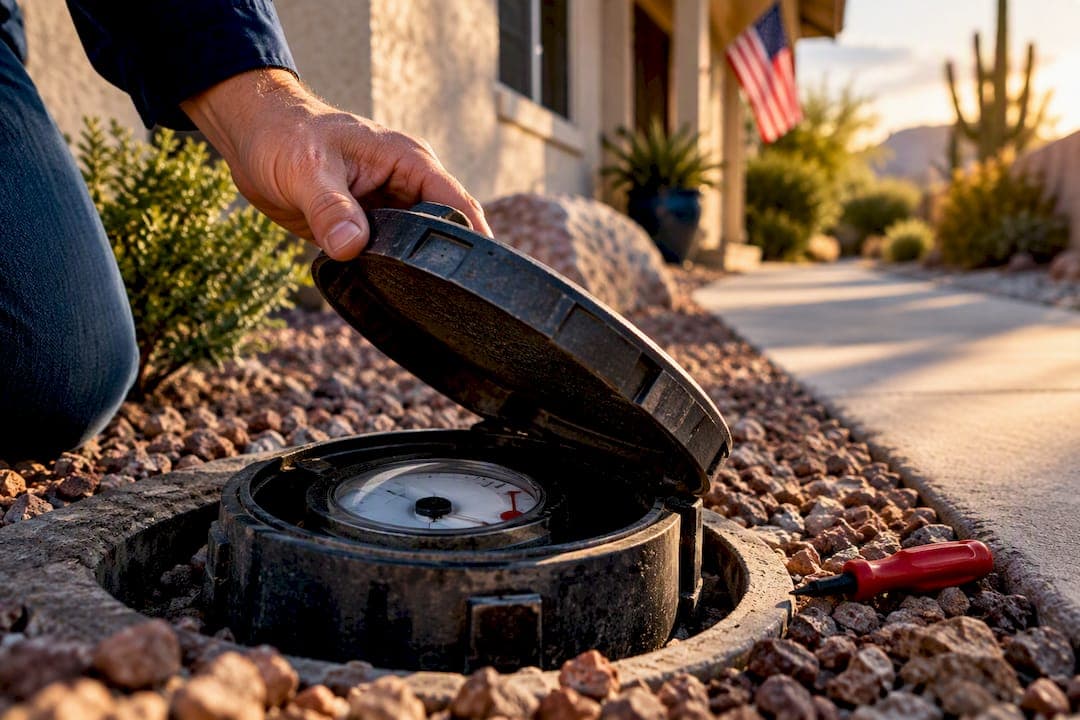
Most sudden high water bills are caused by a leak, and the fastest way to confirm it is checking your water meter right now. Silent culprits like a worn toilet flapper, a cracked service line, or a slab leak account for the bulk of surprise charges, though irrigation glitches and billing quirks cause plenty of scares too. A quick meter test, done with everything shut off, tells you in minutes whether water is moving when it shouldn't be. This guide walks through leak checks first, then billing checks, so you know exactly where your money went.
TL;DR:
- Most high water bills are caused by silent leaks like worn toilet flappers or underground pipe failures, which can waste thousands of gallons over a billing cycle.
- Outdoor sprinkler faults, stuck valves, or malfunctioning controllers frequently contribute to increased summer water use, potentially exceeding household leaks.
- Appliances such as water softeners or water heater tanks can unintentionally consume excess water if stuck in regeneration or with slow leaks, respectively.
- Billing issues like estimated reads, longer cycles, or tiered rates can artificially inflate bills without actual leaks, and utility review often clarifies these discrepancies.
- Homeowners should perform a meter test with fixtures off to identify leaks early and call professionals immediately if rapid, unexplained meter movement or structural signs occur.
Table of Contents
- Top causes at a glance
- Leaks: toilets, faucets, fixtures, and hidden pipe leaks
- Outdoor irrigation systems, sprinkler faults, and pools
- Appliances and systems that create unexpected consumption
- Billing and meter issues: estimated reads, days of service, and rate tiers
- How to check and diagnose the cause at home
- When to call a plumber or leak detective
- Effects of local drought restrictions or water use policies
- Common billing errors explained by the utility provider
- What years of service calls teach you about silent leaks
- How USA Plumbing and Septic LLC can help
- Sources
- FAQ
Top causes at a glance
When a water bill jumps without warning, the cause usually falls into one of a handful of categories. Working through them in order of likelihood saves time and often rules out a costly repair before you ever pick up the phone.
- Toilet leaks: A worn flapper or fill valve can silently drain the tank around the clock, and utilities note this waste can reach roughly 22 gallons per day.
- Hidden pipe or slab leaks: Underground service lines and foundation pipes leak quietly, often for weeks before anyone notices.
- Irrigation and sprinkler faults: Stuck valves, broken heads, or a mis-programmed controller can pour water into the yard long after the lawn is soaked.
- Appliance and system cycles: Water softeners stuck in regeneration or a leaking water heater tank can run water without anyone touching a faucet.
- More people, more use: Guests, new tenants, or a change in daily habits raise consumption in ways that show up fast on a bill.
- Pool filling: A pool losing water to evaporation or a plumbing leak needs frequent top-offs that add up quickly.
- Billing or meter issues: Estimated reads, longer billing cycles, or tiered rates can make a bill look worse than actual usage justifies.
Each of these gets its own closer look further down, starting with the leaks that cause the most damage over time.
Leaks: toilets, faucets, fixtures, and hidden pipe leaks
Toilets are the single most common source of wasted water in a home or business, and the damage is almost always silent. A worn flapper lets water seep from the tank into the bowl nonstop, and a faulty fill valve can keep topping off a tank that never actually needs it. Utilities that track these failures put typical waste from one leaking toilet at around 22 gallons a day, which adds up to thousands of gallons over a billing cycle. A dye tablet dropped in the tank is the simplest way to catch this: if color shows up in the bowl within ten minutes without a flush, the flapper is letting water through. Our toilet overflow guide covers the repair side once you've confirmed the leak.
Dripping faucets and showerheads look minor but rarely stay minor. USGS drip-volume research shows how a steady drip translates into whole gallons over a day, and that math compounds fast across multiple fixtures. A single dripping tap left unaddressed for a billing cycle can quietly outpace what most people assume a "small" leak could ever cost.
Hidden leaks are the ones that do the most damage before anyone notices. Watch for:
- A wet or unusually green patch of lawn with no obvious source.
- A hissing sound near the water line or a spot where the ground feels soft underfoot.
- Cracks in the foundation or flooring paired with a musty smell indoors.
These signs often point to underground service line breaks or slab leaks, and both usually call for professional detection equipment rather than guesswork. Our underground leak repair guide walks through what that process looks like.
Pro Tip: Replace a toilet flapper the moment it feels stiff or discolored. It's a five-dollar part that prevents a bill that can run into hundreds of gallons of waste.
Small fixes like a new flapper or a tightened supply line connection are safe DIY jobs. Anything involving a buried line, a slab, or gas proximity should go to a licensed professional, both for safety and because some repairs require permits.
Outdoor irrigation systems, sprinkler faults, and pools
Warm-weather water bills spike for a reason, and irrigation is usually it. A stuck valve, a cracked head, or a controller still running a summer schedule in cooler weather can waste enormous volumes without anyone noticing until the bill arrives. The EPA notes that WaterSense-labeled irrigation controllers can cut irrigation water use by up to 30% compared with unmanaged systems, which says a lot about how much waste an unmonitored system can generate.
A few checks catch most irrigation problems quickly:
- Run each zone individually and watch for pooling, weak spray, or a head that won't shut off.
- Confirm the rain sensor and seasonal schedule are actually working, not just installed.
- Walk the yard after a cycle looking for soggy patches away from any sprinkler head.
Pools add their own wrinkle. A pool that needs constant top-offs beyond normal evaporation may have a leak in the shell or underground plumbing, and that kind of loss can rival a full-blown household leak in volume.
Appliances and systems that create unexpected consumption
Some of the highest water bills come from equipment nobody thinks to check. A water softener stuck in regeneration mode can cycle water for hours or days, mimicking a major leak on the meter. A water heater with a slow tank leak refills constantly to maintain pressure, adding unaccounted water usage.
Other quiet contributors include:
- Humidifiers with a stuck supply valve running longer than intended.
- Water-cooled air conditioning units that use a continuous water flow for cooling.
- Water-powered sump pump backups that activate more often than expected during wet seasons.
If a softener is suspected, temporarily bypass or shut it off and watch whether usage drops. That single step often solves the mystery faster than any other check on this list.
Billing and meter issues: estimated reads, days of service, and rate tiers
Not every high bill means a leak. Utilities sometimes issue an estimated read when a meter can't be accessed, and that estimate can overshoot or undershoot actual use enough to distort the next bill. The City of Seattle's billing guidance explains that estimated reads and varying days in a billing cycle can make a bill look like a spike even when daily consumption hasn't changed at all.
Tiered rate structures make the problem worse in summer. Once usage crosses a threshold, every additional gallon costs more per unit, so a modest increase in irrigation or pool filling can push a bill up faster than the extra water alone would suggest. Sewer charges, which many utilities calculate from water use, then magnify that increase again.
Before assuming a leak, check the bill itself:
- Look for a note or asterisk indicating an estimated rather than actual read.
- Compare the number of billing days to your previous statement.
- Log into the utility's online portal, if available, to review daily or hourly usage data.
If something looks off, call the utility directly. Most offer a re-read or a one-time leak adjustment when a documented repair follows a confirmed leak.
How to check and diagnose the cause at home
A clear, ordered process beats guesswork every time. Municipal utilities recommend starting at the meter because it settles the leak question before you touch anything else.
- Locate the meter and record the exact reading, including the small dial digits.
- Shut off every fixture and appliance that uses water, including ice makers and irrigation timers.
- Wait 15 to 20 minutes without using any water, then check the meter again. Movement means water is flowing somewhere in the system.
- Run a toilet dye test in each bathroom: drop in a tablet, wait ten minutes without flushing, and check the bowl for color.
- Test irrigation zones one at a time, watching for a head that won't close or a valve that keeps weeping after shutoff.
- Isolate appliances like the softener or water heater by bypassing them briefly to see if usage changes.
- Know your main shutoff location before starting any test, in case a fixture needs to be closed off fast.
The EPA estimates the average family loses close to 9,400 gallons a year to household leaks, roughly a couple hundred gallons a week, which shows how much a "small" leak can cost over a full billing cycle. If the meter keeps moving after every fixture is off, or a dye test comes back positive, that's your answer. For step-by-step meter instructions specific to yard leaks, our meter test guide covers the process in more detail. Stop testing and call a professional if you notice rapid meter movement, standing water, or any smell of gas near a line.
When to call a plumber or leak detective
Some situations move past the DIY stage immediately. Call a professional right away if you see:
- Rapid, continuous meter movement with no explanation after all fixtures are off.
- Cracks, bulging, or shifting in the foundation near a suspected leak.
- A sudden sinkhole or soft depression in the yard.
- Water intruding into a basement, crawlspace, or interior wall.
Professionals use tools most homeowners don't have access to, including acoustic leak detection equipment that listens for the sound of escaping water through soil and concrete, along with main meter monitors and trenchless location technology that pinpoints a leak without tearing up the whole yard. Our leak detection guide explains how that equipment works in practice.
Pro Tip: For non-emergency repairs, get more than one estimate. Cost can vary based on how deep a line runs and how much excavation the fix requires.
Effects of local drought restrictions or water use policies
Many regions impose watering schedules, rate surcharges, or usage caps during dry periods, and those policies change what a "normal" bill looks like almost overnight. A household that irrigated freely last year might find the same habits now cost more simply because the utility has shifted pricing tiers or added a drought surcharge to discourage heavy use.
Restrictions sometimes work in the opposite direction too. A property that ignores a designated watering day can rack up penalty charges layered on top of the water itself, and those fees show up on the bill without looking like a separate line item at first glance. Some municipalities also lower the threshold for a "high usage" tier during drought conditions, meaning the same gallons that used to sit comfortably in a lower rate bracket now cross into a pricier one.
Property owners in areas under active water restrictions should check with their local utility for the current rules before assuming a bill increase points to a leak. Sometimes the policy changed, not the plumbing. Checking the utility's website or a recent mailed notice usually clears this up faster than any meter test.

Common billing errors explained by the utility provider
Meters and billing software aren't perfect, and utilities themselves acknowledge that errors happen. A meter can stick, under-register for months, then suddenly catch up all at once on a single bill, creating what looks like an enormous spike that's actually months of unbilled usage landing at once.
Estimated reads cause a similar effect. When a meter reader can't access the meter, the utility estimates usage based on past history, and if that estimate runs low for a few cycles, the next actual read corrects the gap in one lump charge. The City of Seattle's utility guidance walks through exactly how this shows up on a statement and what to look for.
Account mix-ups, transposed meter numbers, or a billing cycle that ran a few extra days longer than usual can all produce a bill that looks alarming but reflects an administrative issue rather than a plumbing one. Calling the utility with your meter reading in hand is the fastest way to sort a true leak from a billing hiccup, and most providers will issue a correction or a re-read without much hassle once the numbers don't add up.

What years of service calls teach you about silent leaks
Homeowners almost never hear the leak that ends up costing them the most. It's usually the ones that make noise, a dripping faucet or a running toilet, that get fixed fast. The quiet ones, a flapper that seeps instead of runs, or a slab leak with no visible sign at all, are the ones that rack up a bill for months before anyone calls.
One case that sticks with me: a commercial property manager called about a bill that had nearly doubled with no change in tenant activity. The meter test showed steady movement with everything off. A dye test on two ground-floor toilets came back negative, which pointed us toward the yard. A short irrigation zone check found a valve that never fully closed, running low and steady into a flower bed for weeks. The fix took under an hour, and the next bill dropped back to normal.
Professional plumbers run these diagnostics daily and offer 24/7 service when a leak can't wait for business hours.
— JOHN
How USA Plumbing and Septic LLC can help
Running the meter test yourself is the right first move, and if it shows continuous flow, the next step is getting a professional set of eyes on the problem before the next bill arrives. USA Plumbing and Septic LLC handles water line leak detection and repair, water heater service, irrigation diagnostics, and the full range of fixture and pipe repairs that cause unexplained usage spikes.

Every visit starts with diagnostics, not guesswork, so you get a clear answer on where the water is going before any repair begins. Our licensed plumbers are available 24/7 for emergencies and offer transparent estimates for non-urgent work, whether that's a slow slab leak, a failing water heater, or a softener stuck in an endless regeneration cycle. If your meter test confirms a leak, contact USA Plumbing and Septic LLC today to get it diagnosed and fixed before another billing cycle passes.
Sources
For deeper reading, the EPA's WaterSense statistics cover national leak-waste figures, while USGS drip research breaks down drip-to-gallon math. Our main shutoff guide covers safety steps for any test that requires isolating the water supply.
- Water Q&A: Does a little leak in my house really waste water? | USGS
- WaterSense labeled irrigation controllers | US EPA
- My bill seems too high - Utilities | City of Seattle
FAQ
What is the main cause of a high water bill?
A silent leak, most often a worn toilet flapper or a hidden pipe leak, is the most common cause of an unexplained spike. Running a meter test with all fixtures off is the fastest way to confirm whether a leak is present.
What uses the most water on your water bill?
Outdoor irrigation is often the single largest source of excess water use during warm months, especially when a controller is mis-programmed or a valve sticks open. Toilets come next, since a leaking flapper can run continuously without any visible or audible sign.
What causes the most water usage in a house?
Toilets typically account for the largest share of everyday water use in a home, and that share grows sharply when a flapper or fill valve fails. A softener stuck in regeneration or a leaking water heater tank can also drive usage up without anyone touching a faucet.
How do I know if a high bill is a billing error rather than a leak?
Check the bill for a note indicating an estimated rather than actual meter read, and compare the number of billing days to your last statement. If the meter test at home shows no movement with everything off, the issue is more likely billing than plumbing.
When should I call a plumber instead of testing myself?
Call immediately if the meter shows rapid, continuous movement, or if you notice foundation cracks, a sinkhole, or water intruding into living space. These signs point to a major leak that needs professional detection equipment rather than a DIY fix.