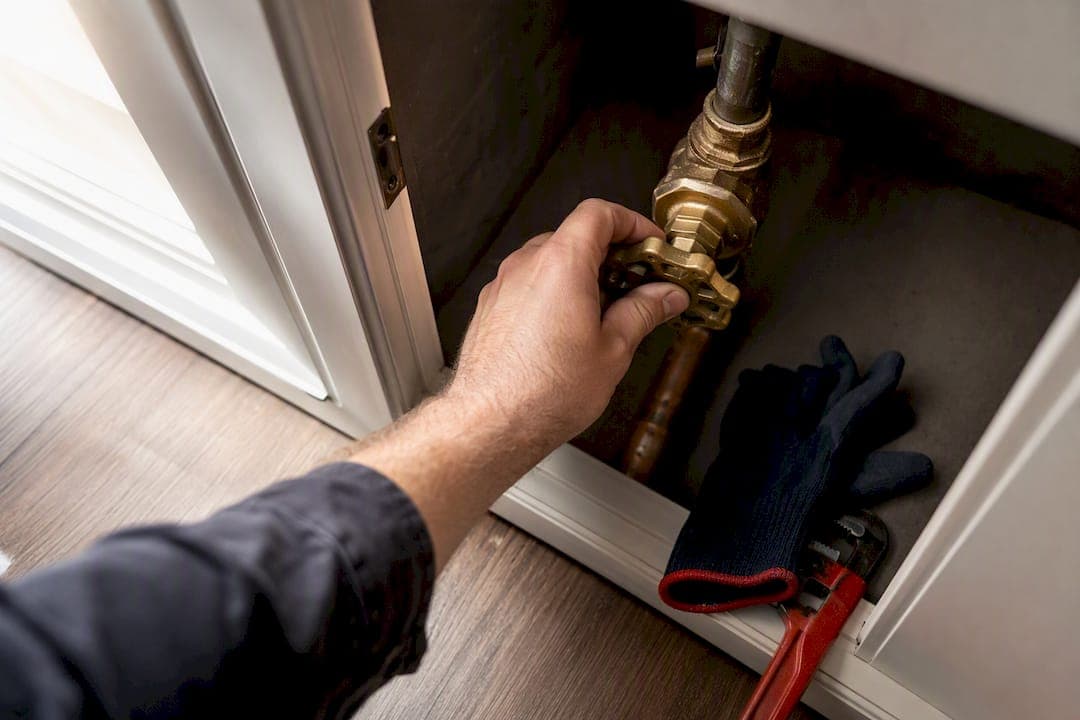
Your main water shut off is almost always where the water line enters the house, in the basement, crawlspace, or utility closet, or outside near the meter or curb box. Turn the valve clockwise, or push the lever until it sits perpendicular to the pipe, to stop the flow immediately. If you're on a well, flip the well pump breaker instead. If the valve doesn't budge, stop and call a plumber rather than forcing it.
TL;DR:
- Most main water shutoff valves are located within a few feet of where the supply pipe enters the house, typically in the basement, crawlspace, or outside near the meter or curb box.
- Turning off a gate valve requires several full clockwise rotations, while a ball valve just needs a quarter turn perpendicular to the pipe to stop water flow.
- Regularly testing your main valve and labeling it helps prevent flooding during emergencies, especially since some valves can seize or become difficult to operate over time.
- If the valve is stuck, leaking, or inaccessible, calling a licensed plumber is essential to avoid water damage and ensure proper repair or replacement.
- For homes with well systems, shutting off the pump breaker is usually faster than locating a traditional main valve.
Table of Contents
- How Do You Find Your Main Water Shut Off?
- How Do You Turn Off the Main Water Valve?
- How Do You Verify the Water Is Really Off?
- What If the Valve Won't Turn or Starts Leaking?
- When Should You Call a Plumber Instead of Handling It Yourself?
- Why Labeling Your Valve Matters More Than People Think
- Need Help With a Stuck Valve or Emergency Shutoff?
- Sources
- FAQ
How Do You Find Your Main Water Shut Off?
Finding the valve fast matters more than finding it perfectly. Most homes follow common patterns in valve placement related to climate and foundation type, and checking these typical spots in order helps you find the valve quickly before water spreads across the floor.
- Basement or foundation wall. Look where the supply pipe enters, usually within three to five feet of the front foundation wall, close to where the water meter sits inside.
- Crawlspace or utility room. In homes without basements, check the crawlspace access point or a mechanical room near the water heater.
- Slab homes. The valve often hides in a closet near the water heater or in a garage wall stub-out.
- Exterior meter box or curb box. Homes in warmer climates frequently keep the valve outside, near a metal or plastic meter cover set into the ground close to the curb or property line.
- Well systems. There's no traditional main valve. Shutting off the pump breaker at your electrical panel is usually faster than hunting for a valve at the well head, though some setups also have a dedicated valve there. Follow your well technician's setup notes since configurations vary.
Valve placement isn't random. According to the San Francisco Public Utilities Commission, most residential shutoffs sit right where the service line penetrates the building, which is why tracing the pipe from your water heater or meter backward almost always leads you to it. Cold-climate homes tend to keep valves indoors to avoid freezing, while warmer regions install them outside more often.
How Do You Turn Off the Main Water Valve?
Two valve types dominate American homes: the gate valve, a round wheel handle, and the quarter-turn ball valve, a straight lever. Knowing which one you have changes how you shut it off.
A gate valve closes only when you turn the wheel clockwise, often for several full rotations, until it stops moving. A ball valve needs just a quarter turn. When the lever sits parallel to the pipe, water flows; turn it until it's perpendicular, and the water stops.
Here's the sequence to follow:
- Turn off any running appliances, including washing machines or dishwashers mid-cycle.
- Switch off electrical power to your water heater before draining lines, since an empty tank with power still running can damage the heating element.
- Close the main valve slowly. Slamming it shut can cause a pressure spike known as water hammer.
- Open the highest faucet in the house to let air in, then the lowest faucet or an outdoor spigot to drain remaining water.
- Check the water meter or the highest faucet for continued flow to confirm the valve fully closed.
Reopening follows the same logic in reverse. Close all faucets first, then open the main valve slowly while listening for banging pipes or watching for new leaks at fittings.
Pro Tip: Test your main valve once a year even when nothing's wrong. Gate valves especially can seize from mineral buildup if they sit untouched for years, and you don't want to discover that during an actual emergency.
How Do You Verify the Water Is Really Off?
Closing the valve isn't the finish line. Run the highest faucet in the house; if it sputters and stops, the shutoff worked. Then check your water meter. A Western Municipal Water District guide notes that a stationary meter dial confirms no water is moving through the line at all.
- Turn off electric power to the water heater, and if it's gas, follow the manufacturer's shutdown steps before draining any lines.
- Leave a small amount of water in low fixture traps to block sewer gas from entering the house.
- Watch for appliances like ice makers or humidifiers that may keep drawing from stored water for a few minutes after shutoff.
- Most repairs only need water off for one to a few hours; if a job runs longer, tell household members so nobody's caught off guard.
A WSSC Water advisory adds a wrinkle for homes with fire sprinkler systems: if you have two valves, operate the one downstream of the meter so you don't depressurize the sprinkler line by accident.
What If the Valve Won't Turn or Starts Leaking?
Never force a stiff valve. According to Choates HVAC, forcing a corroded gate valve can snap the stem or crack the pipe, turning a manageable shutoff into a flooding repair job. A gentle back-and-forth motion or a little penetrating oil is fine to try, but stop if you feel real resistance.
- If the valve still won't move or starts leaking once you do get it closed, call a licensed plumber for repair or replacement.
- If you can't locate the valve at all during an active emergency, contact your water utility to shut service off at the curb box; utilities sometimes charge a service fee for this.
- In the meantime, close shutoffs at individual fixtures and cut power to the water heater if it's draining.
Buried curb valves present their own puzzle. When the key won't turn a ground-level valve, InspectApedia notes the shaft connecting the key to the buried valve may be damaged, which usually means excavation and professional help. If yard-side leaks are part of the problem, our guide to underground water leaks walks through what to expect from that kind of repair.
When Should You Call a Plumber Instead of Handling It Yourself?
Some situations call for a technician right away rather than a wrench and some patience. Licensed plumbers handle emergency shutoffs, stuck or corroded valve repair, full valve replacement, and well pump shutoff assistance for homes in the local area.
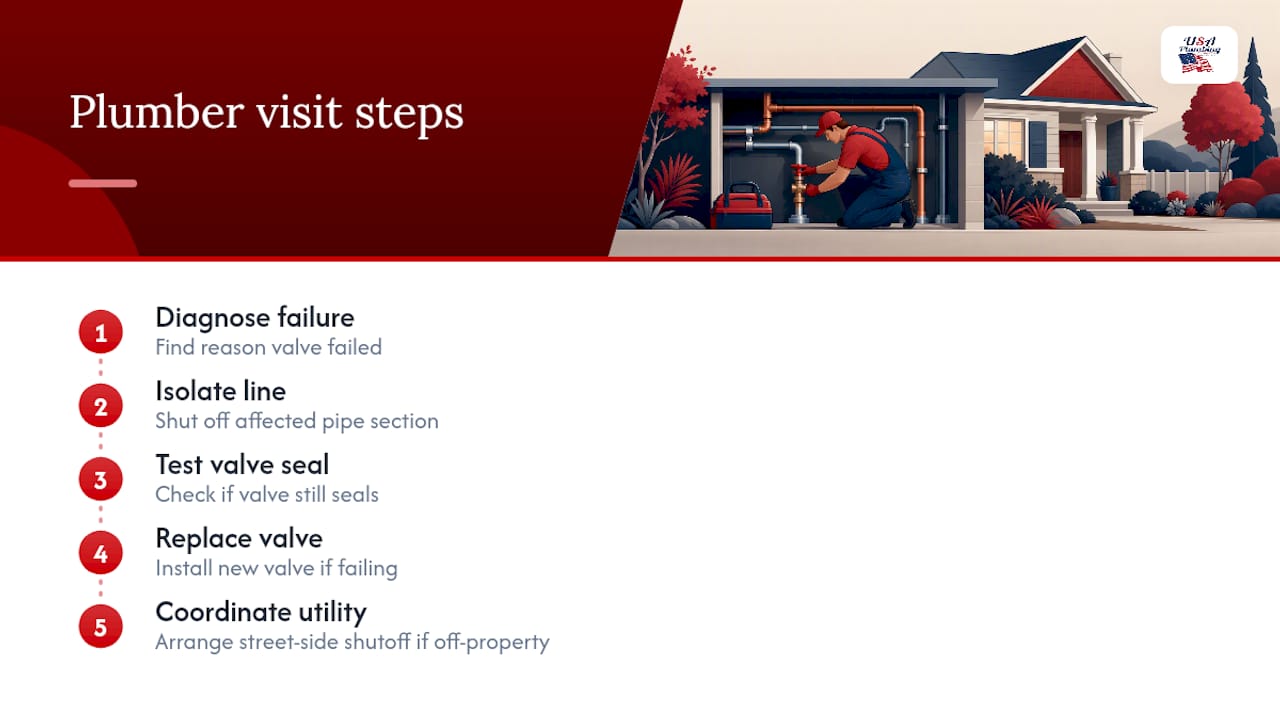
A typical visit follows a clear path: diagnose why the valve failed, isolate the affected line, test whether the existing valve still seals properly, replace it if it doesn't, and coordinate with the water utility for a street-side shutoff when the problem sits beyond your property line. Keep your plumber's number somewhere visible, next to the breaker panel or on the fridge, so it's not buried in a phone contacts list during a flood. For broader emergency prep, our 24-hour plumbing emergency checklist covers what else to have ready.
Why Labeling Your Valve Matters More Than People Think
Most homeowners can find their main shut off eventually. The problem is "eventually" during a burst pipe means gallons of water on the floor. Label the valve, walk every adult in the house through operating it, and check it once a year so it doesn't seize. A Paul Davis Restoration piece makes the same point: the households that avoid major water damage are usually the ones who practiced this before they needed to.
— JOHN
Need Help With a Stuck Valve or Emergency Shutoff?
If your main valve won't turn, keeps leaking after you close it, or you can't find it at all while water is spreading across the floor, Usaplumbingseptic answers that call around the clock. Unlike waiting on a municipal service request that may take days to schedule, our licensed technicians handle emergency shutoffs, valve replacement, and well pump service directly, without the runaround.

Services are available in the local area with response for issues such as stuck gate valves or burst lines at any hour. Call now or visit our main service page to schedule emergency or routine plumbing work, including drain cleaning, water heater repair, and sewer line service, before a small valve problem turns into a bigger one.
Sources
For local curb valve requests, contact your municipal water utility directly. For valve repair or replacement, the InspectApedia and Home Depot guides referenced above offer additional technical detail.
- Home water shutoff valve | San Francisco Public Utilities Commission (SFPUC)
- How to Turn Off Your Water | Western Municipal Water District
- What to do if your main water shut off valve will not turn | Choates HVAC
- Turn off the building main water valve | InspectApedia
FAQ
How Do You Find Your Main Water Shut Off?
Trace the pipe from your water meter or water heater toward the nearest exterior wall; most valves sit within a few feet of where the line enters the house, or outside near the meter box.
Why Is My Water Still Running After I Shut Off the Main?
You likely closed a secondary valve instead of the true main, or the valve isn't fully seated. Check for a second valve near the meter, and confirm the handle or lever reached its full stop position.
Which Way Do You Turn the Main Water Shut Off Valve?
Turn a wheel-style gate valve clockwise until it stops; for a lever-style ball valve, rotate it a quarter turn until it sits perpendicular to the pipe.
How Long Can You Leave the Main Water Shut Off?
Most repairs only require the water off for a few hours, and there's no strict safety limit for short-term shutoffs, but tell everyone in the house beforehand and turn off water heater power if you're draining lines for an extended repair.