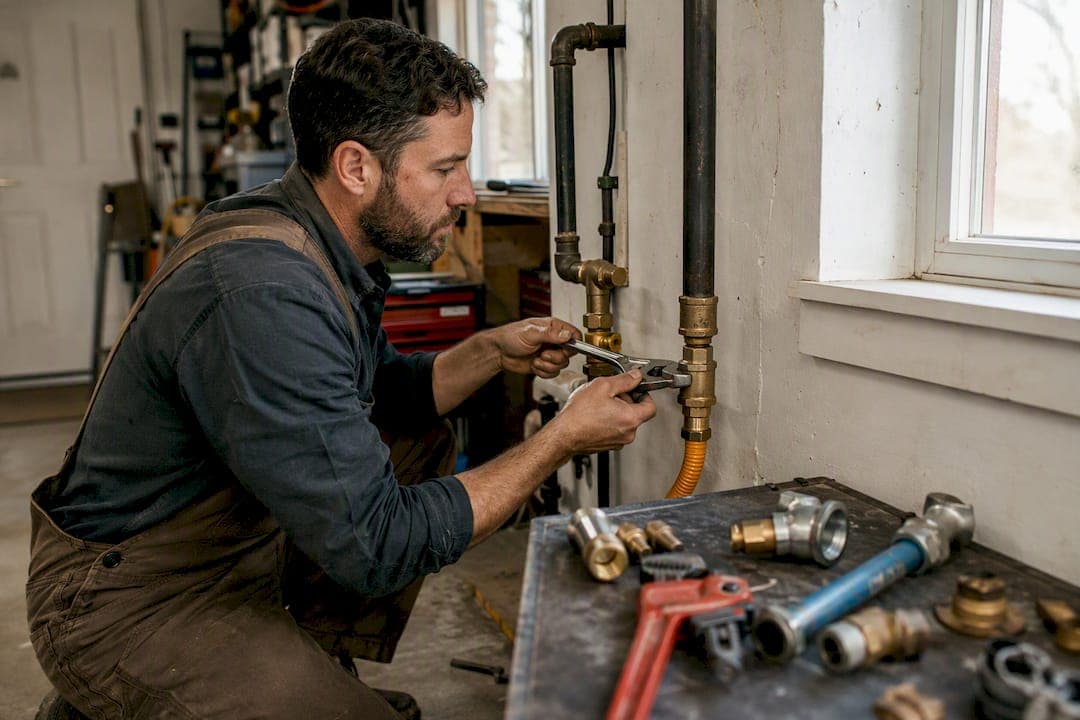
Most gas line repairs cost between $150 and $700, with homeowners paying an average near $400 for a standard fix. Buried lines or repairs requiring excavation push that number to $1,500 to $3,000 or more. The biggest swing factors are access, pipe material, and whether concrete or drywall has to come out. If you smell gas or suspect a leak, shut off the supply, get everyone outside, and call your gas company before anyone touches a wrench.
TL;DR:
- Repair costs for buried or extensive gas lines can exceed $3,000, especially when excavation and concrete restoration are involved.
- The price varies widely based on pipe material, access difficulty, and whether permits or pressure testing are required, influencing total expenses.
- Replacing pipes over 40 years old or with multiple recent leaks is often more cost-effective than multiple patch repairs, especially for corroded black iron piping.
- Contractors usually charge $75 to $150 for pressure tests, which are mandatory before service is restored and may be billed separately.
- Homeowners should get at least three detailed quotes, confirm included services, and avoid DIY fixes, as gas line repairs demand licensed professionals for safety and compliance.
Table of Contents
- How Much Does Gas Line Repair Cost? Typical Scenarios
- What Drives the Cost of a Gas Line Repair?
- Repair or Replace? Costs by Method and a Decision Checklist
- Hidden Costs Homeowners Forget to Budget For
- Getting an Accurate Quote: Questions and a Three-Quote Strategy
- Local Notes From USA Plumbing and Septic LLC
- What Homeowners Get Wrong About Gas Line Repairs
- Request a Local Gas Line Estimate From USA Plumbing and Septic LLC
- Sources
- FAQ
How Much Does Gas Line Repair Cost? Typical Scenarios
The honest answer depends entirely on where the problem lives. A cracked fitting under your kitchen sink and a corroded line buried under your driveway are two different jobs with two very different invoices, even though both fall under "gas line repair."
Minor, accessible repairs sit at the low end of the spectrum. If the damaged section is exposed, say, in a basement, crawl space, or utility closet, plumbers typically charge $150 to $300 for the job. This covers small leaks at a joint, a worn gasket, or a fitting that has loosened over time. Fixr.com notes that small, accessible leak fixes can run as low as $100 to $300, which tracks with what most homeowners see when the pipe is easy to reach and the fix is straightforward.
In-wall repairs and valve work climb higher because of the extra labor involved in opening up a wall or working around fixtures. Expect $150 to $800 depending on how many cuts the plumber needs to make and whether drywall repair is part of the job. Valve or fitting replacements alone typically run $150 to $350, according to industry pricing data. A section of corroded pipe that needs full replacement, rather than just a patch, lands closer to $300 to $800.
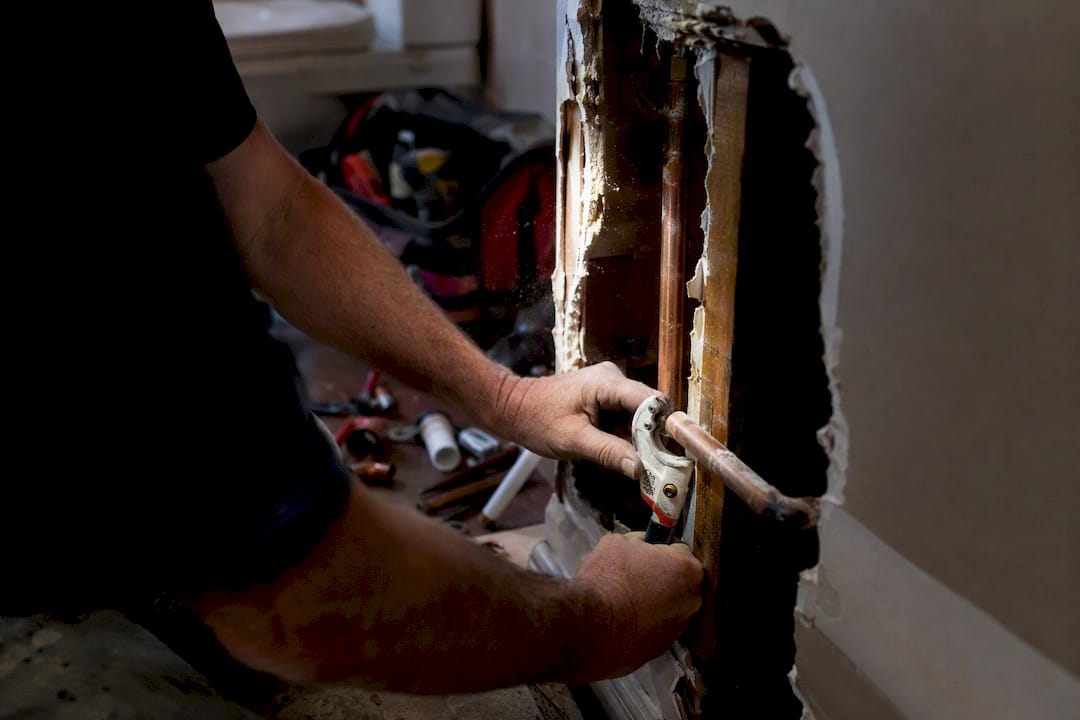
Buried or under-slab repairs are where costs jump dramatically. Once a line runs under a concrete driveway, foundation, or several feet of yard, you are paying for detection, excavation, the repair itself, and restoration. These jobs commonly range from $1,500 to $3,000 and climb higher on larger properties or when multiple sections of pipe are compromised. Underground repairs specifically fall between $500 and $2,000 for the direct pipe work, with concrete cutting and yard restoration added on top.
Here's how the most common repair tasks typically break down by price:
- Sealing a small leak at a joint: $100–$300
- Soldering or fitting a section of copper pipe: $150–$350
- Replacing a shut-off valve: $150–$350
- Replacing a corroded pipe section: $300–$800
- Capping an unused gas line: $100–$250
- Rerouting a line around new construction: $500–$1,500
- Underground/buried line repair: $500–$2,000, before excavation and restoration
A driveway repair versus a plain-yard repair can differ by hundreds of dollars just in restoration alone, since concrete removal and replacement costs far more than reseeding grass. That distinction alone often decides whether a homeowner's final bill lands at the low or high end of the buried-repair range.
What Drives the Cost of a Gas Line Repair?
Four variables control almost every gas line quote you will receive: material, access, labor rates, and whether testing and permits are required. Understanding each one helps you read a quote instead of just reacting to the bottom-line number.
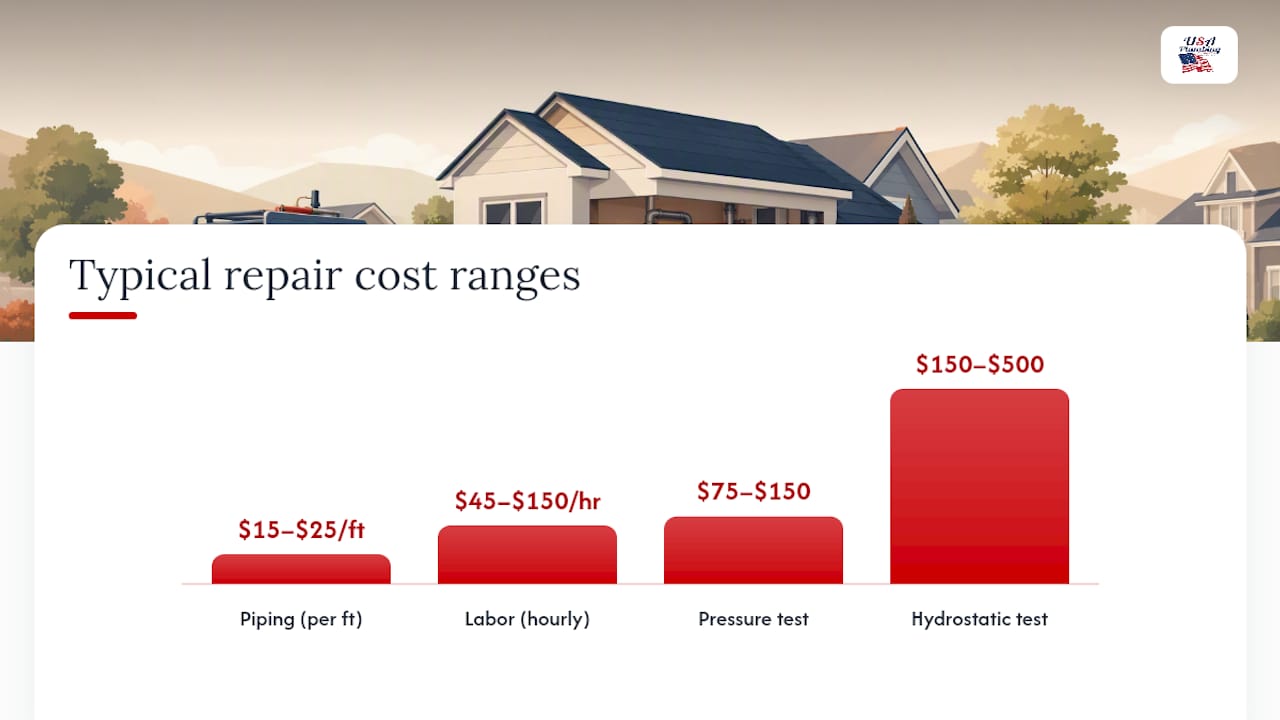
Pipe material affects both repair and installation cost per linear foot. Black iron pipe, still common in older homes, is durable but labor-intensive to cut and thread. Copper offers corrosion resistance but costs more per foot. CSST (corrugated stainless steel tubing) installs faster in many new applications but sometimes needs bonding corrections rather than full replacement, which a licensed technician can confirm during inspection. PVC and HDPE are typically reserved for certain underground applications, per local code. Angi reports per-foot piping charges commonly falling between $15 and $25, with total cost depending heavily on how many feet of line need replacing.
Access is the variable that separates a $200 repair from a $2,000 one. A line inside a finished wall means drywall demolition and patching. A line under a concrete slab means saw cutting, jackhammering, and concrete replacement, a cost driver plumbing pricing guides flag as one of the most expensive steps in any underground job.
Labor rates vary by region and urgency:
- Standard hourly rates typically run $45 to $150 per hour, with some metro markets and after-hours calls pushing toward $150 or higher.
- Most companies charge a minimum service call fee regardless of job length.
- Emergency and after-hours dispatch commonly carries a premium on top of standard rates.
Pro Tip: Ask upfront whether the quoted price includes the service call fee or bills it separately. This one question prevents most billing surprises on the final invoice.
What pressure testing actually costs: Before a gas company will restore service after a repair, most jurisdictions require a pressure test to confirm the line holds. Standard tests run $75 to $150, while hydrostatic tests for more complex systems can run $150 to $500. Some contractors bundle this into the repair price; others bill it as a line item, so ask before you sign.
Repair or Replace? Costs by Method and a Decision Checklist
Not every gas line problem calls for the same fix, and the method matters as much as the material. A pinhole leak at a fitting might need nothing more than a reseal. A section riddled with corrosion needs cutting out and rejoining. A line that's failed three times in two years needs an honest conversation about replacement.
Sealing a single joint is the cheapest fix, often $100 to $300. Soldering or splicing in a new section runs higher, generally $150 to $800 depending on pipe material and access. Rerouting a line, common during kitchen remodels or additions, typically costs $500 to $1,500 because it involves new pipe runs rather than a patch. Capping an abandoned line is quick work, usually under $250.
Full-system replacement changes the math entirely. For a typical single-family home, replacing the gas line from meter to appliances generally falls between $1,500 and $8,000, depending on total footage, material choice, and how much of the old line runs underground.
Use this checklist to decide which path makes sense:
- Two or more leaks found in the last year? Lean toward replacement rather than repeated patches.
- Original black iron pipe over 40 years old? Corrosion risk rises sharply; replacement often pays for itself in avoided repair calls.
- Repairs happening in the same section repeatedly? That's a sign of systemic failure, not an isolated problem.
- Any safety concern from the gas company or inspector? Treat that as non-negotiable and prioritize replacement.
Hidden Costs Homeowners Forget to Budget For
The repair itself is rarely the whole bill. Pressure testing, restoration, and emergency premiums routinely add hundreds of dollars that don't show up in a quick phone estimate.
- Pressure testing: $75 to $150 for standard tests, sometimes billed separately from the repair itself.
- Drywall restoration: Patching and repainting an opened wall section typically adds $150 to $500.
- Concrete restoration: Cutting, removing, and repouring concrete over a buried repair can add $500 to $1,500 or more, depending on the driveway or slab size.
- Landscaping repair: Restoring yard damage after excavation runs anywhere from $100 to $600.
- Emergency service premiums: After-hours or same-day dispatch commonly adds a flat fee or percentage markup on top of standard labor.
Check your homeowner's insurance policy before assuming it's out of pocket entirely. Some policies cover sudden, accidental gas line damage, though most exclude gradual corrosion or lack of maintenance. Document the damage with photos and keep every invoice if you plan to file a claim.
Getting an Accurate Quote: Questions and a Three-Quote Strategy
A cheap-sounding quote that leaves out pressure testing or permit fees isn't actually cheap once the final invoice arrives. Comparing quotes line by line, not just by the bottom number, is the only reliable way to avoid that trap.
Ask every contractor these questions before you agree to anything:
- Is pressure testing included in this price, or billed separately?
- Who is responsible for pulling permits and scheduling the gas company inspection?
- What's the restoration plan for drywall, concrete, or landscaping, and is it in the quote?
- What warranty covers the repaired section?
- Can you confirm your license number and current liability insurance?
A properly diagnosed job should include gas company notification where required, a leak detection step to confirm the exact failure point, a written scope of work, and a firm estimate rather than a verbal ballpark. Getting at least three written quotes lets you spot the outlier, whether that's a bid so low it's skipping steps or one padded with unnecessary work. Review licensing and insurance directly with your state licensing board rather than taking a contractor's word for it, and ask for two recent local references before committing.
Local Notes From USA Plumbing and Septic LLC
USA Plumbing and Septic LLC handles gas line repairs across Bullhead City, Fort Mohave, Mohave Valley, and Laughlin, with 24/7 emergency response for suspected leaks. Local calls typically fall in line with national averages, though older Bullhead City homes with original black iron piping sometimes need section replacement sooner than newer construction. Every completed repair goes through pressure testing, and the team coordinates permits and restoration so nothing gets left half finished.
What Homeowners Get Wrong About Gas Line Repairs
The costliest mistake isn't overpaying a contractor, it's attempting a DIY fix first. A gas leak is not a weekend project, and a botched attempt often means paying for the original repair plus damage control afterward. My budgeting rule: set aside 20 to 30 percent above your repair estimate as a restoration contingency. If you smell gas or see corrosion on exposed pipe, call a licensed plumber immediately rather than waiting to see if it gets worse.
— JOHN
Request a Local Gas Line Estimate From USA Plumbing and Septic LLC
USA Plumbing and Septic LLC gives you something a lot of national price guides can't: a licensed technician who already knows the pipe materials common to Bullhead City, Fort Mohave, Mohave Valley, and Laughlin homes, and can quote your job on-site instead of over a phone call.

A service visit starts with a diagnostic check to pinpoint the leak, followed by a written estimate that spells out labor, pressure testing, permit handling, and any restoration work up front, no surprise line items after the job is done. The team handles gas company notification and inspection scheduling as part of the process, so you're not chasing down separate contractors for testing and paperwork. For emergency situations, emergency plumbing response is available around the clock. If you're weighing a repair against other plumbing work on your property, the plumbing repair cost guide breaks down labor and diagnostic fees across common jobs. Visit the Bullhead City plumbers page to request a written estimate or book a same-day inspection.
Sources
- Fixr
- Gas Line Repair and Replacement Costs 2026 Data
- How Much Does a Gas Line Repair Cost? (HomeGuide)
- Gas Line Repair Cost 2026: What You'll Pay to Fix a Leak - Plumbing Sniper
FAQ
How expensive is it to fix a gas line?
Most repairs cost $150 to $700, with a national average near $400. Buried lines requiring excavation can push costs to $1,500 to $3,000 or more.
Does homeowners insurance cover gas line repairs?
Some policies cover sudden, accidental damage to gas lines, but most exclude gradual corrosion or wear from lack of maintenance. Check your specific policy and document damage with photos before filing a claim.
What is the average lifespan of a gas line?
Lifespan varies by material. Black iron pipe common in older homes can last several decades but becomes prone to corrosion over time, while CSST and modern copper installations tend to hold up longer with proper bonding and maintenance.
Is it easy to fix a gas line?
No. Gas line work requires a licensed technician, proper leak detection, and a pressure test before service can be restored safely. DIY attempts risk both personal safety and costly damage that turns a simple repair into a much larger bill.