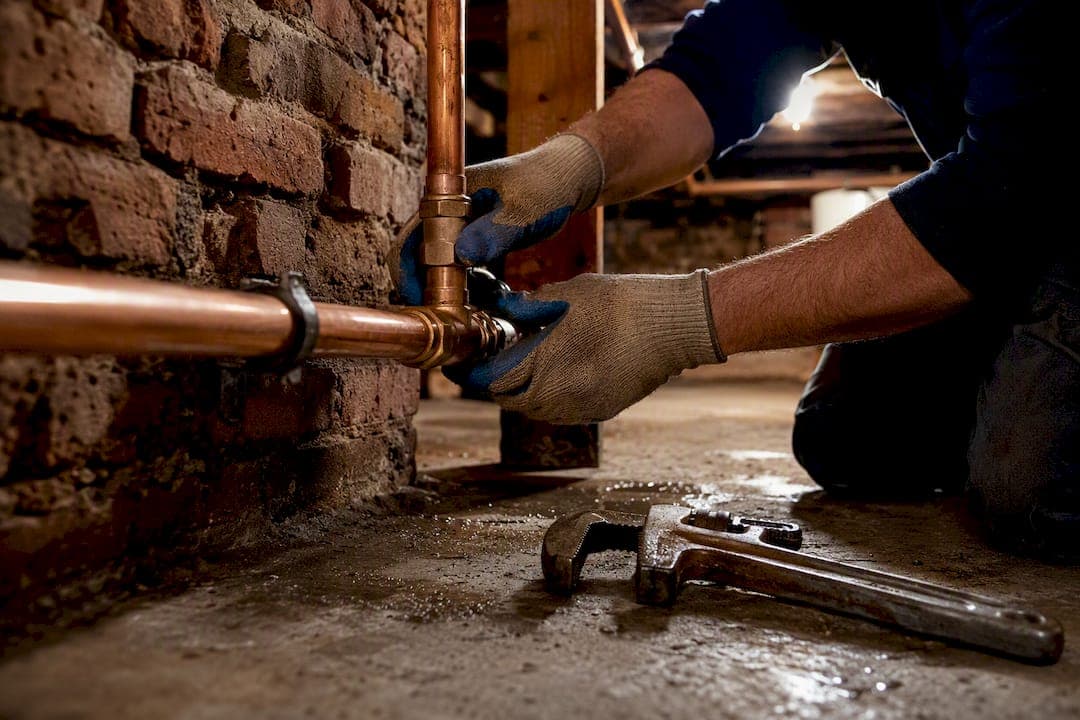
The average burst pipe repair cost lands around $500, with most jobs falling between $200 and $3,000 depending on where the pipe burst and how bad the damage got before you found it, according to HomeAdvisor. A simple exposed pipe under a sink might run you $150. A burst line under a concrete slab can climb past $3,000 once you add trenching and restoration. Location and access drive the swing more than anything else.
Quick Answer: Expect to pay $500 on average for burst pipe repair, with a typical range of $200 to $3,000. That figure usually covers labor, replacement fittings, and a basic patch, but not drywall repair, flooring, or mold remediation if water sat for a while.
Before you even think about pricing, protect the house. Do these four things now:
- Shut off your main water valve immediately, usually located near the water meter or where the line enters the house.
- Drain remaining water from faucets and toilets to relieve pressure still sitting in the pipes.
- Call an emergency plumber if water is actively flooding a room or you smell gas near the leak.
- Photograph the damage right away, before cleanup, in case you need it for an insurance claim later.
Usaplumbingseptic recommends keeping our emergency plumbing checklist saved on your phone. When a pipe lets go at 2 a.m., you won't have time to search for steps. You'll just want the list.
Key Takeaways
Burst pipe repair costs average around $500 nationally, but location, pipe access, and emergency timing can push that number anywhere from $150 to over $5,000.
| Point | Details |
|---|---|
| National average cost | Expect around $500, with a typical range of $200 to $3,000 depending on severity and access. |
| Location drives price | Exposed pipes cost far less to fix than pipes behind walls, under slabs, or underground. |
| Labor dominates the bill | Labor often makes up the largest share of total repair cost, more than materials in most jobs. |
| Act fast to limit damage | Shutting off water and calling a plumber quickly can prevent mold and cut restoration costs. |
| Usaplumbingseptic offers 24/7 response | Emergency and scheduled burst pipe repair is available throughout the Bullhead City service area. |
Table of Contents
- Burst Pipe Repair Pricing: Averages and Sample Jobs
- What Actually Drives Your Final Bill
- Cost by Location: Kitchen, Wall, Basement, Slab, and Yard
- How a Plumber Builds Your Invoice
- Emergency Steps While You Wait for a Plumber
- Who Pays: Insurance and Responsibility
- How Long Repairs Actually Take
- Preventing the Next Burst Pipe
- Get a Faster, More Accurate Quote From Usaplumbingseptic
- Sources
- FAQ
Burst Pipe Repair Pricing: Averages and Sample Jobs
Three separate industry sources converge on similar numbers, which is a good sign the range is realistic rather than inflated. Fixr puts the national average near $500 with a typical range of $200 to $1,000. HomeGuide reports totals commonly between $400 and $2,000, with slab and underground work responsible for pushing the high end up. HomeAdvisor's broader range of $200 to $3,000 accounts for labor making up a significant share of the bill.
| Cost Tier | Typical Range | What It Covers |
|---|---|---|
| Low-end repair | typically low cost repair | Exposed, easily accessible pipe with minor damage and no restoration work |
| National average | $400–$600 | Standard fitting replacement, moderate labor, minimal drywall or restoration |
| High-end repair | $1,000–$3,000+ | Slab, underground, or sewer line work requiring excavation or trenching |
Here's what those numbers look like on real jobs:
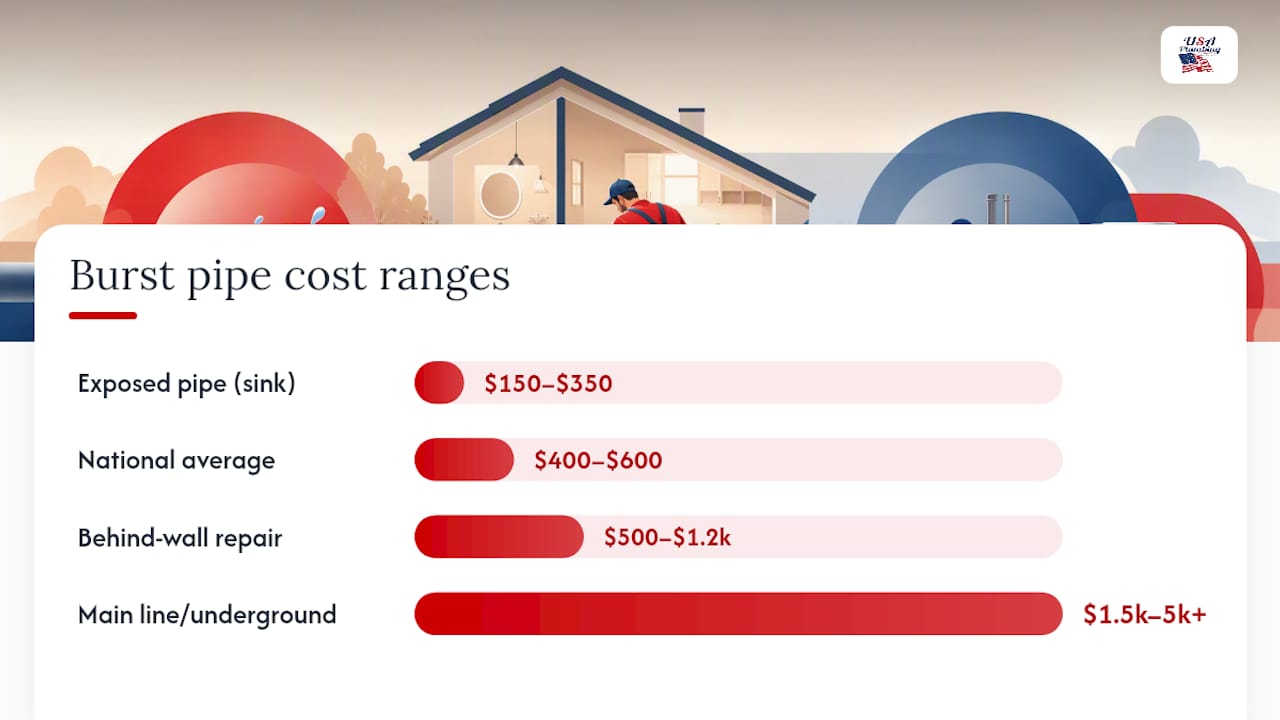
- Short exposed pipe under a sink or in a basement: Often $150 to $350. The plumber can see the damage, reach it without cutting anything, and swap the section in under an hour.
- Behind-wall repair in a kitchen or bathroom: Usually $500 to $1,200. Add drywall cutting, possible tile removal, and a return trip once the wall is patched.
- Main line or underground repair in the yard: Frequently $1,500 to $5,000 or more. Excavation, permits, and backfilling all add labor hours that a simple patch job never touches.
Per-linear-foot pricing gives you another way to sanity-check a quote. Angi reports full replacement, materials and labor combined, typically runs $150 to $250 per linear foot, while materials alone can be as little as $0.50 to $30 per foot depending on whether you're using PEX, copper, or PVC. That per-foot model works fine for a short section. It falls apart fast once access and restoration work start dominating the bill, which happens more often than homeowners expect.
What Actually Drives Your Final Bill
Two identical-looking leaks can cost wildly different amounts to fix. The pipe itself is rarely the expensive part. What surrounds it usually is.
- Pipe material. Copper costs more in materials than PEX or PVC, but PEX is faster to install, which can offset the difference in labor.
- Location and accessibility. A pipe you can reach with a wrench costs far less than one buried in a wall, under a slab, or beneath your yard.
- Extent of damage. A clean patch is cheap. A corroded section that needs full replacement, or damage that spread to multiple fittings, costs more.
- Pipe size and linear feet. Longer runs and wider diameter pipes both add material and labor time.
- Standard labor rates. Most plumbers charge by the hour or by the job, and rates vary by region and by how urgent the call is.
- Emergency call-out fees. After-hours or weekend calls typically add $100 to $300 on top of standard labor, according to Forbes.
- Restoration work. Drywall, flooring, and cabinetry repair are usually billed separately from the plumbing itself.
Some invoices also include flat diagnostic fees that catch homeowners off guard. A camera inspection to locate a hidden leak often runs a fixed $100 to $250. Thawing a frozen pipe before repair work can even start sometimes carries its own separate charge. Ask your plumber to itemize these upfront so you're not surprised when the final invoice lands.
Pro Tip: Clear a path to the affected area and shut off water before your plumber arrives. Every minute they spend moving boxes or hunting for the shutoff valve is billable time you're paying for.
Cost by Location: Kitchen, Wall, Basement, Slab, and Yard
Where the pipe burst matters more than almost any other factor, because access dictates labor hours are a significant factor in the total cost. A leak under your kitchen sink is generally less costly to repair than one located inside a wall nearby.
| Location | Typical Cost Range | Why |
|---|---|---|
| Kitchen (exposed, under sink) | typically low cost repair | Easy access, minimal disassembly needed |
| Bathroom (exposed) | $200–$500 | Similar to kitchen, sometimes tighter workspace |
| Behind a wall | $500–$1,200 | Requires cutting drywall, possible tile or trim removal |
| Basement, exposed | $150–$350 | Pipes usually visible and reachable |
| Basement, under slab | $1,000–$4,000+ | Concrete cutting, excavation, and patching add major labor |
| Yard or underground main line | often very high repair costs | Trenching, permits, and backfilling extend the timeline |
| Sewer line | potentially the highest repair costs | Trenchless or open-trench excavation, sewage cleanup, possible permits |
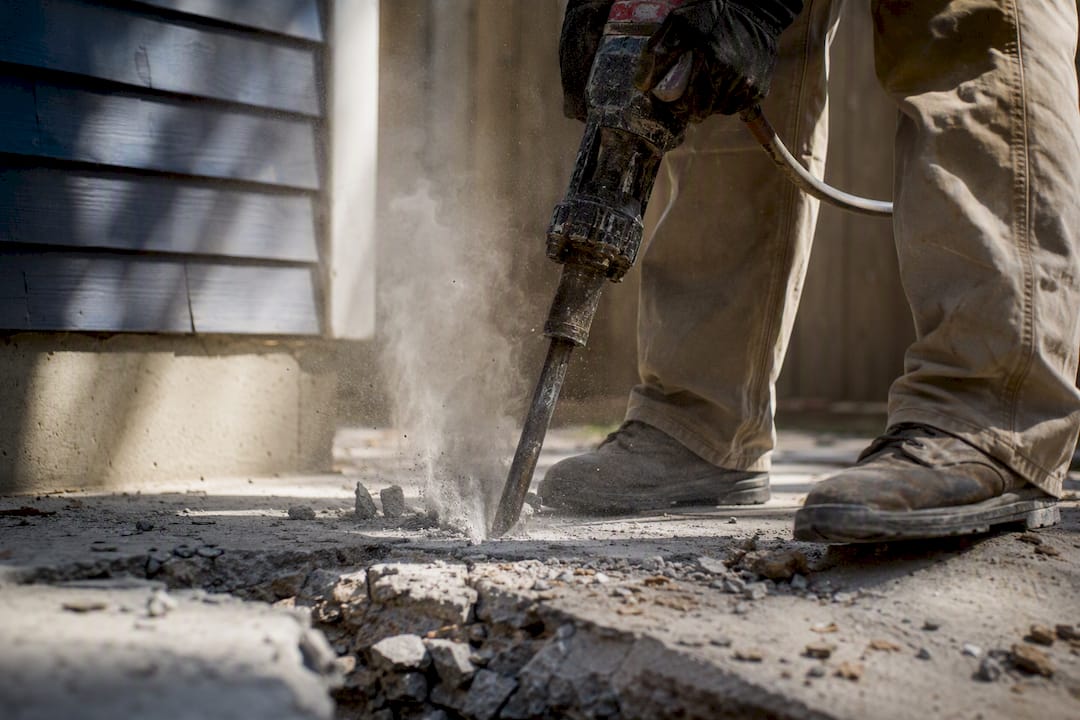
Slab and sewer work deserve their own callout because they operate on a different cost scale entirely. Cutting into a concrete foundation isn't a one-hour job. Many plumbers now offer trenchless repair, which can reduce excavation but still costs more than surface-level fixes because of the specialized equipment involved. Sewer line bursts add another layer: sewage exposure creates a health hazard, which often means cleanup crews on top of the plumbing crew, and that adds up quickly. Some emergency guides put worst-case underground jobs at $5,000 or higher once everything is factored in, according to LendEDU.
Here's a scenario that trips people up. Say two homeowners each have a burst pipe leaking at roughly the same rate. One is behind a bathroom vanity, easy to spot and reach. The other is under a concrete slab in the garage, invisible until the floor starts sweating. The vanity repair might run $400. The slab repair, once you add camera diagnostics, jackhammering, pipe replacement, and concrete patching, can hit $2,500 or more, even though the actual leak was smaller. If you're dealing with a suspected underground leak, our guide to underground water leak repair walks through what to expect before you call anyone out.
How a Plumber Builds Your Invoice
Most burst pipe invoices break into four buckets: labor, materials, emergency fees, and restoration, with modern construction software for plumbers helping professionals manage these costs and streamline workflow.
A typical invoice on a $600 mid-range job might break down like this: a breakdown including labor as the largest share, with materials and minor restoration separately accounted. Hourly rates for standard plumbing service commonly range from $75 to $200 depending on your region and the plumber's experience level. Flat fees are common too. Expect some service call fees and possibly a thawing charge if the pipe was frozen before bursting.
Restoration costs live outside most plumbing quotes entirely. Drywall repair typically runs $2 to $9 per square foot depending on the extent of the damage. If water sat for more than 24 to 48 hours, watch for musty odors, discoloration, or soft drywall, all signs that mold remediation may be needed, which the EPA notes can turn a modest repair into a much larger restoration project. That's a separate contractor call in most cases, not something your plumber handles.
Emergency Steps While You Wait for a Plumber
What you do in the first 15 minutes after a pipe bursts often determines whether you're looking at a $400 repair or a $4,000 restoration job. Move fast, but move carefully.
- Shut off the main water valve to stop the flow at the source.
- Open faucets and drain remaining water from pipes to relieve pressure.
- Turn off electricity to the affected area if water is pooling near outlets or fixtures.
- Move furniture and valuables away from the flooded area if it's safe to do so.
- Call an emergency plumber immediately if the leak is active and you can't stop the flow yourself.
A few temporary fixes can buy you time before a professional arrives:
- A pipe repair clamp can seal a small crack or pinhole leak for a few hours to a couple of days.
- Rubber patch and hose clamp combinations work similarly for slightly larger splits.
- Epoxy putty designed for plumbing can seal a leak temporarily, though it's not a permanent solution.
None of these replace a real repair. They're stopgaps to limit water damage while you wait, and you can find a fuller walkthrough in our temporary burst pipe fix guide.
Safety Warning: Never touch electrical outlets, panels, or appliances in standing water. If flooding is significant or you smell gas, evacuate the area and call emergency services before attempting any repair.
Pro Tip: Take timestamped photos of the leak, the standing water, and any damaged belongings before you start cleanup. Insurance adjusters want to see the damage as it happened, not after you've already mopped it up.
Who Pays: Insurance and Responsibility
Responsibility for a burst pipe usually depends on where it happened and who owns the property.
- Interior plumbing inside your home is almost always the homeowner's responsibility, and homeowner's insurance typically covers sudden, accidental bursts.
- Water main lines between your house and the street can fall under utility responsibility or homeowner responsibility depending on local ordinances, so check with your municipality if the break is near the property line.
- Rental properties usually put plumbing repair responsibility on the landlord, though tenants should report leaks immediately to avoid dispute over damage.
For a claim, gather: time-stamped photos of the damage, a written estimate or invoice from your plumber, the time you shut off the water, and receipts for any emergency mitigation work. Keep in mind that water damage and mold remediation are often covered under separate policy sections, sometimes with their own deductibles, so read your policy closely before assuming everything is bundled together.
How Long Repairs Actually Take
Timeline depends heavily on location, same as cost.
- Simple exposed repair: Usually 1 to 2 hours from arrival to finished patch.
- Behind-wall repair: Same day in most cases, sometimes stretching to a full day if drywall needs to dry before patching.
- Slab or underground repair: 1 to 3 days, longer if permits or trenching are required.
What stretches these timelines: needing a camera inspection to locate the leak, waiting on a specialty part, drying time for saturated materials, or coordinating a separate restoration contractor for drywall and flooring.
Preventing the Next Burst Pipe
A little seasonal maintenance costs far less than another emergency call. Insulate exposed pipes in basements, crawl spaces, and garages before cold weather hits, and keep interior temperatures above 55°F during winter storms, following guidance from the Red Cross on freeze prevention. Replace galvanized or heavily corroded pipe runs proactively rather than waiting for a failure. Installing a pressure regulator prevents excess water pressure from stressing your pipes over time.
Pro Tip: Replacing a known problem pipe on your schedule, during a routine service call, almost always costs less than replacing it after it bursts during an emergency at 3 a.m.
Walk your basement and crawl space each season and look for small drips, corrosion, or damp insulation. Catching a slow leak early is a lot cheaper than catching it after it becomes a burst pipe.
A Note From Usaplumbingseptic
We've walked into more flooded basements and cut-open walls than we can count, and the pattern is always the same: the homeowners who acted fast on shutting off water and calling a trained plumber paid less than the ones who waited. When a pipe bursts, hesitation is the expensive part.
Get a Faster, More Accurate Quote From Usaplumbingseptic
Usaplumbingseptic runs 24/7 emergency plumbing service throughout Bullhead City, Fort Mohave, Mohave Valley, and Laughlin, so you're never stuck waiting days for someone to look at a burst pipe. Whether it's an exposed leak under your kitchen sink or a slab break in the garage, our trained plumbers show up equipped to diagnose and repair the same visit in most cases.

Before you call, have a few things ready: photos of the leak, the general location (kitchen, basement, yard), whether the water is still running, and any visible damage to walls or flooring. That information helps us quote your job accurately over the phone instead of guessing on-site. If the burst happened underground or near your sewer line, our sewer line solutions page covers what that repair process typically involves.
Ready for an estimate? Visit our Golden Valley plumbing services page to book a same-day appointment or request emergency dispatch.
Sources
- What Does It Cost to Repair a Burst Pipe? 2025 Data
- How Much Does Burst Pipe Repair Cost? (2024) | Angi
- Fixr
- How Much Does It Cost to Repair a Burst Pipe? (2026)
- Epa
- Redcross
FAQ
How much do plumbers charge to fix a burst pipe?
Most plumbers charge $150 to $500 for a straightforward, accessible repair, with the national average landing near $500 once you include standard labor and materials.
How fast can a plumber fix a burst pipe?
A simple exposed repair often takes 1 to 2 hours, while behind-wall or slab repairs can take a full day to several days depending on access and drying time.
Can I fix a burst pipe myself?
You can apply a temporary patch with a pipe clamp or epoxy putty to slow the leak, but a permanent fix almost always requires a licensed plumber, especially for anything behind a wall or underground.
Who is responsible for a burst water main?
Interior plumbing is the homeowner's responsibility, but a burst water main near the street may fall under your utility company's jurisdiction depending on local rules, so check with your municipality before assuming coverage.