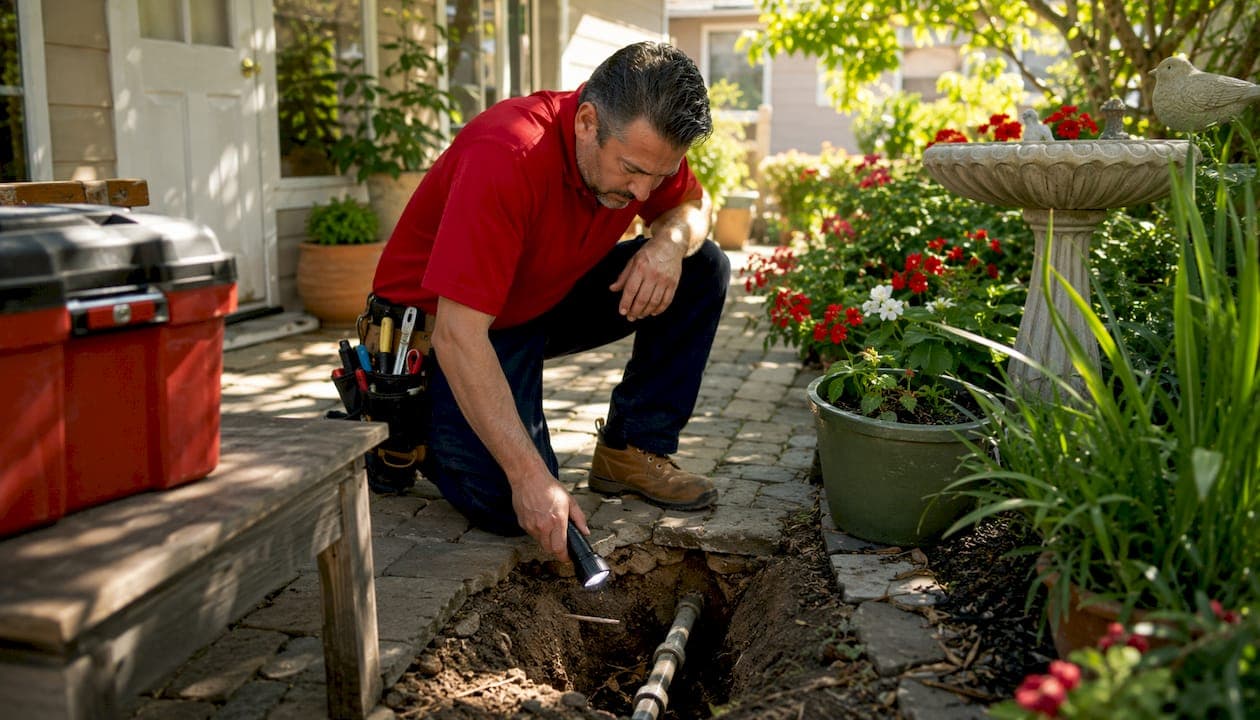
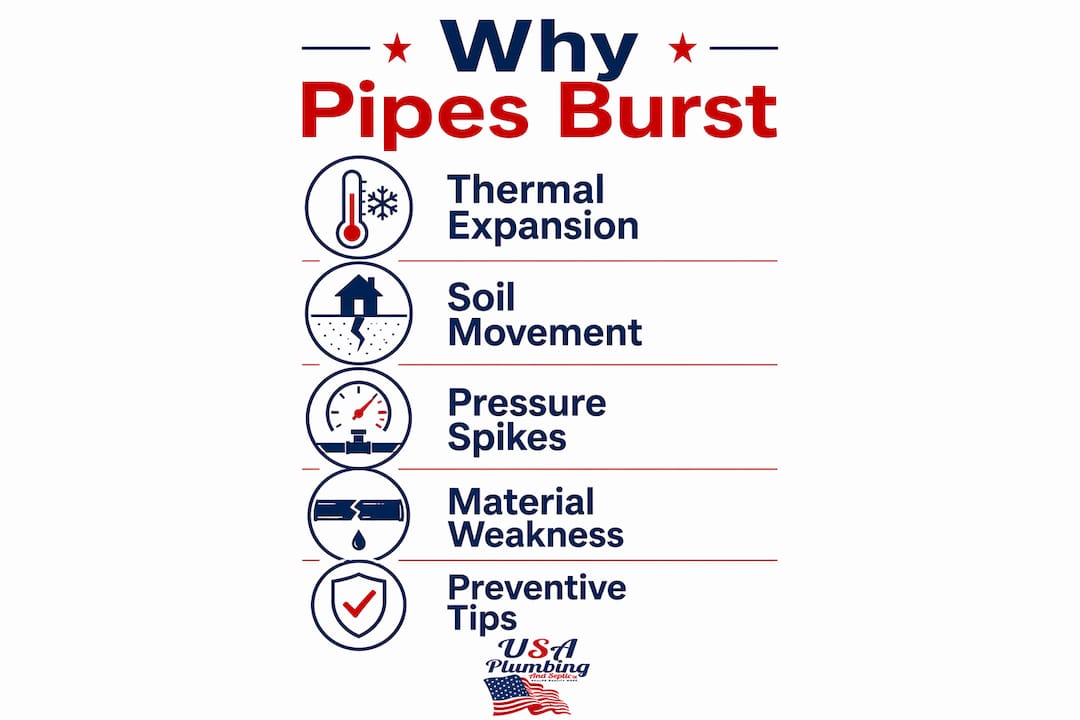
Hot weather is one of the most underestimated threats to your home's plumbing. Pipes burst in heat mainly because of three forces working together: thermal expansion that stresses joints and fittings, soil movement that pulls support away from buried lines, and pressure spikes driven by higher summer water demand. None of these is a single dramatic event. They build quietly over days and weeks until something gives.
Here's what you need to know right now:
- Thermal expansion causes metal and plastic pipes to grow and contract with every temperature swing, weakening solder joints over time through cumulative fatigue
- Soil movement in clay-heavy or drought-stressed ground removes bedding support from buried lines, leading to joint separation and cracking
- Pressure spikes and water hammer from irrigation cycling and heavy summer use create transient surges that stress already-weakened fittings
- If you spot any warning signs, call a licensed plumber before a slow leak becomes a full burst
Usaplumbingseptic responds to plumbing emergencies 24/7 across Bullhead City, Fort Mohave, Mohave Valley, and Laughlin. This guide gives you the causes, warning signs, and prevention steps to protect your home this summer.
Table of Contents
- Why pipes burst in heat: the causes explained
- How do you know a pipe is stressed before it bursts?
- A practical summer prevention checklist for your home
- What to do immediately if a pipe bursts
- What a professional checks and what repairs typically involve
- Key Takeaways
- What pros actually see in heat-related failures
- Need emergency plumbing help in Bullhead City right now?
- Useful sources and further reading
- FAQ
Why pipes burst in heat: the causes explained
Heat does not destroy pipes instantly. It sets off a chain of mechanical and chemical processes that compound over a season or several summers.
Thermal expansion and joint fatigue
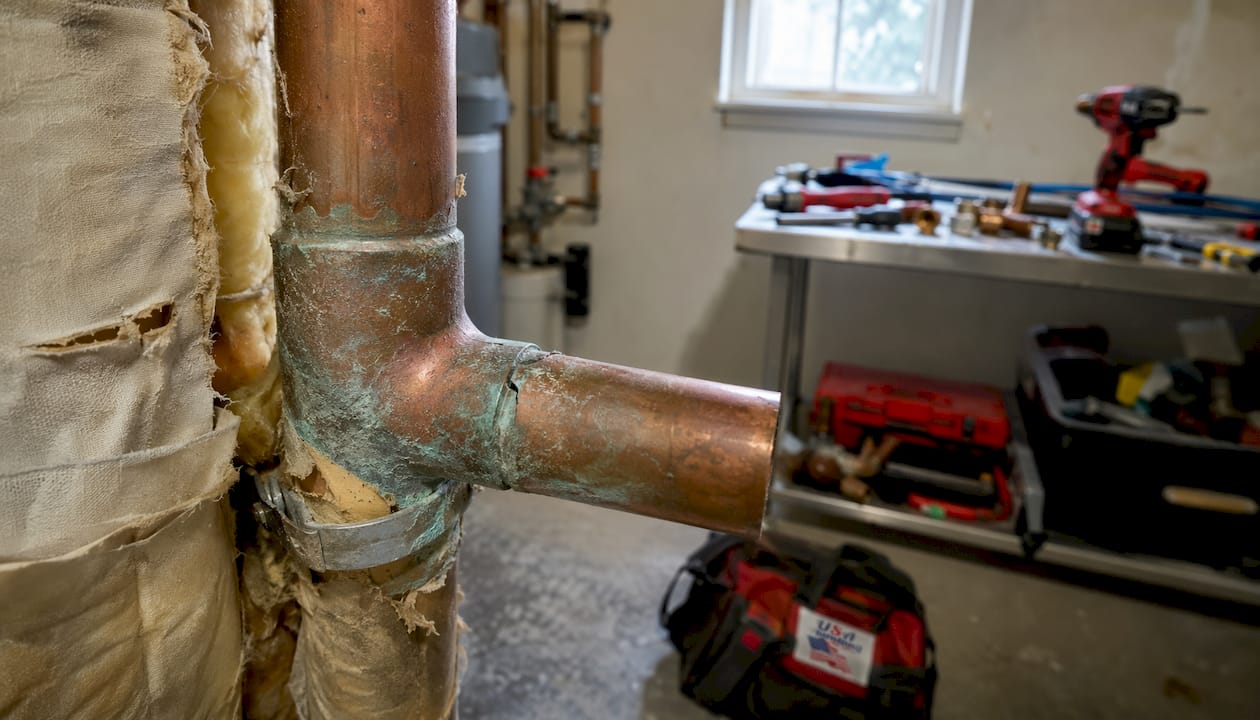
Every pipe material expands when it heats up and contracts when it cools. In a long, tightly run copper or steel line, that movement has nowhere to go. The stress concentrates at soldered joints, threaded fittings, and elbows. One hot day rarely causes a failure. But repeated expansion cycles open microscopic cracks in solder and fittings that grow wider each season until a pressure event finishes the job. Plumbing professionals consistently describe summer failures as the result of long-term fatigue, not a single scorching afternoon.
Soil movement and loss of bedding support
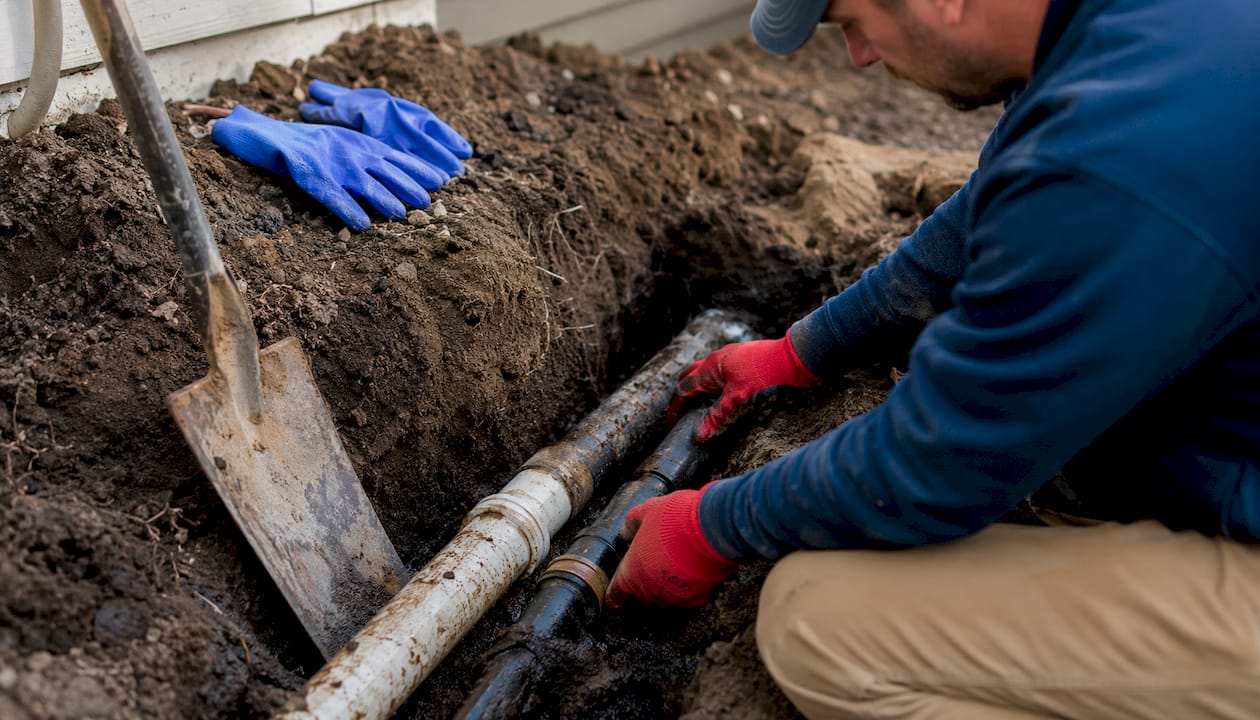
Underground water and sewer lines depend on stable, compacted soil for support. Prolonged heat and drought cause clay-heavy soils to contract and pull away from pipe walls, leaving unsupported spans that flex under normal water pressure. This process accelerates during heat waves that follow dry spells, which describes most summers across the U.S. Southwest, including the Bullhead City area. When a heavy monsoon rain finally arrives, the sudden soil shift can snap a joint that has been slowly bending for weeks. Check our underground water leaks repair guide for what to expect if this happens at your property.
Pressure spikes and water hammer
Summer water use climbs fast: longer showers, irrigation systems cycling on and off, pool fills, and kids running hoses. That elevated demand raises internal system pressure and creates frequent pressure cycling. When a solenoid valve on an irrigation controller snaps shut, it sends a hydraulic shock wave through the line, a phenomenon called water hammer. Rattling or banging noises in your walls are the audible warning. Per AWWA hydraulic transient analysis guidelines, peak pressure spikes from water hammer can reach very high multiples of normal operating pressure, and repeated surges stress fittings and joints that thermal fatigue has already weakened.
Material-specific vulnerabilities
Not all pipes age the same way in heat.
| Pipe material | Where it's most vulnerable | Heat-related failure mode | Prevention note |
|---|---|---|---|
| Galvanized steel | Older homes, interior supply lines | Corrosion narrows diameter; fittings crack under pressure | Professional inspection; consider repipe |
| Copper | Exterior and attic runs | Pinhole leaks from pitting; solder joint separation | Annual inspection; check for green staining |
| PVC / CPVC | Exposed outdoor or attic runs | UV photodegradation causes brittleness; softening in extreme attic heat | Shade or insulate exposed sections |
| HDPE / PEX | Buried service lines | Thermal stress at restrained fittings | Verify expansion allowance at installation |
Older galvanized steel is the highest-risk material in homes built before 1960. Once the zinc coating depletes, rust narrows the pipe's interior until pressure has nowhere to go. A single burst in a galvanized system usually signals the rest of the line is in the same condition.
Heat also stresses water heaters indirectly. A malfunctioning temperature-and-pressure relief (TPR) valve can allow dangerous pressure to build in the tank and connected piping during periods of high hot-water demand. Review common water heater problems if your unit is more than eight years old.
Pro Tip: After any multi-day heat wave, walk your attic and check exposed plastic lines for surface chalking, discoloration, or hairline cracks. These are early signs of UV degradation that a quick wrap of foam insulation or UV-resistant pipe wrap can address before the next hot spell.
How do you know a pipe is stressed before it bursts?
Early warning signs are almost always present before a catastrophic failure. The problem is that most homeowners do not know what to look for.
Summer pipe failures typically develop from slow-building stress rather than a single instant event. That means you usually have a window to act. Here are the signs that demand attention:
- Wet or unusually green patches in your lawn with no recent irrigation, especially along the path of your service line, often indicate underground joint separation from soil movement
- Damp spots or soft drywall on interior walls, particularly near pipe runs in the attic or exterior walls, point to a slow leak at a joint or fitting
- Decreased or fluctuating water pressure at multiple fixtures simultaneously suggests a partial break or significant leak somewhere in the supply line
- Banging or rattling sounds inside walls when irrigation or appliances cycle on and off are the classic sign of water hammer, a pressure spike that accelerates joint failure
- Pooling near the foundation or along a slab edge after dry weather can indicate a slab leak or a buried line shifting under the structure
- Higher-than-usual water bills without a change in usage habits often mean water is escaping somewhere in the system
Professionals use acoustic and camera leak detection to locate underground joint separation before any excavation. If you see persistent lawn saturation or a wet spot that reappears after drying out, that is your cue to call a plumber, not wait.
A practical summer prevention checklist for your home
Prevention costs a fraction of emergency repair. Proactive pressure testing and professional inspections consistently prove more cost-effective than dealing with a burst and the water damage that follows.
Immediate actions you can take now
- Attach a pressure gauge to an outdoor hose bib and check your system pressure. Most residential systems should run between 40–60 psi. Readings above 80 psi put your pipes at risk.
- If pressure is high, a licensed plumber can install a pressure-reducing valve (PRV) to bring it into a safe range. Do not attempt to adjust or replace a PRV yourself.
- Walk exposed attic and exterior pipe runs. Look for chalking, cracks, or discoloration on plastic lines. Wrap unprotected sections with foam pipe insulation or UV-resistant wrap.
- Confirm that any visible pipe runs have clearance to expand. A line pinned tightly against a joist or wall bracket with no room to move is a fatigue risk.
Landscape and soil management
- Keep soil around buried service lines consistently moist during drought. Bone-dry clay soil contracts and removes bedding support from your lines.
- Avoid deep digging or heavy equipment near known service line paths during dry spells.
- Watch for new cracks along your foundation or driveway. Ground movement visible at the surface often means movement is happening around buried pipes too.
Maintenance actions worth scheduling
- Book a professional inspection if your home is more than 20 years old or if you have not had one in the past two years. Routine maintenance catches corrosion, weakened joints, and UV damage that are invisible from the outside.
- Test your water heater's TPR valve annually. Lift the lever briefly and confirm water flows, then releases cleanly. A valve that sticks or drips needs replacement.
- Flush irrigation lines at the start of summer and check for pressure irregularities at each zone.
Pro Tip: On the hottest days of summer, reduce irrigation run times by 20–30% and stagger zone cycles to avoid stacking pressure demand. This simple scheduling change lowers the frequency of pressure spikes that drive water hammer.
| Task | DIY or pro? | When to do it |
|---|---|---|
| Visual check of exposed pipes | DIY | Before and after each heat wave |
| Pressure gauge test at hose bib | DIY | Start of summer and after any pressure complaint |
| PRV adjustment or replacement | Licensed plumber only | When pressure exceeds 80 psi |
| Buried pipe inspection or repair | Licensed plumber only | At first sign of lawn wet spots |
| TPR valve test | DIY (simple lift test) | Annually |
| Solder joint or fitting repair | Licensed plumber only | Any visible leak or joint separation |
| UV wrap on exposed plastic lines | DIY | Before peak summer heat |
What to do immediately if a pipe bursts
Act fast. Water damage compounds by the minute, and electrical hazards can develop quickly if flooding reaches outlets or appliances.
-
Shut off the main water valve. Find your main shutoff at the meter box near the street or at the point where the service line enters your home. Turn it clockwise until it stops. If the valve is stuck or corroded, do not force it. Call a plumber immediately and minimize water use until help arrives.
-
Cut power to affected circuits. If water is pooling near electrical outlets, appliances, or your electrical panel, switch off the breakers for those areas at your main panel. Never step into standing water near live outlets.
-
Drain the lines and contain the water. Open faucets at the lowest point in your home to relieve trapped pressure and drain remaining water from the pipes. Use buckets, towels, and plastic sheeting to protect flooring, furniture, and valuables. Move electronics and documents to higher ground.
-
Document everything before cleanup. Photograph all visible damage, including wet walls, flooring, and any damaged belongings, before you move or dry anything. Your insurer will need this documentation. Follow up with your insurance company as soon as possible. Delayed reporting can complicate claims.
-
Call a licensed plumber. Provide your address, a description of where the burst appears to be, whether the water is off, and whether any electrical hazards are present. A licensed plumber will assess the break, apply a temporary stop-gap if needed, and give you a written estimate before any repair work begins. Our 24-hour plumbing emergency checklist walks you through each step in detail.
Repair costs for a burst pipe vary widely. A straightforward copper or PEX patch typically runs in the hundreds of dollars. When water damage remediation is involved, total costs can climb significantly higher. Getting a plumber on-site quickly is the single most effective way to limit the final bill.
What a professional checks and what repairs typically involve
When a licensed plumber arrives after a heat-related failure, the first job is diagnosis, not repair. Guessing at the cause and patching the wrong spot wastes time and money.
A professional inspection for heat-related pipe damage typically covers: pressure testing the full system to identify pressure loss and isolate the failure zone; camera inspection for underground lines to locate joint separation or cracking without unnecessary excavation; thermal imaging to detect hidden hot spots or moisture behind walls and ceilings; and a full joint and valve assessment to identify fatigue cracks that have not yet leaked but are close to failure.
Common repair paths depend on what the inspection reveals. For underground lines, re-bedding and relining or section replacement is standard when soil movement has caused joint separation. Failed soldered joints on copper lines are cut out and replaced with new fittings. Corroded galvanized sections are typically replaced in full rather than patched, because a single burst in a galvanized system signals that the surrounding pipe is in the same deterioration state. UV-damaged exterior PVC runs are replaced and, where possible, rerouted or shaded to prevent recurrence. Adding expansion loops or pipe anchors addresses the root cause of thermal fatigue in tightly run lines.
Professionals recommend annual checks for older homes and after any extreme-weather event. For underground diagnostics specifically, acoustic and tracer leak detection locates joint separation before a single shovel goes in the ground, which keeps repair costs down.
Call a licensed plumber without delay when: pressure is persistently low across multiple fixtures, wet spots on your lawn or walls reappear after drying out, or any burst has put water in contact with electrical systems. These are not situations to monitor and hope improve on their own.
Key Takeaways
Heat-related pipe failures almost always result from cumulative stress across three mechanisms: thermal expansion, soil movement, and pressure spikes, and catching warning signs early is what separates a minor repair from a major restoration.
| Point | Details |
|---|---|
| Three main causes | Thermal expansion, soil movement under buried lines, and pressure spikes from summer water demand each contribute to failure. |
| Warning signs to act on | Wet lawn patches, damp drywall, low pressure, and banging noises all signal stress before a full burst occurs. |
| Top prevention priorities | Test system pressure, inspect exposed plastic lines, and keep soil around buried lines moist during drought. |
| When to call a pro | Any burst, persistent wet spots, or pressure loss that reappears after a fix requires a licensed plumber, not a wait-and-see approach. |
| Usaplumbingseptic | Available 24/7 in Bullhead City and surrounding areas for emergency repairs, underground leak location, and professional inspections. |
What pros actually see in heat-related failures
The pattern we see most often is not a dramatic pipe explosion. It is a homeowner who noticed a damp patch on the wall two weeks earlier and figured it would dry out on its own. By the time we arrive, what started as a weeping solder joint has soaked the insulation, wicked into the drywall, and sometimes reached the subfloor. The repair cost is now three to five times what it would have been with a prompt call.
Heat-related failures are almost never random. The pipes that go first are the ones that were already stressed: an attic run with no UV protection, a buried line in soil that has been bone-dry since April, a galvanized section that has been corroding for a decade. The heat does not create the weakness. It accelerates it to the point of failure.
The one-sentence rule I give every homeowner: if a symptom reappears after you have addressed it yourself, stop addressing it yourself and call a licensed plumber. A wet spot that dries and comes back is not a coincidence. It is a pipe telling you it needs professional attention.
Need emergency plumbing help in Bullhead City right now?
A burst pipe or a suspected underground leak in the Bullhead City area is not a situation to leave until morning. Usaplumbingseptic provides 24/7 emergency plumbing service across Bullhead City, Fort Mohave, Mohave Valley, and Laughlin, with licensed plumbers equipped for emergency repairs, underground leak location, and irrigation line assessment.

When you call, tell us your address, whether the water is shut off, and where you see signs of the problem. We will dispatch a plumber, perform an on-site diagnosis, apply a temporary stop-gap where needed, and give you a written estimate before any repair work begins. No surprises.
For immediate dispatch or to schedule a summer inspection, visit our local plumbing service page or call us directly. If you want to understand what minor leaks are costing you before they become a burst, that page is worth a read too.
Useful sources and further reading
- Top Causes of Burst Pipes During Southern California Heat Waves — Detailed breakdown of soil movement, thermal expansion, and pressure causes relevant to arid U.S. climates.
- What Causes a Pipe to Burst in Summer? (Robinson Plumbing) — Explains cumulative thermal fatigue and why summer failures build over time rather than from a single event.
- Why Pipes Burst: When to Call Experts (Bud Matthews) — Covers water hammer, pressure spikes, and the warning signs homeowners most often miss.
- Can Extreme Heat Cause Pipes to Burst? (Fireservice USA) — Professional perspective on inspection priorities and what maintenance catches before failure.
- Burst Pipe Repair: Emergency Response Guide (Alert Plumber) — Practical emergency steps and repair cost context for homeowners dealing with an active burst.
- Thermal Stresses in HDPE Water Pipes (Plastic Pipe Institute) — Engineering reference on how temperature changes create stress in buried polyethylene pipe.
- Underground Water Leaks Repair: A Homeowner's Guide (Usaplumbingseptic) — Step-by-step expectations for underground pipe repairs, from detection to restoration.
- 24-Hour Plumbing Emergency Checklist (Usaplumbingseptic) — Prioritized emergency action steps for homeowners in the minutes after a burst.
FAQ
Can hot weather really cause pipes to burst?
Yes. Heat causes pipes to burst through thermal expansion, soil movement under buried lines, and elevated water pressure from higher summer demand. These mechanisms build over time rather than triggering a single instant failure.
At what temperature do pipes start to show heat-related stress?
There is no single temperature threshold for heat-related pipe failure. Unlike freezing pipes, which show sharply increased risk below 20°F, heat-related failures are mechanism-driven, meaning the risk depends on pipe material, soil conditions, and pressure levels rather than one number.
What are the first signs a pipe is about to fail in summer?
Wet or unusually green patches in your lawn, damp spots on interior walls, banging noises when appliances cycle, and unexplained drops in water pressure are the most common early indicators. Any of these warrants a call to a licensed plumber.
How do I keep pipes from bursting during a heat wave?
Test your system pressure and install a pressure-reducing valve if it exceeds 80 psi, shade or insulate exposed plastic lines, keep soil around buried lines moist, and schedule a professional inspection if your home is older or has not been checked recently.
When should I call Usaplumbingseptic instead of waiting?
Call immediately if a pipe has burst, if wet spots reappear after drying out, or if water pressure drops across multiple fixtures at once. Usaplumbingseptic is available 24/7 in Bullhead City and surrounding areas for emergency repairs and underground leak detection.