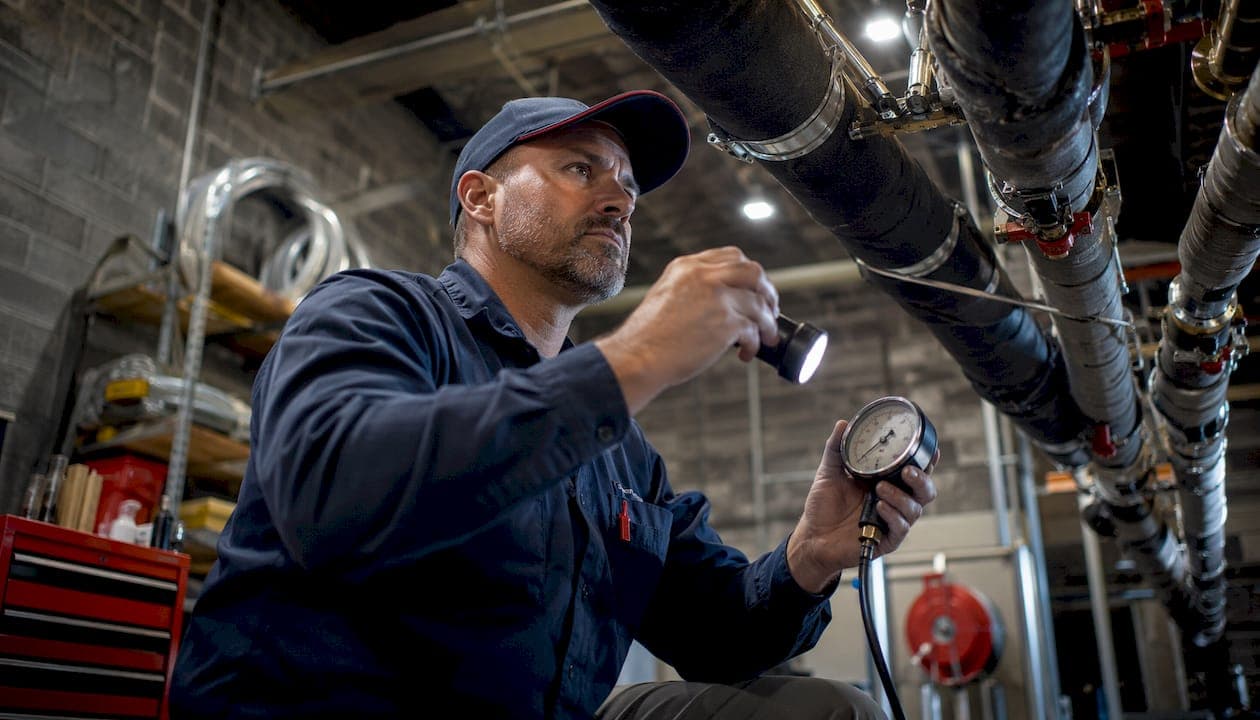
Commercial pipes burst when internal pressure exceeds the structural limits of the pipe wall, and freezing is the leading cause in commercial buildings across the United States. Water expands approximately 9% when it freezes, generating internal pressures far beyond what copper, PVC, or PEX can withstand. Beyond freezing, corrosion, pressure surges, and physical damage all contribute to commercial plumbing failures. The good news: most of these failures are preventable with the right maintenance approach.
The main reasons commercial pipes burst:
- Freezing water expanding inside uninsulated or unheated pipe runs
- Internal corrosion from aging galvanized steel or aggressive water chemistry
- Water pressure surges and water hammer stressing joints and fittings
- Physical damage from construction, renovation, or improper installation
- Material degradation in older polybutylene or cast iron systems
Prevention starts with keeping vulnerable areas heated, insulating exposed pipe runs, maintaining system pressure between 40 and 80 PSI—with 60 PSI as the practical target for system longevity—and scheduling regular professional inspections.
Why commercial pipes burst from freezing: the physics explained
Freezing is the single most destructive force in commercial plumbing, and the physics behind it are straightforward. When water turns to ice, it expands roughly 9% in volume. Inside a sealed pipe with no room to accommodate that expansion, the resulting internal pressure climbs to between 2,000 and 30,000 PSI, depending on how fast temperatures drop and the diameter of the pipe. Copper, CPVC, and PEX all fail well below the theoretical maximum ice pressure.
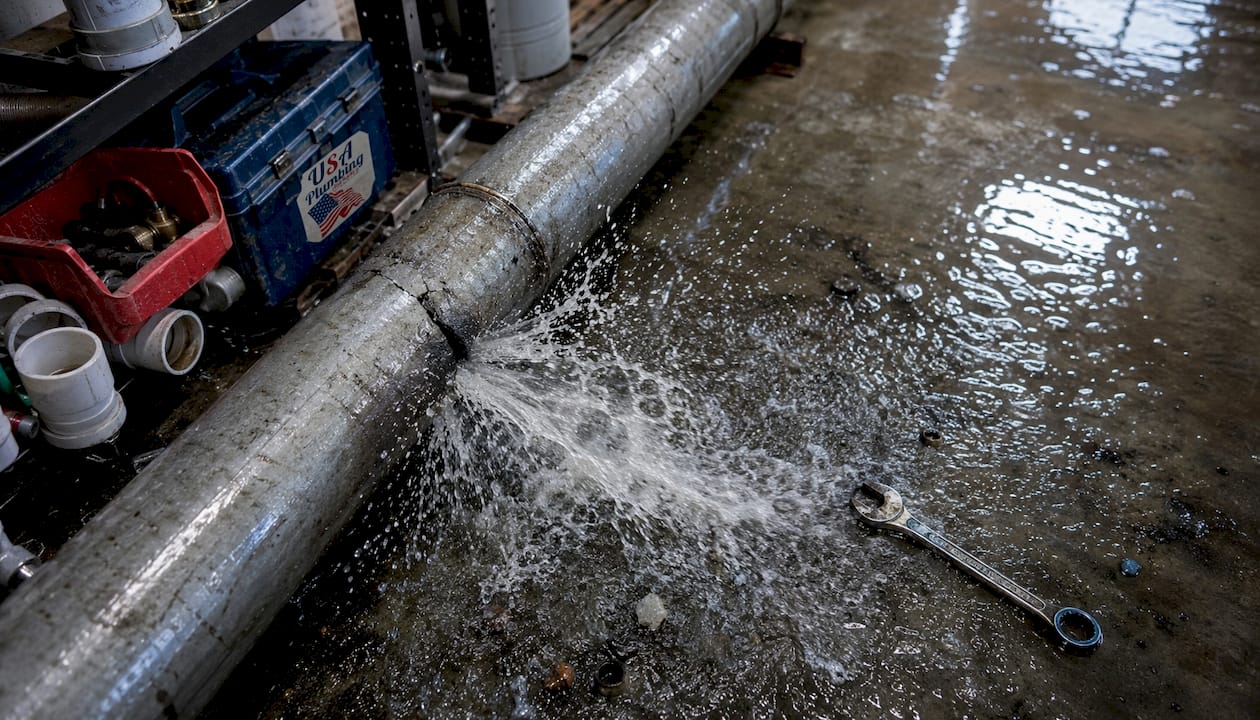
The burst rarely happens at the moment of freezing. Freeze bursts typically occur during the thaw, when the ice blockage melts and suddenly releases the pressure that built up behind it. That delay is why a building manager might walk in on a monday morning after a cold weekend to find a catastrophic flood, even though temperatures have already risen above freezing.
Locations most vulnerable to freeze bursts in commercial buildings:
- Pipes running through exterior walls without insulation
- Unheated attics, crawlspaces, and mechanical rooms
- Loading docks and areas near frequently opened exterior doors
- Unheated garages and storage areas
- Fire sprinkler lines in unheated spaces
Pressure context: Standard commercial supply pipe is designed for operating pressures of 40–80 PSI. Ice-induced pressure of even 2,000 PSI is roughly 25 times that design limit, which is why even well-maintained pipes fail under freeze conditions.
Pipe burst risk also concentrates at the weakest points in any system: fittings, elbows, and any section with a pre-existing thin wall or minor corrosion. A pipe that has survived ten winters without insulation is not necessarily safe. Each freeze cycle adds cumulative stress to those weak points.
Other causes of commercial pipe bursts you need to know
Freezing gets most of the attention, but several other failure modes cause commercial plumbing failures just as suddenly and expensively.
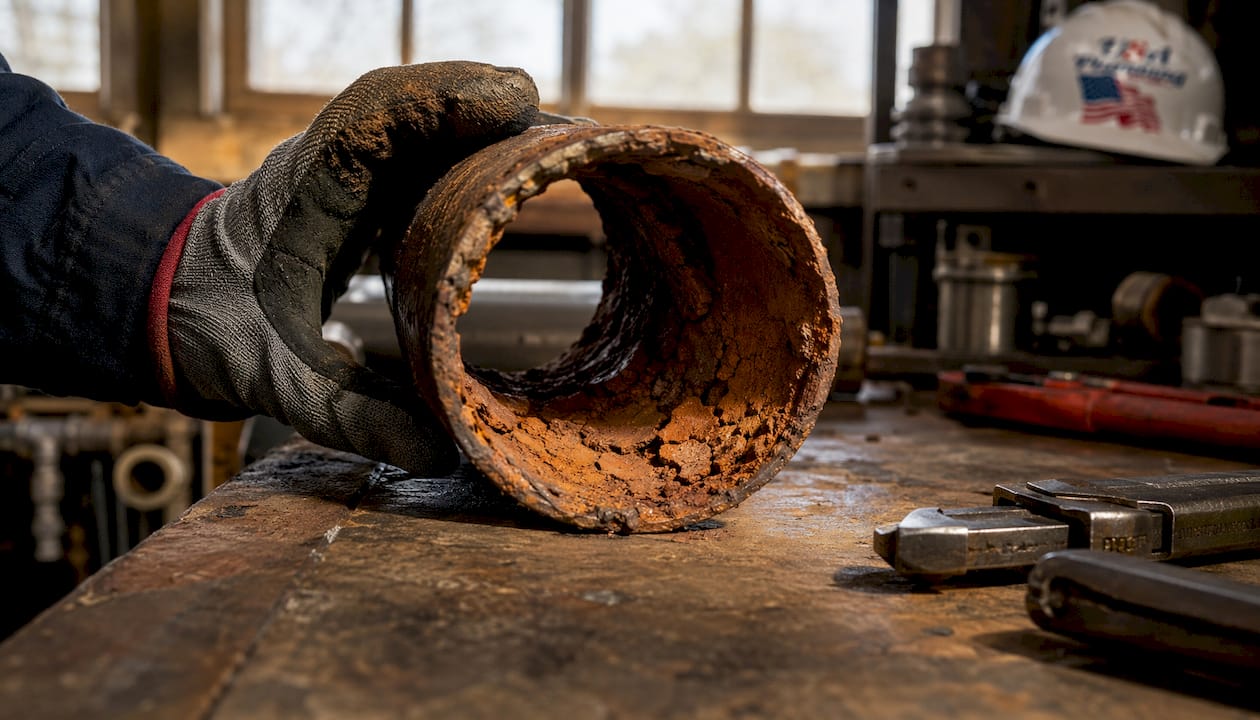
Internal corrosion is the slow-building threat. Galvanized steel pipe, standard in buildings constructed before 1960, corrodes from the inside out once its zinc coating depletes. The pipe wall thins progressively, and the burst risk concentrates at elbows and fittings where corrosion advances fastest. Copper pipe faces a different problem: soft, low-pH water drives Type I pitting corrosion, creating pinhole leaks that eventually rupture. A copper system showing its second or third failure in the same zone almost always has a water-chemistry problem driving systemic corrosion.
Water pressure surges and water hammer are mechanical threats. Pressure spikes from water hammer can reach ten times normal operating pressure, repeatedly stressing fittings and joints until one fails. Fast-closing solenoid valves on commercial dishwashers, washing machines, and HVAC equipment are common sources. A water hammer arrestor installed at the supply stop absorbs the shock before it travels through the system.
Physical and mechanical damage during construction or renovation is more common than most building managers expect. Nail or screw punctures through drywall into a pipe running just behind the wall surface cause damage that shows up immediately or within hours as water seeps through. Improper pipe support during installation creates sag points where water collects and joints carry extra load.
Material degradation rounds out the risk picture:
- Polybutylene pipe, installed in many commercial buildings between 1978 and 1995, degrades with chlorine exposure, developing micro-fractures that eventually rupture
- Cast iron drains corrode from the inside, weakening walls until normal pressure causes failure
- Drain blockages from grease and debris build pressure behind the clog, stressing the pipe upstream
Understanding these commercial water damage scenarios helps property managers prioritize which systems need attention first.
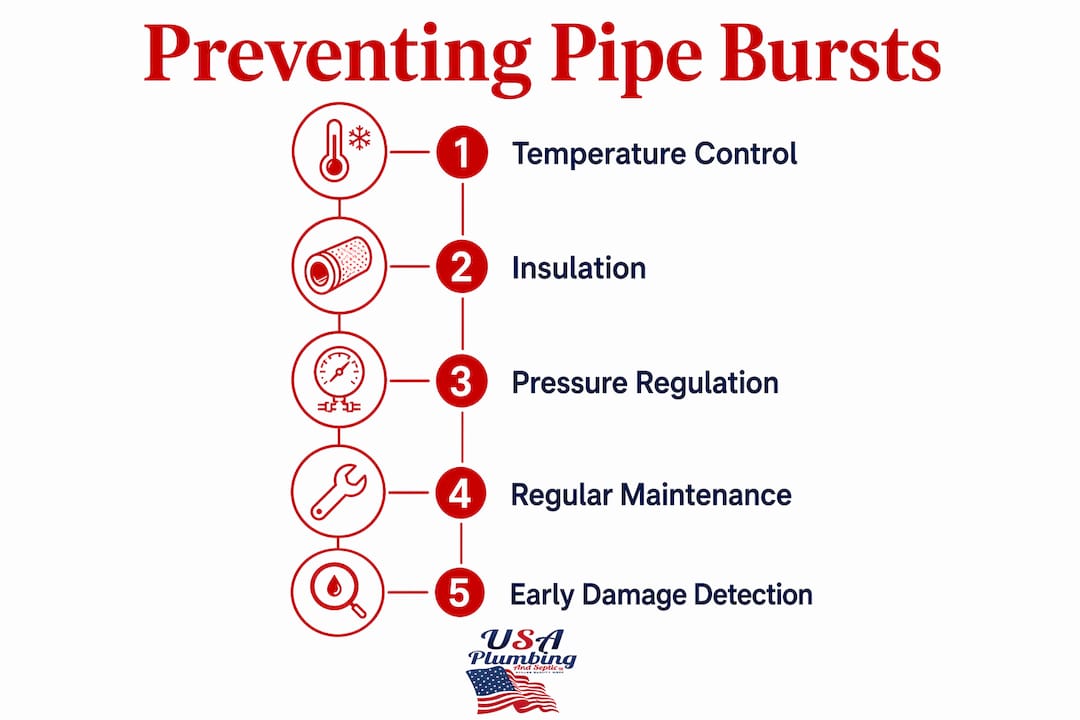
How to prevent frozen and burst pipes in your commercial building
Prevention is far cheaper than remediation. A commercial plumbing maintenance schedule built around the following practices dramatically reduces burst risk across all failure modes.
Temperature control is the first line of defense against freeze bursts. Unheated spaces, exterior walls, and attic areas carry the highest freeze risk. Keep all areas where pipes run above 55°F during cold weather, even in unoccupied sections of the building. Never turn off heat completely during winter, even in storage areas or over holiday weekends.
Pipe insulation protects runs that cannot be kept warm by building heat alone. Foam pipe insulation, fiberglass wrap, and heat tape all work, but the right choice depends on the pipe material and the severity of cold exposure. Exterior wall cavities and attic runs need the most attention.
Pressure regulation protects against surge-related failures. Commercial buildings should maintain water pressure between 40 and 80 PSI, with 60 PSI as the practical target for system longevity. A pressure-reducing valve installed at the building entry keeps municipal supply fluctuations from stressing the internal system.
Corrosion mitigation requires both water chemistry management and physical pipe protection. Epoxy pipe lining prevents water from contacting metal pipe walls directly, eliminating the electrochemical reaction that drives corrosion. Protective coatings, including epoxy and polyurethane, shield exterior pipe surfaces from moisture and temperature swings.
Step-by-step prevention checklist for building managers:
- Inspect all pipe runs in unheated spaces before the first cold snap of the season
- Install or replace insulation on any exterior wall pipe runs and attic lines
- Test and calibrate the building pressure-reducing valve annually
- Schedule a corrosion inspection for any galvanized or copper system older than 20 years
- Install water hammer arrestors on all solenoid valve supply connections
- Check for polybutylene pipe and plan a full repipe if found
- Set up a leak detection system with automatic shutoff capability for high-risk areas
Pro Tip: Pipe insulation in exterior wall cavities fails silently. Insulation that was installed correctly ten years ago may have shifted, compressed, or absorbed moisture. Pull inspection panels in freeze-prone areas every two to three years and physically verify the insulation is still in place and dry.
How to recognize freezing pipes and what to do immediately
Catching a freeze early is the difference between a minor inconvenience and a major flood. Pipes do not freeze instantly, and the warning signs usually appear before a burst occurs.
Common signs that pipes are starting to freeze:
- Faucets producing only a slow drip or no flow at all despite the valve being open
- Visible frost on exposed pipe surfaces in unheated areas
- Unusual banging, cracking, or gurgling sounds from the walls or ceiling
- A sudden drop in water pressure throughout the building
- Cold spots on walls or ceilings near exterior pipe runs
What to do if you suspect freezing:
- Open the affected faucet slightly to relieve pressure as ice melts
- Apply gentle heat to the frozen section using an electric heating pad, a hair dryer, or warm towels
- Keep the building heat on and raise the thermostat if needed
- Locate the main water shutoff so you can close it immediately if a burst occurs
- Call a licensed plumber if you cannot identify the frozen section or if flow does not return within 30 minutes
What not to do:
- Do not use open flames, propane torches, or any combustion heat source near pipes
- Do not pour boiling water directly on a frozen pipe, as the thermal shock can crack it
- Do not ignore a slow drip and assume the problem has resolved on its own
If a pipe does burst, handling the plumbing emergency correctly in the first five minutes limits the damage significantly. Shut the main water supply, document everything with photos, and call for same-day professional service.
Mistakes that make frozen pipe situations worse
Building managers sometimes take actions during a cold snap that accelerate the damage rather than prevent it. These are the errors we see most often.
- Turning off building heat completely during unoccupied periods in winter. Even a weekend without heat can drop interior temperatures in exterior wall cavities below freezing, especially in older buildings with poor insulation.
- Closing valves abruptly during a pressure event. Slamming a valve shut creates a water hammer spike that can fail a fitting already stressed by cold or corrosion.
- Using open flames near pipes to thaw them. Beyond the fire hazard, the rapid localized heat can cause a frozen copper or CPVC pipe to crack at the point of heating.
- Assuming one burst means the rest of the system is fine. If one pipe in an exterior wall froze, every other pipe in a similarly exposed location is at the same risk. Check them all.
- Delaying professional inspection after a freeze event. A pipe that survived a freeze may have developed micro-cracks that will fail under normal operating pressure days or weeks later.
- Ignoring slow drips after cold weather. A pinhole leak following a cold snap is often the first sign of a freeze-damaged pipe wall, not a coincidence.
Expert insights on what's really threatening commercial pipes in 2026
The plumbing systems in most commercial buildings are under more stress than their original design anticipated, and the gap between expected and actual pipe longevity is widening.
Modern commercial buildings increasingly use Schedule 40 pipe where Schedule 80 was standard decades ago. Thinner pipe walls combined with weaker corrosion inhibitors mean that corrosion rates have climbed from the historical 1–2 mill penetration per year to closer to 3–5 MPY in many systems. Facility managers relying on original design-life estimates are often surprised by failures that arrive years ahead of schedule.
Three corrosion mechanisms deserve particular attention because they operate invisibly until failure:
Stress Corrosion Cracking (SCC) produces fine cracks with almost no visible surface rust. It requires three simultaneous conditions: a susceptible material, a corrosive environment, and tensile stress. SCC often goes undetected until sudden catastrophic failure, making it one of the most dangerous mechanisms in stainless steel commercial systems.
Microbiologically Influenced Corrosion (MIC), driven by sulfate-reducing bacteria, creates localized acidic environments inside the pipe. MIC pitting rates can exceed 1–2 mm per year, even in treated water systems. The telltale signs are a sulfur or rotten-egg odor and visible biofilm on internal surfaces, but these are rarely discovered without deliberate inspection.
Stray current corrosion occurs when electrical currents from nearby power lines, railways, or building electrical systems flow through metal pipe walls. This type of corrosion forms holes and cracks rapidly and requires external pipe protection strategies, not just water chemistry treatment.
The "CUI Death Zone": Pipes operating in the 122°F–176°F range face a specific threat called Corrosion Under Insulation. Standard epoxy coatings soften in this temperature range, and moisture trapped beneath the insulation creates a continuous electrochemical cell. This temperature band accelerates corrosion faster than almost any other condition, and the damage is invisible from the outside until the pipe fails.
Pro Tip: Corrosion coupons placed inside active pipe runs give you a real-time corrosion rate for your specific water chemistry and pipe material, rather than relying on industry averages. A coupon showing 4 MPY in a system designed for 1.5 MPY tells you exactly how far ahead of schedule your repipe timeline needs to move.
Key Takeaways
Commercial pipes burst when internal pressure from freezing, corrosion, or pressure surges exceeds the structural limits of the pipe wall, and most failures are preventable with proactive maintenance and temperature control.
| Point | Details |
|---|---|
| Freezing is the top cause | Water expanding 9% upon freezing generates internal pressures far exceeding pipe design limits. |
| Bursts happen during thaw | Pressure trapped behind an ice blockage releases when ice melts, not while the pipe is still frozen. |
| Pressure target: maintain system pressure between 40–80 PSI, ideally not exceeding 60 PSI to reduce surge-related joint and fitting failures. | |
| Corrosion rates are rising | Modern commercial pipes corrode faster than historical design standards anticipated. |
| Insulation must be verified | Pipe insulation in exterior walls can shift or degrade; physical inspection every few years is necessary. |
FAQ
Why would a pipe suddenly burst without warning?
Most sudden bursts have a hidden history: freeze-cycle stress, slow corrosion, or repeated pressure spikes that weaken the pipe wall over time before the final failure. The burst appears sudden, but the damage accumulated gradually.
How do I prevent my pipes from bursting in cold weather?
Keep all areas where pipes run above 55°F, insulate exterior wall and attic pipe runs, and maintain system pressure between 40 and 80 PSI, ideally not exceeding 60 PSI to prevent structural pipe damage. Opening faucets slightly during extreme cold events also relieves pressure if ice begins to form.
Will commercial property insurance cover a burst pipe?
Coverage depends on the policy and the cause of the burst. Sudden and accidental bursts are typically covered, but damage from long-term neglect or gradual corrosion is often excluded. Review your policy terms and document all maintenance records.
Why are so many commercial pipes bursting in older buildings?
Older systems often use galvanized steel or polybutylene pipe that has reached or exceeded its service life, and corrosion rates in modern buildings run higher than original design estimates anticipated. Buildings with older plumbing systems face significantly elevated failure risk and benefit most from proactive inspection and repiping.
Usaplumbingseptic serves commercial and residential customers across Bullhead City, Fort Mohave, Mohave Valley, and Laughlin with 24/7 emergency plumbing and septic services. If your building has aging pipes, unexplained pressure drops, or a history of leaks, our licensed team can assess your system and recommend the right fix before a burst becomes a flood. Learn more about plumbing in Mohave County or call us now for same-day service.