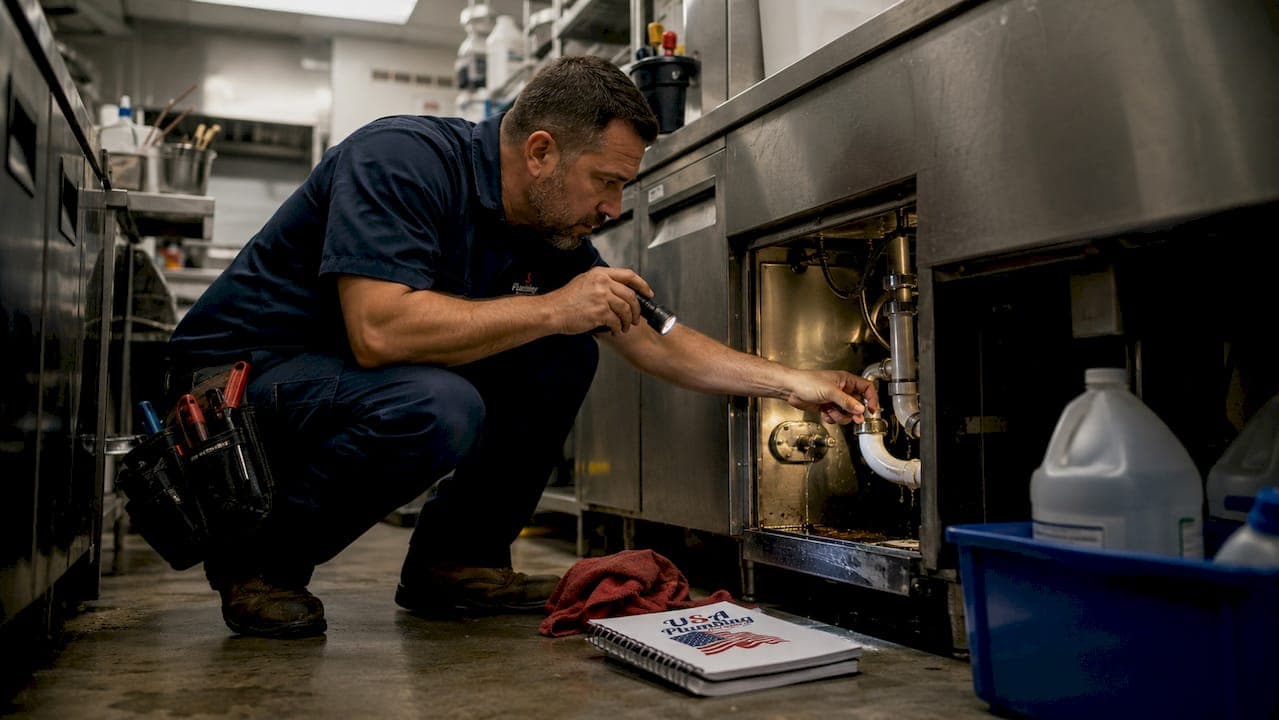
Plumbing issues that close businesses are defined as failures in water supply, drainage, or sanitation systems severe enough to halt legal operations. A burst pipe, sewer backup, or failed water heater does not just create a repair bill. It stops revenue, triggers health code violations, and can force a mandatory closure within hours. Commercial plumbing failures, the industry term for these events, follow predictable patterns. Recognizing them early and having a response plan in place is the difference between a one-hour fix and a three-day shutdown.
1. What are the top plumbing issues that shut down businesses?
Clogged drains are the most frequent commercial plumbing complaint as of 2026. In restaurants and food service operations, grease trap backups are the leading cause, because grease solidifies in drain lines and blocks flow entirely. When a kitchen drain backs up during a dinner rush, the business stops.
Burst or leaking pipes cause rapid water damage to floors, walls, and equipment. A pipe that fails inside a wall can go undetected for days, creating mold and structural damage that multiplies repair costs. Businesses in older buildings face this risk most often.
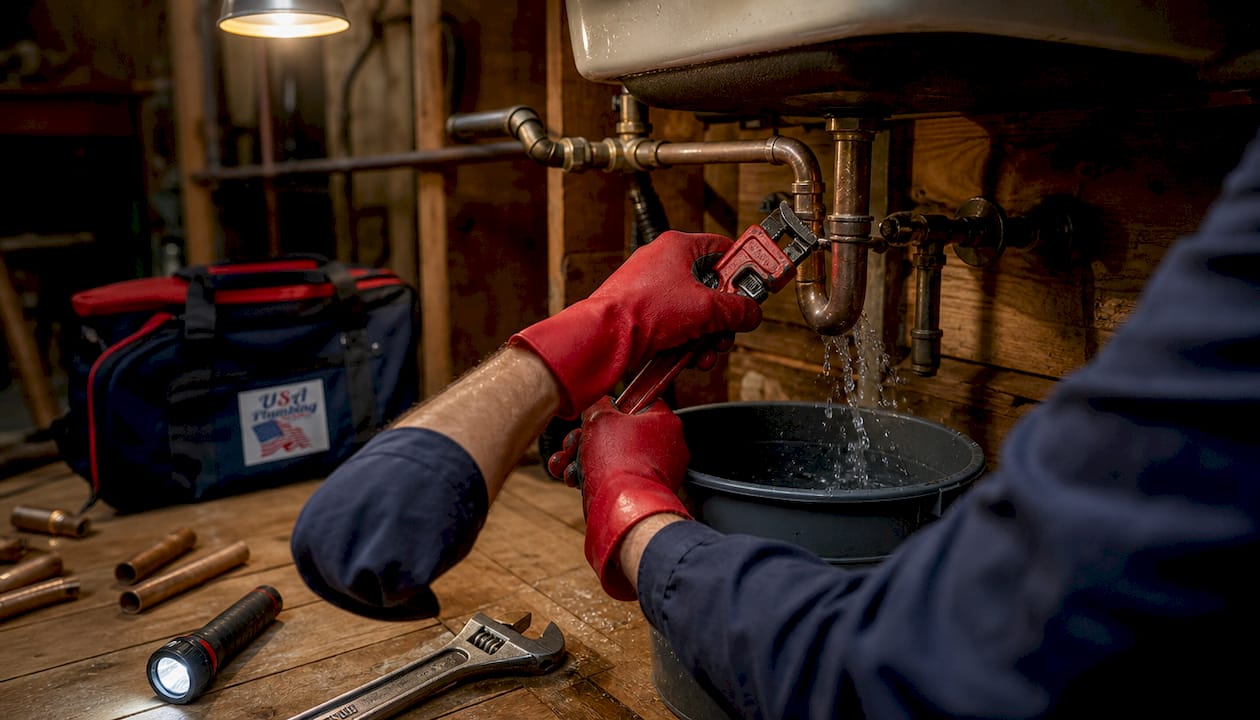
Water heater failures cut off hot water to restrooms and commercial kitchens. Health codes in most states require hot water for handwashing and food preparation. A failed water heater is not just an inconvenience. It is a compliance violation that forces closure until the unit is repaired or replaced.
Sewer line backups create health hazards that require immediate shutdown of affected areas. Raw sewage on a commercial floor triggers mandatory health department action. Restaurants, hotels, and medical offices face the highest exposure to this type of closure.
Backflow prevention failures risk contaminating the potable water supply with wastewater or chemicals. Annual testing and repair are required by most municipal codes. A failed backflow preventer can result in fines, a boil-water notice, and forced closure until the device is replaced and retested.
Low water pressure disrupts dishwashers, autoclaves, and fire suppression systems. A single running toilet wastes thousands of gallons monthly and adds measurable cost to utility bills. Left unchecked, it also causes moisture damage to subfloors and walls.
Pro Tip: Schedule a grease trap inspection every 90 days if your business operates a commercial kitchen. Most municipalities require it, and skipping it is the fastest path to a surprise closure.
2. How plumbing failures impact business operations and finances
Every minute of operational delay can result in thousands of dollars lost, especially in high-hygiene sectors like healthcare and food service. That figure covers lost sales, but the full picture is worse.
Fixed costs keep running during a shutdown. Staff wages, rent, utilities, and loan payments do not pause because a pipe burst. A restaurant forced to close for two days still owes its full payroll for that period.
"Indirect downtime costs often dwarf the direct repair bills in industries such as hospitality and healthcare. Business interruption costs include revenue losses, wage payments, and reputational damage accumulating fast during shutdowns."
Reputational damage compounds the financial hit. A customer who arrives to find a "Closed for Plumbing" sign does not always come back. Online reviews mentioning unsanitary conditions or unexpected closures affect future bookings and foot traffic.
Legal liabilities under lease agreements add another layer of risk. Many commercial leases require tenants to maintain sanitation and hot water service. Failure to do so can trigger lease violations, fines, or even eviction proceedings.
| Impact Category | Business Consequence |
|---|---|
| Lost revenue | Sales stop immediately during closure |
| Ongoing labor costs | Wages continue despite zero output |
| Health code violations | Fines and mandatory closure orders |
| Reputational damage | Lost customers and negative reviews |
| Legal liability | Lease violations and potential litigation |
Water damage from plumbing failures also creates secondary costs. Mold remediation, floor replacement, and equipment repair often cost more than the original plumbing fix. Businesses that delay calling a plumber typically pay far more in total.
3. Early warning signs and how to prevent business closures
Recurring drain clogs, unusual odors, and rising water bills indicate impending serious breakdowns. These signals appear weeks before a catastrophic failure. Acting on them early costs a fraction of emergency repair.
Here are the most reliable warning signs and prevention steps every business owner should follow:
- Multiple slow drains at once. One slow drain is a local clog. Multiple slow drains signal a blockage deep in the main line. Call a plumber before it becomes a full backup.
- Sewer odors inside the building. Subtle sewer odors often precede major commercial plumbing failures. Do not mask the smell. Investigate the source.
- Unexplained spikes in the water bill. A sudden increase without a change in usage points to a hidden leak. Use a leak detection guide to identify the source quickly.
- Low water pressure across multiple fixtures. This suggests a supply line issue, a failing pressure regulator, or a developing blockage in the main.
- Schedule routine drain cleaning. Commercial drain maintenance on a quarterly schedule prevents the buildup that causes emergency backups.
- Maintain grease traps on a fixed schedule. Food service businesses should pump and inspect grease traps every 60–90 days. The exact interval depends on volume and local code.
- Test backflow preventers annually. Most municipalities require annual testing. Keep records on file for health inspections.
- Build a plumbing emergency response plan. Know where your water main shutoff is. Assign a staff member to handle the first response. Have a 24/7 plumber's number posted in the utility room.
- Partner with a 24/7 emergency plumbing service. Emergency plumbing issues arise without advance notice. A pre-vetted partner responds faster than a cold call to an unknown contractor.
Pro Tip: Build your commercial plumbing maintenance schedule before you need it. Businesses with written maintenance protocols recover from failures faster and spend less on emergency repairs.
4. How to respond when a severe plumbing emergency hits
Quick professional intervention limits damage and restores operations faster, minimizing revenue loss and reputational harm. Speed is the single most important variable in a commercial plumbing emergency.
Follow these steps the moment a serious failure occurs:
- Shut off the water main immediately. Every business manager should know the location of the main shutoff valve. Stopping water flow limits damage within minutes.
- Secure and cordon off affected areas. Businesses must close contaminated areas immediately until professional cleanup is complete. This protects staff and customers and demonstrates compliance to inspectors.
- Call a certified commercial plumber without delay. Do not attempt DIY repairs on commercial systems. Incorrect fixes can void insurance coverage and worsen the failure.
- Maintain partial operations where safe. If only one restroom is affected, redirect customers to another. If the kitchen is down, assess whether counter service or a limited menu is possible.
- Document everything for insurance. Photograph all damage before cleanup begins. Record the time the failure was discovered, the time you called a plumber, and the time repairs were completed. This documentation supports business interruption insurance claims.
- Notify staff, customers, and regulators promptly. If a health code violation is involved, contact the local health department before they contact you. Proactive communication reduces penalties. Review how to handle a plumbing emergency at your commercial property for a full checklist.
Proactive management with pre-vetted emergency plumbing partners reduces costs and avoids lengthy closures compared to reactive approaches. Businesses that call a known partner spend less time searching and more time fixing.
Key Takeaways
The most effective way to prevent plumbing issues that close businesses is to combine routine maintenance, early warning monitoring, and a pre-arranged 24/7 emergency response plan.
| Point | Details |
|---|---|
| Top closure causes | Sewer backups, burst pipes, and water heater failures are the most common triggers. |
| Financial impact | Downtime costs include lost revenue, ongoing wages, fines, and remediation expenses. |
| Early warning signs | Slow drains, sewer odors, and rising water bills signal failures weeks in advance. |
| Prevention priority | Quarterly drain cleaning and annual backflow testing prevent most emergency closures. |
| Emergency response | Shut off the main, secure the area, call a certified plumber, and document all damage. |
Why plumbing downtime is an operational risk, not just a facilities problem
I have seen business owners treat a plumbing failure the same way they treat a broken light fixture. They call someone when it is convenient, wait for a quote, and assume the problem will hold. That mindset is expensive.
Plumbing downtime is an operational risk requiring pre-planned protocols, not a reactive facilities task. The moment a sewer line backs up or a pipe bursts, you are not managing a maintenance issue. You are managing a business crisis with a ticking clock attached.
The businesses I have seen recover fastest share one trait. They already had a plumber's number on the wall, a written shutoff procedure, and a staff member who knew what to do. They did not spend the first 30 minutes searching online for a contractor. They spent those 30 minutes stopping the damage.
The cascading effect of a plumbing failure is what most owners underestimate. A burst pipe does not just flood a floor. It triggers a staff evacuation, a health inspection, a potential lease violation, and a social media post from a customer who walked in at the wrong moment. Each of those events has its own cost and timeline.
Proactive maintenance is not about spending money on plumbing you do not need. It is about controlling when and how you spend that money. A scheduled drain cleaning costs a fraction of an emergency sewer backup repair. A backflow test costs far less than a contamination fine. The math is straightforward.
— JOHN
Usaplumbingseptic keeps your business running around the clock
Commercial plumbing failures do not wait for business hours. Usaplumbingseptic provides 24/7 emergency plumbing and septic services for businesses in Bullhead City, Fort Mohave, Mohave Valley, and Laughlin. Our licensed team responds fast to sewer backups, burst pipes, water heater failures, and backflow issues that threaten your operations.
We also offer scheduled maintenance contracts and inspection programs tailored to your business type and local code requirements. Keeping your sewer system healthy is the most reliable way to avoid forced closures. For businesses in the region, our commercial plumbing services cover everything from routine inspections to full emergency response. Call us now and get a reliable partner on your side before the next failure hits.
FAQ
What plumbing issues most commonly force a business to close?
Sewer line backups, burst pipes, and water heater failures are the most common causes of forced business closures. These failures disrupt sanitation and water supply, triggering mandatory health code shutdowns.
How much does plumbing downtime cost a business?
Every minute of operational delay can result in thousands of dollars lost in high-hygiene sectors like food service and healthcare. Total costs include lost revenue, ongoing wages, health fines, and water damage remediation.
How can a business prevent plumbing emergencies?
Quarterly drain cleaning, annual backflow preventer testing, and a written emergency response plan prevent most commercial plumbing failures. Partnering with a 24/7 plumber before an emergency occurs reduces response time significantly.
What should I do first when a pipe bursts at my business?
Shut off the water main immediately, secure the affected area, and call a certified commercial plumber. Document all damage with photos before cleanup begins to support any insurance claim.
How often should a commercial business schedule plumbing inspections?
Most commercial properties benefit from a full plumbing inspection at least once per year, with drain cleaning and grease trap service every 60–90 days depending on business type and local code requirements.