
A properly functioning residential gravity-feed toilet should stop running within 20–60 seconds after a flush. For modern low-flow models rated at 1.6 gpf or 1.28 gpf, 20–30 seconds is a common refill window. That time covers two things happening at once: the bowl refilling through the refill tube, and the tank refilling to the float shutoff point. Once the float rises to its set level, the fill valve closes and the running stops.
Here is what each scenario means at a glance:
- 20–60 seconds: Normal toilet cycle time for most residential gravity-feed toilets.
- 60–120 seconds: Still within range for older or larger tanks, or homes with lower water pressure.
- Over 2 minutes: Refill time longer than 2 minutes suggests the fill valve may need cleaning or replacement.
- Constant running: A clear sign of a failing part. Shut the supply valve and call a plumber if it does not stop.
- Intermittent refills with no flush (ghost flushing): Usually a slow flapper leak. Diagnose with the dye test below.
Water pressure in your home also plays a role. Higher pressure shortens the visible running time; lower pressure can extend it, which is why the same toilet model may behave slightly differently from one house to the next.
Key Takeaways
A toilet running longer than 60 seconds after every flush, or cycling on its own between flushes, almost always points to a worn flapper, a misadjusted float, or a failing fill valve, all of which are fixable with inexpensive parts.
| Point | Details |
|---|---|
| Normal run time | A gravity-feed toilet should stop running within 20–60 seconds; 20–30 seconds is typical for modern low-flow units. |
| First diagnostic step | Drop food coloring in the tank and wait 10–20 minutes; color in the bowl confirms a flapper or flush-valve leak. |
| Most common fixes | Flapper replacement ($3–$15), fill-valve swap ($10–$40), and chain adjustment ($0) resolve the majority of cases. |
| When to call a pro | Constant running after DIY fixes, multiple affected fixtures, or a tank that empties with the supply valve closed all require professional service. |
| Local help available | Usaplumbingseptic provides 24/7 toilet repair and diagnostics in Bullhead City and surrounding Mohave County areas. |
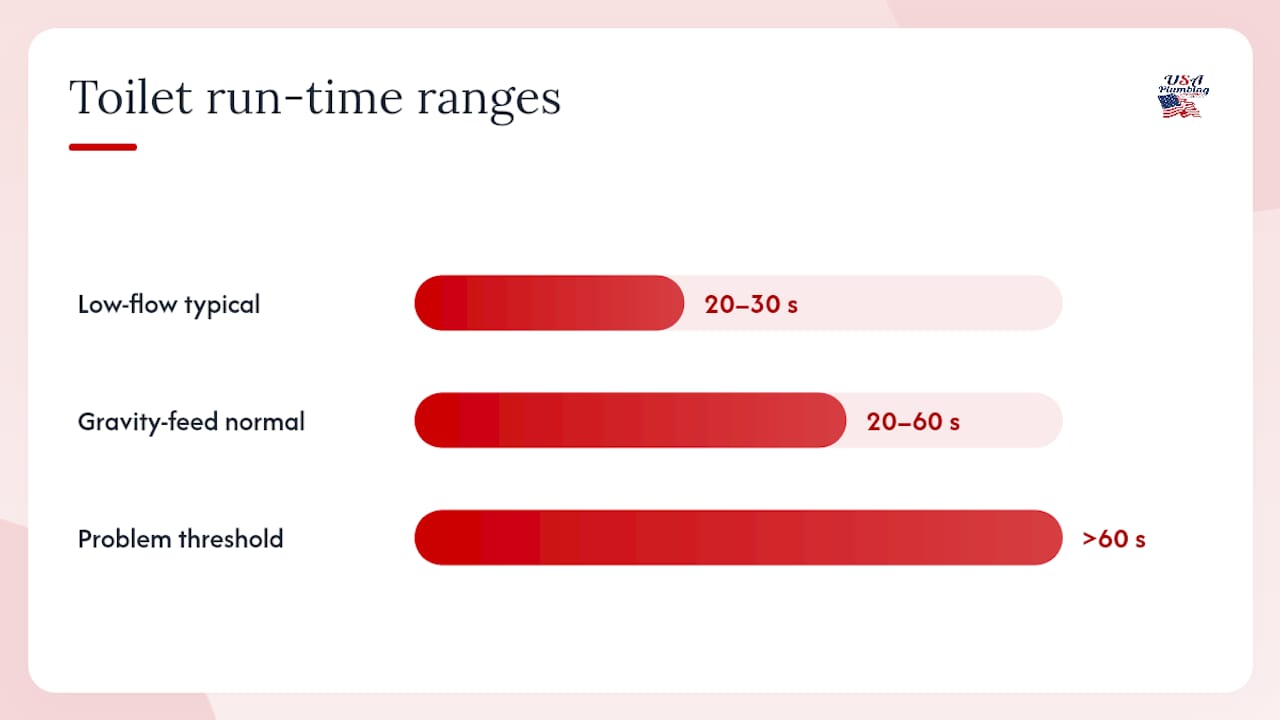
Table of Contents
- Why is your toilet running longer than normal?
- How to quickly diagnose which part is causing the long run
- Simple DIY fixes you can do today
- How long do repairs take and what do they cost in the U.S.?
- When should you call a professional plumber?
- Maintenance tips to prevent a running toilet
- A local plumber's honest note
- Reliable toilet repair in Bullhead City from Usaplumbingseptic
- Sources
- FAQ
Why is your toilet running longer than normal?
Most cases of a toilet running too long trace back to one of a handful of inexpensive parts. A failing fill valve causes continuous tank filling; a worn flapper causes slow tank-to-bowl leaks and intermittent refilling. Knowing which part is the culprit saves you time and money.
- Worn or warped flapper: The flapper is the rubber seal at the bottom of the tank. When it warps or hardens, water seeps past it into the bowl, triggering the fill valve to top off the tank repeatedly.
- Fill valve failure: A fill valve that is clogged, worn, or misadjusted will either run continuously or refill far too slowly.
- Float level misadjustment: If the float is set too high, water may spill into the overflow tube before the valve shuts, creating a constant trickle. Set too low, the tank never fills completely.
- Chain or lift-wire problems: A chain that is too short holds the flapper open after the flush. One that is too long can get pinched under the flapper, preventing a clean seal. Changing chain length or using an adjustable flapper directly affects how long the flush cycle lasts.
- Misrouted refill tube: If the refill tube is submerged in tank water instead of aimed into the overflow tube, it creates a siphon effect that slows or disrupts the bowl refill.
- Partial bowl or drain blockage: A partial clog can cause the bowl to drain slowly, making the refill phase appear longer than it actually is.
- Toilet type: Pressure-assist toilets flush with a sharp burst and typically cycle faster than gravity-feed models. Dual-flush toilets vary by which button is pressed. The 20–60 second range applies specifically to standard gravity-feed residential units.
How to quickly diagnose which part is causing the long run
A phased visual check isolates most toilet running problems in under 15 minutes. Work through these steps in order before buying any parts.
- Dye test first: Drop food coloring or a dye tablet into the tank. Wait 10–20 minutes without flushing. If color appears in the bowl, water is leaking past the flapper or flush-valve seat. This symptom-to-cause pattern reliably points to a flapper leak detectable with the dye test.
- Listen right after the flush: Continuous refilling that never stops points to the fill valve or float. A quiet period followed by a short refill cycle minutes later (ghost flushing) points to a slow flapper leak.
- Watch the flapper drop: Lift the tank lid, flush once, and watch the flapper fall. It should seat flat and stay there. If it tilts, catches on the chain, or bounces, you have found your problem.
- Check float height: With the tank full, the water line should sit about 1 inch below the top of the overflow tube. If water is spilling into the overflow tube, the float is set too high.
- Inspect the refill tube: The tube should clip to the inside of the overflow tube and terminate above the water line, not submerge in the tank.
Pro Tip: Shut the supply valve briefly after a flush. If the running stops and the tank water level is low, the problem is a leaking flush valve or flapper rather than a supply or pressure issue. If the tank remains low even with supply off, a flush-valve or porcelain seat problem is likely and may need professional attention.
Simple DIY fixes you can do today
Most toilet repairs take under an hour and cost less than $40 in parts. Start with the simplest fix first.
Replacing the flapper
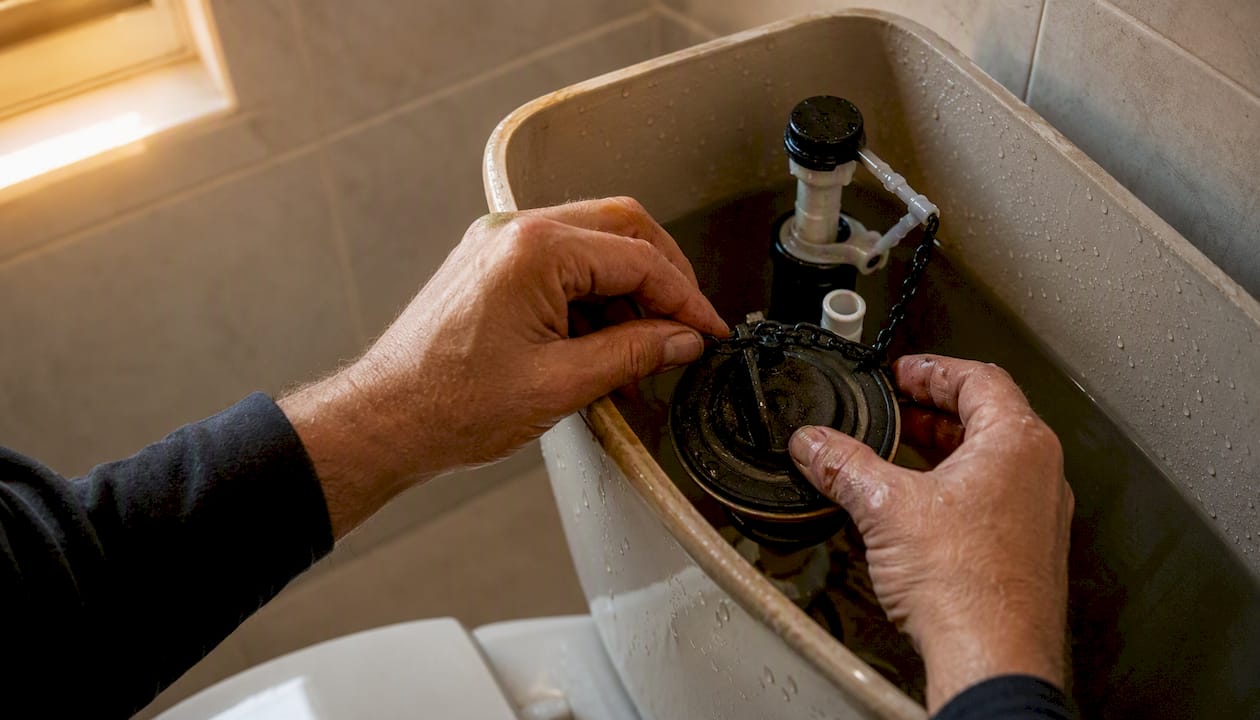
Turn off the supply valve, flush to empty the tank, unhook the chain from the flush handle arm, and slip the old flapper off the pegs on the flush valve. Take it to the hardware store to match the size, or buy a universal flapper. Seat the new flapper on the pegs, reconnect the chain with about half an inch of slack, and turn the supply back on. Let the tank fill and run the dye test to confirm the seal.
Adjusting the chain
The chain should have just enough slack that the flapper seats fully, but not so much that it loops under the flapper. Clip the chain one or two links shorter if the flapper is staying open too long, or one or two links longer if the flush feels weak.
Adjusting or replacing the float
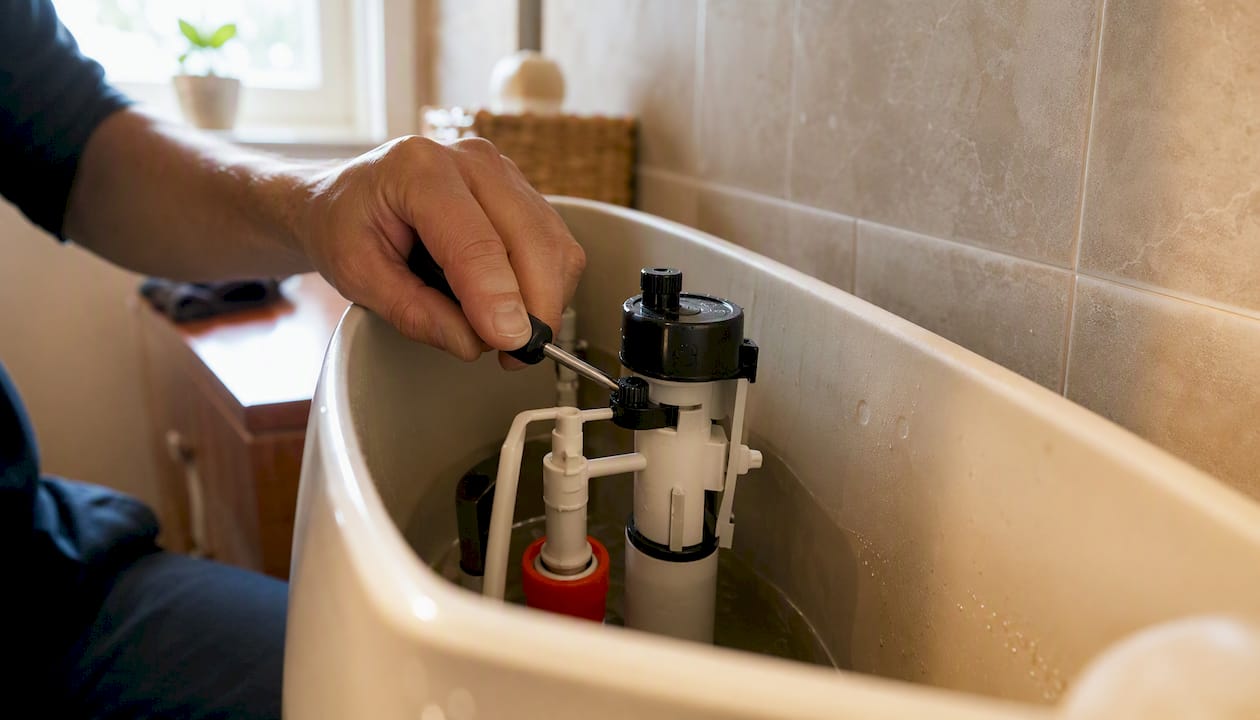
Most modern fill valves use a float that slides up and down the valve shaft. Pinch the clip or turn the adjustment screw to lower the float until the water line sits 1 inch below the overflow tube. If the float arm is cracked or waterlogged, replace the entire fill valve assembly.
Replacing the fill valve
Turn off the supply, flush, and sponge out remaining water. Disconnect the supply line under the tank, unscrew the locknut holding the fill valve, and lift it out. Universal replacement fill valves, such as the Fluidmaster PerforMAX, are a common DIY fix for restoring normal refill speed. Install the new valve, reconnect the supply line, and adjust the float to the correct height.
Clearing a partial bowl blockage
Use a flange plunger with a firm, steady plunge stroke. Avoid chemical drain cleaners; they can degrade rubber seals inside the tank and bowl. If plunging does not clear the blockage, the clog may be deeper in the drain line. Check our guide on why toilets overflow for more on drain-side causes.
Pro Tip: Keep a small repair kit under the sink: a spare universal flapper, a replacement refill tube, an adjustable wrench, and a towel. Most common toilet failures are fixable in under an hour with those four items.
How long do repairs take and what do they cost in the U.S.?
Knowing the realistic time and price range helps you decide whether to DIY or call a pro.
- Chain adjustment or refill tube rerouting: 10–30 minutes; $0–$10 in parts.
- Flapper replacement: 20–45 minutes; parts run $3–$15 for a universal flapper. A plumber's minimum visit in most U.S. local markets adds labor, commonly $75–$150.
- Fill valve replacement: 30–90 minutes; parts cost $10–$40 for a Fluidmaster-style valve. A professional visit with labor typically runs $120–$300 depending on travel distance and hourly rates.
- Flush-valve seat or complex internal repairs: 1–3 hours; parts and labor commonly $100–$400 or more. Cracked porcelain or a damaged flush-valve seat often requires specialized service.
- Multiple toilets or whole-house symptoms: Expect longer diagnostics and higher costs. A running toilet that is part of a broader pressure or water leak issue warrants a full plumbing inspection.
When should you call a professional plumber?
Some situations go beyond what a flapper swap can fix. Call a pro when:
- The toilet runs constantly for several minutes and DIY fixes have not resolved it.
- You have replaced the flapper and fill valve and the problem keeps coming back.
- Multiple fixtures in the home are affected, which can indicate a pressure or supply-line issue.
- You suspect a cracked flush-valve seat or damaged porcelain.
- The tank water level drops even with the supply valve closed, pointing to a flush-valve or seat leak.
A licensed plumber will do a full tank inspection covering the flapper, flush-valve seat, chain, and fill-valve performance. They will test water pressure at the fixture, confirm findings with a dye test, check for overflow or cracked valve seats, and replace whatever components are needed. For drain-side concerns, issues like partial blockages can sometimes connect to deeper sewer-line problems; proper sewer line maintenance prevents those from escalating.
Usaplumbingseptic provides 24/7 residential plumbing service in Bullhead City and surrounding areas, including Fort Mohave, Mohave Valley, and Laughlin. Our team handles toilet diagnostics, fill-valve and flush-valve service, and emergency repairs with the tools and experience to get it right the first time.
Pro Tip: Before any work begins, ask the plumber for an itemized estimate and confirm whether parts carry a warranty. That one question protects you from surprise charges and gives you recourse if the repair does not hold.
Maintenance tips to prevent a running toilet
A few simple habits keep toilet parts working longer and catch problems before they show up on your water bill.
- Inspect the tank every 6 months. Check flapper condition, chain slack, refill tube position, and float movement. A 5-minute look catches most problems early.
- Replace rubber parts annually in older toilets. Flappers and seals degrade faster in hard-water areas. Replacing them on a schedule costs less than one emergency call.
- Run a dye test quarterly. Keep a dye tablet in your toolkit. A slow flapper leak is invisible to the eye but shows up immediately in the bowl water.
- Upgrade aging fill valves. If you deal with recurring running issues, swapping an old ballcock-style valve for a modern fill valve is often the longest-lasting DIY fix.
- Watch your water bill. Ghost flushing and slow leaks show up as steady, unexplained increases in monthly usage. Our DIY home plumbing maintenance tips cover a full seasonal checklist for homeowners.
For multi-unit properties or commercial bathrooms, consistent fixture maintenance is even more critical. Our guide on commercial bathroom plumbing best practices covers what facilities managers should check regularly.
A local plumber's honest note
The three repairs we see most often on service calls are flapper swaps, fill-valve replacements, and chain adjustments. Most of those jobs cost under $40 in parts, and a motivated homeowner with a guided video can handle them. We respect that, and we say so directly.
Where things get complicated is with older toilets. Brittle plastic components, pressure-assist designs, and worn porcelain seats do not always respond to a universal part. When a homeowner has already replaced the flapper twice in six months and the toilet is still running, the problem is usually the flush-valve seat itself, and that is a job where a professional diagnosis saves money in the long run.
The math is also worth considering. A toilet running constantly can waste a significant volume of water daily, and that shows up on your bill every month the problem sits unfixed. A short diagnostic visit, parts, and labor often costs less than the accumulated water waste from weeks of delay.
Reliable toilet repair in Bullhead City from Usaplumbingseptic
A running toilet that will not stop after basic checks is exactly the kind of problem we handle every day. Usaplumbingseptic offers 24/7 residential plumbing repairs across Bullhead City, Fort Mohave, Mohave Valley, and Laughlin, including full toilet diagnostics, fill-valve and flush-valve service, and emergency response when you need it fast.

We show up ready to diagnose, not just guess. Our plumbers carry common replacement parts on the truck, so most toilet repairs are completed in a single visit. For local service details, coverage area, and scheduling, visit our Mohave County plumbing services page or call us directly. We are ready when you are.
Sources
- Why Is My Toilet Running? 3 Common Issues : Ranshaw
- How to fix a running toilet | The Home Depot
- Why Is My Toilet Running? 6 Common Causes 2026 - Plumbing By The Book
- How Long Should a Toilet Run After Flushing - Best Modern Toilet
- Can I alter the timing of my toilet flush? - DIY Stack Exchange
- How Does a Toilet Work | Flush Mechanics Guide
FAQ
How long is too long for a toilet to run?
Any toilet still running after 2 minutes has a problem worth fixing. Constant running that never stops points to a fill-valve or float issue; intermittent refills between flushes usually mean a slow flapper leak.
Why is my toilet running for so long after flushing?
The most common reasons are a worn flapper that does not seal, a fill valve that will not shut off, or a float set too high that lets water spill into the overflow tube before the valve closes.
How long does it take a toilet to reset after flushing?
Most residential gravity-feed toilets complete their full cycle, bowl refill plus tank refill, within 20–60 seconds. Older toilets or homes with lower water pressure may take up to 90 seconds.
Is 20 minutes too long on the toilet?
For the toilet itself, yes: a toilet running for 20 minutes without stopping indicates a significant leak or part failure and should be diagnosed immediately. For personal use, extended sitting time is a separate health matter outside plumbing scope.