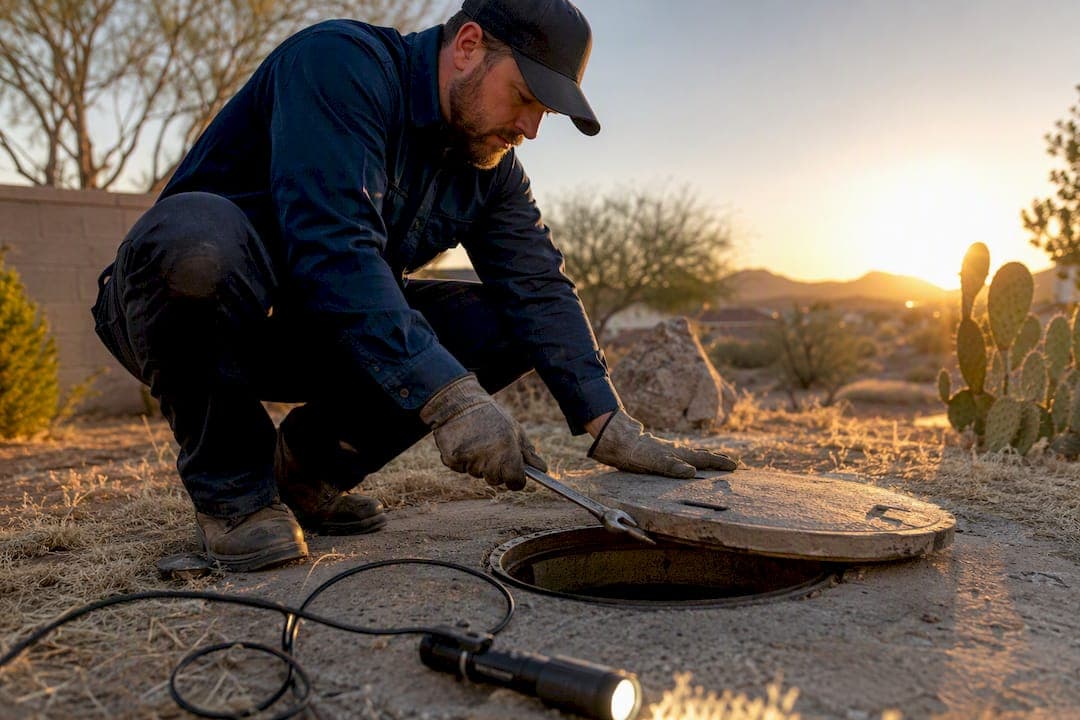
Septic inspection cost typically runs in a moderate range for most homeowners, with prices varying widely depending on inspection type and add-ons. Basic visual checks land near the bottom of that range, and full real-estate inspections push toward the top. If you're a homeowner doing routine upkeep, you likely need a standard maintenance inspection. If you're buying a home, you need the full pre-purchase version, and it costs more for good reason.
One number matters more than the rest: Angi's industry data puts the national average around $400 to $550 once you factor in the add-ons most quotes leave out.
Before you book anything, ask about these three things, because they're what actually move the final invoice:
- Whether pumping is bundled into the quoted price or billed separately
- Whether excavation to uncover buried tank lids is included
- Whether a camera scope is part of the package or an extra line item
Key Takeaways
Septic inspection cost depends far less on the base fee than on which add-ons, like pumping and excavation, get bundled into that price.
| Point | Details |
|---|---|
| National range holds steady | Expect $200 to $650 for most homeowner situations, with a full $100 to $1,300 range across all inspection types. |
| Match tier to purpose | Routine maintenance inspections fit annual checkups; real-estate inspections need the full $300–$650 tier for lender-ready documentation. |
| Add-ons drive the real bill | Pumping ($250–$600) and excavation ($100–$300) are the two charges most likely to appear after the initial quote. |
| Follow the EPA cadence | Inspecting every 1 to 3 years catches problems while repairs still cost hundreds, not tens of thousands. |
| Usaplumbingseptic bundles pricing | Pump-and-inspect visits are combined into one line item, avoiding a second service call and reinspection fee. |
Table of Contents
- How Much Does a Septic Inspection Cost by Type?
- What does a septic inspection include?
- What Add-Ons Actually Raise the Final Price?
- What Factors Change Septic Inspection Pricing?
- Who Pays for a Septic Inspection When Buying a Home?
- What Warning Signs Mean You Need an Inspection Now?
- How Usaplumbingseptic Prices Inspections and What to Prepare
- The Real Cost Story Behind Septic Inspections
- Book a Septic Inspection With Usaplumbingseptic
- Sources
- FAQ
How Much Does a Septic Inspection Cost by Type?
The type of inspection you need depends on why you're getting one, and the price tag shifts a lot between a quick visual check and a full real-estate evaluation. Knowing which tier applies to your situation keeps you from overpaying for depth you don't need, or underpaying for depth you do.
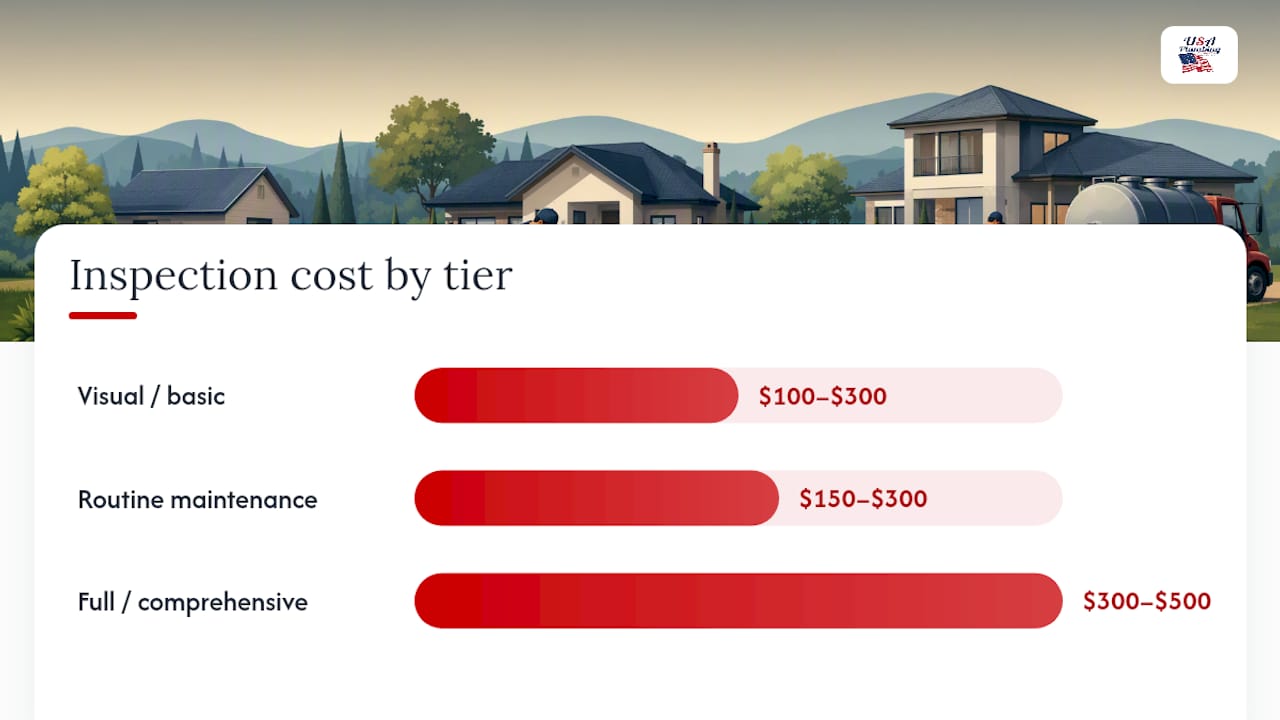
Visual or basic inspections run $100 to $300 and take about 30 to 45 minutes. An inspector walks the yard, checks for surface pooling, confirms the tank location, and looks for obvious red flags. This tier suits homeowners doing a quick annual check with no known problems.
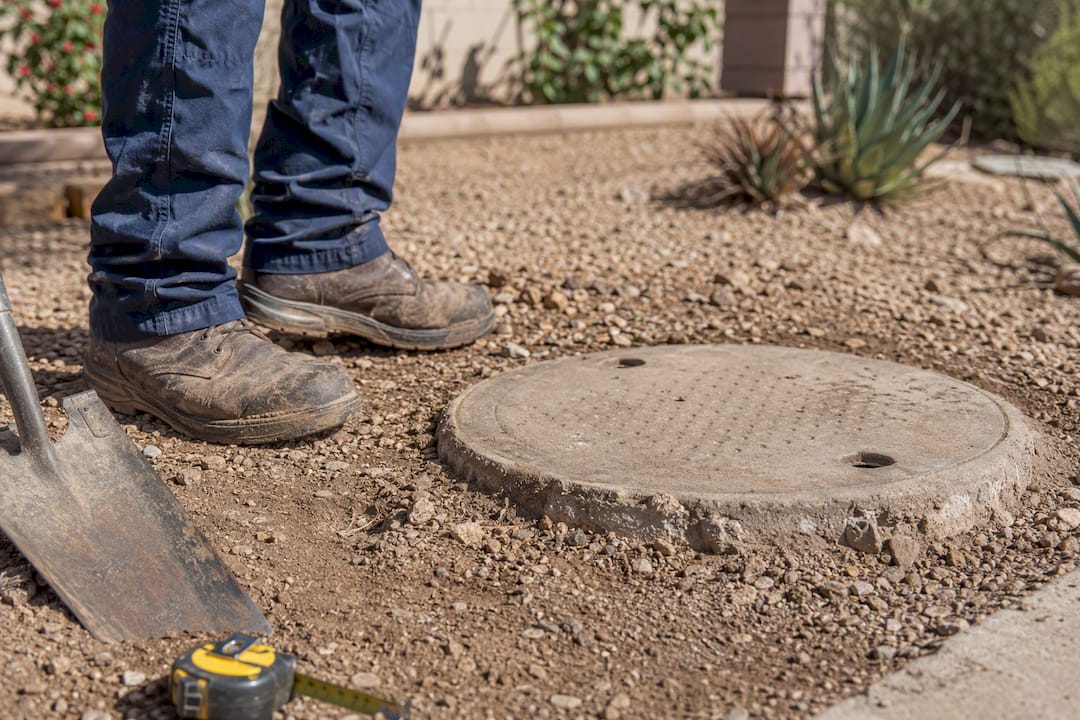
Routine maintenance inspections cost $150 to $300 and take roughly 45 minutes to an hour and a half. This is the standard checkup: the inspector opens the tank, measures sludge and scum layers, and checks that the system is functioning as designed. Most homeowners on a 1 to 3 year cycle fall into this category.
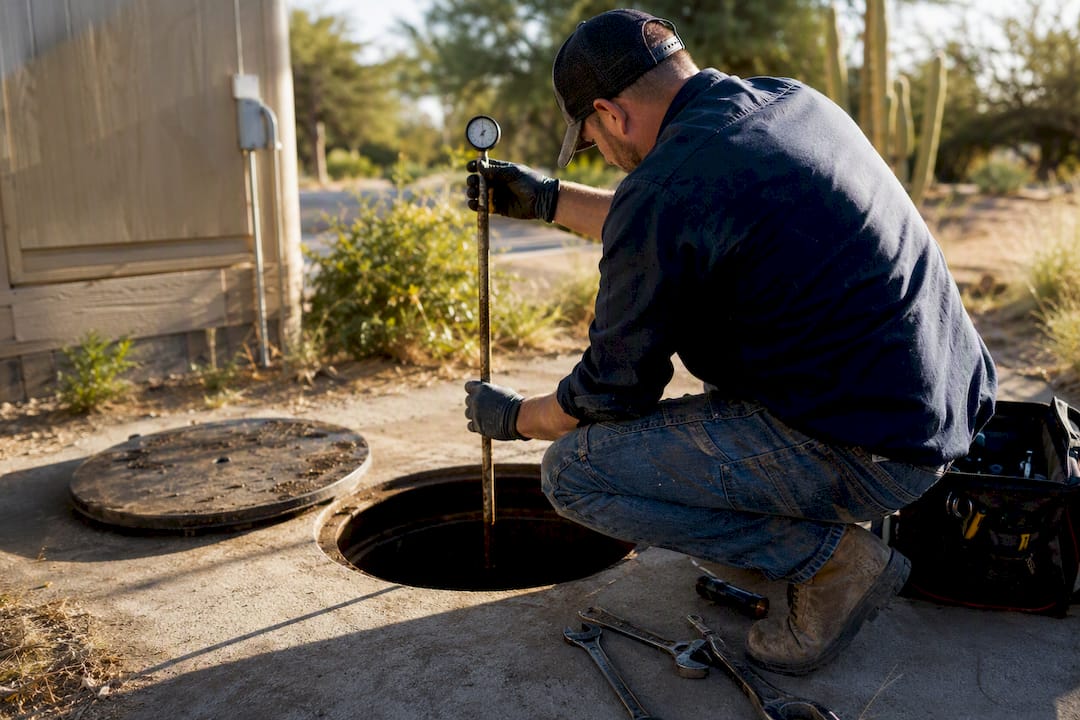
Full or comprehensive inspections run $300 to $500 and typically take 2 to 3 hours. These dig deeper into the distribution box, drainfield condition, and baffle integrity, and they're the right call when a system is aging or showing early warning signs.
Real-estate or title inspections cost $300 to $650 and often take 2 to 4 hours, since the inspector has to produce a formal, transaction-ready report. The Septic Guide's cost breakdown confirms this tier sits at the top of the range because lenders and attorneys need documentation, not just a verbal thumbs-up.
Camera scope inspections add $125 to $500 on top of a base inspection and usually take an extra 30 to 60 minutes. They're diagnostic tools, not standard-issue, and they matter most when pipe bellies, root intrusion, or hairline cracks are suspected.
| Inspection Type | Typical Cost | Typical Duration |
|---|---|---|
| Visual/basic | $100–$300 | 30–45 minutes |
| Routine maintenance | $150–$300 | 45–90 minutes |
| Full/comprehensive | $300–$500 | 2–3 hours |
| Real-estate/title | $300–$650 | 2–4 hours |
| Camera scope (add-on) | $125–$500 | +30–60 minutes |
One detail trips up a lot of homeowners: some quotes are inspect-only, and pumping gets billed as a separate service call. If your tank hasn't been pumped in the last three years, expect the inspector to recommend it before they can properly evaluate sludge levels, which turns an "inspection" into an inspection-plus-pump-out invoice.
What Does a Septic Inspection Include?
A standard septic inspection follows a fairly consistent sequence, whether you're paying $150 or $650. Knowing the checklist helps you compare quotes apples to apples instead of guessing why one bid is double another.
- Locate and open the tank. The inspector finds the access lids, which may mean probing the yard if they're buried under sod or landscaping.
- Measure scum and sludge layers. This tells the inspector how full the tank is and whether pumping is overdue.
- Inspect baffles and effluent filters. Damaged or clogged baffles are one of the most common failure points in an aging system.
- Check the distribution box. The inspector confirms wastewater is distributing evenly across the drainfield lines instead of overloading one section.
- Walk the drainfield surface. Standing water, unusually lush grass, or sunken ground often signals a failing leach field.
- Run flow or dye tests when warranted. These aren't standard on every visit, but they get added when the inspector suspects a specific problem.
- Deliver a written report. A real report includes measurements, photos, and a pass/fail assessment, not just a verbal "looks fine."
What a standard inspection does not include: pump-out (unless it's explicitly bundled), any repair work, permit filings with the local health department, laboratory water-quality testing, or excavation beyond what's needed to open existing lids. Camera scope work and lab testing get added only when the inspector spots something during the standard walk-through that warrants a closer look, like suspected pipe cracks or root intrusion that a visual check alone can't confirm.
What Add-Ons Actually Raise the Final Price?
The quoted inspection fee is rarely the whole story. Add-ons are where a $200 estimate turns into a $700 invoice, and most of them are predictable if you ask the right questions before the truck shows up.
| Add-On | Typical Price Range | When It's Triggered |
|---|---|---|
| Pump-out | $250–$600 | Tank hasn't been serviced in 3+ years, or sludge levels are high |
| Excavation to expose lids | $100–$300 | Lids are buried under soil, sod, or landscaping |
| Camera scope | $125–$500 | Suspected pipe damage, root intrusion, or blockages |
| Dye test | $150–$300 | Suspected drainfield failure or surfacing effluent |
| Lab water testing | $100–$300 | Concerns about groundwater contamination or well proximity |
| Permit/report filing fees | $125–$500 | Required for real-estate closings or health department records |
Excavation and pump-out fees are the two add-ons that catch homeowners off guard most often, mainly because a "septic inspection" line item on a quote doesn't automatically tell you whether either is included.
Before you book, ask the inspector these questions directly:
- "Is pumping included in this price, or billed as a separate service?"
- "If the lids are buried, is excavation part of the quote or extra?"
- "Do you provide a written report, and is there a fee for it?"
- "Will you recommend a camera scope, and if so, what does that add to the bill?"
A low quoted number that skips pump-out and excavation can end up costing more than a higher quote that bundles everything, once the follow-up invoices arrive.
What Factors Change Septic Inspection Pricing?
Quotes for the same inspection tier can vary by hundreds of dollars between two houses on the same street, and it usually comes down to a handful of factors that affect how much labor and time the job requires.
- Tank size and depth. Larger tanks and deeply buried tanks take longer to access and measure, which adds labor hours.
- System type and age. Older systems, especially ones with no maintenance records, often need more thorough checks and take longer to evaluate safely.
- Accessibility. A tank under a paved driveway or dense landscaping costs more to reach than one under open lawn.
- Local labor rates. Inspection pricing tracks regional labor costs the same way any skilled trade service does.
- Urgency. Same-day or emergency scheduling typically carries a premium over a routine appointment booked a week out.
- Inspector credentials and state requirements. NAWT-certified inspectors or state-licensed professionals may charge more, but their reports carry more weight with lenders and health departments.
States with mandated inspection protocols, like Massachusetts' Title 5 program, follow a defined checklist that inspectors must complete regardless of what the homeowner wants checked. That protocol-based structure tends to push costs toward the higher end of the standard range, since there's no shorter, cheaper version available.
How Long Does a Septic Inspection Take, and How Often Do You Need One?
Duration scales with depth, not just price. A basic visual check wraps up in 30 to 45 minutes. A routine maintenance inspection runs closer to an hour to 90 minutes. Full and real-estate inspections take 2 to 4 hours because they involve more measurements, more report documentation, and often a pump-out scheduled the same day.
On frequency, the EPA recommends inspecting your septic system every 1 to 3 years as standard preventive maintenance. That interval isn't arbitrary. Catching a clogged baffle or a rising sludge layer early costs a few hundred dollars to address. Letting it go until the drainfield fails costs thousands.
There's a practical bonus to sticking with routine cadence: using the same inspector over multiple visits often speeds up the evaluation, since they already know your system's layout, tank location, and history. That familiarity translates into lower labor time, and lower labor time translates into a smaller bill.
Who Pays for a Septic Inspection When Buying a Home?
In most real-estate transactions, the buyer orders and pays for the septic inspection as part of due diligence, though this varies by region and can be negotiated into the purchase contract. Sellers sometimes cover it upfront to make the listing more attractive, particularly in markets where septic issues are a common deal-breaker.
Lenders and attorneys typically require more than a verbal pass. A usable pre-purchase report needs:
- Written documentation of tank condition, sludge and scum measurements, and baffle status
- Drainfield assessment, including any visible signs of surfacing effluent
- A clear pass, conditional pass, or fail determination
- Photos supporting the inspector's findings
If the system is older than 15 years or the inspector can't confirm recent maintenance history, budget for a pump-out and possibly a camera scope on top of the base inspection. Regional rules matter too. Some states require a Title 5-style certification before a sale can close, which means the inspection isn't optional paperwork, it's a legal prerequisite.
When an inspection turns up a problem, buyers generally have three paths: negotiate a price reduction, request the seller complete repairs before closing, or request a re-inspection after remediation to confirm the fix held. A failed inspection isn't automatically a dead deal, but it does shift the leverage in the negotiation.
What Warning Signs Mean You Need an Inspection Now?
Some septic problems announce themselves before an inspector ever shows up, and catching them early is the difference between a repair bill and a replacement bill.
- Sewage backups in toilets, sinks, or tubs, especially ones that happen repeatedly.
- Persistent odors near the tank or drainfield, particularly after rain.
- Soggy or unusually green patches in the yard above the drainfield, even during dry weather.
- Slow drains throughout the house, not just in one fixture, which suggests a system-wide backup rather than a local clog.
- Gurgling sounds in plumbing lines when no water is running elsewhere in the house.
Any of these warrants escalating past a routine check to a diagnostic inspection, often including a camera scope or soil testing to pinpoint the failure point rather than guessing.
The financial case for acting fast is straightforward. Minor septic repairs typically run $300 to $1,200, while drainfield replacement can climb into the tens of thousands once a system fails completely. A $300 diagnostic inspection that catches a problem early is a rounding error next to that worst-case number.
How Usaplumbingseptic Prices Inspections and What to Prepare
Pricing an inspection accurately starts with knowing what's actually involved before the truck rolls out. Usaplumbingseptic bundles pump-and-inspect into a single line-item wherever the tank condition calls for it, which avoids the scheduling hassle and extra reinspection fee that comes with splitting the job into two separate visits; for expert help, consider their sump pump repair services to maintain your home's foundation and drainage systems.
Homeowners can speed up their own inspection and often lower the bill by doing a little prep work first:
- Locate and mark the tank access lids, even roughly, before the inspector arrives
- Clear landscaping, furniture, or debris from the area above the tank and drainfield
- Pull together any past inspection records, pump-out receipts, or system permits you have on file
- Note any recent plumbing symptoms (slow drains, odors, wet spots) so the inspector knows where to look first
Pro Tip: Installing risers on your tank access lids is one of the best money-saving upgrades a homeowner can make. It eliminates the excavation fee on every future inspection, and it typically pays for itself within two or three visits.
Bundled pricing and simple prep steps like these are why understanding how the inspection process actually works ahead of time puts homeowners in a stronger position when quotes come in.
The Real Cost Story Behind Septic Inspections
The conventional advice on this topic treats septic inspection cost like a single number you can shop around for, and that's exactly where most homeowners get burned. The base inspection fee is rarely the number that matters. What matters is whether pump-out, excavation, and camera work are already built into that number or waiting to show up as separate charges after the inspector has already been on-site for an hour.
I'd argue the entire framing of "cheap vs. expensive" inspections is the wrong lens. A $200 quote that excludes pumping and a $550 quote that includes it aren't different price points, they're the same service priced two different ways. The homeowner who books the cheaper one often ends up paying more once the add-ons land.
If you take one thing from this guide, make it this: ask what's bundled before you ask what it costs. That single question does more for your budget than any amount of price comparison.
— JOHN
Book a Septic Inspection With Usaplumbingseptic
Usaplumbingseptic bundles pump-and-inspect into one scheduled visit instead of billing them as two separate service calls, which means no surprise reinspection fee and no second trip charge when your tank turns out to need pumping before the evaluation can proceed.

That matters most for real-estate transactions and overdue maintenance checks, the two situations where a split-billing quote tends to balloon past what homeowners expect. Usaplumbingseptic's team handles the full range of septic system solutions across Bullhead City, Fort Mohave, Mohave Valley, and Laughlin, and they'll walk you through exactly what your quote includes before any work begins.
If you're preparing for a home sale, budgeting for routine maintenance, or dealing with early warning signs like slow drains or yard odors, schedule an inspection with Usaplumbingseptic and get a written quote that spells out what's bundled, not just a base number that leaves the rest to guesswork.
Sources
- How to care for your septic system | US EPA
- How Much Does a Septic Inspection Cost? 2026 Data | Angi
- Septic Inspection Cost 2026: What Each Type Costs and What's Actually Included | The Septic Guide
- How Much Does a Septic System Inspector Cost? (2026 Pricing Guide) | SepticTrust
FAQ
How much does it cost to have your septic tank checked?
Most homeowners pay $200 to $650 for a septic inspection, though basic visual checks can run as low as $100 and full real-estate inspections with add-ons can reach $1,300.
What are the signs of a failing septic system?
Sewage backups, persistent odors near the tank or drainfield, soggy or unusually green patches in the yard, and slow drains throughout the house all signal a system that needs a diagnostic inspection.
How long does a septic inspection usually take?
A basic visual check takes 30 to 45 minutes, routine maintenance inspections run 45 to 90 minutes, and full or real-estate inspections typically take 2 to 4 hours.
What does a septic inspection include?
A standard inspection covers opening the tank, measuring sludge and scum levels, checking baffles and filters, inspecting the distribution box, and walking the drainfield surface, followed by a written report.
Does the quoted price usually include pumping?
Not always. Many quotes are inspect-only, with pumping billed separately at $250 to $600, so it's worth confirming this before booking, since Usaplumbingseptic bundles pump-and-inspect into a single visit to avoid that surprise.