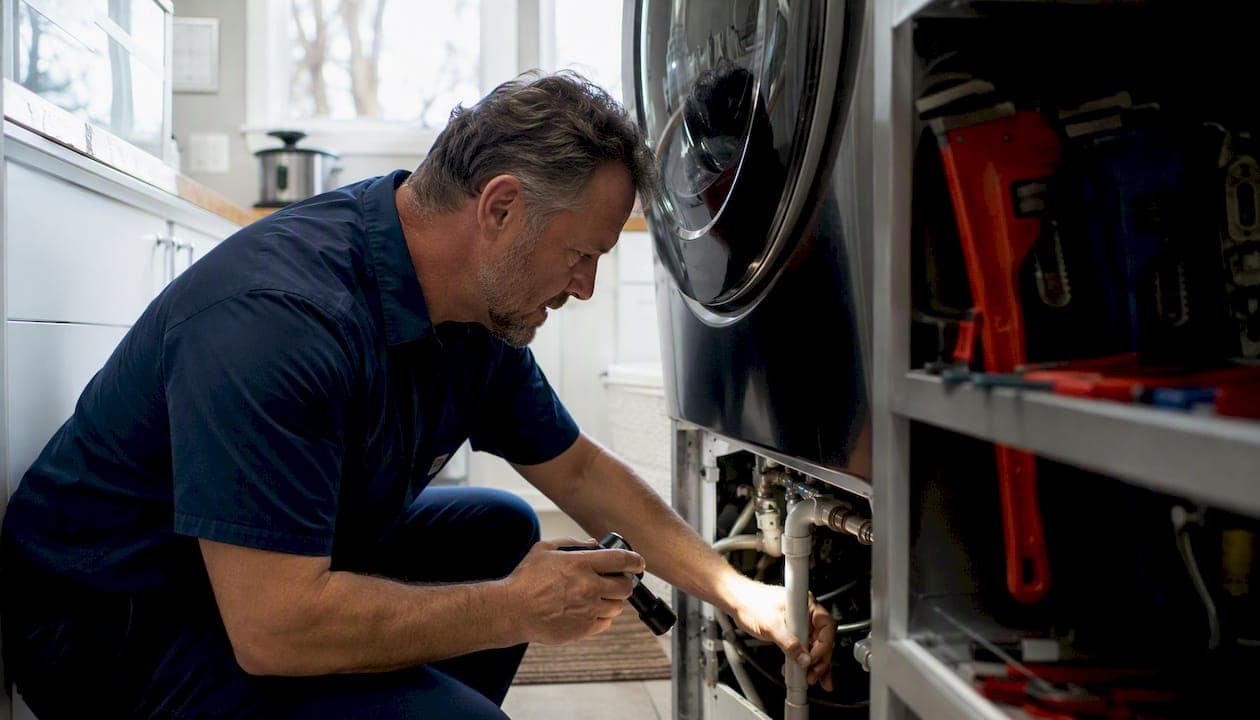
Expect to pay $100 to $200 for a basic visual plumbing inspection, a moderate cost for a sewer camera scope for a sewer camera scope, and a higher cost for a combined inspection combining visual and camera inspection. Which range applies to you depends on what you're checking and why. A visual inspection covers accessible fixtures, supply lines, and drains. A camera scope sends a lens down your sewer lateral to find blockages, cracks, or root intrusion that no one can see from above ground. A combined inspection does both, and it's the option most mortgage advisors and plumbing pros recommend before you buy an older home.
Here's the quick breakdown:
- Visual inspection: $100–$200, roughly about an hour, checks fixtures and visible plumbing
- Camera/sewer scope: $125–$500, roughly about half an hour to an hour, checks the underground sewer line
- Combined inspection: $400–$1,300, roughly a few hours, checks both systems together
A quick benchmark: NASSCO sets the technical standards most professional camera crews follow, and InterNACHI certifies the inspectors who perform visual assessments. If you're buying a home built before 1980, or you've noticed slow drains that keep coming back, a combined scope is worth the extra cost. We've walked enough Bullhead City crawlspaces to tell you: the cheap visual inspection alone rarely tells the whole story.
Key Takeaways
A basic visual plumbing inspection runs $100 to $200, a sewer camera scope costs a moderate amount, and a combined inspection typically falls between $400 and $1,300.
| Point | Details |
|---|---|
| Choose by scenario | Routine maintenance needs a visual inspection; home purchases and older systems need a combined scope. |
| Camera scopes vary widely | Existing cleanout access keeps costs near $125–$300; no cleanout can add $75–$150. |
| Time investment | Visual inspections take about an hour; combined inspections run a few hours. |
| Repairs found are the real cost | Sewer line replacement can run $3,000 to $5,000 or more if a scope reveals a collapsed lateral. |
| Local expertise matters | Usaplumbingseptic offers combined visual and camera inspections with written reports across Bullhead City and the surrounding area. |
Table of Contents
- How Much Does a Plumbing Inspection Cost by Type?
- What Does a Plumbing Inspection Actually Cover?
- How Long Does a Plumbing Inspection Take?
- What Factors Affect Plumbing Inspection Price?
- Why Do Sewer Camera Inspection Costs Vary So Much?
- How Often Should You Schedule a Plumbing Inspection?
- DIY Checks vs. When You Need a Professional
- What Repairs Do Plumbing Inspections Usually Uncover?
- How Were These Plumbing Inspection Cost Ranges Calculated?
- A Local Plumber's Take on Inspection Costs
- Get a Local Plumbing Inspection Quote
- Sources
- FAQ
How Much Does a Plumbing Inspection Cost by Type?
The three inspection types aren't interchangeable, and homeowners often get confused about which one they actually need. A visual inspection is a walkthrough. A camera scope is diagnostic surgery for your pipes. A combined inspection is both, bundled into one visit.
| Inspection type | Typical cost range | What it includes | Typical duration |
|---|---|---|---|
| Visual | $100–$200 | Fixtures, visible supply/drain lines, water heater, shutoff valves | about an hour |
| Camera/sewer scope | $125–$500 | Sewer lateral condition, blockages, root intrusion, pipe material check | about half an hour to an hour |
| Combined | $400–$1,300 | Full visual walkthrough plus camera scope and written report | a few hours |
A few things push each range up or down:
- Low end of visual inspections usually means an existing cleanout, easy attic and crawlspace access, and a smaller home with fewer fixtures.
- High end of camera scopes shows up when there's no existing cleanout, the sewer line runs long, or the plumber has to scope multiple lines.
- Combined inspections climb when the report includes recorded HD video, written documentation, or line locating for underground mapping.
For routine maintenance on a newer home, a visual inspection is usually enough. If you're buying a house, dealing with recurring slow drains, or the property has mature trees near the sewer line, combined pricing guides show the extra cost pays for itself compared to inheriting a collapsed lateral after closing.
What Does a Plumbing Inspection Actually Cover?
A plumbing inspection isn't just someone glancing at your under-sink pipes for two minutes. A proper inspection works through your home system by system, and knowing the checklist helps you judge whether a quoted price matches the actual scope.
Here's what a thorough inspector typically checks:
- Every accessible fixture: faucets, toilets, showers, tubs, for leaks and proper drainage
- Visible supply and drain lines in basements, crawlspaces, and under sinks
- All shutoff valves, to confirm they turn and actually stop water flow
- The water heater: age, corrosion, pressure relief valve, and visible leaks
- Visible gas connections and appliance hookups (for water heaters, ranges, dryers)
- Sewer cleanout access and condition
- Sump pumps and any secondary pumps, tested for function
What a standard visual inspection usually doesn't cover matters just as much. It won't catch leaks inside walls or under slabs, and it won't tell you what's happening 40 feet down your sewer lateral. That's exactly why Rocket Mortgage's home-buying guidance points out that standard home inspections rarely dig into sewer laterals at all, which is a gap a separate camera scope is built to close.
Before you book anything, ask for a written scope of work in the estimate. A one-line quote that just says "plumbing inspection" leaves too much room for surprises when the invoice arrives.
How Long Does a Plumbing Inspection Take?
Time expectations vary by inspection type, and knowing the sequence helps you plan your day around the visit.
A visual inspection generally runs about an hour for a typical single-family home. A camera scope alone takes about half an hour to an hour when there's existing cleanout access. A combined inspection, according to Angi's cost data, typically takes a few hours since it bundles both processes plus reporting time.
Here's the general sequence you can expect during a combined visit:
- Arrival and a short intake conversation about your concerns or history with the property
- Visual walkthrough of fixtures, visible lines, water heater, and shutoffs
- Targeted tests: water pressure checks, valve function, appliance hookups
- Camera insertion through the cleanout, with the technician narrating findings in real time
- Wrap-up conversation and delivery of the written report (and video, if requested)
Before the inspector shows up, clear access to crawlspaces, water heater closets, and the sewer cleanout. Have any past plumbing repair records handy, and write down your specific concerns, whether that's a slow upstairs toilet or a musty smell near the laundry room. A five-minute prep saves the inspector time and keeps your bill closer to the low end of the range.
What Factors Affect Plumbing Inspection Price?
Two homes of the same size can get wildly different quotes, and it usually comes down to a handful of variables that either speed the job up or slow it down.
- Home size and fixture count. More bathrooms and appliances mean more time on the visual portion.
- Pipe length and material. Older cast iron or clay pipe takes longer to scope and interpret than modern PVC.
- Access difficulty. A home with an existing sewer cleanout is faster and cheaper to inspect than one without.
- Pipe age. Older systems often need a more careful look, which adds time.
- Regional labor rates. Prices in a market with a higher cost of living run higher across the board.
- Emergency or after-hours requests. Same-day or weekend inspections usually carry a premium.
Bundling changes the math too. An inspection paired with drain cleaning or hydro-jetting often costs less combined than booking each service separately, since the crew is already on-site with equipment out. A written video report, formal line locating, or physical pipe marking are typically priced as add-ons, usually in the range of $50 to $150 each depending on the provider.
Pro Tip: Ask your plumber if they charge a flat inspection fee that's credited toward any repair work you approve on the spot. Many local companies, including ours, apply the inspection cost to the job if you move forward the same day, which effectively makes the diagnostic free.
Why Do Sewer Camera Inspection Costs Vary So Much?
If you've shopped around for a sewer camera inspection cost and gotten quotes ranging from $150 to $900, you're not imagining things. The spread is real, and it comes down to what's actually included, not just who's cheaper.
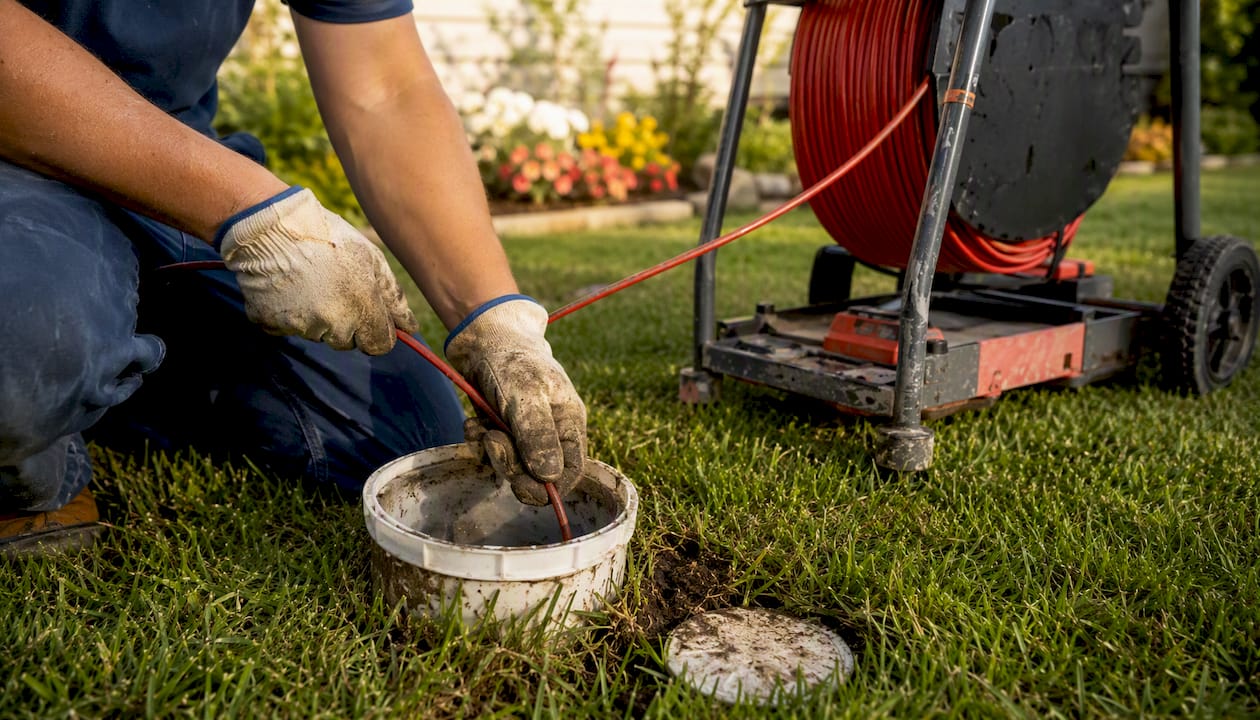
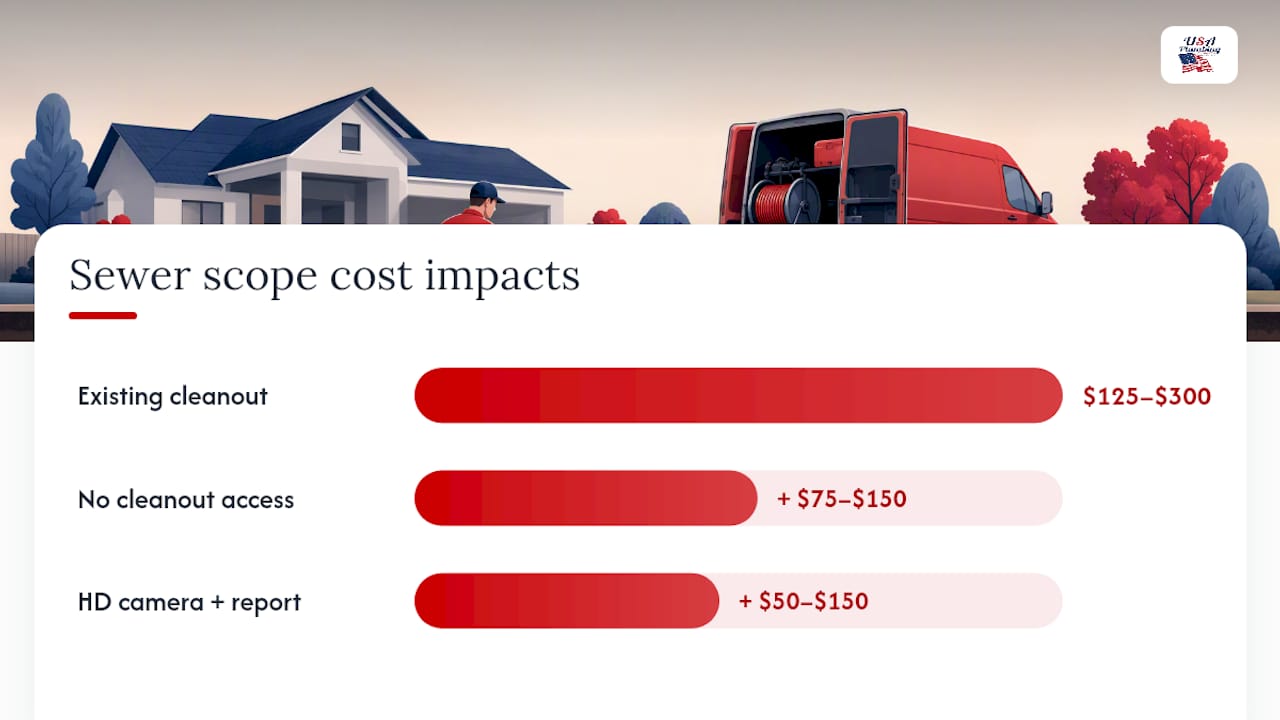
A standard camera scope with existing cleanout access typically runs a moderate cost for a sewer camera scope. That figure assumes one line, standard-definition footage, and a verbal report on findings. Costs climb when there's no cleanout and the technician has to pull a toilet or access the line through a roof vent, which commonly adds $75 to $150 to the job. Longer pipe runs, HD camera equipment, and scoping multiple lines all push the estimate higher too.
| Camera scope scenario | Typical cost impact | Why |
|---|---|---|
| Existing cleanout, single line, standard camera | $125–$300 | Fastest, simplest access |
| No cleanout, toilet pull or vent access required | +$75–$150 | Extra labor and setup time |
| HD camera with recorded video/written report | +$50–$150 | Documentation for records or negotiations |
| Multiple lines or longer pipe runs | Varies, often several hundred more | More footage to capture and interpret |
HomeAdvisor's cost data shows some reported prices run into the low thousands, and that's almost always because the quote bundles cleaning, locating, or repair estimates into the same visit rather than reflecting the scope alone. Compare quotes by asking exactly what's included, not just the bottom-line number.
A camera scope earns its cost fastest in a few specific situations: buying a home with a sewer line older than 40 years, dealing with backups that keep returning after snaking, or living on a property with large trees whose roots have a track record of finding old clay pipe. Add-ons worth knowing about include line locating (useful for future excavation), a recorded video/report (essential if you're negotiating repairs with a home seller), and hydro-jetting if the camera reveals grease or root buildup. DIY camera rental runs $100 to $250 per day, but without professional interpretation, you're looking at footage without knowing what you're actually seeing.
How Often Should You Schedule a Plumbing Inspection?
For most homes, a general visual inspection every 1 to 2 years catches small issues before they become expensive ones. Homes over 25 years old benefit from a combined scope every few years, since aging pipe materials degrade in ways a quick visual check won't reveal. And regardless of age, always schedule an inspection before buying or selling a property.
A few triggers should move up your timeline regardless of when your last inspection happened:
- Slow drains in more than one fixture at the same time
- Recurring backups, especially after snaking that only offers temporary relief
- Water stains on ceilings, walls, or around fixture bases
- Sudden, unexplained drop in water pressure
- Recent tree removal or major landscaping near the sewer line
Many homeowners bundle their plumbing inspection with seasonal maintenance or a general home inspection to save a trip and keep everything on one calendar. Property investors managing multiple units often build this into a recurring maintenance schedule rather than waiting for a tenant complaint to trigger the call.
DIY Checks vs. When You Need a Professional
There's plenty homeowners can do themselves before ever picking up the phone. It won't replace a professional inspection, but it can catch obvious problems early and give you talking points for when a pro does show up.
Try these on your own first:
- Walk through every room checking for visible leaks under sinks, around toilets, and near the water heater
- Run a water meter idle test: shut off every fixture, note the meter reading, wait two hours without using water, and check if the number moved (if it did, you likely have a hidden leak)
- Test every fixture shutoff valve to confirm it actually stops water flow
- Check your water heater's age on its data plate. Anything past 10 to 12 years old is worth a professional look
- Sniff around drains and the sewer cleanout for sewage odors, which often signal a venting or line problem
Some situations aren't a "wait and see" call. Sewage backing up into a tub or floor drain, an active leak dripping through a ceiling or bulging a floor, water pressure that drops suddenly and stays low, or pipes that look rusted, corroded, or visibly bulging all mean it's time to call a professional immediately, not schedule something for next week.
Don't attempt DIY excavation around a suspected sewer line break, and don't force a camera or snake aggressively into a line you can't see. That's how a $300 repair turns into a $3,000 one. For a fuller rundown of warning signs worth acting on, keep a running list so you're not troubleshooting from memory when something goes wrong. General DIY maintenance habits can also stretch the time between paid inspections.
What Repairs Do Plumbing Inspections Usually Uncover?
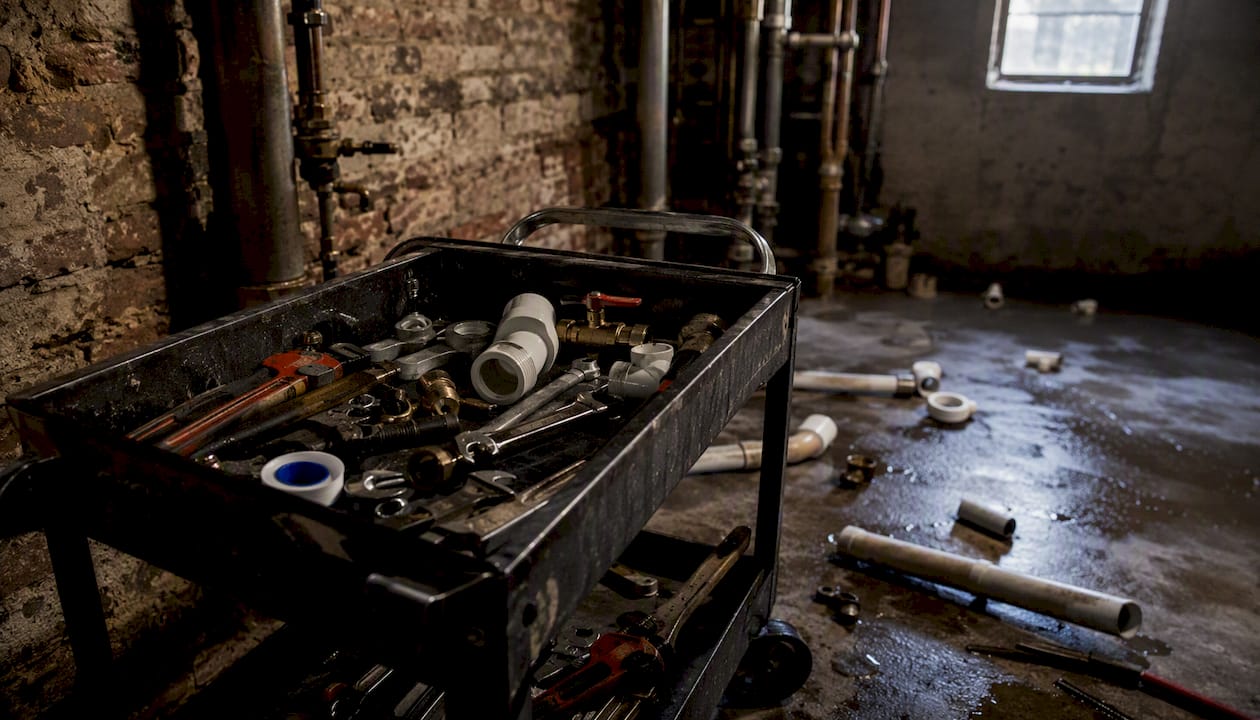
Knowing what an inspection commonly finds helps you budget realistically instead of getting blindsided by a repair estimate. Here's what shows up most often, along with rough cost ranges homeowners typically report.
| Common finding | Rough repair cost range | Notes |
|---|---|---|
| Clog removal / snaking | $100–$300 | Cost rises with access difficulty and clog severity |
| Sewer cleaning / hydro-jetting | $300–$500 | Needed for grease buildup or root intrusion |
| Localized pipe repair | $300–$1,300 | Varies heavily by pipe material and location |
| Sewer line replacement | $3,000–$5,000 | Trenchless methods often cost less than full excavation |
| Water heater repair | $150–$500 | Depends on the part failing (element, thermostat, valve) |
| Water heater replacement | $400–$1,300 | Tankless units run higher than standard tank models |
Access and pipe material drive most of the cost swings you'll see. A pipe repair under an easily accessible crawlspace costs a fraction of the same repair under a concrete slab or mature landscaping. Cast iron and clay pipe also tend to be more brittle and expensive to work with than modern PVC.
If you're buying a home and the camera scope reveals a problem, bring the video footage and a written repair estimate to the negotiation table. Sellers and their agents respond far better to documented evidence than a verbal claim, and it gives you leverage to request a price reduction or repair credit before closing. For a deeper look at typical repair-cost drivers, it helps to understand what separates a quick fix from a major line replacement before you sign anything.
How Were These Plumbing Inspection Cost Ranges Calculated?
The cost ranges in this guide come from a mix of sources: industry standards organizations like NASSCO and InterNACHI, published pricing guides that track homeowner-reported and contractor-quoted costs, and our own field experience quoting and performing inspections across the Bullhead City, Fort Mohave, Mohave Valley, and Laughlin area.
The wide ranges you see for camera scopes aren't inconsistency. They reflect real variance drivers: whether a cleanout already exists, how long the sewer run is, whether the report includes recorded video, and whether the quote bundles cleaning or repair work. Bright Home Cares' pricing analysis points out that different datasets sample different things, so a homeowner-reported average and a contractor-quoted average won't always match, even for the same type of job.
A quote isn't just a number. It's a reflection of exactly what's included, and comparing two estimates without comparing scope is how homeowners end up feeling overcharged for identical work.
Prices in any guide, including this one, reflect aggregated market samples at a point in time. Your local labor rates, home age, and pipe access will shift your actual quote up or down. Getting two or three local estimates remains the most reliable way to confirm a fair price for your specific property.
A Local Plumber's Take on Inspection Costs
In our experience working plumbing calls across Bullhead City and the surrounding Tri-state area, the biggest cost surprise for homeowners isn't the inspection itself. It's what the inspection finds. We regularly see older homes in this region with galvanized supply lines and clay sewer laterals that have been quietly degrading for decades, invisible until someone runs a camera through them.
That's why we push harder than some companies for a combined scope, especially before a home sale closes. A visual walkthrough alone tells a buyer the sink drains fine. It says nothing about the sewer line running under the driveway that might collapse in three years. We've watched buyers save thousands by catching that problem during due diligence instead of after they own the property.
When we perform an inspection, the report includes a written summary of every finding, photos or video where relevant, and a plain-language explanation of what needs immediate attention versus what can wait. No jargon, no guesswork.
Pro Tip: If you're getting repeat inspections on the same property over the years, ask your plumber to install a proper sewer cleanout if one doesn't already exist. It typically costs a few hundred dollars once, but every future scope becomes faster and cheaper because the technician isn't paying for access time.
Get a Local Plumbing Inspection Quote
Usaplumbingseptic gives you something a lot of national chains can't: a crew that already knows the plumbing quirks common to Bullhead City, Fort Mohave, Mohave Valley, and Laughlin homes, from galvanized supply lines to older clay sewer laterals. That local knowledge means fewer surprises on your final invoice and a faster diagnosis when something looks off.

When you call, ask specifically for a combined scope, a recorded video report, and line locating if you're planning any future landscaping or excavation work. A written estimate before the crew starts is standard practice, and you should never accept less. If you're buying a home, request the video footage explicitly. It's your best leverage if repairs need to be negotiated before closing.
Ready to get a straightforward quote for your property? Visit our Golden Valley and Bullhead City service page to request an inspection, or check out our sewer line solutions if you already suspect a problem below ground.
Sources
- InterNACHI (International Association of Certified Home Inspectors)
- NASSCO (National Association of Sewer Service Companies)
- Sewer scope inspection — Rocket Mortgage
FAQ
How Much Does a Plumbing Inspection Cost?
A basic visual inspection costs $100 to $200, a camera/sewer scope costs a moderate cost for a sewer camera scope, and a combined inspection typically runs a higher cost for a combined inspection depending on home size and access.
How Much Does It Cost for a Plumber to Check Pipes?
Checking visible pipes as part of a standard visual inspection falls within the $100 to $200 range; checking underground sewer pipes with a camera runs a moderate cost for a sewer camera scope separately.
What Is Included in a Plumbing Inspection?
A thorough inspection checks fixtures, visible supply and drain lines, shutoff valves, the water heater, gas connections, appliance hookups, and sewer cleanout access, though in-wall leaks and full sewer laterals usually require a separate camera scope.
How Long Does a Plumbing Inspection Take?
A visual inspection typically takes about an hour, a camera scope takes about half an hour to an hour, and a combined inspection takes about a few hours for a standard single-family home.
Is It Worth Paying for a Sewer Camera Inspection Before Buying a Home?
Yes. Standard home inspections rarely examine the sewer lateral in detail, and a camera scope costing a moderate cost for a sewer camera scope can help you avoid inheriting a sewer line replacement costing thousands of dollars after closing.