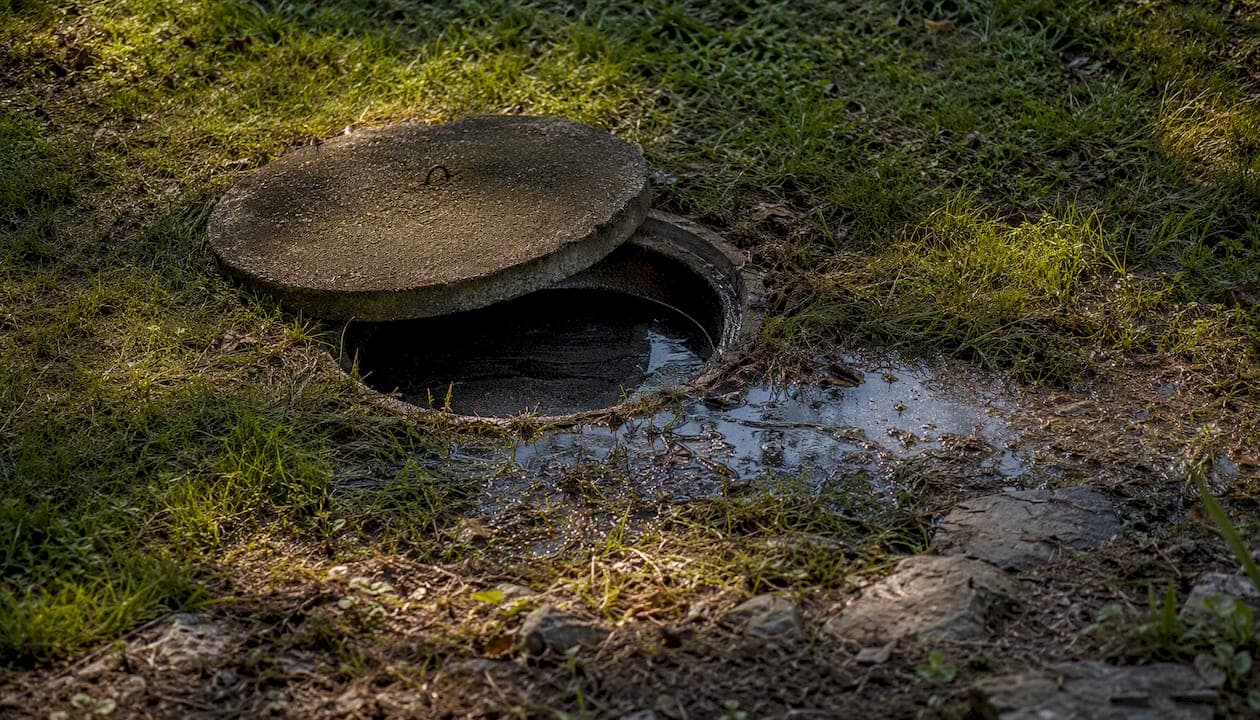
A septic tank overflows for one of three reasons: hydraulic overload (too much water going in), a blocked flow path (clogs, damaged baffles, or bad pipes), or a failing drainfield that can no longer absorb effluent. If sewage is backing up inside your home or surfacing in your yard right now, stop using water immediately, keep everyone away from the area, and call a licensed septic professional before you do anything else.
Do not run more water hoping it will "flush through." That only forces more sewage into your house or across your property, according to EPA guidance on septic malfunctions. And do not order a pump-out on repeat without a diagnosis. If the real problem is a saturated or failing drainfield, pumping buys you a day or two before the tank fills right back up, and you have spent money without fixing anything.
Here is your immediate checklist:
- Stop all water use in the house: no laundry, no dishwasher, no long showers.
- Keep people and pets away from any area where sewage is pooling or the ground looks soggy.
- Do not touch or attempt to clean up standing effluent yourself. Treat it as a biohazard.
- Call a licensed septic professional the same day, especially if sewage is inside the home or standing outside.
- Skip the repeat pump-out until someone has actually diagnosed why the system backed up.
If sewage is visible inside the house, if it is surfacing in the yard, or if this has happened more than once in the past few months, that is your signal for a same-day inspection, not a wait-and-see approach.
Key Takeaways
Septic overflows trace back to hydraulic overload, blocked flow paths, or drainfield failure, and only a diagnostic inspection, not repeated pumping, reliably identifies which one you are facing.
| Point | Details |
|---|---|
| Stop water use first | Cut all water use immediately to prevent forcing more sewage into the home or yard. |
| Overflow is a symptom | Treat backups as a signal to diagnose, not a problem pumping alone will solve. |
| Watch for backflow during pumping | Water re-entering the tank while pumping signals drainfield or groundwater trouble. |
| Protect the drainfield daily | Avoid heavy vehicles, tree roots, and stormwater runoff over the absorption field. |
| Usaplumbingseptic diagnoses before repairing | Camera, dye, and D-box checks precede any repair recommendation on service visits. |
Table of Contents
- What Causes a Septic Tank to Overflow?
- How Can You Tell If Your Septic Tank Is Overflowing?
- What Should You Do Right Now (and What Should You Avoid)?
- How Do Professionals Diagnose the Real Cause?
- What Are the Repair Options and Realistic Timelines?
- How Do You Prevent Future Overflows?
- When Is a Septic Overflow a Same-Day Emergency?
- What Happens During a Professional Septic Visit?
- Why Diagnosis Matters More Than a Quick Pump-Out
- How Usaplumbingseptic Handles Septic Overflows
- Sources
- FAQ
What Causes a Septic Tank to Overflow?
Three mechanical categories cause almost every overflow, and each one leaves different clues.
Hydraulic overload happens when more water enters the system than the soil underneath can absorb. Septic systems are engineered around a specific daily flow, roughly a specific daily flow per bedroom, and tanks generally need pumping every three to five years depending on household use, according to NC State Extension. Push past that design capacity with back-to-back laundry loads, a leaking toilet flapper, or a water softener stuck mid-regeneration, and the system floods faster than it can process. That last one surprises a lot of homeowners. A malfunctioning water softener or a silently running toilet can dump hundreds of extra gallons a day into the tank without anyone noticing until the system fails, according to Inspectapedia's analysis of septic backflooding.
Blockages are a different animal entirely. A clogged inlet or outlet pipe, a damaged or missing baffle, or solids that have pushed past the tank and into the distribution lines will cause backups that show up almost exclusively inside the house. If every drain backs up at roughly the same rate regardless of which fixture you use, you are likely looking at a blockage or a full tank rather than a drainfield problem.

Drainfield failure is the cause that a simple pump-out cannot solve. A layer called biomat, a buildup of organic slime that forms in the soil under the drainfield, can seal the pores that let effluent absorb into the ground. Heavy rain, high groundwater, soil compaction, or old age can all push a drainfield past the point of recovery. Soil is genuinely the most important component of the whole system, and once it is compacted or clogged, the loss of absorption capacity can be permanent, according to a Kansas State University extension analysis. Learn more about how these systems work in our guide to what a drain field actually does.
A fourth pattern deserves its own mention: backflooding and groundwater intrusion. Cracked tank walls, poor riser seals, or a saturated drainfield can let outside water push back into the tank instead of effluent draining out. This is precisely why overflow so often returns within days of a pump-out. If the drainfield is the actual problem, the technician has emptied a tank that was never really "full" of sewage. It was full of backflow, and the ground had nowhere else to send it, according to Oregon State University's breakdown of common septic failure causes.
How Can You Tell If Your Septic Tank Is Overflowing?
Indoor and outdoor clues tell different parts of the story, and reading them correctly saves you a wasted service call.
Inside the house, watch for slow or gurgling drains, multiple fixtures backing up around the same time, or toilets that back up into the tub or shower when you flush. That pattern, where drainage problems show up across several unrelated fixtures at once, usually points toward the tank or the main line rather than one clogged pipe under a single sink.
Outside, the signs are harder to miss but easier to dismiss. Soggy or spongy ground over the tank or drainfield, grass that looks unnaturally green and lush compared to the rest of the yard even during dry weather, sewage actually surfacing at ground level, and a persistent sewage odor near the tank lid are all classic markers of drainfield failure. If you see wet or spongy patches concentrated specifically over the drainfield lines rather than near the tank itself, that is a strong signal the field, not the tank, is the actual failure point.
A drainfield that is failing does not always announce itself with a flood. Often the first sign is grass that looks a little too healthy for the season, or ground that gives slightly underfoot where it never used to. By the time sewage is visibly surfacing, the field has usually been struggling for a while.
If you can safely do so from a distance, photograph the affected areas: standing water, discoloration, odor sources, and the septic tank lid or riser itself. Note the date, whether it rained recently, and what you were doing in the house right before the backup started (running laundry, showering, flushing multiple times). Do not walk through standing effluent to get a better shot. Treat any surfacing sewage as a public-health hazard, keep children and pets clear of it, and let your camera do the close-up work from solid, dry ground.
What Should You Do Right Now (and What Should You Avoid)?
Your first move is simple: stop the water. Every load of laundry, every extra shower, and every dishwasher cycle adds gallons to a system that is already failing to process what is already inside it. Next, isolate the area. Rope it off or block access if sewage has surfaced outdoors, and keep kids and pets on the other side of the yard. Then call a septic professional. Waiting to "see if it clears up on its own" is the single most common way a manageable problem turns into an expensive one. Our 24-hour plumbing emergency checklist walks through the same triage logic for related plumbing crises.
Here is where a pump-out helps and where it does not. If the cause is a blockage or a tank that simply reached its normal service interval, pumping clears the immediate crisis and buys you real time. But if the drainfield is saturated or failing, pumping is a stopgap at best. The tank will refill within days because the ground has nowhere to send the effluent, and you are paying for the same service call every few weeks.
| Do This | Don't Do This |
|---|---|
| Stop all water use in the house | Keep running laundry or dishwasher cycles |
| Rope off or block surfacing sewage outdoors | Walk through or hose down standing effluent |
| Photograph problem areas from dry ground | Bury or cover surfacing sewage yourself |
| Call a licensed septic professional same day | Order repeat pump-outs without a diagnosis |
| Note recent rain, water use, and pumping history | Assume the tank is simply "old" without inspection |
Before the technician arrives, jot down when the problem started, whether it followed heavy rain, whether you recently pumped the tank, and which fixtures are affected. That timeline often points a trained eye straight to the cause before they even lift the lid.
How Do Professionals Diagnose the Real Cause?
A proper service visit goes well beyond popping the lid and running a hose. Technicians start with a visual inspection of the risers and lids, checking for cracks, poor seals, or signs of water intrusion around the tank access points. They inspect the baffles and effluent filter, since a damaged or missing baffle lets solids escape into pipes and the drainfield where they do not belong.
The real diagnostic work happens during pumping. A skilled technician watches the outlet baffle and listens for splashing while the tank empties. If water keeps entering the tank as the level drops, that is strong evidence of backflow from a saturated drainfield, a cracked tank wall, or groundwater intrusion, not just a routine full tank, according to Inspectapedia's detailed explanation of tank backflooding. Additional tools include dye testing to trace where water is moving, sewer camera inspections to check the condition of pipes running from the house to the tank and from the tank to the distribution box, and soil or percolation evaluations when drainfield failure is suspected. Our guide on how septic inspections work covers each of these steps in more detail.
Inspectors will often recommend checking the distribution box, the component that splits effluent flow evenly across the drainfield's lines, before recommending any drainfield repair. A clogged or tilted D-box can starve some lines while flooding others, mimicking full-field failure when only one section is actually compromised.
Pro Tip: Ask your technician directly whether they observed water entering the tank while it was being pumped, and ask them to check the distribution box before you approve any drainfield work. That single question can save you from paying for a full field replacement when the real problem is one tilted D-box.
What Are the Repair Options and Realistic Timelines?
Repairs map fairly cleanly to root causes, and knowing the category helps you set expectations before the estimate arrives.
- A simple pump-out combined with clearing a clogged inlet or outlet pipe resolves a straightforward blockage.
- Pipe repair or replacement addresses cracked, crushed, or root-invaded lines between the house, tank, and field.
- Effluent pump or dosing system repair fixes systems that rely on a mechanical pump to push effluent to the drainfield.
- Drainfield rehabilitation, which can include resting the field, adding aeration, or replacing a portion of the lines, may recover a field that is saturated but not permanently damaged, according to the Washington State Department of Health.
- Full drainfield replacement becomes necessary when the soil itself has failed structurally and can no longer absorb effluent regardless of rest or repair.
| Repair Category | Typical Disruption | General Timeframe |
|---|---|---|
| Temporary fixes (pump-out, minor unclog) | Minimal, usually same-day | Hours |
| Spot repairs (pipe, baffle, or D-box) | Localized digging, limited yard disruption | One to a few days |
| Field rehabilitation | Moderate yard disruption, possible rest period | Days to a few weeks |
| Full drainfield replacement | Significant excavation and site work | Weeks, depending on permitting |
Full replacements typically require a site evaluation, a permit from your local health or environmental agency, and sometimes a new soil or percolation test before construction begins. That regulatory step exists to make sure the new field is sized and placed correctly, and skipping it is not an option in most jurisdictions. If your system needs extended repair time, ask your technician about temporary containment or interim pumping arrangements so the household can keep functioning safely while the permanent fix is scheduled.
How Do You Prevent Future Overflows?
Prevention comes down to three habits: manage your water load, protect your drainfield, and stay on a pumping schedule.
Spread laundry loads across the week instead of running several back to back. Fix leaking toilets and faucets as soon as you notice them; a running toilet can waste hundreds of gallons a day without ever showing up on your radar. Avoid garbage disposals where possible, since they send extra solids into a system that is meant to handle liquids first. And never route roof drainage, sump pump discharge, or other stormwater toward the drainfield. Diverting surface water away from the field is one of the most effective, and most overlooked, protective steps a homeowner can take, according to Oregon State Extension.

Your landscaping choices matter more than most homeowners realize. Never park vehicles or run heavy equipment over the drainfield, since compaction seals the very soil pores the system depends on. Keep trees and deep-rooted shrubs away from the field lines. Root intrusion cracks pipes and clogs distribution lines over years, quietly setting up a failure that seems to appear out of nowhere. Grade the surrounding soil so rainwater runs away from the field rather than pooling over it.
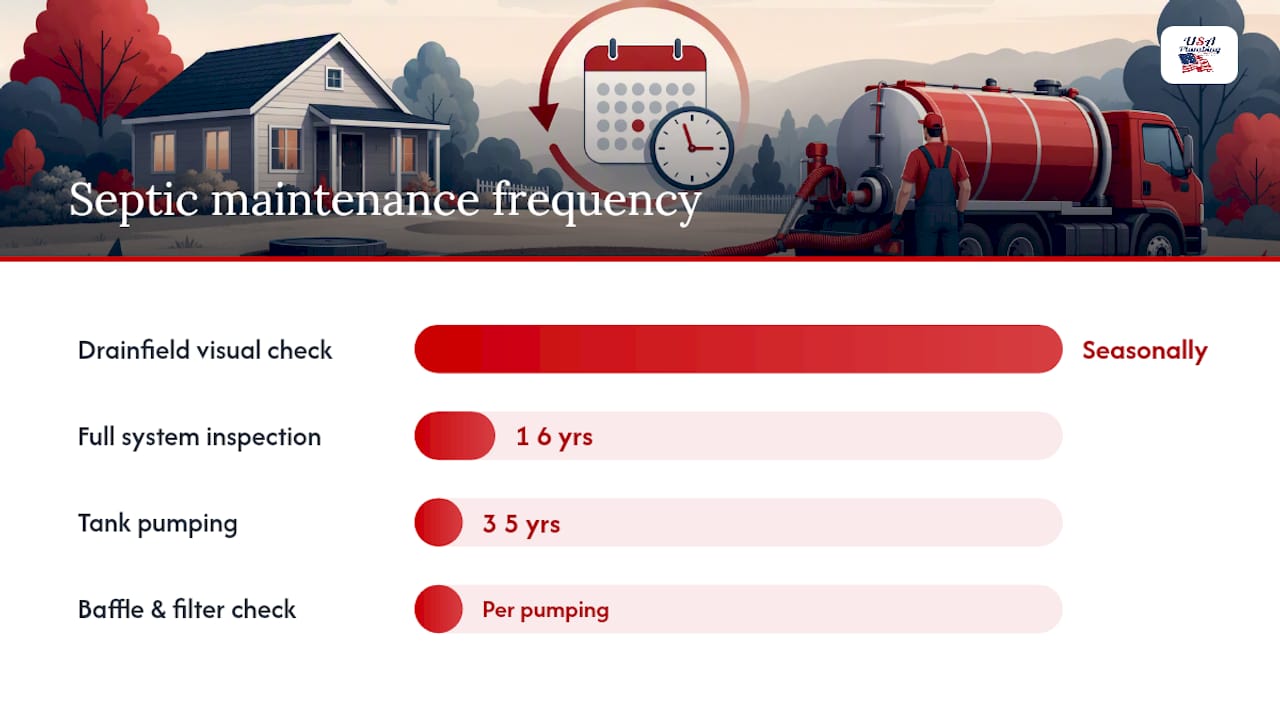
| Maintenance Task | Recommended Frequency |
|---|---|
| Tank pumping | Every 3 to 5 years, depending on household size and use |
| Full system inspection | Every 1 to 3 years |
| Baffle and filter check | At every pumping visit |
| Drainfield visual check (wet spots, odor, grass color) | Seasonally, especially after heavy rain |
Pro Tip: Schedule your septic inspection for the same month each year, tied to something memorable like a birthday or tax season. Systems that get skipped tend to get skipped indefinitely, and a missed inspection is almost always cheaper than the field failure it was supposed to catch.
For broader household leak prevention that keeps hydraulic load off your septic system in the first place, our page on how minor water leaks add up is worth a look.
When Is a Septic Overflow a Same-Day Emergency?
Some situations do not leave room for waiting until tomorrow. Sewage inside the home, standing sewage anywhere outside, strong sewage odor indoors, signs of contaminated well water, or backups that return within days of a pump-out are all red flags that call for a same-day technician response.
Treat any visible effluent as hazardous material, not a mess to mop up yourself. Wastewater carries bacteria and pathogens that pose a real health risk to anyone who comes into direct contact with it, which is exactly why the EPA recommends avoiding contact entirely and calling professional help right away rather than attempting DIY cleanup. Keep children and pets away from any affected area until it has been professionally addressed.
When you call, be ready to describe what you are seeing: which fixtures are backing up, whether sewage has surfaced outside, when you last had the tank pumped, whether it rained heavily in the past day or two, and what you were doing in the house right before the problem started. That handful of details often lets a dispatcher prioritize your call correctly and gives the technician a head start before they even arrive. For a broader look at what counts as a true plumbing emergency, see our guide to emergency plumbing situations.
What Happens During a Professional Septic Visit?
A thorough inspection follows a predictable sequence, and knowing what to expect helps you judge whether the crew doing the work is being careful or just checking boxes.
- Arrival and safety setup. The technician cordons off the work area and confirms where the tank and risers are located.
- Tank access and level check. Lids or risers are opened, and the technician notes liquid levels and any signs of backflow before pumping begins.
- Pumping with active observation. The tank is pumped while the crew watches the outlet baffle and listens for water re-entering the tank, a key sign of drainfield or groundwater trouble.
- Camera inspection. A sewer camera checks the condition of pipes from the house to the tank and from the tank to the distribution box.
- D-box and drainfield surface check. The distribution box is inspected for tilt or clogging, and the surface over the field is checked for wet spots or unusual grass growth.
- Report and recommendations. You should receive a written summary of findings along with next steps.
By the end of the visit, you should have documentation you can actually use:
- Written inspection notes describing what was found in the tank, pipes, and drainfield.
- Photos of any problem areas, including camera footage stills if applicable.
- A clear, prioritized list of recommended next steps, not just a single fix.
Before you approve any work, ask the technician about their license and any permits required for the repair, a realistic timeline for completion, and whether temporary containment measures are needed while repairs are scheduled. A licensed company's estimate should reflect an actual diagnosis. A quick patch quote that skips the camera work and D-box check is a warning sign that you might be paying to solve the wrong problem.
Pro Tip: A written estimate that references specific findings, like "outlet baffle deteriorated" or "D-box tilted, uneven flow to lines 2 and 3," tells you the technician actually diagnosed your system. A vague quote for "drainfield repair" with no supporting detail is worth a second opinion.
Why Diagnosis Matters More Than a Quick Pump-Out
An overflow is a symptom, not a diagnosis. That distinction shapes everything about how you should respond, and it is the single point I wish more homeowners understood before they call for service. Too many people treat a backed-up drain the way they would treat a flat tire: pump it out, move on, assume the problem is solved. But a tank that refills within a week was never actually fixed. Something upstream, whether that is a leaking appliance, a cracked baffle, or a drainfield that has quietly been failing for years, is still there waiting to cause the same mess again.
The homeowners who come out ahead financially are the ones who insist on a real diagnosis the first time, even when it costs a bit more upfront than a bare pump-out. Watching what happens during pumping, checking the distribution box, running a camera through the lines: these steps take an extra hour, and they are the difference between a $300 service call and a $15,000 surprise a year later. Your health matters here too. Standing sewage is not a cosmetic yard problem; it is a public-health hazard that deserves the same urgency you would give a gas leak. If you are dealing with a stubborn or recurring overflow near Bullhead City, USA Plumbing and Septic LLC is a local resource built around exactly this diagnose-first philosophy rather than a reflexive pump-and-go visit.
How Usaplumbingseptic Handles Septic Overflows
Usaplumbingseptic runs a diagnose-first process, not a pump-and-hope routine. That is the practical difference for anyone dealing with a recurring overflow: instead of paying for the same pump-out every few weeks, you get a technician who checks the baffles, watches for backflow during pumping, inspects the distribution box, and tells you exactly which repair category you are actually facing before you spend a dollar on it.

Our crews handle the full range: emergency pump-outs, camera and dye diagnostics, drainfield rehabilitation, and full replacement coordination when a field has genuinely failed. When you call, have a few things ready: photos of the affected area, a description of which fixtures are backing up, and your last pumping date if you know it. This information lets our dispatcher prioritize same-day service when the situation calls for it and lets the technician arrive with a head start on the likely cause.
Every visit includes a written inspection summary and a clear explanation of your options, whether that is a spot repair or a larger field project, so you are never guessing what you are paying for. If your septic system is backing up, surfacing outside, or refilling faster than it should after a recent pump-out, visit our Bullhead City plumbing and septic services page to schedule an inspection with a licensed local crew.
Sources
- Resolving septic system malfunctions | US EPA
- Signs of septic system failure | Washington State Department of Health
- Septic tank flooding and backflooding explanation | Inspectapedia
- Why do septic systems fail? | Oregon State Extension
FAQ
Why is my septic tank overflowing after being pumped?
A tank that refills quickly after pumping usually means the drainfield is saturated, failing, or that groundwater or a cracked tank is letting water back in rather than the tank simply reaching a normal full level again.
Why would water be coming out of the top of my septic tank?
Water surfacing at the tank lid or riser typically points to a drainfield that can no longer absorb effluent, a cracked tank, or a poor riser seal letting surface water intrude, and it needs same-day professional evaluation.
Why is my septic tank overflowing after heavy rain?
Heavy rain can saturate the soil around your drainfield, temporarily blocking effluent absorption, or it can push groundwater and surface water into a tank through cracks or poor seals, both of which can be worsened by existing drainfield damage.
What does septic overflow look like?
Indoors it looks like slow or gurgling drains and multiple fixtures backing up together; outdoors it shows up as soggy or spongy ground, unusually lush grass, standing sewage, or a persistent sewage odor near the tank or drainfield.
How do I know if I need a full drainfield replacement?
A technician typically confirms this through camera inspection, a distribution box check, and soil evaluation. If the soil itself has failed rather than just being temporarily saturated, rehabilitation will not hold and full replacement becomes necessary.