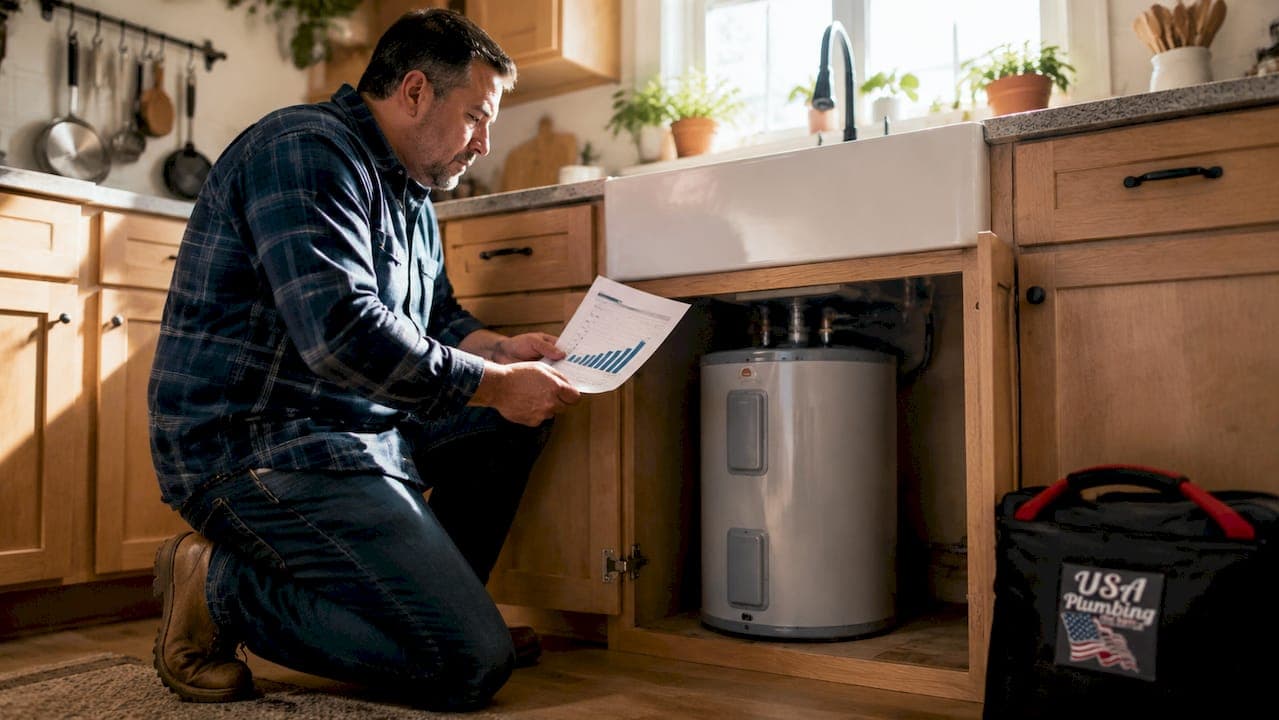
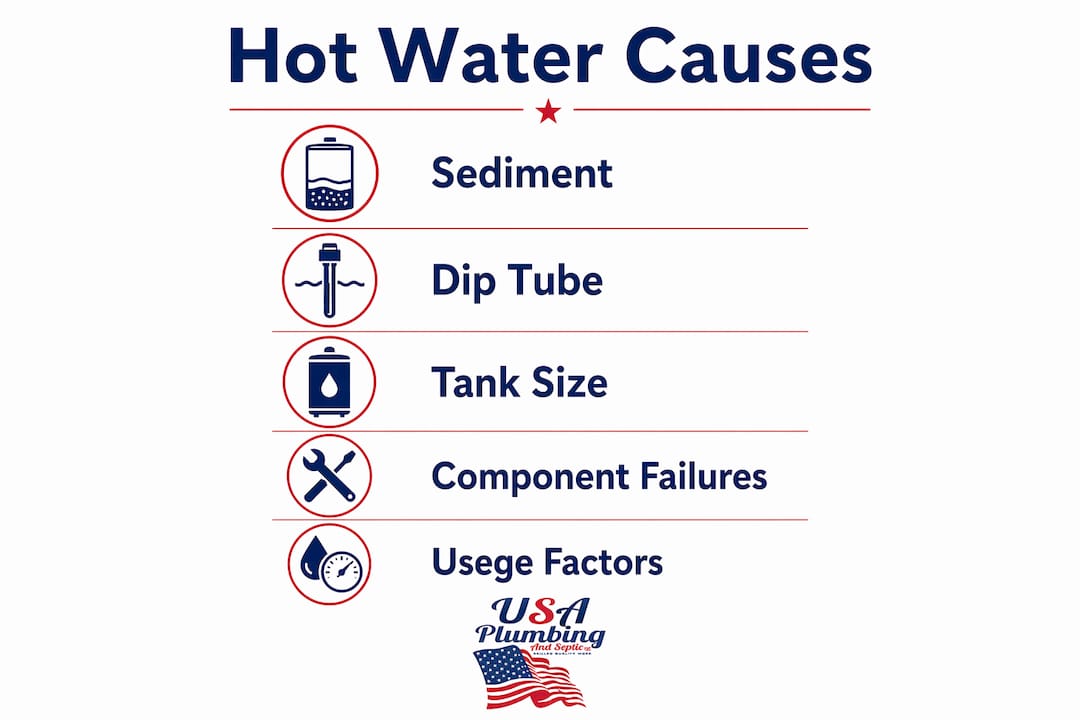
Hot water runs out when your water heater's effective capacity or heating ability falls below your household's demand. The most common causes are sediment buildup, a broken dip tube, undersized tank capacity, and failing heating components. Each of these problems reduces the volume of hot water your system can deliver before it needs to recover. Understanding which cause applies to your home is the first step toward fixing it for good.
Why does hot water run out so fast?
Sediment is the single most overlooked reason your hot water supply shrinks over time. Minerals from your water supply, primarily calcium and magnesium, settle at the bottom of the tank with every heating cycle. Over time, that layer grows thick enough to physically displace water. A 50-gallon tank with sediment can function as a 40-gallon tank or smaller. That is a meaningful loss of capacity before any other problem enters the picture.
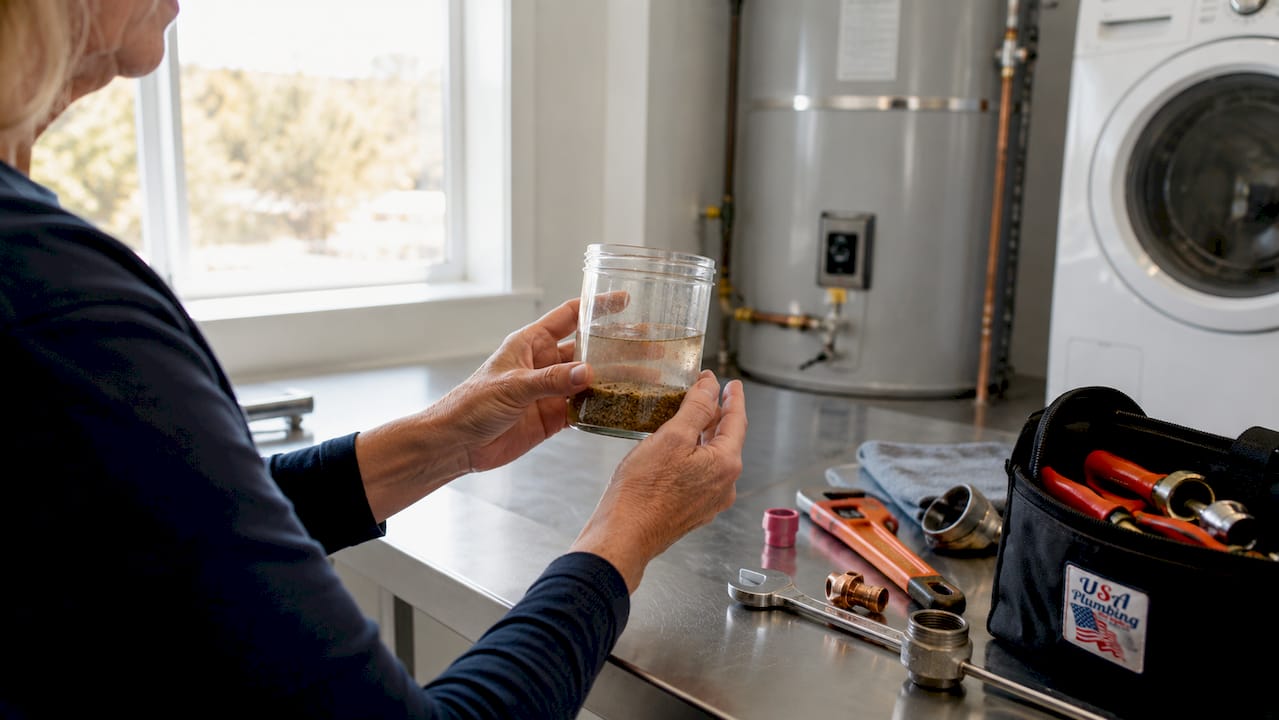
Sediment also acts as an insulator between the heating element and the water above it. The burner or element runs longer, uses more energy, and still delivers less heat to the water. You will often hear rumbling or popping sounds from the tank. Those sounds are steam bubbles forcing through the sediment layer, and they signal that the problem is already well advanced.
| Sediment level | Estimated tank volume lost | Likely symptoms |
|---|---|---|
| Light (1–2 inches) | 5–10% | Slightly longer recovery |
| Moderate (3–4 inches) | 15–20% | Rumbling sounds, higher bills |
| Heavy (5+ inches) | 25–30% | Rapid hot water loss, overheating |
Flushing the tank annually restores performance significantly and extends the life of the unit. A professional flush and inspection typically costs $150–$300, which is far less than an emergency replacement.
Pro Tip: If you hear popping or rumbling from your tank, check out water heater popping sounds before the problem gets worse. Catching sediment early saves you money.
What does a broken dip tube do to your hot water?
The dip tube is a plastic pipe inside your tank that carries incoming cold water to the bottom, where it gets heated before rising to the outlet. When the dip tube cracks or breaks, cold water mixes directly at the top of the tank near the hot water outlet. The result feels identical to running out of hot water, but the actual cause is dilution, not depletion.
Homeowners often misdiagnose this problem because the tank feels full and the heater appears to be working. The giveaway signs are:
- Cold water arriving much sooner than usual, even with a full tank
- Small white or gray plastic fragments appearing in faucet aerators or showerheads
- Water temperature that drops sharply within minutes of turning on a tap
- Inconsistent temperature that fluctuates rather than declining gradually
Dip tube failure is not a DIY repair for most homeowners. The part itself is inexpensive, but accessing it requires draining the tank and removing the cold water inlet fitting. A licensed plumber can replace it in under two hours. Leaving it broken means every shower wastes energy and delivers cold water no matter how well the heater functions.
Pro Tip: If you find plastic bits in your aerators, check your water heater diagnostics guide to confirm whether a dip tube is the culprit before calling for service.
Is your water heater tank too small for your household?
An undersized water heater is one of the most commonly overlooked causes of insufficient hot water, and it has nothing to do with the unit being broken. The tank simply cannot keep up with the demand your household places on it. This problem gets worse when families grow, when high-flow fixtures are installed, or when usage patterns shift toward morning rushes.
Rain showerheads are a prime example. They consume about 3.0 gallons per minute, which means a 40-gallon tank can be emptied in roughly 13 minutes of shower time. Add a dishwasher running in the background and that window shrinks further.
| Tank size | Typical household fit | Peak demand limit |
|---|---|---|
| 30–40 gallons | 1–2 people | 1 shower at a time |
| 50 gallons | 3–4 people | 2 showers, light appliance use |
| 75–80 gallons | 5+ people | 2–3 showers, concurrent appliances |
Signs your tank is undersized for your current needs:
- Hot water runs out during the second consecutive shower
- You run out faster after adding a bathroom or a new resident
- Recovery takes more than an hour during peak morning use
- Simultaneous laundry and shower use always causes cold water
Replacing an undersized tank with a correctly sized unit, or switching to a tankless water heater, solves the problem permanently. Protecting your anode rod during any upgrade also extends the new unit's life considerably.
How component failures reduce your hot water supply
Heating elements, thermostats, and gas valves all degrade before they fail completely. That gradual decline is why hot water not lasting is often the first warning sign, not a total loss of heat. Component wear causes temperature swings and reduced run time long before the unit stops working entirely.
In electric water heaters, the lower heating element does most of the work. When it burns out, only the upper element remains active. That upper element heats a fraction of the tank's volume, which is why you get a short burst of hot water followed by cold. Failing thermostats compound the issue by preventing the element from cycling on at the right temperature.
Gas water heaters face different failure points. A weakening pilot light, a faulty thermocouple, or a gas valve that does not open fully all reduce the burner's output. The tank takes longer to recover between uses, and during peak demand it simply cannot keep up.
Common component failure symptoms to watch for:
- Hot water lasts 10–15 minutes instead of your usual 20–30 minutes
- Water temperature fluctuates between hot and lukewarm unpredictably
- You hear the burner or element cycling on and off more frequently than before
- The unit runs constantly but never fully heats the tank
Early detection of element burnout prevents emergency replacements. A plumber can test elements and thermostats with a multimeter in under 30 minutes. Replacement parts for most standard units are widely available and affordable. Catching the problem at this stage is far less disruptive than a cold shower on a Monday morning.
Environmental and usage factors that reduce hot water faster
Incoming water temperature directly affects how much hot water your heater can deliver. In winter, colder municipal water slows recovery and reduces the volume of fully heated water available at any given time. The heater works the same way, but it starts from a colder baseline, so it takes longer to reach the set temperature.
Simultaneous appliance use is the other major factor. Running a dishwasher, washing machine, and shower at the same time draws hot water faster than most standard tanks can recover. This is especially true during morning and evening peak periods when demand spikes across the whole household.
Not every temperature problem is the heater's fault. Pressure fluctuations and faulty fixture valves can cause shower temperature to shift when another tap opens nearby. That sudden cold blast is often a pressure issue, not a sign that hot water is gone. Knowing the difference saves you an unnecessary service call.
Practical steps to reduce hot water demand during peak times:
- Stagger showers by 15–20 minutes to allow partial recovery
- Run the dishwasher and laundry at off-peak hours, such as late evening
- Lower your showerhead flow rate with a low-flow restrictor insert
- Set your water heater thermostat to 120°F, which is the U.S. Department of Energy's recommended setting for efficiency and safety
Key Takeaways
Hot water runs out due to sediment buildup, broken dip tubes, undersized tanks, failing components, and high simultaneous demand, and each cause has a specific, fixable solution.
| Point | Details |
|---|---|
| Sediment shrinks tank capacity | A heavily fouled tank loses up to 25–30% of its usable volume; annual flushing restores it. |
| Broken dip tube mimics depletion | Cold water mixes at the outlet, causing rapid temperature drops that feel like running out. |
| Tank size must match demand | Rain showerheads use 3.0 gallons per minute; a 40-gallon tank empties in about 13 minutes. |
| Component failures give early warnings | Reduced run time and temperature swings signal element or thermostat failure before total breakdown. |
| Environmental factors add pressure | Cold incoming water in winter and simultaneous appliance use both reduce effective hot water output. |
What I've learned after years of diagnosing hot water problems
The most consistent pattern I see is gradual degradation that homeowners attribute to "the heater getting old" when the real cause is something fixable. Water heaters degrade over years through compounding wear, and the failure point feels sudden even though the warning signs were there for months.
The mistake I see most often is waiting for a cold shower before calling anyone. By that point, sediment has been building for years, an element has been running at reduced capacity for months, and the homeowner has been paying higher energy bills the whole time without realizing why. A quick annual check catches all of this early.
The second most overlooked issue is the mismatch between tank size and household changes. A family that adds a teenager, a new bathroom, or a rain showerhead has fundamentally changed their hot water demand. The tank that worked fine three years ago is now undersized. That is not a heater problem. It is a capacity planning problem, and the fix is straightforward once you recognize it.
My practical advice: schedule a tank flush every 12 months, check your common water heater problems list once a year, and reassess your tank size whenever your household changes. Repair versus replacement depends on the unit's age and the cost of the fix. For units over 10 years old, repair costs often justify replacement with a more efficient model.
— JOHN
Usaplumbingseptic can solve your hot water problems fast
When hot water problems go beyond a simple flush or thermostat adjustment, you need a licensed plumber who knows water heaters inside and out.

Usaplumbingseptic serves Bullhead City, Fort Mohave, Mohave Valley, and Laughlin with 24/7 availability for water heater diagnostics, sediment flushing, dip tube replacement, component repairs, and full system upgrades. Our team identifies the root cause on the first visit, whether it is a failing element, a cracked dip tube, or a tank that simply cannot keep up with your household. For homeowners in the area, our Mohave County plumbing services cover everything from routine maintenance to emergency replacements. Call us today and get your hot water back.
FAQ
Why does my hot water run out after 10 minutes?
A lower heating element failure in an electric water heater limits heating to the upper portion of the tank, which depletes in 10–15 minutes under normal flow. A broken dip tube can cause the same symptom by mixing cold water directly into the hot water outlet.
How do I know if sediment is causing my hot water problem?
Rumbling or popping sounds from the tank are the clearest sign of heavy sediment buildup. A tank that takes much longer to recover between uses, or delivers noticeably less hot water than it used to, also points to sediment reducing usable capacity.
Can I fix a broken dip tube myself?
Replacing a dip tube requires draining the tank and removing the cold water inlet fitting, which most homeowners should leave to a licensed plumber. The repair is straightforward for a professional and typically completed in under two hours.
What size water heater do I need for a family of four?
A 50-gallon tank generally fits a family of four with standard fixtures and moderate simultaneous use. Adding high-flow showerheads or an extra bathroom may require upsizing to 75 gallons or switching to a tankless unit.
Does cold weather make hot water run out faster?
Yes. Colder incoming water in winter requires more energy and time to reach the set temperature, which slows recovery and reduces the volume of fully heated water available during peak demand periods.