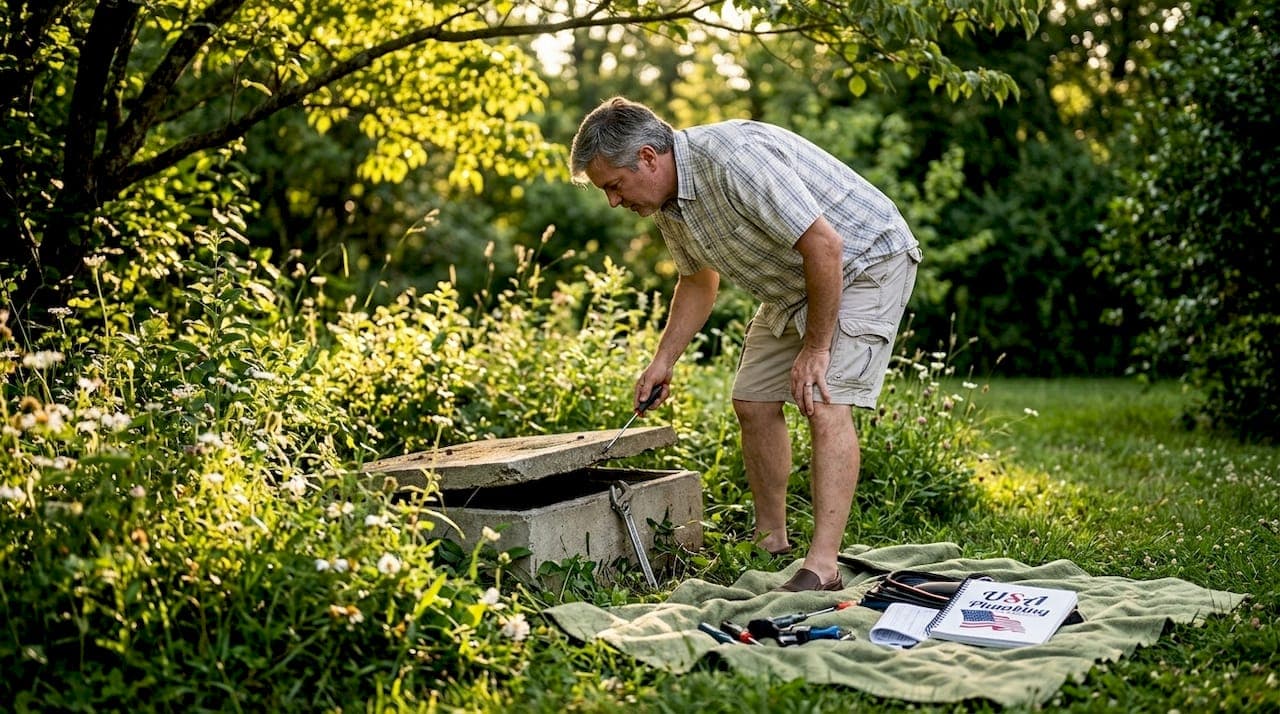
A drain field is defined as the subsurface network of perforated pipes and gravel trenches that receives liquid effluent from a septic tank and disperses it into the soil for final treatment. Also called a leach field, this component is the last stage of a residential septic system. Without a functioning drain field, untreated wastewater has nowhere to go. The U.S. EPA classifies the drain field as essential to septic treatment, noting it removes pathogens and organic matter before effluent reaches groundwater. If you own property on a septic system, understanding your drain field is not optional. It is the difference between a healthy yard and a costly environmental hazard.
What is a drain field and how does it work?
A drain field works by receiving pre-treated liquid effluent from the septic tank and slowly releasing it through perforated pipes buried in gravel-filled trenches. The soil beneath those trenches does the real work. It acts as an active treatment layer, not just a passive container.
Here is the step-by-step flow of wastewater through a complete septic system:
- Wastewater leaves the home through the main sewer line and enters the septic tank.
- Solids settle in the tank. Heavy sludge sinks to the bottom. Lighter scum floats to the top. Liquid effluent stays in the middle.
- Liquid effluent flows out of the tank and into a distribution box, which splits the flow evenly between multiple pipe lines.
- Perforated pipes distribute the effluent along the length of each trench, allowing it to seep into the surrounding gravel.
- The soil filters the effluent through biological, physical, and chemical processes that destroy pathogens and break down organic matter.
The soil profile and groundwater separation strongly influence how well this treatment works. Sandy soils drain fast but may not filter thoroughly. Clay soils filter well but drain too slowly, causing backups. Loamy soil is the ideal middle ground for most residential drain fields.
A distribution box is a critical but often overlooked component. Regular inspection of the distribution box can detect cracks or blockages before they cause uneven loading and premature field failure. Uneven distribution forces one pipe line to handle more effluent than it can absorb, which saturates that section and shortens its lifespan.
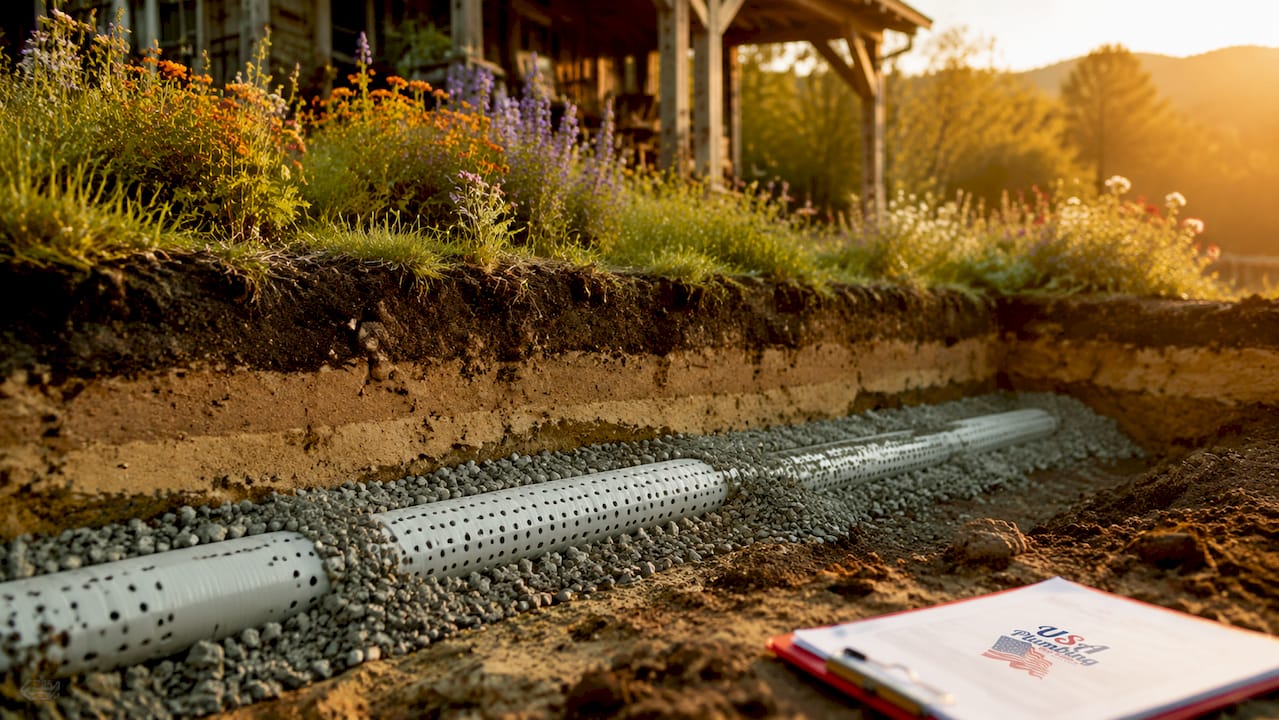
Pro Tip: Mark the location of your distribution box and each pipe trench on a simple yard map. This saves significant time and money if a technician ever needs to inspect or repair the system.
What are the common types and designs of drain fields?
Drain field design is not one-size-fits-all. The right system depends on your soil type, lot size, slope, and local regulations. Drain field designs vary widely, from conventional gravel trenches to evapotranspiration systems, each suited to different site conditions.
| System Type | How It Works | Best For | Key Limitation |
|---|---|---|---|
| Conventional gravel trench | Perforated pipes in gravel-filled trenches disperse effluent into native soil | Standard lots with permeable soil | Requires adequate soil depth and permeability |
| Chamber system | Plastic arch chambers replace gravel, allowing direct soil contact | Sites with variable soil or limited space | Higher upfront material cost |
| Evapotranspiration (ET) system | Effluent evaporates from the surface rather than entering groundwater | Arid climates with low rainfall | Fails in wet climates or during heavy rain |
| Mound system | Drain field is built above grade using imported fill soil | High water tables or shallow bedrock | Requires more land and higher installation cost |
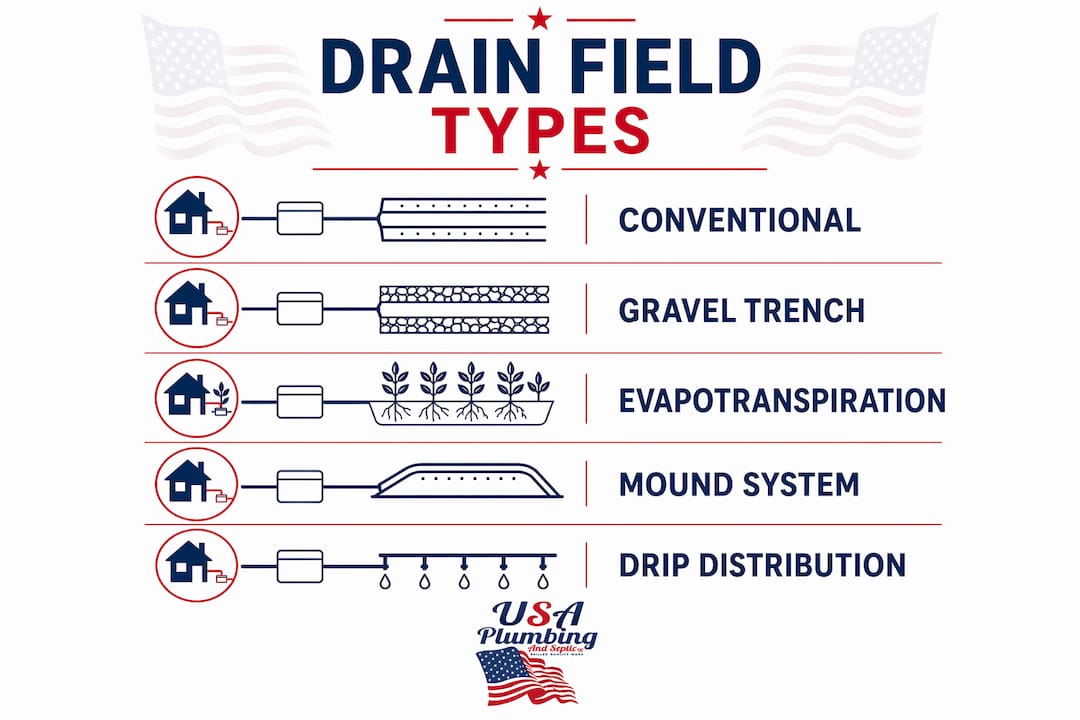
Evapotranspiration systems are particularly relevant in dry regions like Bullhead City and the Mohave Valley. They prevent groundwater contamination entirely by evaporating effluent before it percolates down. That makes them a strong choice in areas with sensitive aquifers, but they cannot handle the effluent load during rainy periods.
Soil testing, specifically a percolation test, is required before any drain field design is finalized. The test measures how fast water moves through your soil. That number drives every sizing and layout decision. Skipping this step is the most common reason new drain fields fail within the first few years.
Pro Tip: Ask your installer for a copy of the percolation test results and the as-built diagram. Store these with your property records. Future buyers, inspectors, and repair technicians will need them.
How should a drain field be maintained and protected?
The single most important maintenance task for your drain field is pumping the septic tank on schedule. Routine tank pumping every 3 to 5 years is the industry standard for protecting drain fields. When the tank is not pumped, sludge overflows into the leach field pipes and clogs the soil. That clogging is often irreversible.
Common causes of drain field damage include:
- Sludge overflow from a neglected septic tank, which coats the soil pores and stops absorption
- Soil compaction from vehicles, heavy equipment, or structures built over the field
- Excess water loading from roof drains, sump pumps, or surface runoff directed toward the field
- Root intrusion from trees and shrubs planted too close to the pipe network
- Flushing harmful materials such as grease, wipes, or chemical cleaners that kill the beneficial soil bacteria
Soil compaction from vehicles crushes drain field pipes and reduces the oxygen exchange that soil microbes need to treat effluent. Even a single pass from a heavy truck can cause irreversible damage. Never park on or drive over your drain field area.
Signs that your leach field may be failing include slow draining toilets, sewage odors, saturated ground over the field, and unusually lush green grass patches above the pipe lines. Lush grass sounds like a good thing, but it signals that partially treated effluent is surfacing rather than filtering properly. Catching these signs early can prevent a full system replacement.
Pro Tip: Keep a maintenance log with pump dates, inspection results, and any repairs. This record protects your property value and helps contractors diagnose problems faster.
What to expect during drain field installation and repair
Drain field installation follows a defined sequence of steps, and skipping any one of them creates problems down the line. Here is what a proper installation looks like:
- Site evaluation. A licensed engineer or inspector assesses the lot size, setback distances from wells and property lines, slope, and existing vegetation.
- Soil testing. A percolation test and soil profile analysis determine absorption rates and the required trench depth and length.
- Permit application. Regulatory permits and zoning rules govern drain field siting and installation to protect public health. No permit means no legal installation.
- Excavation and gravel placement. Trenches are dug to the specified depth and filled with washed gravel before pipes are laid.
- Pipe layout and distribution box installation. Perforated pipes are placed at the correct slope, and the distribution box is set to balance flow between lines.
- Inspection and backfill. A local health or building inspector verifies the installation before the trenches are covered.
Repairs to an existing drain field typically involve jetting clogged pipes, replacing a cracked distribution box, or in severe cases, installing a new field section. Full replacement is necessary when sludge bypass from a poorly pumped tank has caused irreversible soil clogging. That repair can cost several times more than routine pumping would have over the same period.
When choosing a contractor, verify their license, ask for proof of insurance, and confirm they pull the required permits. A contractor who skips permits is leaving you exposed to fines and liability. Professional installation and inspections are the foundation of a system that lasts for decades. For guidance on residential drain cleaning and related maintenance, consulting a licensed professional before problems escalate is always the right call.
Key Takeaways
A drain field is the active soil treatment zone of your septic system, and its longevity depends entirely on consistent tank maintenance, proper design, and physical protection from compaction and overloading.
| Point | Details |
|---|---|
| Drain field definition | A subsurface network of pipes and gravel that disperses and treats septic tank effluent in the soil. |
| Soil is the treatment engine | Biological, physical, and chemical soil processes remove pathogens before effluent reaches groundwater. |
| Pump the tank every 3–5 years | Skipping tank pumping causes sludge overflow that permanently clogs the drain field. |
| Never drive over the field | Vehicle weight compacts soil, crushes pipes, and kills the microbial activity needed for treatment. |
| Know the failure signs | Slow drains, sewage odors, wet ground, and lush grass patches signal a failing leach field. |
What years of septic work taught me about drain fields
Most homeowners treat the drain field like it is invisible. Out of sight, out of mind. That mindset is exactly what leads to a $15,000 replacement that could have been avoided with a $400 pump-out.
The biggest misunderstanding I see is the belief that tank pumping alone preserves the system. Tank pumping matters, but the drain field has its own vulnerabilities. Soil biology, hydraulic load, and physical protection all play equal roles. A homeowner who pumps religiously but parks a truck on the field every weekend is still heading toward failure.
The second mistake is waiting for obvious symptoms. By the time sewage odors appear or the ground feels spongy, the damage is usually deep. The well-designed drain field integrates soil science and hydraulics to maintain treatment depth. When that balance is disrupted, recovery is difficult and expensive.
My practical advice: walk your drain field area twice a year. Look for wet spots, unusual odors, or changes in grass color. Check that nothing has been planted or built over it. Keep your pump schedule on the calendar. These are five-minute habits that protect a system worth thousands of dollars. And when something looks wrong, call a licensed professional before it becomes an emergency.
— JOHN
Usaplumbingseptic is here for your drain field needs
Drain field problems rarely fix themselves. At Usaplumbingseptic, we provide professional septic inspections, tank pumping, drain field evaluations, and repair services across Bullhead City, Fort Mohave, Mohave Valley, and Laughlin. Our team is available 24/7 for emergency calls and routine maintenance alike.

Whether you need a scheduled pump-out to protect your leach field or a full system inspection before buying a property, we have you covered. Check out our guide to keeping your septic system healthy and learn what signs to watch for before small issues turn into major repairs. For local homeowners, our Mohave County plumbing essentials page covers everything you need to know about maintaining your system year-round. Call us today or book online.
FAQ
What is a leach field vs. a drain field?
A leach field and a drain field are the same thing. Both terms describe the subsurface pipe and gravel system that disperses and treats liquid effluent from a septic tank into the surrounding soil.
How long does a drain field last?
A properly installed and maintained drain field typically lasts 20 to 30 years. Regular septic tank pumping every 3 to 5 years is the single most important factor in reaching that lifespan.
How do I know if my drain field is failing?
Common signs of drain field failure include slow-draining toilets, sewage odors indoors or outdoors, soggy or spongy ground above the field, and unusually green grass patches over the pipe lines. Early detection prevents full system replacement.
Can I plant a garden over my drain field?
Shallow-rooted grass is the only recommended cover for a drain field. Deep-rooted plants, shrubs, and trees can send roots into the pipes and cause blockages or structural damage to the system.
Do drain fields require permits to install or repair?
Yes. Regulatory permits and zoning rules govern all drain field installation and repair work. Always hire a licensed contractor who pulls the required permits to protect your property and comply with local health codes.