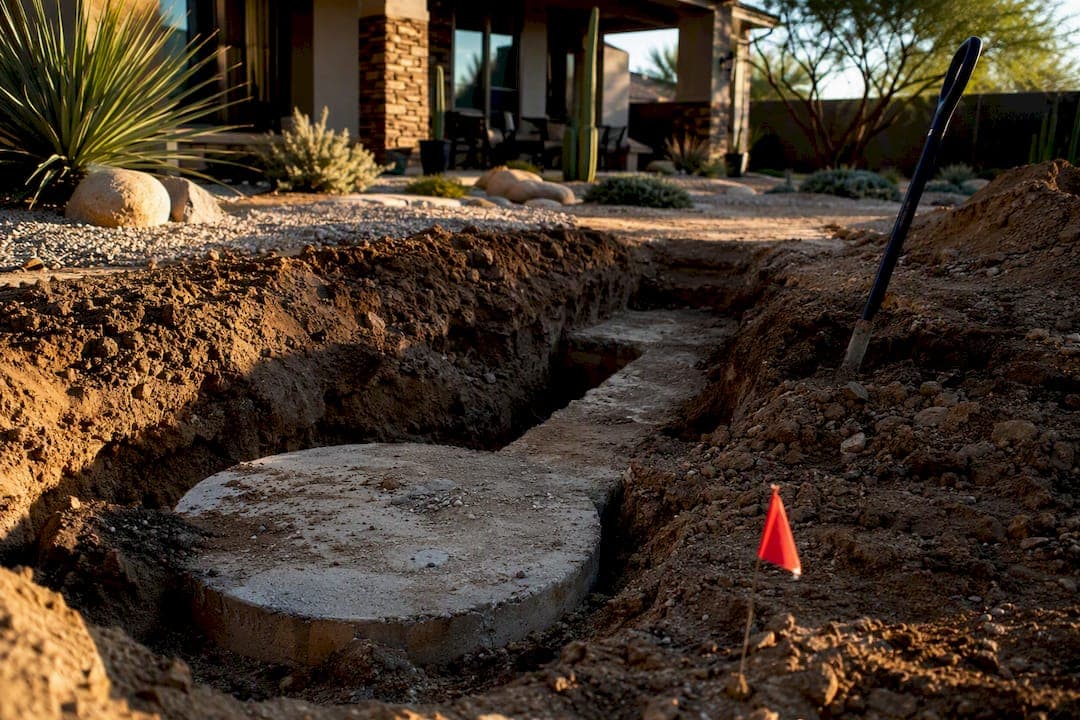
Tank-only replacement typically runs $3,000 to $7,000, drainfield-only work costs $5,000 to $15,000, and a full system replacement lands between $8,000 and $20,000 or more depending on soil conditions and system type. Soil percolation and drainfield condition drive most of that spread. Before anything else, schedule a perc test and collect three written contractor quotes.
TL;DR:
- A septic tank replacement costs between $3,000 and $7,000 if only the tank needs replacing and the drainfield is in good condition.
- Drainfield replacement alone can range from $5,000 to $15,000, depending on soil type, trench length, and site accessibility.
- Full system replacements, including tank, drainfield, and site prep, typically cost between $8,000 and $20,000 or more, influenced by soil conditions and system complexity.
- Key variables affecting costs include soil percolation rate, system type (gravity, chamber, mound, aerobic), site access, and regional permit requirements.
- Budgeting should account for permits, site evaluation, tank abandonment, and potential surprises from undocumented underground components.
Table of Contents
- What Does Septic Tank Replacement Cost by Home Size?
- Why Do Septic Replacement Costs Vary So Much?
- What's the Real Line-Item Breakdown for a Septic Replacement?
- Which Cost Scenario Matches Your Situation?
- How Long Does Permitting and Testing Take?
- How Can You Budget and Save on Septic Replacement?
- What Should You Ask Contractors Before Signing?
- What a Local Contractor Sees on Most Septic Jobs
- Get an Accurate Septic Replacement Quote
- Where to Verify These Estimates
- Sources
- FAQ
What Does Septic Tank Replacement Cost by Home Size?
Your bedroom count determines tank size, and tank size sets the floor for your budget. A 3-bedroom home typically needs a 1,000-gallon tank, while larger homes with 4 or more bedrooms often require 1,250 to 1,500 gallons. Here's how the numbers break down by job type:
- Tank-only replacement: $3,000 to $7,000, and this applies when your drainfield tests healthy and only the tank has failed or corroded.
- Drainfield-only replacement: $5,000 to $15,000, depending on soil type and how much trench footage the county requires.
- Full system replacement: $8,000 to $20,000 or more, covering tank, drainfield, excavation, and permitting together.
- Tank price alone: $500 to $2,500 for a 500 to 1,500 gallon tank, before installation labor.
These ranges assume a standard gravity-fed system on reasonably accessible ground. Steep lots, rocky soil, or a system upgrade required by your county will push you toward the higher end.
Why Do Septic Replacement Costs Vary So Much?
Five variables explain almost every price difference you'll see between quotes, and understanding them helps you tell a legitimate cost from padding.
- Perc test results: the soil's percolation rate determines what type of system your county permits and how large the drainfield needs to be. A slow-draining lot forces a bigger, more expensive field.
- System type: conventional gravity systems cost the least; chamber systems cost slightly more; mound and aerobic treatment units cost thousands more because they add pumps, blowers, and engineering oversight.
- Site access and old-tank abandonment: a backyard buried under a deck or blocked by mature trees means more excavation hours, and the old tank must be pumped and decommissioned before the new one goes in.
- Regional labor and permit rules: some counties require licensed engineers to design the system, which adds design fees on top of construction.
- Material choice: concrete tanks last longest but weigh more to install; plastic and fiberglass tanks cost less and install faster but may need more careful backfilling.
What's the Real Line-Item Breakdown for a Septic Replacement?
A written quote should separate costs into distinct categories, not bundle everything into one number. Vague, single-line quotes are the fastest way to get surprised by a change order halfway through the job.
| Cost item | Typical range | Notes |
|---|---|---|
| Tank (materials only) | $500–$2,500 | Varies by size and material |
| Tank-only installed | $3,000–$7,000 | Includes labor, backfill, hookup |
| Drainfield replacement | $5,000–$15,000 | Largest variable cost on most jobs |
| Excavation & site prep | $1,500–$3,000 | Depends on access and soil |
| Perc test | $300–$1,500 | Required before design |
| Land survey | $330–$900 | Confirms setbacks and boundaries |
| Permit fees | $250–$1,500 | Set by county, varies widely |
| Tank abandonment | $400–$900 | Pumping and filling the old tank |
| Risers & restoration | $250–$900 | Lawn repair and access improvements |
The drainfield and excavation together usually make up the biggest single chunk of a full replacement quote, often more than the tank and permits combined. If a quote seems suspiciously low, check whether it actually includes drainfield work or just the tank swap.
Which Cost Scenario Matches Your Situation?
Most homeowners fall into one of four scenarios. Matching yours to a sample budget gives you a realistic number before a contractor ever walks your property.
- Tank-only replacement. Assumes a passing drainfield inspection, a 1,000-gallon concrete tank, and easy backyard access. Sample budget: $4,200, covering tank, labor, and permit.
- Drainfield-only replacement. Applies when the tank is sound but the field has failed. Reuse is sometimes possible if only part of the field failed; a full new field is required if soil has become saturated with effluent. Sample budget: $9,500.
- Full replacement, standard site. Covers tank, drainfield, excavation, perc test, and permit on a typical suburban lot. Sample budget: $13,000.
- Engineered system, difficult site. A mound or aerobic system adds pumps, alarms, and possibly a maintenance contract with the manufacturer. Sample budget: $19,500 to $24,000.
How Long Does Permitting and Testing Take?
Testing and paperwork often add more time to a project than the actual excavation does, and skipping a step here is what causes county rejections later.
- Perc test: $300 to $1,500 and usually takes a few days to schedule and complete.
- Land survey and engineering design: $330 to $900 for a survey; engineered systems add design fees on top.
- Permit fees: $250 to $1,500, with wide swings depending on your county's process.
- Abandonment obligations: most jurisdictions require the old tank pumped and filled before a new system goes in, adding $400 to $900.
- Overall timeline: expect 4 to 8 weeks from permit application to a completed installation, longer if your county has a backlog.
How Can You Budget and Save on Septic Replacement?
Financing a septic replacement catches many homeowners off guard because homeowner insurance rarely covers it — failure is usually treated as wear and tear, not a covered peril. A HELOC or personal loan is the common route, and some counties or state agencies offer low-interest grants for failing systems near waterways. If you're selling, a failed system discovered during inspection can delay closing until it's replaced, so budget for it before listing.
- Schedule installation in the off-season (late fall or winter in most climates) for better contractor availability and pricing.
- Get three written, itemized quotes before signing anything.
- Ask whether you can supply your own tank to shave a few hundred dollars off materials markup.
- Treat any quote 30% below the others as a red flag. Missing scope, not savings, is usually the reason.
Pro Tip: Pumping your tank every 3 to 5 years costs roughly $300 to $600 and is the single best investment against a $10,000 to $25,000 drainfield failure. If you've never scheduled routine pumping, that's the first call to make, not the last.
What Should You Ask Contractors Before Signing?
Comparing quotes only works if every contractor is bidding on the exact same scope of work. Use this checklist during every estimate call:
- Does the quote include tank abandonment and decommissioning, or is that billed separately?
- Are risers, restoration, and lawn repair included in the price?
- What's the warranty period, and does it cover both parts and labor?
- Can you provide your license number, insurance certificate, and county permit reference?
- Is the permit fee included in the total, or will I pay the county directly?
- What happens if the perc test reveals a different system type is required?
Keep copies of every quote, permit, and inspection report. If you're selling the property later, buyers and their lenders will ask for this paperwork.
What a Local Contractor Sees on Most Septic Jobs
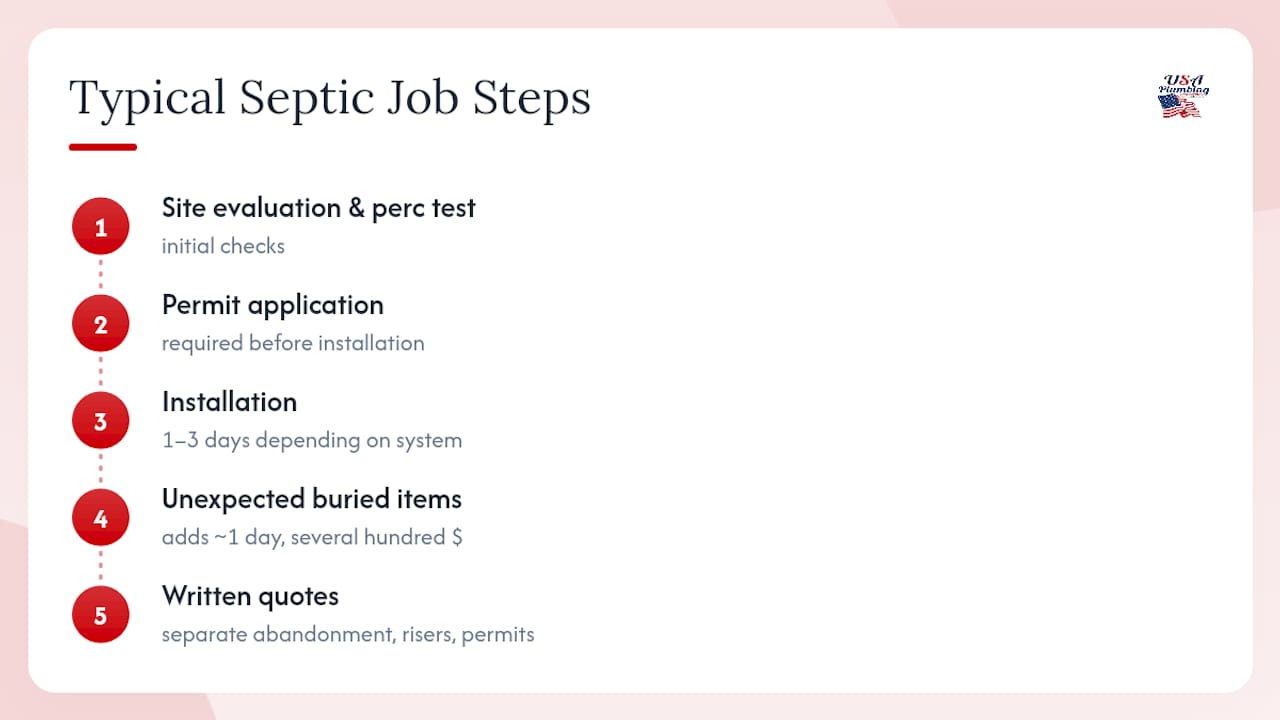
Most surprises on a septic replacement come from what a homeowner didn't know was buried, literally. Old cast iron pipe, an undocumented second tank from a previous addition, or a drainfield that was never permitted in the first place. Any of these can add a day of extra excavation and several hundred dollars before the new system ever goes in.
On a typical job, expect a site evaluation and perc test first, then a permit application, then installation over one to three days depending on system type, facilitated by communication tools for service providers to coordinate scheduling and rapid responses. Written quotes should separate abandonment, risers, and permit handling into their own line items, because those are exactly the costs aggregator estimates tend to leave out.
— JOHN
Get an Accurate Septic Replacement Quote
Skip the guesswork of matching your property to a national average. Onsite evaluations, permit coordination, and both tank-only and full system replacement are offered with every quote broken into the same line items covered above instead of one lump number.

To get a fast, accurate estimate, send your bedroom count, a few photos of your tank access area and yard, and any known issues (slow drains, standing water, odors). Your written quote will include the full line-item breakdown, a realistic timeline, and confirmation that permit handling and old-tank abandonment are already built into the price. If a well pump or filtration system is part of the same property, well pump maintenance and water softening service can often be scheduled in the same visit. Request your written septic quote today and get a number you can actually plan around.
Where to Verify These Estimates

Cross-check your quote against the EPA's wastewater guidance for the regulatory reasoning behind setbacks and permits, and run a county-specific perc and permit search before finalizing your budget. Local rules vary enough that a national range is a starting point, not a final answer.
Sources
- What does it cost to install a septic system? | Angi
- Septic Tank Replacement Cost and Ways to Save - NerdWallet
- EPA - Sources and solutions: wastewater
FAQ
How Much Does It Cost to Replace an Existing Septic Tank?
Tank-only replacement typically costs $3,000 to $7,000 installed, while a full system replacement including the drainfield runs $8,000 to $20,000 or more depending on soil and system type.
How Long Do Septic Tanks Usually Last?
A properly maintained septic tank typically lasts about 20 years or more, with concrete tanks on the longer end and lifespan heavily dependent on pumping every 3 to 5 years.
Can You Replace Just a Septic Tank?
Yes, if the drainfield passes inspection and only the tank has failed, tank-only replacement is possible and typically costs $3,000 to $7,000, well below a full system swap.
How Much Is a Septic Tank for a 2,000 Square Foot House?
A home with 3 to 4 bedrooms usually needs a 1,000 to 1,250 gallon tank, with installed tank-only costs falling in the $3,000 to $7,000 range depending on material and access.