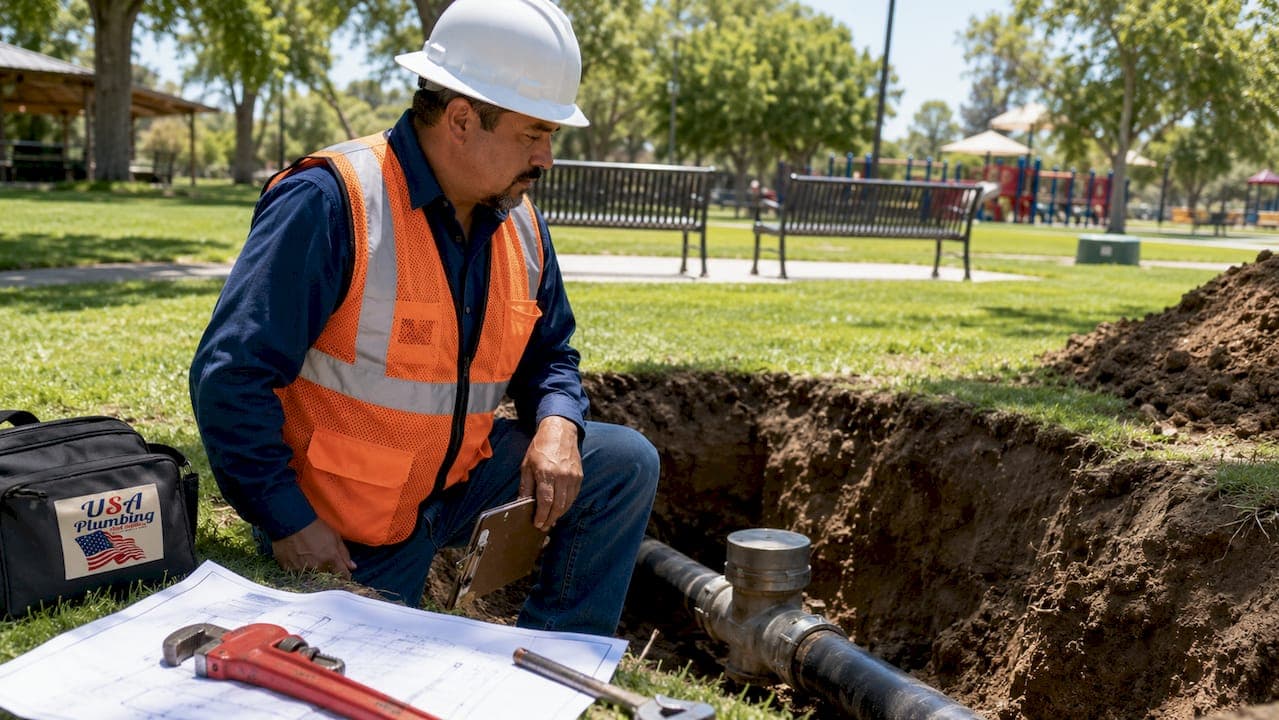
A public sewer connection is the physical and legal link between your property's private plumbing and the city's municipally owned sewer system, enabling safe wastewater disposal and centralized treatment. This connection point is where your responsibility ends and the municipality's begins. Understanding how it works, what it costs to install, and what you must maintain protects you from fines, failed inspections, and expensive emergency repairs. This guide covers the public sewer system explained from infrastructure to permits, so you can make informed decisions as a homeowner or property developer.
What is a public sewer connection and how is it defined?
A public sewer system is a municipally owned network of pipes, lift stations, and treatment facilities that collects and transports wastewater from multiple properties to a centralized treatment plant. The Clean Water Act (33 U.S.C. § 1251 et seq.) governs these systems at the federal level, setting sanitation and environmental protection standards that every municipality must meet. Approximately 860 U.S. communities use combined sewer systems, while 7,250 have permitted municipal separate storm sewer systems. That scale means the rules and infrastructure vary significantly depending on where your property sits.
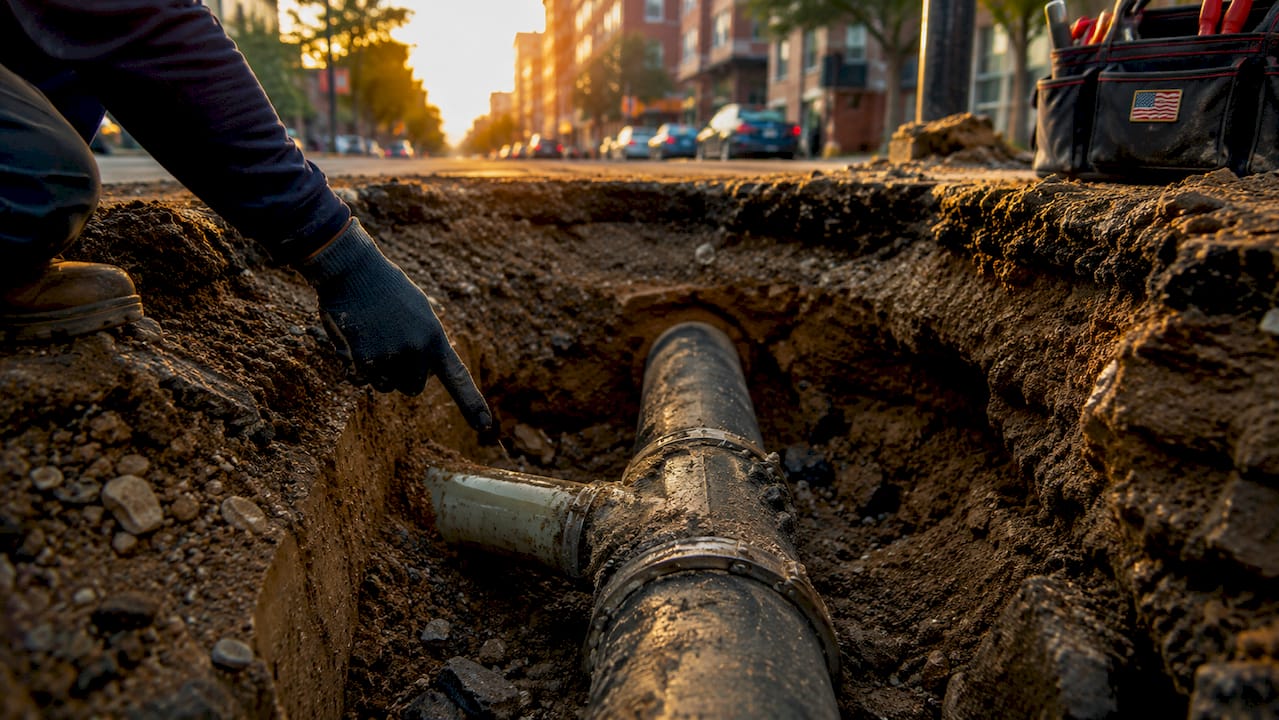
The connection itself is the point where your private lateral pipe meets the public sewer main buried under the street or easement. Your private lateral is your property. The public main belongs to the city or county. That boundary line determines who pays when something goes wrong, which is why knowing exactly where it falls matters before you buy, build, or renovate.
How does a public sewer system work at the connection point?
Wastewater leaves your home through your private lateral, a pipe that runs from your foundation to the public sewer main. From there, the public system takes over. Here is how the flow works from connection point to treatment plant:
- Private lateral: Runs from your home to the property line or the public main tap point. You own and maintain this section entirely.
- Public sewer main: The larger pipe under the street that collects flow from multiple laterals. The municipality owns and maintains this.
- Gravity flow: Most sewer systems rely on gravity to move wastewater downhill toward the treatment plant.
- Lift stations: In flat or low-lying terrain, pump stations push wastewater uphill through force mains when gravity alone cannot do the job.
- Treatment plant: Wastewater arrives here for processing before discharge into waterways.
Treatment itself happens in stages. Primary sedimentation removes 50–70% of suspended solids. Secondary biological treatment breaks down organic matter using bacteria. Tertiary filtration adds nutrient removal and disinfection through chlorination or UV light. Each stage reduces the environmental impact of the discharge.
Pro Tip: If your property sits in a flat area near Bullhead City or Mohave Valley, ask your municipality whether a lift station serves your street. Lift station failures can back wastewater into your lateral fast, so knowing your system type helps you respond quickly.
What are the benefits of connecting to a public sewer?
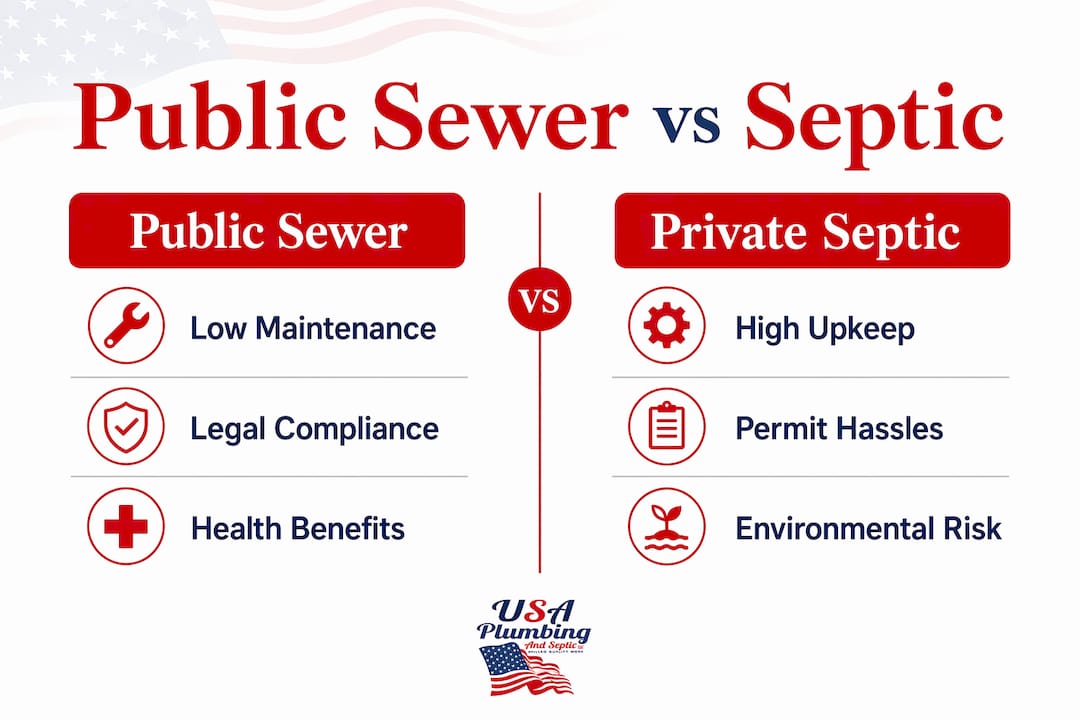
Public sewer connections offer clear advantages over private septic systems across health, legal compliance, and long-term cost.
| Category | Public Sewer | Private Septic |
|---|---|---|
| Maintenance burden | Municipality handles the main; you maintain the lateral only | Owner maintains the entire system including tank and drain field |
| Treatment quality | Centralized, multi-stage treatment under federal NPDES permits | On-site treatment with variable effectiveness |
| Legal compliance | Required by law within 200–500 feet of an available main | Permitted only where public sewer is unavailable |
| Environmental risk | Regulated discharge into waterways | Drain field failures can contaminate groundwater |
| Property value | Generally positive for buyers and appraisers | Can be a concern during home inspections |
The health and environmental benefits are the strongest argument for connection. Many jurisdictions legally mandate connection to public sewers when a main becomes available within 200–500 feet of your property. Local health or public works departments enforce these mandates specifically to prevent septic system failures that contaminate soil and groundwater.
The maintenance reduction is real and significant. With a septic system, you schedule pumping every 3–5 years, monitor drain field health, and absorb full repair costs when the system fails. With a public sewer connection, your ongoing responsibility shrinks to the lateral pipe between your home and the main. That is a meaningful reduction in both time and financial exposure.
What are the public sewer connection requirements and permit process?
Connecting to a public sewer is not a weekend project. It is a formal regulatory process with specific steps that vary by municipality but follow a consistent structure.
-
Confirm availability. A public sewer main is generally considered available for connection if it sits within 200–500 feet of your property, depending on local code limits on line extensions and manhole depths. Contact your local public works or utilities department to confirm.
-
Submit a permit application. The application requires site plans showing your property layout, proposed pipe routing, pipe sizing calculations, and proof of a licensed contractor. No permit means no legal connection.
-
Hire a licensed contractor. Only municipal crews or city-approved licensed contractors may physically tap the public sewer main. Unauthorized connections are severe code violations that result in fines and mandatory removal at your expense.
-
Schedule inspections. Most municipalities require an inspection of the lateral before backfilling the trench. The inspector confirms pipe grade, material, and connection integrity.
-
Abandon or decommission your septic system. If you are switching from septic to public sewer, local code typically requires proper septic tank abandonment, which means pumping, crushing, or filling the tank under permit.
-
Pay connection fees. Most municipalities charge a one-time connection fee, sometimes called a tap fee, separate from ongoing sewer service charges. Fee amounts vary widely by jurisdiction and are not publicly standardized.
Pro Tip: Pull your local code before hiring anyone. Some municipalities cap how far a private lateral can extend from the main, and exceeding that limit requires a variance or a different connection strategy entirely. Usaplumbingseptic handles permit research for homeowners in Bullhead City, Fort Mohave, and Mohave Valley so you do not miss a step.
What homeowner responsibilities keep a public sewer connection healthy?
Your responsibility does not end at the connection point. Property owners are fully liable for the private lateral pipe from their home to the public main, including excavation and repair costs if a blockage or collapse occurs. That liability is often a surprise to new homeowners who assume the city handles everything underground.
The most common causes of lateral failures include:
- Grease buildup: Cooking grease cools and solidifies inside pipes, narrowing the flow path until a full blockage forms.
- Flushed wipes: Even products labeled "flushable" do not break down in sewer lines and create dense clogs.
- Tree root intrusion: Roots seek moisture and can crack or fully block older clay or cast iron laterals.
- Pipe age and material: Older homes may have clay or Orangeburg pipe laterals that deteriorate and collapse without warning.
- Non-biodegradable materials: Flushing non-biodegradable items causes network-wide clogs that affect your neighbors and trigger costly municipal repairs.
The best defense is a scheduled sewer scope inspection every few years, especially in older homes. A camera run through the lateral shows root intrusion, cracks, and buildup before they become emergencies. Knowing your cleanout location is equally important. A cleanout gives plumbers direct access to the lateral without digging, which cuts both repair time and cost significantly.
When a problem sits beyond your lateral and inside the public main, contact your municipality's public works department immediately. Document the issue with photos and timestamps. If sewage backs up into your home from a public main failure, the municipality may bear liability, but only if you can prove the blockage originated on their side of the connection.
Key Takeaways
A public sewer connection is the regulated link between your private plumbing and the city's sewer main, and understanding where your responsibility ends determines how you protect your property and budget.
| Point | Details |
|---|---|
| Ownership boundary | Your private lateral is your liability; the public main belongs to the municipality. |
| Legal mandate | Connection is often required by law when a public main sits within 200–500 feet of your property. |
| Permit process | Site plans, pipe sizing, and a licensed contractor are required before any tap connection is made. |
| Maintenance priority | Schedule lateral inspections regularly to catch root intrusion and buildup before they cause failures. |
| Treatment quality | Public systems use multi-stage treatment under federal NPDES permits, providing stronger environmental protection than most septic systems. |
What I have learned from years of sewer connection work
Most homeowners I talk to assume the city owns everything underground near their property. That assumption is expensive when it is wrong. The private lateral is yours from the foundation wall to the tap point at the main, and that pipe can run 50 feet or more through your yard. When it fails, you pay for the camera inspection, the excavation, the pipe replacement, and the permit. The city does not contribute a dollar.
The second misconception I see constantly is that connection is optional. If a public main runs within the mandated distance from your property, most jurisdictions will require you to connect and abandon your septic system on a set timeline. Ignoring that notice does not make the requirement go away. It adds fines.
What actually protects homeowners is treating the private lateral like any other major home system. You service your HVAC. You inspect your roof. Your sewer lateral deserves the same attention. A camera inspection every few years costs a fraction of emergency excavation. Choosing a licensed contractor who knows your local code saves you from permit rejections and unauthorized tap violations that cost far more to fix than to prevent. If you are buying a property, insist on a sewer scope before closing. That single step has saved buyers from inheriting collapsed laterals that would have cost thousands to repair.
— JOHN
Usaplumbingseptic is ready to handle your sewer connection
Connecting to a public sewer involves permits, licensed contractors, and local code details that vary across Bullhead City, Fort Mohave, Mohave Valley, and Laughlin. Getting one step wrong can mean failed inspections, fines, or a connection that has to be redone from scratch.
Usaplumbingseptic provides professional sewer connection services, lateral inspections, and permit support for residential and commercial properties across Mohave County. Our licensed plumbers know the local requirements and go the extra mile to get your connection done right the first time. Whether you need a new tap, a lateral repair, or a full sewer line solution, we are available 24/7. Explore our Mohave County plumbing guide to see the full range of services we offer. Call us today.
FAQ
What is a public sewer connection in simple terms?
A public sewer connection is the point where your home's private drain pipe links to the city-owned sewer main, allowing wastewater to flow to a centralized treatment plant. The municipality owns and maintains the main; you own and maintain the pipe on your side.
How does public sewer work compared to a septic system?
Public sewer systems use gravity and pump stations to carry wastewater to a treatment plant, where it goes through primary, secondary, and tertiary treatment stages before discharge. Septic systems treat waste on-site in a tank and drain field, with no centralized oversight or multi-stage treatment.
What are the public sewer connection requirements for homeowners?
Most municipalities require a permit application with site plans and pipe sizing, a licensed contractor for the tap, and a formal inspection before the trench is backfilled. Connection is often legally required when a public main sits within 200–500 feet of your property.
Who is responsible for maintaining the sewer lateral?
The property owner is responsible for the private lateral from the home to the public main tap point, including all repair and excavation costs if the pipe fails or becomes blocked.
Can I connect to a public sewer myself?
No. Only municipal crews or city-approved licensed contractors may tap the public sewer main. Unauthorized connections are code violations that result in fines and mandatory removal at the property owner's expense.