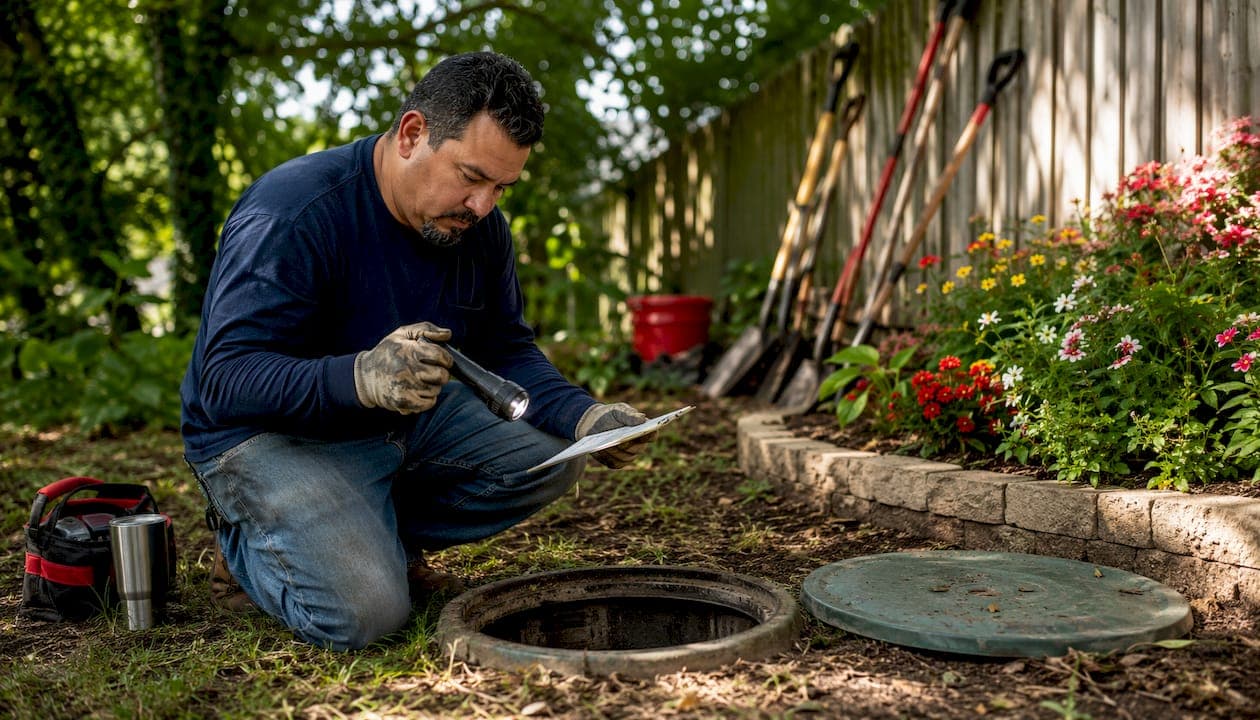
A septic system is a private, underground wastewater treatment system that collects, treats, and disperses household sewage on your property. If your home sits outside a municipal sewer service area, this is how your wastewater gets handled. Over 20% of U.S. households rely on these systems, making them one of the most common forms of residential wastewater treatment in the country.
Here is what a septic system does for your home:
- Collects all wastewater from toilets, sinks, showers, and laundry
- Separates solids, grease, and liquid inside a buried tank
- Moves partially treated liquid out to a drainfield
- Uses natural soil processes to complete treatment before water reaches groundwater
- Protects public health and local water quality when properly maintained
Understanding how your system works is the first step toward keeping it running for decades.
Table of Contents
- How does a septic system work from start to finish?
- What are the main septic system components and what do they do?
- How long do septic systems last, and what maintenance do they need?
- What do experts say that most homeowners get wrong about septic systems?
- Need professional septic help in the Bullhead City area?
- Key Takeaways
- FAQ
How does a septic system work from start to finish?
Every flush and every drain in your home feeds into one pipe that leads to your septic tank. From there, the process is straightforward but relies on both engineering and nature working together.
Here is the step-by-step flow:
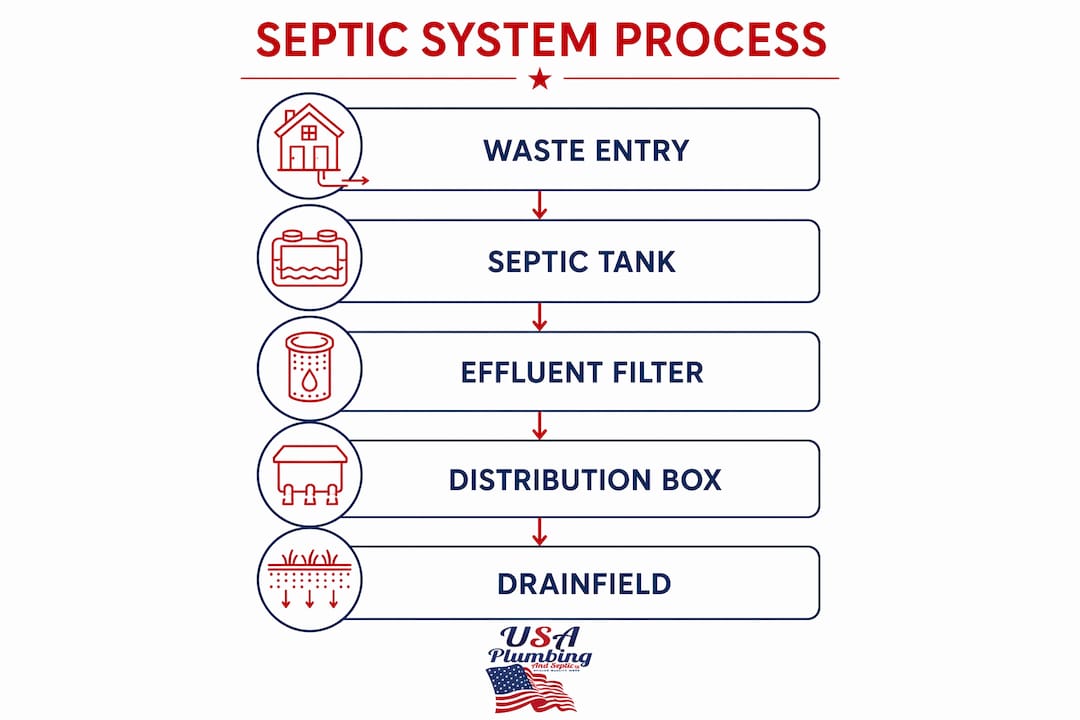
- Wastewater enters the tank through the main sewer line from your home
- Solids sink to the bottom, forming a layer called sludge
- Grease and light materials float to the top as a scum layer
- Liquid effluent sits in the middle and flows out through a filtered outlet pipe
- The distribution box receives that effluent and spreads it evenly across the drainfield
- Perforated pipes in the drainfield allow effluent to seep into the surrounding soil
- Soil microorganisms break down remaining pathogens and contaminants
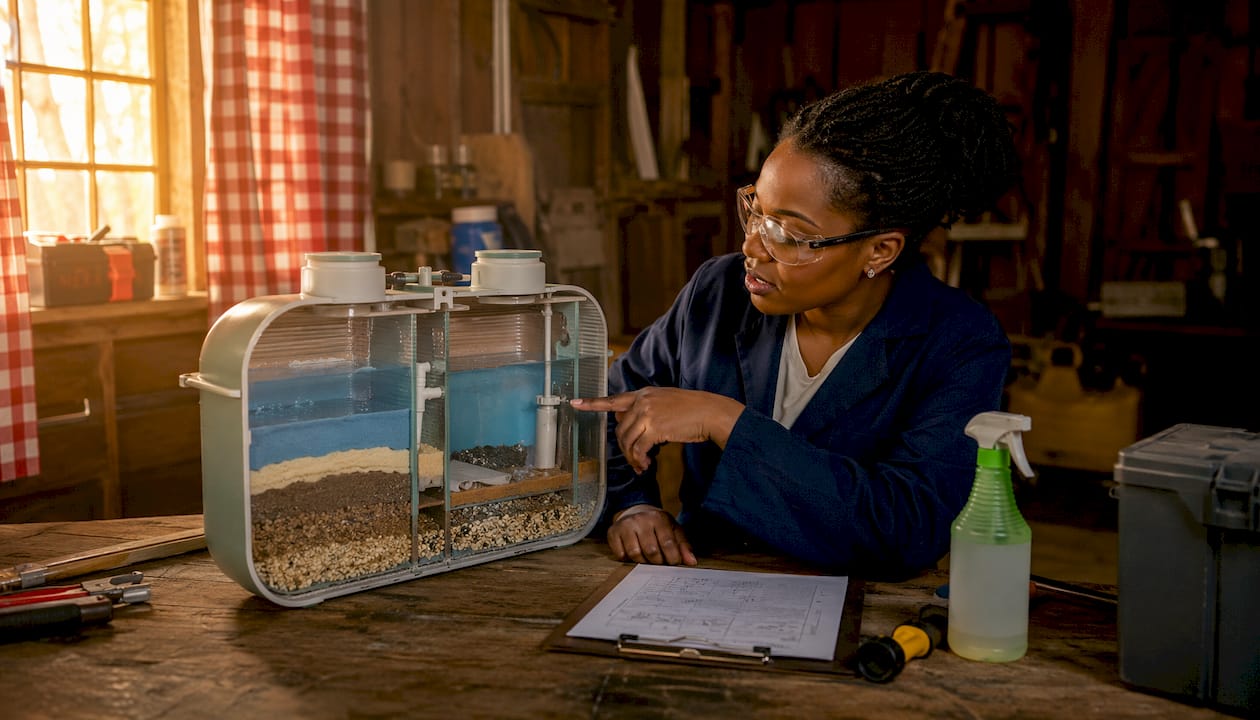
The septic tank's job is separation and partial digestion, not full treatment. Anaerobic bacteria inside the tank break down organic matter, but the majority of actual treatment happens in the drainfield soil. That distinction is one most homeowners miss.
Pro Tip: Ask your installer or inspector whether your tank has an effluent filter on the outlet pipe. Modern tanks include them to keep small solids out of the drainfield, and they should be cleaned during every pumping.
What are the main septic system components and what do they do?
A conventional septic system has four core components, each with a specific job. Knowing what each one does helps you catch problems early and talk confidently with your service provider.
-
House sewer line: The main drain pipe that carries all wastewater from your home's fixtures to the septic tank. Every toilet, sink, shower, and washing machine connects to this line.
-
Septic tank: A buried, watertight container made of concrete, fiberglass, or polyethylene. It holds wastewater long enough for solids to settle and scum to rise, while anaerobic bacteria begin breaking down organic material. Compartments and a T-shaped outlet keep sludge and scum from escaping into the drainfield.
-
Distribution box (D-box): A small concrete or plastic box positioned between the tank and the drainfield. Its only job is to split effluent evenly across all drainfield lines. Uneven distribution causes one section of the drainfield to overload while the rest sits idle, which shortens the system's life.
-
Drainfield (leach field): A network of perforated pipes laid in gravel-filled trenches beneath the soil. Effluent seeps out through the pipe perforations, filters through the gravel, and enters the native soil where microbes complete the treatment process. The drainfield is where most of the biological work actually happens.
The septic tank and the full system are not the same thing. The tank is just one component. When people say their "septic failed," the problem is usually in the drainfield, not the tank itself.
Pro Tip: Have your service technician check the D-box for cracks or uneven flow during every inspection. A cracked D-box is inexpensive to replace and prevents far costlier drainfield damage.
How long do septic systems last, and what maintenance do they need?
A well-maintained conventional system lasts 20–30 years, but that range depends heavily on soil conditions, household usage, and how consistently the system gets serviced. Neglect a system for a few years and you can cut that lifespan in half.
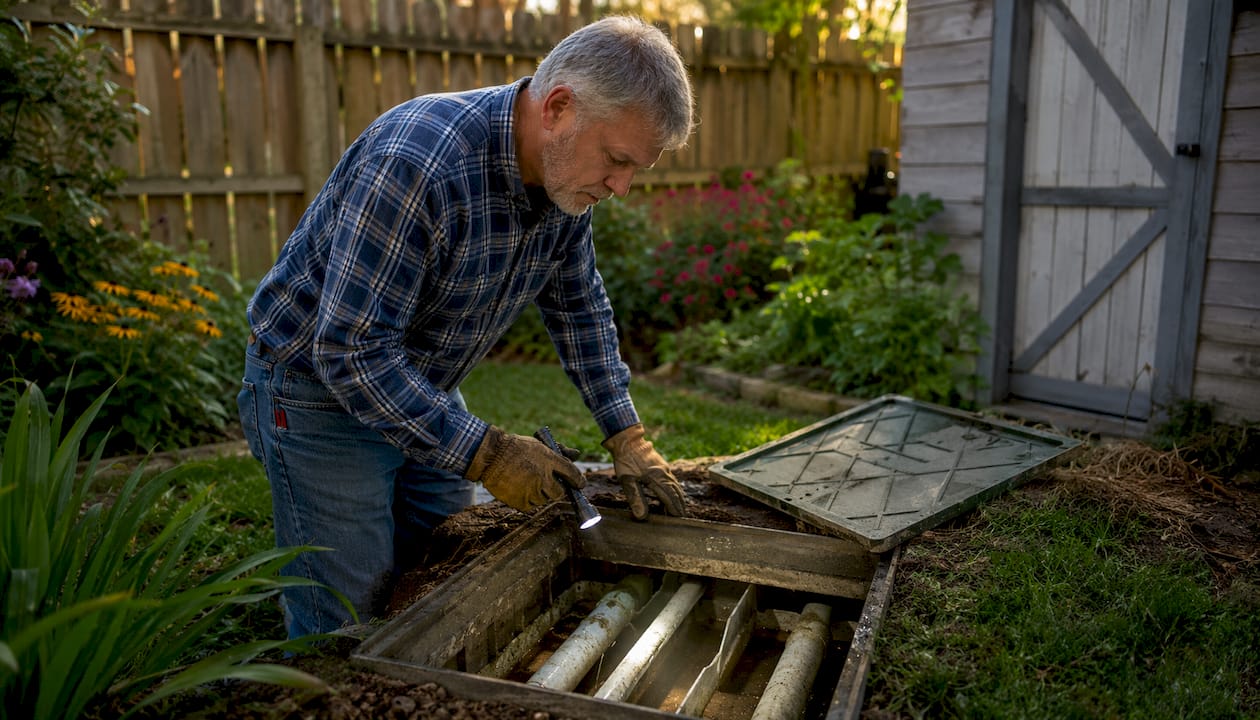
The EPA recommends having your tank inspected every 1–3 years and pumped every 3–5 years, based on tank size and household size. A family of four with a standard tank will typically need pumping closer to the three-year mark. A single occupant in the same home might stretch to five years.
Watch for these warning signs that your system needs attention:
- Slow drains throughout the house, not just one fixture
- Gurgling sounds from toilets or drains
- Sewage odors inside the home or near the tank and drainfield
- Wet, spongy ground or unusually green grass over the drainfield
- Sewage backing up into sinks or tubs
Protecting the drainfield from physical damage is just as important as pumping the tank. Driving vehicles over it, planting trees nearby, or directing roof runoff onto it can all cause failures. Homeowners often underestimate how much damage deep-rooted plants and compaction can do to drainfield pipes and soil structure.
Pro Tip: Installing risers on your septic tank lids creates permanent above-ground access points. Your technician can inspect and pump the tank without digging each time, which saves money on every service visit.
What do experts say that most homeowners get wrong about septic systems?
A few widespread misconceptions lead homeowners to make decisions that quietly damage their systems over time. Here is what the experts consistently flag:
-
The tank does not fully treat wastewater. The septic tank is primarily a separation unit. Anaerobic digestion inside the tank breaks down some solids, but the effluent leaving the tank still contains pathogens and contaminants. The soil in the drainfield does the heavy lifting.
-
Chemical additives are unnecessary and often harmful. Products marketed as septic tank "boosters" or bacterial additives are generally not needed. A healthy tank already contains the bacteria it needs. Chemical additives can disrupt that natural bacterial balance and cause more harm than good.
-
Nutrients are not fully removed, even by well-maintained systems. Septic systems are designed to manage pathogens effectively, but nitrogen and phosphorus are not fully captured. According to Clemson Extension, these nutrients can still affect groundwater quality even when a system is functioning correctly. Homes near wells or water bodies should be especially aware of this.
-
The drainfield is the most vulnerable part of the system. Overloading it with too much water at once, whether from a large gathering or a leaking fixture, can flood the soil and cause sewage to surface or back up into the home. Space out laundry loads, fix leaks promptly, and avoid directing any extra water toward the drainfield area.
-
Septic systems and public sewers are not interchangeable options. If you are weighing your options, a public sewer connection transfers wastewater treatment responsibility off your property entirely, while a septic system keeps it on-site. Each has real trade-offs in cost, maintenance responsibility, and environmental impact.
Need professional septic help in the Bullhead City area?
At Usaplumbingseptic, we handle septic inspections, pumping, repairs, and full installations across Bullhead City, Fort Mohave, Mohave Valley, and Laughlin. Our team is available 24/7 for emergencies and routine service alike. We know local soil conditions, local codes, and what it takes to keep your system running reliably for the long haul.
Not sure if your system is healthy? Start with our guide on septic system health or reach out directly to schedule an inspection. We are your trusted local partner for everything plumbing and septic.
Key Takeaways
A septic system is an on-site wastewater treatment system that relies on tank separation and drainfield soil treatment to protect your home, health, and groundwater.
| Point | Details |
|---|---|
| System prevalence | Over 20% of U.S. households use septic systems instead of public sewer. |
| Core components | Every conventional system includes a sewer line, septic tank, distribution box, and drainfield. |
| Where treatment happens | Most biological treatment occurs in the drainfield soil, not inside the septic tank. |
| Maintenance schedule | Inspect every 1–3 years; pump every 3–5 years based on tank and household size. |
| Expected lifespan | A properly maintained system lasts 20–30 years depending on soil, usage, and care. |
FAQ
Is a septic system the same as a sewage system?
Not exactly. A septic system is a private, on-site treatment setup that handles wastewater on your property, while a public sewage system transports waste to a centralized treatment plant off-site.
What is the difference between a septic tank and a septic system?
The septic tank is just one component of the full system. A complete septic system also includes the house sewer line, distribution box, and drainfield, all of which are needed for proper wastewater treatment and dispersal.
The EPA recommends having your septic tank inspected every 1–3 years and pumped every 3–5 years, based on tank size and household size. Larger households or smaller tanks typically need pumping closer to the three-year mark.
How many years will a septic system last?
A conventional septic system lasts 20–30 years when properly sited, installed, and maintained with regular inspections and pumping. Poor soil conditions or neglected maintenance can shorten that range considerably.