
If you smell gas, get out of the building first. Call 911 or your gas utility's emergency line once you're outside, and the utility will secure the line at no cost to you. After that, a licensed plumber or certified gas fitter handles the actual repair, and no repair is legal or safe without that license.
TL;DR:
- Gas utility technicians secure the public side of the line by shutting off the meter and conducting safety checks, but homeowners must hire licensed plumbers for repairs.
- Repairs for leaking gas lines require a certified gas fitter, and permits are mandatory for any work involving underground or indoor gas piping.
- Signs of a potential gas leak include hissing sounds, disturbed soil, dead vegetation, yellow flames, or faint smells, which warrant immediate evacuation and emergency calls.
- The repair process involves pinpointing the leak with electronic detection, replacing damaged sections with code-compliant materials, and passing municipal inspections before re-energizing the line.
- Costs can range from inexpensive fitting fixes to extensive excavation jobs, with emergency service charges increasing overall expenses, so obtaining a detailed written estimate is advised.
Table of Contents
- Who to Call First: The Gas Utility vs. a Plumber
- Which Professionals Actually Repair Gas Lines?
- How to Recognize a Gas Leak Before It Becomes an Emergency
- What a Proper Gas Leak Repair Actually Involves
- What Does Gas Leak Repair Cost, and How Long Does It Take?
- How to Vet a Gas-Plumbing Contractor Before You Hire
- Our Take on Why This Process Trips Up So Many Homeowners
- How USA Plumbing and Septic LLC Handles Gas Leak Repairs
- Sources
- FAQ
Who to Call First: The Gas Utility vs. a Plumber
Call 911 immediately if you smell gas along with physical symptoms like dizziness or nausea, if you see visible pipe damage, or if there's already a fire. Otherwise, move to a safe outdoor location and call your utility's emergency line. Major providers dispatch technicians around the clock and investigate reports at no cost to the homeowner.
Here's what happens once the utility crew arrives:
- They shut off gas at the meter to eliminate the immediate danger.
- They inspect the line and appliances to locate the source of the leak.
- They perform a no-charge safety check, even if the leak turns out to be minor.
- They generally do not repair anything inside your home or on your private line.
That last point trips up a lot of homeowners. Utility technicians secure the public-supply side of the system but stop there. Once they lock out the meter, you're responsible for hiring a licensed contractor to fix whatever caused the leak, then getting it inspected before the utility will turn your gas back on.
Which Professionals Actually Repair Gas Lines?
The job belongs to licensed plumbers with gas-fitting certification, sometimes called master plumbers or state-certified gas fitters depending on where you live. Licensing rules vary by state, but the Maryland Department of Labor's gas fitter licensing page is a good example of how seriously states regulate this work: it's not a trade you pick up informally.
A few things to keep in mind when you're deciding who to hire:
- General handymen are not licensed for gas work, no matter how many other repairs they've done well.
- HVAC or appliance technicians may step in for issues isolated to a specific furnace or water heater, but line repairs still require a gas-certified plumber.
- Permits are typically required for any gas line repair or replacement, and your local building department enforces that.
- Ask directly whether the technician holds a gas-fitting certification, not just a general plumbing license.
Skipping this step isn't just risky. In most jurisdictions, it's flatly against code.
How to Recognize a Gas Leak Before It Becomes an Emergency
The classic "rotten egg" smell comes from mercaptan, an odorant added to natural gas specifically so people notice leaks. But that smell fades over distance and time, so relying on your nose alone is a mistake. SoCalGas recommends watching for several other signs too.
- A hissing or whistling sound near a gas line, meter, or appliance connection.
- Dirt or soil that looks disturbed, bubbling, or unusually dry above a buried line.
- Dead or dying vegetation in a patch of yard with no other explanation.
- Appliances that suddenly burn with a yellow flame instead of blue, or won't stay lit.
- A hissing sound paired with any odor at all, even faint.
If you notice any of these, treat it as a life-safety issue. Evacuate, avoid flipping light switches or using your phone until you're outside, and don't try to locate or plug the leak yourself. Call 911 or your utility's emergency line once you're clear of the building.
What a Proper Gas Leak Repair Actually Involves
A qualified contractor doesn't guess where the problem is. They start with electronic leak detection equipment to pinpoint the exact breach, whether it's a corroded fitting, a cracked joint, or a section of pipe damaged during excavation nearby.
Once the utility has shut off the meter, they may leave a red or yellow tag on the line, marking it unsafe until a licensed plumber corrects it. Peoples Gas is explicit that homeowners are responsible for hiring that contractor before service gets restored, and the tagging process varies a bit by utility and city.
From there, the standard workflow looks like this:
- Isolate and remove the damaged section of pipe, fitting, or valve.
- Replace it with new, code-compliant materials, not a temporary patch.
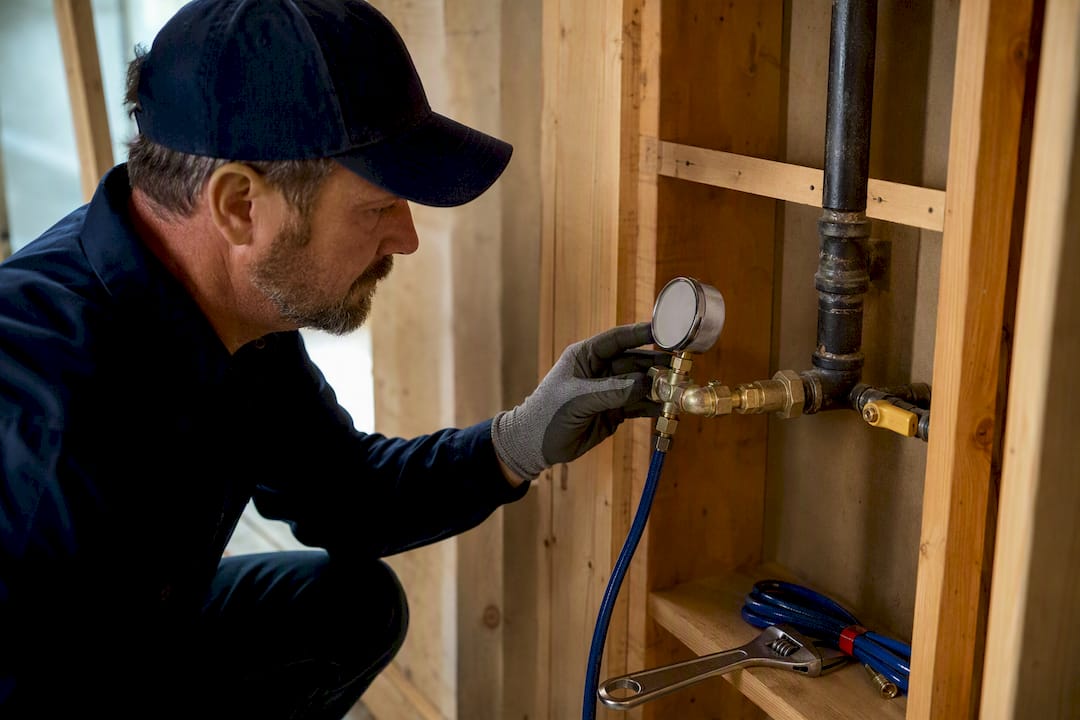
- Run a static or pressure test to confirm the repair holds under real conditions.
- Coordinate with the municipality for permit sign-off and inspection.
- Receive a final clearance, often called a green tag, before the utility re-energizes the line.
A permanent fix means replacing the failed section outright. A patch job might hold for a while, but it's not a repair, it's a delay.
Pro Tip: Ask your contractor to show you the pressure test results before they close up any walls or backfill any trenches. A reputable plumber documents this step because the utility will ask for it too.
What Does Gas Leak Repair Cost, and How Long Does It Take?
Costs swing widely depending on where the leak is and how bad the damage is. A minor fitting repair runs far less than replacing a buried section of line that requires excavation. Emergency or after-hours calls typically carry a surcharge on top of the base repair cost.
Several factors push the price up:
- Whether the line is buried and needs excavation equipment.
- How many feet of pipe need replacing versus a single fitting.
- Permit fees, which vary by city and county.
- After-hours or weekend emergency dispatch.
On timeline, expect the utility's initial safety response within a few hours of your call in most cases. The actual repair, pressure test, and inspection process can take anywhere from a single day for a straightforward fitting fix to several days when excavation or municipal inspection scheduling is involved. Get a written estimate before work starts, and treat any quote that seems unusually low, especially one that skips permits or testing, as a warning sign rather than a bargain.
How to Vet a Gas-Plumbing Contractor Before You Hire
Run through this checklist before anyone touches your line:
- Ask for their license number and verify it's active and covers gas work specifically.
- Confirm they carry liability insurance.
- Ask how they document pressure testing for the utility and municipality.
- Ask about their experience coordinating permits and inspections in your city.
- Get a written estimate, not a verbal number over the phone.
- Ask what warranty covers the repair.
Walk away from anyone who refuses to show a license, insists on cash only, or won't commit to a written estimate. A contractor who can't describe their pressure-testing process or has no experience working with your local utility's tagging system probably shouldn't be near your gas line.
Pro Tip: A quick phone question, "How do you document the pressure test for the utility?", separates serious gas fitters from generalists fast. If they hesitate, keep calling.
Our Take on Why This Process Trips Up So Many Homeowners
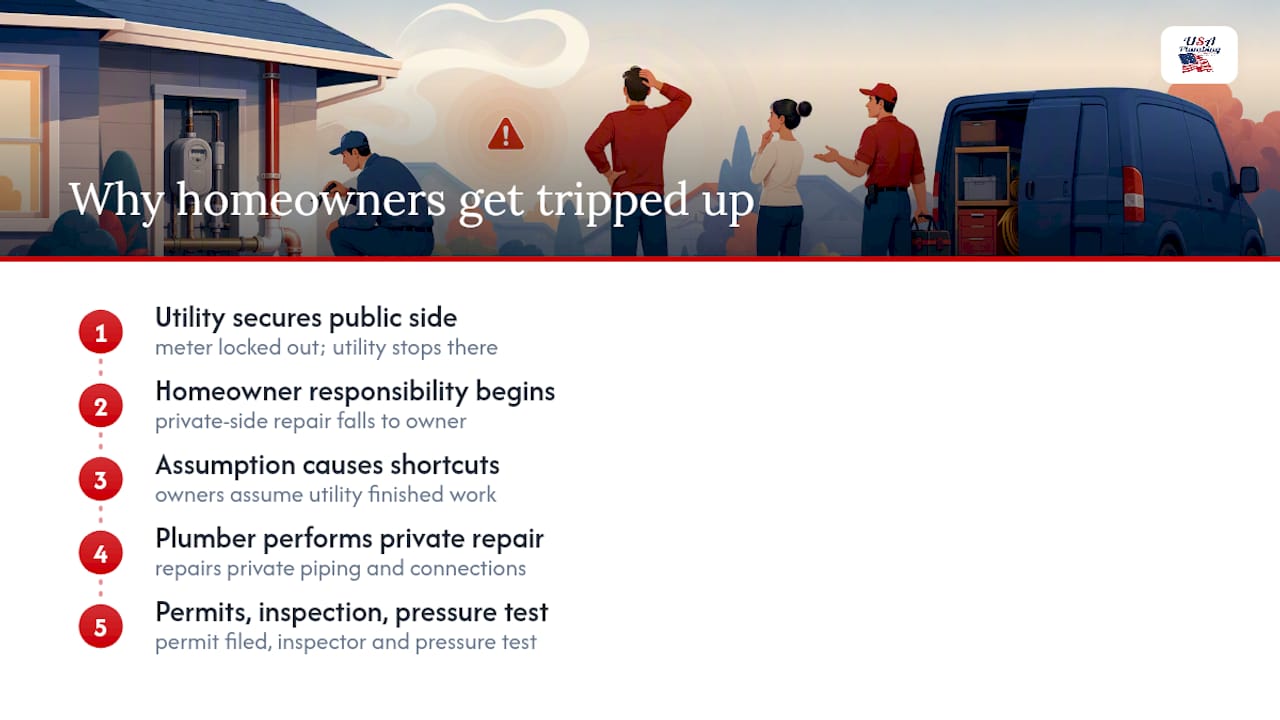
Most people treat a gas leak like any other plumbing problem: find someone available, get it fixed, move on. That instinct is understandable and also the exact reason so many repairs get delayed or done wrong. Gas work isn't a single job, it's a two-party process. The utility secures the public side and steps back. The homeowner is left holding the responsibility for the private-side fix, and that gap is where corners get cut.
At USA Plumbing and Septic LLC, we see the same pattern across Bullhead City, Fort Mohave, Mohave Valley, and Laughlin: homeowners who assume the utility "took care of it" once the meter's locked out, when in reality the real work hasn't started. Our trained plumbers handle that private-side repair, coordinate the permit and inspection paperwork, and make sure the pressure test happens before anyone calls the job done. Skipping that sequence doesn't save time. It usually costs more of it later, when an inspector flags a shortcut and the whole process starts over.
— JOHN
How USA Plumbing and Septic LLC Handles Gas Leak Repairs
Once your utility has secured the meter, the next call should go to a licensed plumber who knows the local permit process cold. A reputable local plumbing service can handle that step for homeowners and property managers in the area, day or night.

When you call, have your address ready, a brief description of what you noticed, and whether the utility has already shut off your meter. That lets our dispatcher triage the call and send a technician equipped for the specific repair, not a general troubleshooting visit. They handle the permit coordination, the pressure test, and the final documentation the utility requires before restoring service, and repairs may carry a warranty so customers are not left guessing whether the fix will hold. If you're facing a leak right now or just found warning signs like dead grass over a buried line, visit our gas line repair and replacement page or call our team directly to get a licensed plumber on the way.
Sources
- PSE&G — I smell gas
- SoCalGas — Natural gas leak safety and prevention
- Peoples Gas — Safety and red/yellow tags
FAQ
Why Do You Call a Plumber for a Gas Leak?
Utility crews secure the meter and check for immediate danger, but they don't repair private gas lines. A licensed plumber with gas-fitting certification performs the actual repair and handles the permits and testing needed to restore service.
How Much Does It Cost to Fix a Gas Leak?
Cost depends heavily on whether the fix is a simple fitting repair or a buried line replacement requiring excavation. Emergency and after-hours calls typically add a surcharge, so getting a written estimate before work starts is the best way to avoid surprises.
Who Do I Call About a Gas Leak in My Area?
Call 911 first if there are symptoms, fire, or visible damage. Otherwise, call your gas utility's emergency line from outside the building, then hire a licensed local plumber like USA Plumbing and Septic LLC to complete the repair once the utility secures the line.
How Expensive Is a Gas Leak to Fix?
Minor repairs cost far less than line replacements that involve digging up buried pipe. Ask any contractor for a written estimate that separates the diagnostic fee, repair cost, permit fees, and any after-hours surcharge so you know exactly what you're paying for.