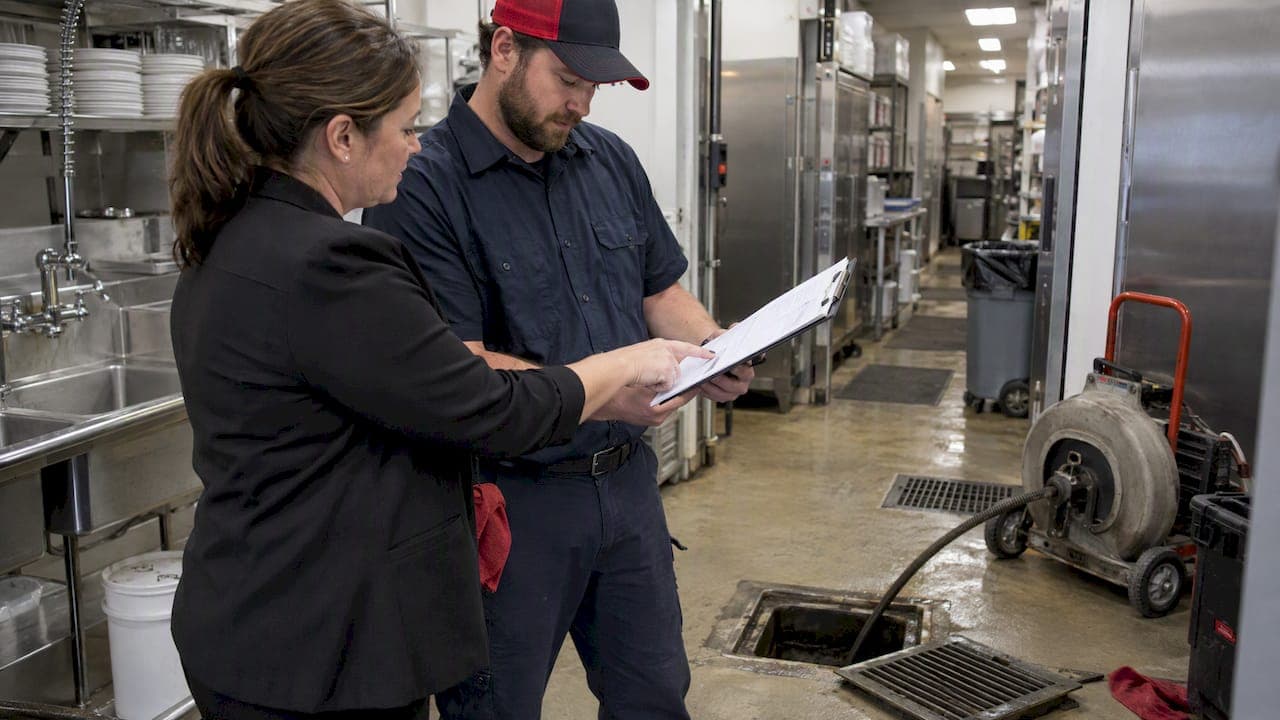
Most commercial drain cleaning jobs run between $147 and $800 depending on the method and the problem, with routine snaking on the low end, and main-line hydro-jetting or sewer work pushing toward the top of that range, according to Angi's cost guide. The biggest swing factors are the method required, where the clog sits, whether grease or FOG compliance is involved, and whether you need after-hours service. We cover every variable below, and it's common practice to obtain on-site estimates for an exact number tailored to your property.
TL;DR:
- Hydro-jetting is often necessary for grease or root blockages and typically costs more upfront than cable snaking.
- Larger pipes, difficult access points, and the need for camera inspections significantly increase the overall cost of commercial drain cleaning.
- Recurring issues, especially for food-service operations, are more cost-effective to prevent with scheduled maintenance like interceptor pumping.
- Emergency or after-hours services can add extra charges, so requesting detailed, itemized estimates upfront helps avoid unexpected bills.
- Regulations for grease and discharge limits may require frequent pumping and inspections, affecting long-term costs for food-service businesses.
Table of Contents
- Typical Cost Ranges and Example Scenarios for Commercial Properties
- What Drives the Price: The Cost Factors You Will Be Billed For
- Professional Methods and How Each Affects Cost and Outcomes
- FOG, Regulations, and How Food-Service Businesses Can Face Extra Costs
- Pricing Models, Preventive Maintenance Plans, and How to Lower Lifetime Cost
- How to Choose a Commercial Drain Cleaning Service
- What USA Plumbing and Septic LLC Inspects and Bills For
- Typical Contractual Terms or Service Agreements
- Industry-Specific Compliance and Insurance Requirements That Affect Cost
- The Real Cost Conversation Commercial Managers Should Be Having
- Get a Clear Estimate From USA Plumbing and Septic LLC
- FAQ
- Sources
Typical Cost Ranges and Example Scenarios for Commercial Properties
A straightforward drain snaking job for a single fixture or branch line typically falls in line with the general average reported by Angi, which is about $246, with most jobs landing between $147 and $352. Add a camera inspection and the price climbs because of the extra equipment and diagnostic time. Hydro-jetting costs more up front since it clears grease buildup and root intrusion more completely than cabling alone. Main-line obstruction costs vary widely depending on job complexity, with some jobs more expensive than basic clog clearing, per the same guide. Interceptor pumping is priced separately and often billed by tank size and disposal volume rather than by the hour.
Here is how that plays out in real commercial settings:
- Restaurant kitchen grease line: A slow kitchen drain with hardened grease usually calls for hydro-jetting rather than snaking, since cabling can punch a hole through a clog without clearing the pipe walls, and the job often includes a camera check to confirm the line is clear.
- Warehouse main-line root intrusion: Tree roots in a main line typically require hydro-jetting plus a camera inspection to locate the intrusion point, pushing the job toward the higher end of the main-line range.
- Restroom stack blockage in a multi-tenant building: A shared stack backup is often a straightforward snaking job unless the blockage sits deep in the line, in which case access and pipe diameter start to matter more than the clog itself.
Pricing also comes down to flat-rate versus hourly billing. Flat-rate menu pricing is common for routine jobs like a single floor drain or fixture line, and it protects you from paying extra if the job takes longer than expected. Hourly pricing shows up more often on complex or open-ended jobs, like root intrusion that requires exploratory work before the scope is clear. Ask upfront which model applies so you are not surprised later.
What Drives the Price: The Cost Factors You Will Be Billed For
Every invoice is built from a handful of variables, and knowing them helps you read a quote instead of just accepting it.
- Clog location and severity: A clog near an accessible cleanout costs less to clear than one buried deep in a main line or behind a slab.
- Pipe diameter and material: Larger commercial pipes and older cast iron or clay lines often require heavier equipment, which raises the price.
- Access and excavation needs: If a technician has to dig, cut drywall, or access a roof vent, that labor gets added separately.
- Required method: Snaking is the base-cost option, hydro-jetting costs more, and combination jobs cost the most.
- Camera inspection fees: Often billed as an add-on, typically bundled when hydro-jetting is also performed.
- Disposal and hauler fees: Interceptor pumping and heavy debris removal usually carry a separate hauling charge.
- Travel time and after-hours premiums: Emergency or weekend calls commonly carry a flat or percentage surcharge.
- Permits or compliance fees: Facilities under local pretreatment rules may face inspection or reporting costs tied to the job.
Some of these, like the base service call and the primary method, are usually bundled into one line. Others, like disposal, permits, and emergency premiums, tend to show up as separate charges, and that is exactly where unexpected invoices come from.
Pro Tip: Always ask for a written, itemized estimate before work begins so you can see exactly which fees are fixed and which depend on what the technician finds once the pipe is open.
Professional Methods and How Each Affects Cost and Outcomes
The method a technician recommends has more influence on your final bill than almost anything else.
- Cable snaking: The least expensive option, best for soft clogs like paper, debris, or minor buildup; it clears a path through the blockage but does not scrub the pipe walls.
- Hydro-jetting: Uses pressurized water to strip grease, scale, and root intrusion from the full diameter of the pipe, which makes it the preferred fix for recurring commercial clogs even though it costs more per visit.
- Camera inspection: Not a cleaning method on its own, but a diagnostic step that confirms what is actually wrong before you pay for the wrong fix.
- Grease interceptor pumping: A maintenance service rather than a reactive fix, billed by tank size and disposal volume, and required on a schedule for most food-service operations.
A camera inspection adds to the bill, but it is worth the extra fee whenever a blockage keeps coming back or when roots are suspected, since it can confirm the exact cause and location before a technician commits to a repair. Skipping the camera on a recurring problem often means paying for a second visit later, which costs more in total than paying for the diagnostic upfront.
FOG, Regulations, and How Food-Service Businesses Can Face Extra Costs
Grease is the most common reported cause of sewer blockages, according to the EPA's pretreatment guidance, which is why food-service properties face a different cost structure than a typical office or retail space. Most municipalities regulate fats, oils, and grease (FOG) under local pretreatment authority, and that often means mandated interceptor pumping schedules, numeric discharge limits, periodic inspections, and surcharges for non-compliance. EPA fact sheet guidance points to numeric local limits commonly set around 100 mg/L, with typical ranges across jurisdictions running roughly 50 to 450 mg/L.
For budgeting purposes, a heavy-use kitchen often needs interceptor pumping on a quarterly basis or more frequently, and that recurring cost is almost always cheaper than the emergency hydro-jetting call and potential fines that follow a missed cleaning. Our restaurant plumbing guide covers the warning signs that a grease line is overdue for service.
Pricing Models, Preventive Maintenance Plans, and How to Lower Lifetime Cost
Commercial drain service generally falls into three pricing structures, and which one fits your property depends on how often you expect to need service.
- Per-call pricing: You pay for each visit as problems come up, which works for low-risk properties with infrequent drain issues.
- Flat-rate menu pricing: A fixed price for defined services like floor drain cleaning or a single-fixture snaking job, which removes hourly surprises.
- Preventive maintenance contracts: Scheduled service, often quarterly interceptor pumping plus periodic camera checks, aimed at catching problems before they become emergencies.
Say a restaurant pays $800 for an emergency hydro-jetting call after a grease blockage shuts down the kitchen for a day, and that happens twice a year without a maintenance plan, for $1,600 annually plus lost revenue from downtime. A quarterly preventive plan covering interceptor pumping and a camera check instead keeps grease buildup from reaching emergency levels in the first place, often avoiding both the shutdown and the premium emergency rate, as explained in The Hidden Costs of Backflow Failure: Why Prevention is Cheaper Than Repairs. Our maintenance guide walks through how these schedules are typically structured.
A preventive plan makes the most financial sense for any kitchen, manufacturing floor, or high-traffic restroom bank where drain problems happen more than once a year, since the fixed cost of scheduled service is predictable while emergency calls are not.
How to Choose a Commercial Drain Cleaning Service
Use this checklist on your first call to avoid vague quotes and unexpected add-ons.
- Ask what method they plan to use and why, since the answer should match the symptoms you described.
- Ask whether a camera inspection is included or billed separately, so you know the full diagnostic cost upfront.
- Ask how disposal and hauling fees are calculated if interceptor pumping is involved.
- Ask for proof of insurance and licensing before anyone steps onto your property.
- Ask what the emergency or after-hours rate is before you call outside business hours.
- Ask for references from other commercial clients, ideally in your own industry.
Watch for red flags like a quote that seems far below the typical range with no explanation, or a technician who won't commit to a scope of work in writing. A detailed guide to what after-hours response typically costs can help you judge whether an emergency quote is reasonable.
Pro Tip: Request an itemized invoice and sign off on the scope of work before authorizing any charges beyond the original estimate, especially if the technician finds something unexpected once the line is open.
What USA Plumbing and Septic LLC Inspects and Bills For
When a commercial property is serviced, technicians typically check access points, run a camera inspection if the clog isn't obvious, recommend an appropriate method, and provide a written estimate before starting work. Typical invoice items may include the service call, equipment use, hydro-jetting if needed, camera inspection, interceptor pumping for grease-heavy kitchens, and an after-hours surcharge if the call occurs outside normal business hours. These charges are often itemized separately so clients can see exactly what they are paying for.

Typical Contractual Terms or Service Agreements
Commercial drain cleaning agreements usually fall into one of two structures: single-visit service agreements or recurring maintenance contracts. A single-visit agreement typically covers the diagnosis, the method used, and a defined scope of work, often with a clause stating that additional charges require your approval before work continues. Recurring maintenance contracts, more common for restaurants and food-service properties, usually specify a cleaning frequency such as quarterly interceptor pumping, a fixed or tiered annual price, and terms for emergency calls that fall outside the scheduled visits.
Most commercial agreements also include a response-time commitment, particularly for properties that depend on uninterrupted plumbing, like restaurants or manufacturing floors. Before signing anything, confirm whether the contract locks in pricing for the full term or allows adjustments, and check whether emergency visits are discounted or billed at full rate even if you're an existing maintenance customer. A clear agreement protects you from surprise pricing changes mid-contract and gives you a documented service history if a compliance inspector ever asks for one.

Industry-Specific Compliance and Insurance Requirements That Affect Cost
Different commercial property types carry different compliance burdens, and those burdens show up in your drain cleaning costs. Restaurants and other food-service operations typically fall under local pretreatment rules tied to FOG discharge, which can require documented interceptor maintenance records, periodic inspections, and in some cases reporting to the local wastewater authority. Manufacturing plants may face their own discharge limits depending on what enters the drain system, and a provider servicing that kind of facility often needs to carry higher liability coverage given the scale of potential disruption.
Insurance matters more than most property managers expect here. A provider working on a commercial site, especially one with a lease or a property management agreement, should carry liability coverage that protects against property damage during excavation or equipment use. Ask for a certificate of insurance before any work begins, not after, since a contract with your property's insurer or landlord may require it on file regardless of what the drain cleaning provider assumes is standard.
The Real Cost Conversation Commercial Managers Should Be Having
Most cost guides treat drain cleaning like a single transaction, and that framing misses the point for commercial properties. The real cost isn't the invoice for one visit, it's the pattern of visits over a year, and that pattern is set by whether you treat drain cleaning as a reaction or a schedule. Restaurants in particular tend to underestimate how much a missed interceptor pumping cycle costs once you factor in the emergency rate, the lost revenue from a shutdown, and the risk of a compliance fine from the local wastewater authority.
The conventional advice to "get three quotes and pick the cheapest" falls apart once you realize the cheapest quote often excludes the camera inspection that would have caught the real problem. We think the smarter first move is asking every provider the same scope question before comparing a single number: what exactly does this price include, and what would make it change. That question does more to protect your budget than any amount of quote shopping.
— JOHN
Get a Clear Estimate From USA Plumbing and Septic LLC
We handle commercial drain cleaning, hydro-jetting, grease interceptor service, and emergency plumbing across Bullhead City, Fort Mohave, Mohave Valley, and Laughlin, with licensed plumbers available 24/7 for the calls that can't wait. If you want a number you can actually plan around instead of a rough guess, request an on-site estimate or book commercial service with USA Plumbing and Septic LLC today.
FAQ
How often should commercial drains be cleaned?
Frequency depends on use: a standard office or retail property may only need cleaning once a year, while a commercial kitchen with grease-heavy drains often needs interceptor pumping quarterly or more often. Properties that experience recurring clogs usually benefit from a scheduled maintenance plan rather than waiting for the next backup.
Is professional drain cleaning worth it?
Yes, for most commercial properties, since a professional can diagnose the actual cause of a blockage instead of just pushing it further down the line. A single preventive visit using the right method, confirmed with a camera inspection when needed, typically costs less than the repeat calls and potential water damage that come from an unresolved clog.
Is hydro jetting worth the cost?
Hydro-jetting costs more than basic snaking, but it clears the full pipe diameter rather than just punching through a blockage, which makes it the better long-term fix for hardened grease and root intrusion. For properties with recurring clogs, the higher upfront cost is often worth avoiding repeat service calls.
How much does an average drain cleaning cost?
A typical professional drain cleaning averages about $246, with most jobs falling between $147 and $352, according to Angi's cost guide. Commercial jobs involving main lines, hydro-jetting, or interceptor pumping tend to run higher due to equipment and disposal requirements.
Sources
- How Much Does Drain Cleaning Cost? | Angi
- National Pretreatment Program - Controlling Fats, Oils, and Grease Discharges from Food Service Establishments (Office of Water, EPA)
- Controlling fats, oils and grease discharges from food service establishments | EPA (fact sheet)