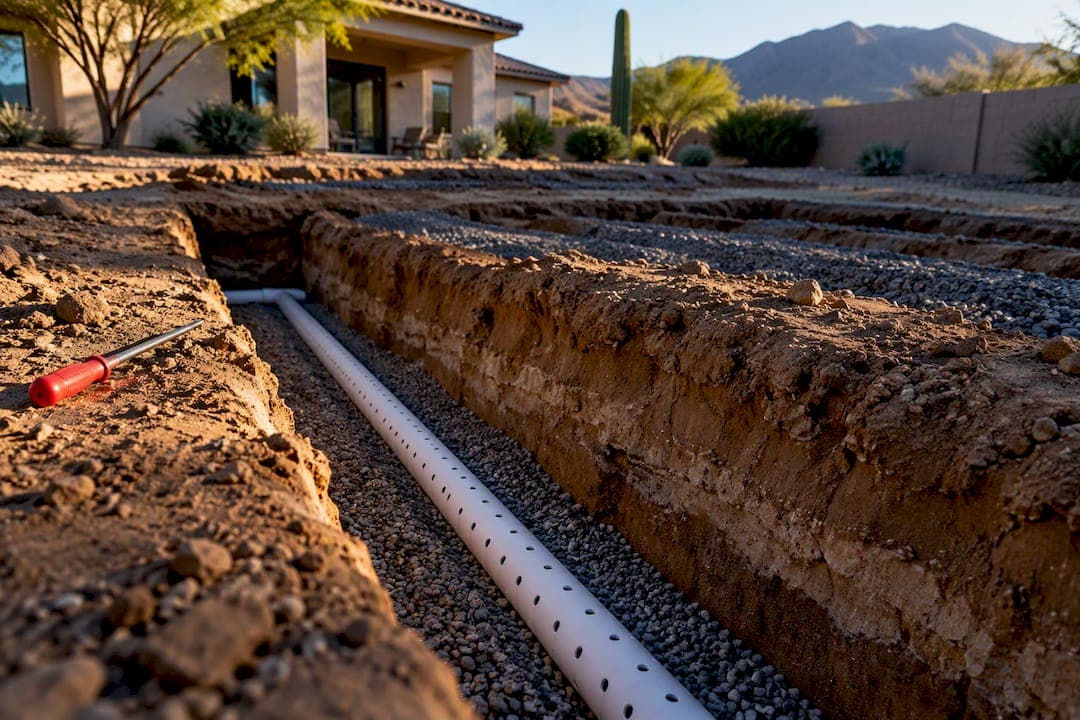
Most homeowners pay $1,000 to $5,000 for a targeted drain field repair, $5,000 to $15,000 for a full conventional replacement, and $10,000 to $30,000+ if soil conditions force an engineered system. Before spending on any of it, get a camera inspection or soil probe. If sewage is pooling on the surface or backing into your house, replacement is usually unavoidable.
TL;DR:
- Most repairs involve minor fixes like jetting or biomat treatment, which cost between $1,000 and $5,000, but soil failure requires full system replacement.
- Full drain field replacement costs range from $5,000 to $15,000 for conventional systems and can exceed $30,000 for engineered options on challenging sites.
- Accurate diagnosis with camera inspections or soil tests, costing a few hundred dollars, is crucial before committing to costly repairs or replacements.
- Soil tests determine whether mechanical fixes will work or if a complete replacement is needed, especially when soil has genuinely lost its absorption capacity.
- Coordinating tank replacement with drain field work and obtaining detailed, line-item estimates from licensed, reputable contractors can prevent overpaying and ensure proper troubleshooting.
Table of Contents
- How Much Does Drain Field Repair Cost?
- What Repair Methods Cost and When They Work
- When Do You Need a Full Drain Field Replacement?
- What Drives Your Drain Field Cost Estimate Up or Down?
- How Much Do Drain Field Diagnostics Cost?
- What Permits and Timeline Should You Expect?
- How Do You Get Accurate Quotes and Vet a Contractor?
- What Our Crews See in the Field
- Why Most Homeowners Overpay for Drain Field Work
- Get a Real Diagnosis Before You Commit to a Fix
- Sources
- FAQ
How Much Does Drain Field Repair Cost?
Drain field repair cost swings widely because "repair" covers everything from a $1,000 pipe flush to a $15,000 full rebuild. The gap exists because septic problems fall into three very different categories, and pricing follows the category, not the symptom.
- Minor repairs ($1,000–$5,000): Covers biomat treatment, distribution-box adjustments, or clearing a single clogged lateral. This band handles the majority of drain field complaints that don't involve total soil failure, according to The Septic Guide's cost breakdown.
- Partial replacement: One or two laterals replaced while the rest of the field stays functional. Costs stack per trench, so a two-lateral job costs proportionally more than a one-lateral job.
- Full replacement ($5,000–$15,000): The entire drain field is excavated and rebuilt with new pipe, gravel, and distribution lines, per Septic & Well Pro's replacement guide.
- Engineered systems: Mound systems, chamber systems, or aerobic treatment units (ATUs) required when soil fails a percolation test, which generally cost more than conventional replacements.
Outliers happen at both ends. A field that just needs jetting to clear roots can land near $1,000, while a job on a small, rocky, or high-water-table lot can blow past $20,000 even for a "standard" replacement, because equipment access and extra fill material add labor hours fast.
Concurrent costs catch people off guard more than the field work itself. If your septic tank is more than 20 years old, most contractors recommend replacing it alongside the field rather than leaving an aging tank feeding a brand-new drain field. Landscaping restoration, driveway or patio removal and repour, and sod replacement can add $500 to $3,000 depending on what sat on top of the old field. Get those line items quoted separately so they don't get buried inside a lump-sum number you can't audit later.
What Repair Methods Cost and When They Work
Most reputable contractors try a targeted repair before recommending full replacement, because a proper diagnosis frequently uncovers a fixable cause rather than total field failure, according to septic industry cost data. Here's how the main repair methods stack up.
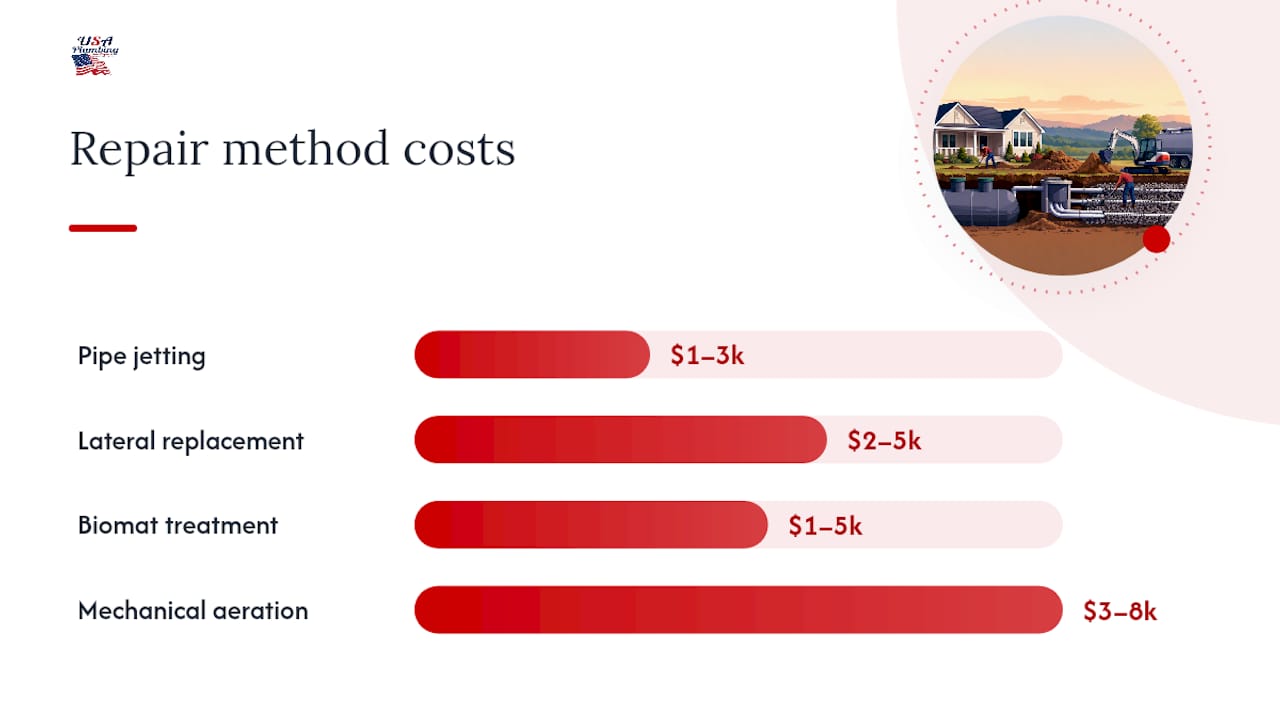
- Pipe jetting ($1,000–$3,000). High-pressure water clears clogged perforations and minor root intrusion without excavation. This works when the pipe structure is intact and the soil underneath still absorbs water normally. It does nothing for soil that has physically lost its absorption capacity.
- Lateral line replacement ($2,000–$5,000 per trench). When one section of pipe has collapsed or is too damaged to jet clean, contractors dig out and replace that single trench rather than the whole field. Excavation is required, and the job typically takes one to two days per lateral, with the lawn needing several weeks to recover.
- Biomat treatment. The biomat is the layer of organic sludge that builds up around drain pipes over years. Chemical or biological treatments break it down without digging, often priced within the same $1,000 to $5,000 minor-repair band. It buys time on an aging field but won't reverse soil that's genuinely saturated.
- Mechanical aeration ($3,000–$8,000). Equipment like a Terralift injects pressurized air into the soil to break up compaction and restore percolation. Results vary by soil type, and the fix can be temporary rather than permanent, per cost and outcome data on aeration.
- Surface-water diversion. Rerouting gutters, grading, or adding a swale to keep rainwater away from the field costs far less than any pipe work, often just a few hundred dollars in materials and labor. It addresses hydraulic overload from outside water, not internal clogging. Homeowners dealing with soggy yards near a field can find useful design context in resources on garden drainage solutions.
- Distribution-box repair. A cracked or unlevel D-box sends uneven flow to different laterals, overloading one section while starving another. Repair or replacement usually costs a few hundred dollars and can resolve what looks like a whole-field problem but is actually just one broken part.
Pro Tip: Ask your contractor to show you the camera footage or soil probe results before agreeing to any method. A field failing from soil exhaustion won't respond to jetting or aeration, and paying for the wrong fix twice costs more than paying for the right diagnosis once.
The dividing line that matters most: jetting, D-box repair, and biomat treatment fix mechanical or flow problems. They can't fix soil that has physically stopped absorbing water. If a perc test or soil probe shows the ground itself has failed, no amount of pipe work solves it, and you're looking at replacement.
When Do You Need a Full Drain Field Replacement?
Replacement becomes necessary when soil testing shows the ground can no longer absorb wastewater, not just when pipes are clogged. Soil and site constraints, not contractor preference, typically determine whether you get a conventional field or an engineered alternative once a percolation test comes back, according to Septic & Well Pro's analysis. Here's what drives the price by system type:
- Conventional gravel trench system ($5,000–$15,000): The standard option when soil percolates well and the lot has adequate space and depth to groundwater.
- Chamber systems ($6,000–$16,000): Plastic chambers replace gravel, often required in areas with limited gravel supply or stricter local codes.
- Mound systems ($10,000–$25,000): Built above grade when soil is shallow or the water table sits too close to the surface for a standard trench.
- Aerobic treatment units, or ATUs ($10,000–$30,000+): Mechanical systems that treat wastewater more thoroughly before it reaches the soil, required on the most challenging lots and sometimes carrying ongoing service contracts.
Add-on costs apply across all four types. A new distribution box runs a few hundred dollars, new supply lines from tank to field add another few hundred, and if your tank hasn't been replaced in the last two decades, most contractors will price that in too. Landscaping restoration after a full rebuild typically lands in that same $500 to $3,000 range mentioned earlier, depending on lot size and what needs to be regraded or replanted.
What Drives Your Drain Field Cost Estimate Up or Down?
No two quotes for the same problem look identical, and the reasons usually trace back to a short list of variables.
- Soil and percolation results. Sandy, well-draining soil keeps costs at the low end. Clay-heavy or compacted soil forces engineered systems that can triple the price.
- Lot constraints and access. Steep slopes, mature trees near the field, or a driveway sitting over the old lines all add equipment time and hand-digging labor.
- Root intrusion and rock. Both slow excavation and sometimes require specialized equipment, adding hours billed at hourly excavation rates.
- Regional labor rates and mobilization fees. A crew traveling farther for a rural property often adds a flat trip charge on top of the job cost.
- Reserve area limitations. Some lots have no backup space designated for a future field, which can force an engineered fix instead of a simple conventional replacement in the same footprint.
Tank replacement timed with field work is one of the few places where spending more upfront saves money later. Regular pumping every three to five years is what prevents most drain field failures in the first place, since a neglected tank sends solids into the field that clog it years before its time, according to The Septic Guide. Skipping that maintenance is the single most common reason homeowners end up staring at a five-figure replacement bid.
How Much Do Drain Field Diagnostics Cost?
Diagnostics are cheap compared to guessing wrong on a $15,000 replacement, and they usually take less than a day.
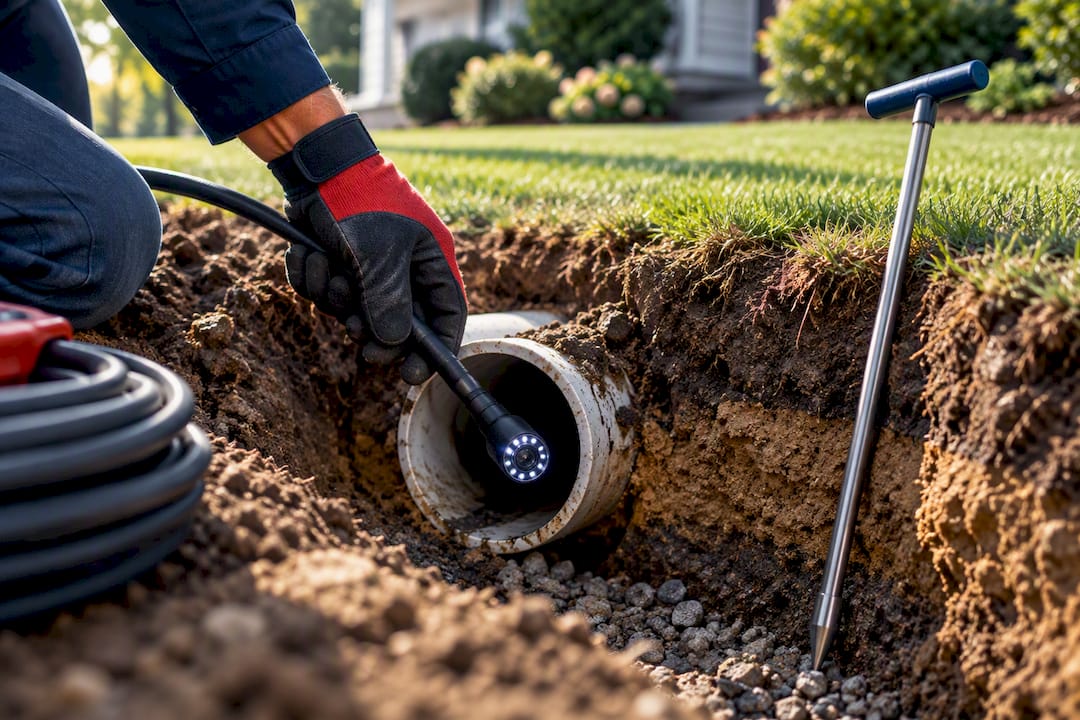
- Camera inspection ($200–$500). A scope run through the pipes shows cracks, root intrusion, collapsed sections, and blockages directly. This is typically the first paid step any contractor worth hiring will suggest, and reputable companies use it before ever quoting replacement, according to Septic & Well Pro. Our guide on septic inspection costs covers what to expect from a full inspection visit.
- Percolation test ($300–$2,000, commonly $300 to $800). Required by many county health departments before a replacement permit gets issued. A failed perc test is what pushes a project from a conventional field into mound or ATU territory, per The Septic Guide's data.
- Soil probe and test trenches. A lower-cost alternative to full engineering studies, used to confirm depth to groundwater or bedrock before committing to a system design.
Misdiagnosis happens most often when a contractor skips the camera step and jumps straight to "you need a new field" based on symptoms alone. A second opinion that includes actual video or soil data is worth the extra $200 to $500 almost every time.
What Permits and Timeline Should You Expect?
Local health departments issue septic permits, not building departments, and requirements vary by county.
- Permit fees typically vary and can add several hundred dollars; skipping them risks a failed home inspection at resale or forced rework later, per septic cost data.
- Repairs (jetting, lateral swaps, D-box fixes) usually run from a few days to two weeks, including scheduling and any minor permitting.
- Full replacements stretch from three weeks to two or three months once you factor in perc testing, permit approval, engineering (for mound or ATU systems), and excavation scheduling around weather.
- Restoration work (regrading, seeding, driveway repour) typically adds another one to two weeks after the field itself is backfilled.
Permit approval is usually the longest single wait in the whole process, especially for engineered systems that require a licensed designer's stamp before your county will sign off.
How Do You Get Accurate Quotes and Vet a Contractor?
A written estimate should never be a single number. Request these specifics before you sign anything.
- Ask for line-item pricing, separating diagnostics, excavation, materials, permits, and restoration so you can compare bids apples to apples.
- Confirm diagnostic method used. A quote based on a camera inspection or soil probe carries more weight than one based on a visual walk-through alone.
- Verify licensing and insurance directly with your state or county licensing board, not just by taking the contractor's word for it.
- Ask for two or three recent references from jobs similar in scope to yours, ideally full replacements if that's what you're facing.
- Get the warranty in writing, including what's covered and for how long.
Red flags include a quote with no diagnostic step mentioned at all, pressure to sign same-day, or a bid that's dramatically lower than every other one you received with no explanation for the gap. On payment structure, avoid paying more than a modest deposit upfront, and hold back final payment until you've walked the site after backfill and confirmed the work matches the estimate.
Pro Tip: Get at least three bids on anything above $5,000. Drain field pricing varies enough by contractor that a spread of $4,000 to $6,000 between the lowest and highest quote on the same job is common, and the middle bid isn't always the safest choice.
What Our Crews See in the Field
Our technicians run camera inspections and soil probes before quoting almost every drain field job, because the most common mistake homeowners describe from past contractors is being sold a full replacement without ever seeing footage of the actual pipe condition. USA Plumbing and Septic LLC writes estimates as line items covering diagnostics, materials, excavation, and permitting separately, so homeowners can see exactly what they're paying for at each stage. For background on how a healthy field is supposed to function before something goes wrong, our guide on what a drain field is and how it fails walks through the basics, and our underground water leak guide covers related issues when groundwater is part of the problem.
Why Most Homeowners Overpay for Drain Field Work
The conventional advice on drain field problems treats replacement as the default answer, and that's backwards. The research behind cost bands in this guide makes one thing clear: most drain field complaints start as mechanical problems (a clogged lateral, a cracked D-box, an overloaded biomat layer) that cost a fraction of a full rebuild to fix. Replacement should be the conclusion of a diagnosis, not the starting assumption.
Where the standard advice falls short is in treating camera inspections and perc tests as optional upsells rather than the first purchase you make. A $200 to $500 camera scope is cheap insurance against a $15,000 mistake, yet plenty of homeowners skip it because a contractor tells them the field is "shot" without showing proof.
Prioritize this: get the diagnostic first, get it in writing, and only then compare replacement quotes if the diagnostic actually points that way. Everything else, including which repair method or which engineered system, follows from that one decision.
— JOHN
Get a Real Diagnosis Before You Commit to a Fix
Skip the guesswork that turns a $2,000 repair into an unnecessary $15,000 replacement. Some plumbing and septic companies run camera inspections and soil evaluations before recommending any fix, so you get a diagnosis backed by actual footage instead of a contractor's gut feeling.

On a first visit, our team documents the problem with video or photos, walks you through what the footage shows, and hands you a written, line-item estimate covering diagnostics, repair or replacement, permitting, and restoration. We handle everything from emergency plumbing to full septic system installation across Bullhead City, Fort Mohave, Mohave Valley, and Laughlin, available 24/7 when a backup won't wait for business hours. Get multiple bids if you want, but call USA Plumbing and Septic LLC first for a transparent quote grounded in what your drain field actually needs, not what's easiest to sell.
Sources
- Septic Drain Field Repair Cost & Methods
- Septic Tank & Drain Field Repair Cost 2026: Every Repair Priced | The Septic Guide
- Drain Field Replacement Cost Guide (2026) | Septic & Well Pro
FAQ
How much does it cost to replace a drain field?
A full conventional drain field replacement typically costs $5,000 to $15,000, while engineered alternatives like mound systems or ATUs run $10,000 to $30,000 or more depending on soil conditions. Partial replacements involving just one or two laterals fall in the lower $2,000 to $10,000 range.
Can a clogged drain field be fixed?
Yes, many clogged fields respond to pipe jetting or biomat treatment rather than full replacement, typically costing $1,000 to $3,000. This works when the clog is mechanical (roots, sludge buildup) rather than caused by soil that's lost its ability to absorb water.
How long does a drain field usually last?
A well-maintained drain field typically lasts 20 to 30 years, though lifespan depends heavily on soil type, tank pumping frequency, and household water use. Skipping regular tank pumping every three to five years is one of the most common reasons fields fail early.
Can a septic drain field be replaced?
Yes, drain fields can be fully replaced with a conventional gravel system, a chamber system, a mound system, or an aerobic treatment unit, depending on what your soil and site allow. A percolation test determines which system type your property qualifies for before any replacement work begins.
What's the first step if I suspect a drain field problem?
Start with a camera inspection, typically costing $200 to $500, before agreeing to any repair or replacement quote. USA Plumbing and Septic LLC documents every inspection with video so you see exactly what's happening underground before spending on a fix.