Expect to pay between $100 and $500 per hour for emergency plumbing service, with holiday and overnight calls sometimes climbing toward $600 per hour. Add a separate dispatch fee on top of that rate. A stable, contained issue can usually wait for regular business hours and a lower bill. An active leak, sewage backup, or safety hazard is worth the premium every time.
TL;DR:
- Emergency rates generally range from $100 to $500 per hour, with holiday and after-hours calls sometimes reaching $600, plus a separate dispatch fee of $75 to $250.
- The total bill depends on factors like timing, severity, access complexity, and regional labor costs, which can significantly increase the final charge.
- It's wise to confirm whether the dispatch fee is credited toward the final bill and to ask for an itemized, transparent estimate before work begins.
- Paying the emergency premium is justified for active leaks or safety hazards, as faster response prevents costs that are often far higher than the extra charges.
Table of Contents
- How Emergency Plumbing Bills Are Built
- What Actually Drives Your Emergency Plumbing Rates
- How Much Do Common Emergency Repairs Actually Cost?
- What to Expect During and After the Emergency Call
- Handling Insurance and Documentation After an Emergency
- Ways to Lower Your Emergency Plumbing Costs
- Questions to Ask Before You Hire an Emergency Plumber
- A First-60-Minutes Checklist From USA Plumbing and Septic LLC
- When Paying the Emergency Premium Actually Makes Sense
- Call Usaplumbingseptic Before a Small Leak Becomes a Big Bill
- Sources
- FAQ
How Emergency Plumbing Bills Are Built
An emergency invoice is rarely just "hourly rate times hours." It stacks several line items, and knowing them helps you read a quote instead of just reacting to the total.
- Dispatch or callout fee: typically $75 to $250, charged for sending a technician to your door regardless of what gets fixed.
- Base labor rate: varies by the plumber's experience level, since apprentices, journeymen, and master plumbers all carry different hourly bands.
- Emergency multiplier: emergency rates commonly run 1.5 to 3 times standard daytime pricing, applied on top of the base labor rate.
- Parts and materials: priced at retail or slightly above, especially when a part has to be sourced after hours.
- Equipment rental or permits: trenchers, sewer cameras, or inspection fees for larger jobs.
Here's how that stacks up in practice. A larger job, like a burst pipe requiring wall access and two hours of labor at $450 an hour (a $150 base rate at 3x on a holiday), plus $150 in parts, can push past $1,200 before any drywall repair even starts. The gap between those two numbers is almost entirely about severity and access, which is what the next section breaks down.
What Actually Drives Your Emergency Plumbing Rates
Four factors decide whether your bill lands near the low end or the high end of that national range, and most of them are visible before the plumber even arrives.
Timing matters more than almost anything else. A weekday afternoon call rarely triggers the full emergency multiplier. Nights, weekends, and especially holidays do, which is exactly why Angi's cost data shows holiday rates spiking toward $600 per hour in extreme cases.
By the numbers: Emergency plumbing rates run 1.5 to 3 times standard daytime pricing, and a separate dispatch fee of $75 to $250 usually applies on top.
Severity and repair type set the labor floor. A burst pipe demanding an immediate shutoff costs more to address than a slow drain that can wait a day. Sewer backups, slab leaks, and water heater failures each carry their own risk profile and time requirement.
Access and complexity add hours fast:
- Behind-wall repairs require cutting and patching, which extends labor time.
- Slab leaks may require concrete cutting or rerouting lines entirely.
- Crawl space work slows everything down simply because of the working conditions.
Parts availability plays a role too. A plumber who has to source an obscure water heater component after 10 p.m. may charge an expedited-parts fee. Regional labor markets shift the baseline as well. Areas with a higher cost of living generally carry higher base hourly rates, which then get multiplied for emergency calls.
How Much Do Common Emergency Repairs Actually Cost?
National averages are useful, but homeowners want to know what a specific problem tends to cost. Here's how the most common emergency calls typically break down.
- Burst pipe. A small under-sink burst with easy access might run a few hundred dollars total. A pipe behind a wall pushes the bill higher because of cutting and patching. A slab leak is the most expensive version of this problem, often reaching into the thousands, since access and repair complexity drive burst-pipe costs from the low hundreds into four figures.
- Sewer backup or main line failure. These sit on the higher end of the cost spectrum because of sanitation requirements and the scope of line work involved, whether that means cabling a clog or excavating a section of pipe.
- Water heater leak or failure. A repair, like replacing a valve or fitting, tends to be the cheaper path. A full replacement costs significantly more and often gets recommended when the tank itself is compromised rather than a single component.
- Toilet overflow. Usually one of the less expensive emergencies, especially if it's a simple clog rather than a sign of a deeper sewer line problem.
- Clogged drains. Often resolved in a single visit with basic equipment, making this one of the more affordable emergency calls when caught early.
Add-on costs can quietly double a bill. Water mitigation equipment, drywall repair after a wall has been opened, and flooring replacement after a flood aren't part of the plumber's invoice. They show up separately, often from a restoration company, and homeowners frequently underestimate them when budgeting for the plumbing repair alone. Our complete price guide covers non-emergency ranges for comparison if you want a fuller picture of what routine repairs run versus after-hours ones.
What to Expect During and After the Emergency Call
The visit itself usually follows a predictable sequence, and knowing it in advance keeps you from feeling caught off guard when the invoice arrives.
- The technician arrives, checks for immediate safety issues, and shuts off water or gas if there's active damage happening.
- Diagnosis time gets billed, often with a minimum charge even if the fix itself takes fifteen minutes.
- Many companies credit the dispatch fee toward the final bill once work begins, but not all do, so ask before the technician starts.
- Parts get quoted before installation on most reputable jobs, and a good technician explains repair versus replacement rather than defaulting to the pricier option.
- Ask for an itemized invoice showing labor, parts, and fees separately.
Pro Tip: Ask the dispatcher on the phone, before anyone drives out, whether the callout fee applies toward the final invoice. That one question can save you $100 or more.
Handling Insurance and Documentation After an Emergency
Most homeowners pay the plumber directly, then sort out reimbursement afterward. Insurers generally expect you to act first and file second, not the other way around.
- Save every receipt, from the dispatch fee to the final parts invoice, since insurers require documentation to process a claim.
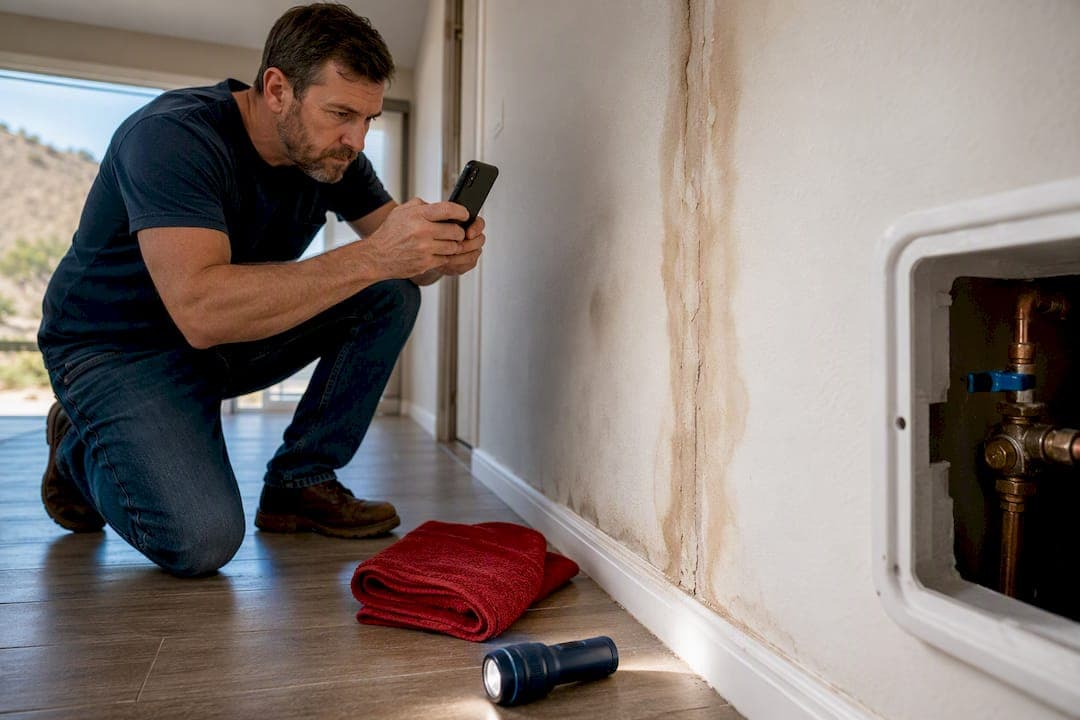
- Photograph the damage before cleanup starts, and again after repairs, to create a timeline an adjuster can follow.
- If the repair cost sits close to your deductible, paying out of pocket instead of filing a claim often makes more financial sense, since a claim on record can affect future premiums.
- For large-scale damage, a public adjuster can help negotiate a payout, though state rules cap what they can charge, so check before signing an agreement.
Our guide on the first sixty minutes after a bathroom flood walks through documentation steps in more detail if your emergency involves water damage specifically.
Ways to Lower Your Emergency Plumbing Costs
You can't control a burst pipe at midnight, but you can control how much it costs you.
- Membership or service plans, typically $15 to $30 a month, often waive the dispatch fee entirely and lock in standard hourly rates instead of emergency ones.
- Apply safe temporary fixes while you wait: shut off the main water valve, use towels to contain spreading water, and avoid touching electrical outlets near standing water.
- Ask directly whether the dispatch fee gets credited and negotiate the scope of work before the technician picks up a tool.
- Get multiple itemized quotes when the situation allows even a short wait.
Pro Tip: If your home has older plumbing or a history of leaks, run the math on a membership plan against a single dispatch fee. For a household that calls twice a year, the plan often pays for itself.
Questions to Ask Before You Hire an Emergency Plumber
A stressful midnight call is exactly when it's easiest to skip due diligence, so keep this checklist by the phone.
- Verify the plumber's license and insurance directly with your state licensing board rather than trusting a directory listing, since consumer protection guidance recommends checking primary sources during high-stress calls.
- Ask what the dispatch fee is, whether it's credited toward the final bill, and what the estimated minimum billed hours look like.
- Confirm parts availability, whether the work carries a warranty, and whether you'll receive an itemized invoice.
- Watch for red flags: a plumber who refuses to provide license information, demands cash only, or gives vague answers about scope or price.
Our guide on hiring a licensed plumber walks through each of these checks in more depth.
A First-60-Minutes Checklist From USA Plumbing and Septic LLC
A 24/7 dispatch service covers multiple local areas, with every call starting with clear billing expectations, including a dispatch fee, an itemized estimate before work begins, and photo documentation for insurance use. Our 24 hour plumbing emergency checklist covers this in full, but the short version: shut off your water at the main, photograph the damage, contain what you can with towels or buckets, call a licensed plumber, and write down who you spoke with and when.

When Paying the Emergency Premium Actually Makes Sense
The premium stings, but faster response often prevents remediation costs that dwarf the extra $200 or $300 you paid for a midnight visit. An active leak, a sewage backup, or anything touching gas or electrical safety justifies the higher rate without debate. A slow drain or a toilet that still flushes can usually wait until morning rates apply. Either way, document the damage and keep every receipt, because that habit costs nothing and pays off if you ever need to file a claim.
— JOHN
Call Usaplumbingseptic Before a Small Leak Becomes a Big Bill
This service aims to provide transparent pricing with a stated dispatch fee, a written estimate before work starts, and photo documentation that can be used for insurance claims.

Technicians are available around the clock to handle emergencies such as burst pipes, sewer backups, or water heater failures. You get an itemized invoice every time, not a vague total. Our examples of real emergency situations show exactly what warrants a call now versus what can wait. If you're dealing with an active leak tonight, reach out to Usaplumbingseptic and get a technician dispatched with your pricing laid out before anyone touches a wrench.
Sources
- How Much Does an Emergency Plumber Cost? 2025 Data
- Emergency plumbing cost (Modernize)
- File Homeowners Insurance Claim After a Storm - Consumer Reports
- Emergency Plumber Cost Guide: What Homeowners Actually Pay After Hours - All About Home Service
FAQ
How Much Does an Emergency Plumber Typically Cost?
Emergency plumbers typically charge $100 to $500 per hour, with holiday rates occasionally reaching $600. A separate dispatch fee, usually $75 to $250, often applies on top of the hourly rate.
Is a Dispatch Fee the Same as the Hourly Rate?
No, the dispatch fee covers sending a technician to your location and is separate from labor charges. Many companies credit the dispatch fee toward your final invoice once work begins, but you should confirm this before scheduling.
Should I File an Insurance Claim for a Burst Pipe?
File a claim when repair and remediation costs clearly exceed your deductible, since insurers require receipts and photo documentation to process the request. For smaller repairs near your deductible amount, paying out of pocket often avoids potential premium increases.
Do Membership Plans Really Save Money on Emergency Calls?
Yes, for many households. Membership plans typically cost $15 to $30 a month and often waive the dispatch fee while locking in standard hourly rates instead of emergency pricing.
Does Usaplumbingseptic Charge for Emergency Dispatch?
Usaplumbingseptic provides an itemized estimate before work begins on every emergency call, so you know the dispatch fee and scope upfront. Current pricing details are available directly through Usaplumbingseptic's contact page.