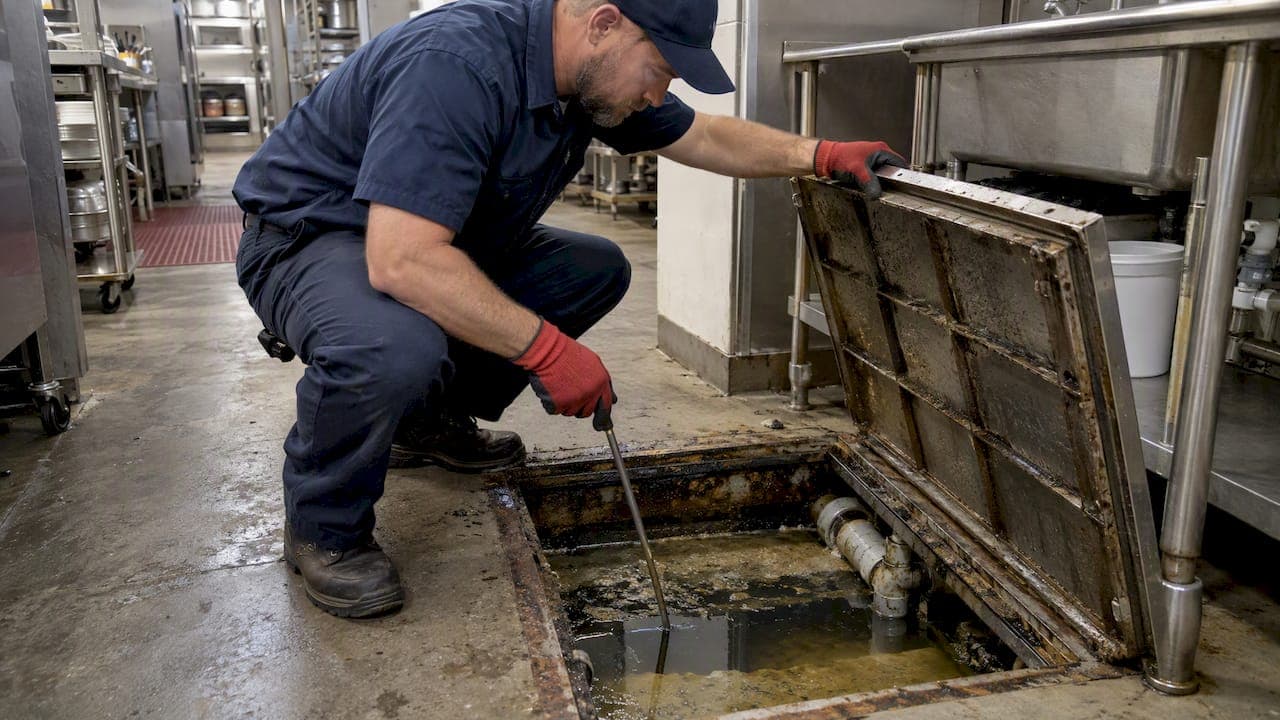
Keep grease traps cleaned on a schedule that matches the device: small under-sink traps need weekly attention, while larger interceptors should be pumped at 60 to 90 days or once FOG and solids reach 25% of liquid depth, whichever comes first. Never use enzymes or solvents in place of physical cleaning, and always keep maintenance receipts and logs on hand for inspection.
TL;DR:
- Grease traps should be pumped at 25% of their liquid capacity, with smaller traps cleaned weekly and interceptors every 60 to 90 days.
- Proper documentation, including detailed logs and hauler manifests, is critical for compliance and can prevent citations during inspections.
- Physical cleaning with scooping and scraping is mandatory; enzymes or solvents are prohibited as replacements.
- Costs vary by trap size, with small under-sink traps typically costing $150 to $300 per visit and large interceptors exceeding $700.
- Regular maintenance and source control practices, such as scraping and using strainers, significantly extend intervals between pump-outs.
Table of Contents
- Step-by-step cleaning procedure for traps and interceptors
- Setting a cleaning schedule: the 25% rule and other triggers
- What inspectors expect: logs, manifests, and banned shortcuts
- Device types and what each one needs day to day
- What grease trap cleaning typically costs
- Best management practices that cut FOG at the source
- Field lessons from servicing restaurant grease traps
- Why we treat maintenance as protection, not paperwork
- How we support your grease trap and interceptor program
- FAQ
- Sources
Step-by-step cleaning procedure for traps and interceptors
Grease trap cleaning follows a set sequence whether your crew handles a small under-sink unit or a hauler services a large in-ground interceptor. Skipping steps leads to repeat service calls and failed inspections.
Before anyone opens a lid, set up basic safety gear: gloves, eye protection, and non-slip boots, since trapped gases and slick grease create real hazards.
- Stop kitchen use of the sink or drain line feeding the trap.
- Check the flow restrictor and confirm tools and waste containers are staged nearby.
- Remove the lid and set it aside on a clean surface.
- Lift out baffles carefully, since cracked or warped baffles signal it's time for repair.
- Skim floating grease from the surface into a sealed waste container.
- Bail out remaining water.
- Remove solids from the bottom with a scoop or shovel.
- Scrape grease and residue from the walls, baffles, and lid.
- Refill the trap with water and reinstall all parts.
For interceptors serviced by a licensed hauler, the process includes full-volume removal, direct measurement of FOG and solids, cautious back-flushing when needed, and a visual inspection of baffles and inlet/outlet tees before the unit goes back into service.
- Confirm water refill level before returning the trap to use.
- Log the date, volume removed, and condition of baffles and seals.
- File the hauler's manifest or receipt immediately, not at the end of the week.
Pro Tip: Photograph the empty interceptor before refilling it. A dated photo paired with your log entry gives inspectors instant proof of a completed service.
Setting a cleaning schedule: the 25% rule and other triggers
Most municipal BMPs rely on the 25% rule: pump the interceptor once combined FOG and solids reach a quarter of the liquid depth, measured with a dipstick or hydrometer stick marked at the baffle. That same guidance sets a 90-day outer limit for pumping even when the 25% threshold hasn't been reached.

Cadence varies by device. Small passive traps under a sink typically need weekly cleaning, interceptors run on a 60 to 90 day cycle, and electro-mechanical grease removal devices (GRDs) follow a manufacturer-set schedule that's often daily for oil buckets and weekly for internal parts.
Several conditions push that schedule tighter:
- A fryer-heavy menu that generates more FOG than a typical kitchen.
- Visible grease sheen or solids in the discharge line.
- Skipped best management practices like pre-scraping or strainer use.
- Past inspection notes flagging slow buildup.
If your actual measurements support a longer interval than the standard cadence, document the readings over several service cycles. That record, not a guess, is what satisfies an inspector asking why you deviated from the default schedule. Our guide to building a commercial plumbing maintenance schedule walks through setting that cadence in more detail.
What inspectors expect: logs, manifests, and banned shortcuts
Inspectors want to see paperwork as much as they want to see a clean trap. BMP manuals commonly call for maintenance logs and hauler manifests to be kept on-site for at least three years, with each entry showing the date, volume removed, and the name of the person or company performing the work.
A documented service history is your strongest defense in an inspection. Without it, even a properly maintained trap can trigger a citation simply because there's no proof of when it was last serviced.
Common municipal rules operators run into:
- No enzymes, emulsifiers, acids, or solvents used in place of physical cleaning.
- No hot-water bypass to melt grease through the system.
- Pump-out required once the 25% threshold is reached, not after.
- Effluent checked visually for grease carryover during inspections.
Keep a binder or a shared digital folder indexed by service date, with scanned receipts attached to each entry. Our manager's guide to commercial kitchen plumbing requirements covers the broader code picture beyond grease traps specifically.
Device types and what each one needs day to day
Passive traps sit under a sink and separate grease by gravity, needing weekly scooping and wall scraping. In-ground interceptors handle higher volumes and sit on a 60 to 90 day pumping cycle. Electro-mechanical GRDs automate separation and run on tighter internal schedules.
- Empty oil collection buckets daily on GRD units.
- Clean strainers and inlet screens at the end of each shift.
- Check timer settings and skimmer blades weekly on automatic units.
- Inspect gaskets and seals monthly for wear on any device type.
Call the manufacturer for GRD service and warranty issues; call a permitted hauler for interceptor pump-outs. Cracked baffles, persistent odors, or slow drainage despite regular cleaning usually mean it's time for repair rather than another cleaning cycle. Our post on signs your drains need professional cleaning covers warning signs worth acting on quickly.
What grease trap cleaning typically costs
Per-visit pricing depends heavily on trap size and access. Small under-sink traps typically run $150 to $300 per visit, mid-size interceptors run $300 to $500, and large interceptors often exceed $700, with disposal fees, tight access, and emergency scheduling all pushing costs higher.
| Trap size | Typical cost per visit |
|---|---|
| Small under-sink trap | $150 to $300 |
| Mid-size interceptor | $300 to $500 |
| Large interceptor | $700 or more |
- Clear access paths before the hauler arrives to cut labor time.
- Bundle multiple properties under one service contract where possible.
- Schedule during off-peak hours to avoid emergency premiums.
A single-location kitchen on a 90-day interceptor cycle paying the mid-size rate lands around four service visits a year, before any emergency calls.
Best management practices that cut FOG at the source
Dry-wiping pans and plates before washing keeps grease out of the drain entirely. Strainers on every floor drain and sink catch solids before they reach the trap, and storing used fryer oil in sealed containers instead of pouring it down a drain removes the biggest single FOG source in most kitchens.
- Train staff to scrape plates into the trash, not the sink.
- Post a strainer-check reminder at each prep and wash station.
- Schedule hood and vent cleaning on a calendar your kitchen already uses.
- Track oil-drum fill rate weekly to spot a sudden jump in FOG volume.
Pro Tip: A sudden increase in how fast your oil drum fills often shows up weeks before a trap starts backing up. Treat it as an early warning, not a coincidence.
Field lessons from servicing restaurant grease traps
Thorough scraping of the lid, baffles, and walls at every visit prevents hardened grease from seeding future buildup, which measurably extends the interval before the next pump-out is required. Haulers often charge less when that prep work is already done.
- Clear the access path and label the trap's size and last service date before the hauler arrives.
- Never flush hot water through a trap to melt grease; it just pushes FOG further downstream.
- Never pour pumped waste back into any drain, even temporarily.
Pro Tip: Label your trap's capacity directly on the lid in permanent marker. It saves the hauler a measurement step and shows up as a time-saver on the service receipt.
Why we treat maintenance as protection, not paperwork
Every shutdown we've responded to traced back to a skipped cleaning or a missing log entry that let a small problem become an emergency call. A standing service contract with an updated log is cheaper than the alternative, every time.
— JOHN
How we support your grease trap and interceptor program
We offer commercial pumping, inspections, and maintenance contracts for restaurants and commercial kitchens, with emergency response available. Whether setting up a maintenance contract or needing an emergency pump-out before a health inspection, help is available from qualified plumbing professionals.

Before you call, have your trap type and size, the date of your last service, and any access notes ready. That information lets us quote accurately and get a crew scheduled without a second site visit. For restaurant and commercial kitchen operators nearby, reach out through Usaplumbingseptic to set up an inspection, a pumping visit, or an ongoing maintenance contract.
- Commercial grease trap and interceptor pumping.
- Routine inspections and compliance documentation support.
- Emergency response when a trap backs up unexpectedly.
- Maintenance contracts scheduled around your kitchen's actual FOG load.
FAQ
How often should a grease trap be cleaned?
Small under-sink traps generally need weekly cleaning, while larger interceptors are pumped every 60 to 90 days or once FOG and solids reach 25% of liquid depth, whichever happens first. High-volume kitchens with heavy fryer use often need shorter intervals than this baseline.
What is the 25% rule for grease interceptors?
The 25% rule means pumping an interceptor once combined grease and solids reach a quarter of its total liquid depth, measured with a dipstick at the baffle. This measurement standard comes from municipal grease interceptor guidance used across most jurisdictions.
How long should grease trap maintenance records be kept?
Most municipal BMP programs recommend keeping maintenance logs and hauler manifests for at least three years. Each log entry should show the date, volume removed, and who performed the service.
Can enzymes or chemical cleaners replace physical grease trap cleaning?
No. Municipal fact sheets specifically prohibit enzymes, emulsifiers, acids, and solvents as a substitute for scooping, scraping, and pumping. Emulsified grease can pass through the trap and cause blockages further down the line.
What does grease trap cleaning typically cost?
Small traps generally run $150 to $300 per visit, mid-size interceptors run $300 to $500, and large interceptors often exceed $700, with access difficulty and disposal fees affecting the final price. Operators managing their own schedule can request a quote directly based on trap type and size.
Sources
- Grease Interceptor Maintenance — City of Annapolis
- Grease trap maintenance checklist — Central Contra Costa Sanitary District
- FOG Best Management Practices for Food Services — Pocatello