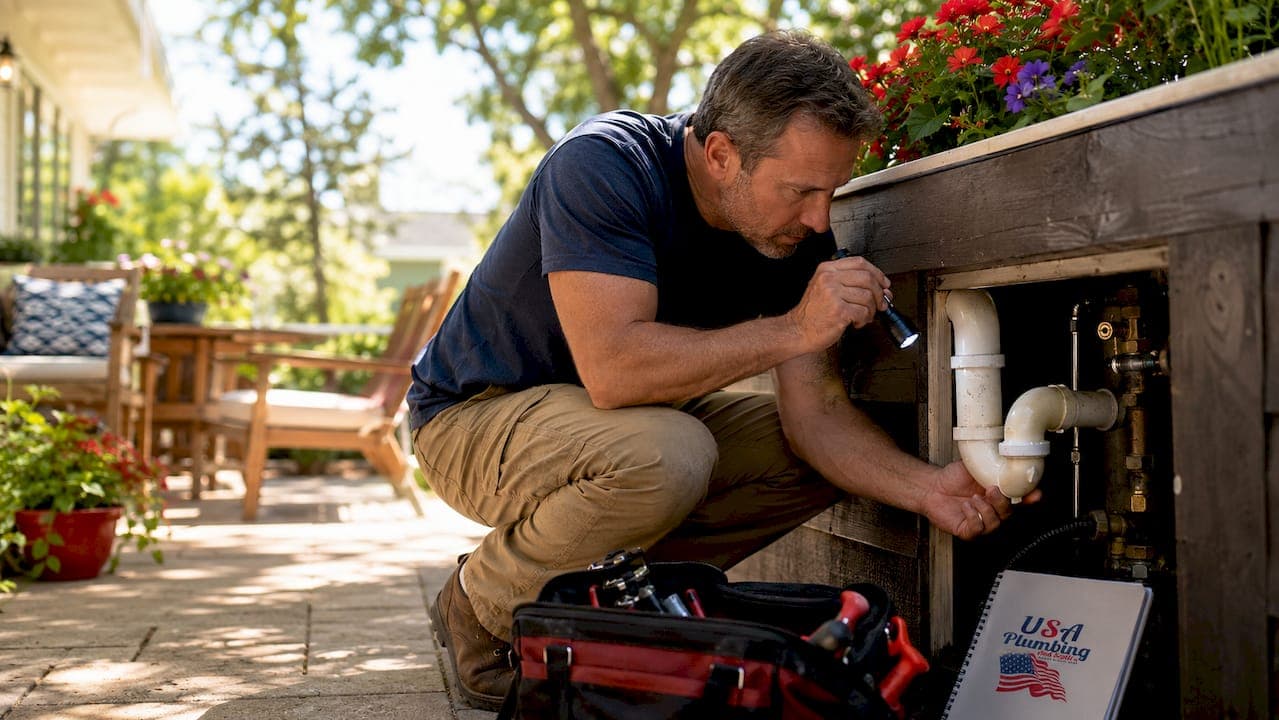
A drain trap is a U-shaped pipe section designed to hold water that blocks sewer gases from entering your home through drains. This simple, no-moving-parts barrier is one of the most important safety features in your entire residential plumbing system. Gases like methane and hydrogen sulfide rise from sewer lines and would flow freely into your living space without a trap in the way. Understanding how drain traps work gives you the knowledge to spot problems early, fix them yourself, and avoid costly repairs.
How does the drain trap mechanism function to block sewer gases?
The drain trap mechanism relies entirely on water. When water flows down your sink, it passes through a curved pipe section shaped like the letter "P" laid on its side. Gravity pulls the water through, but a small amount stays behind in the lowest curve of the pipe. That retained water forms a liquid seal that blocks toxic gases such as methane, carbon monoxide, and hydrogen sulfide from rising into your home.
The water seal works because gases cannot pass through liquid. Sewer gases build up pressure in the drain line below, but they hit the water barrier and stop. Every time you run water, the old seal flushes out and a fresh one forms automatically. No batteries, no valves, no moving parts required.
Here is what happens step by step when water flows through a P-trap:
- Water enters the trap from the sink tailpiece above
- It flows through the curved bottom section, filling the U-bend
- Excess water exits through the outlet pipe toward the drain line
- A small volume stays trapped in the curve, forming the seal
- Sewer gases below the trap cannot rise past the water barrier
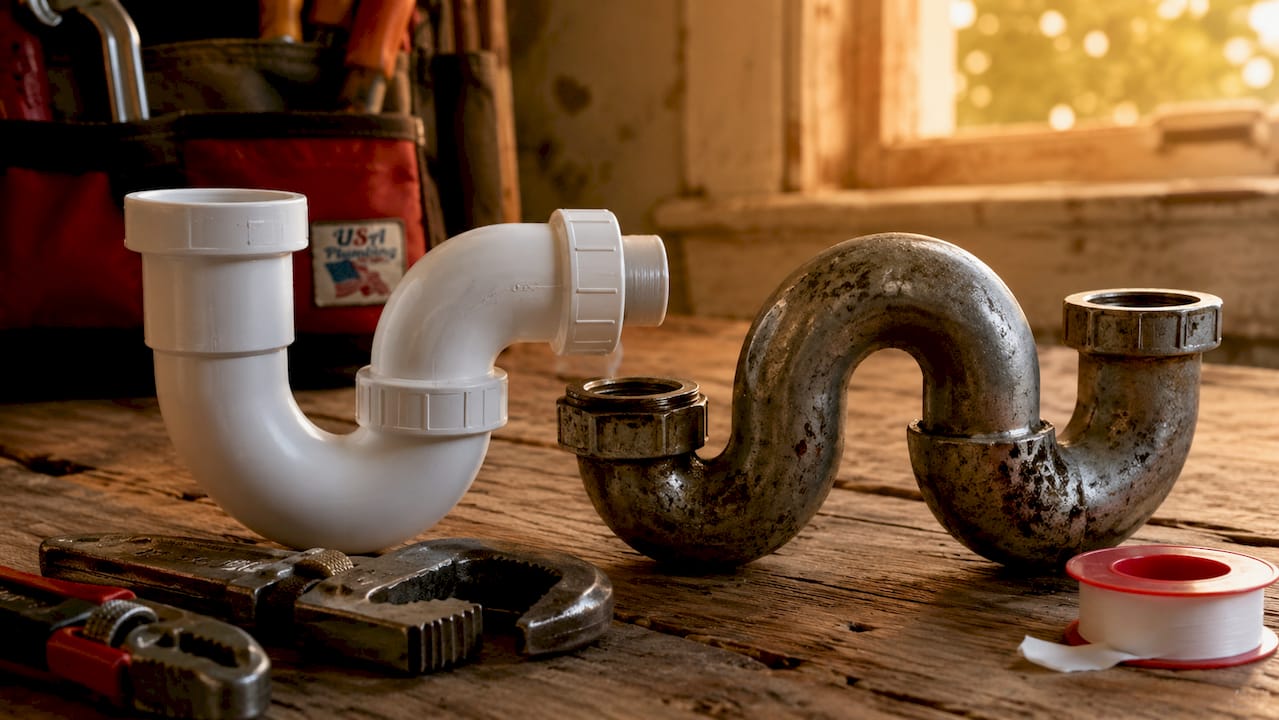
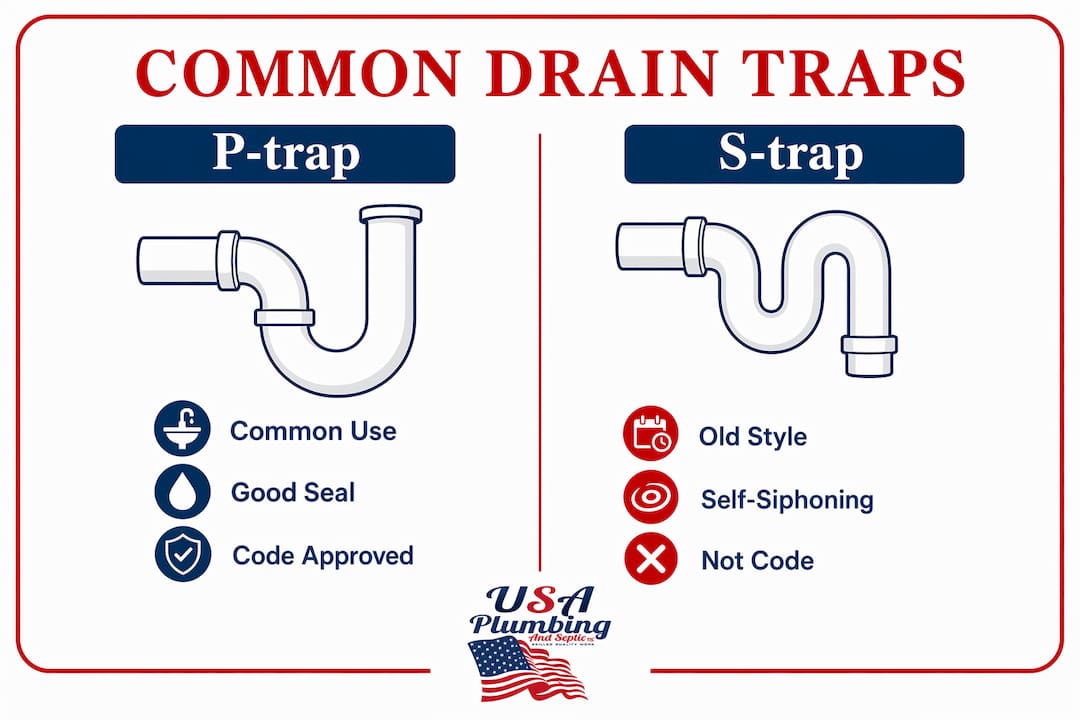
The P-trap is the standard shape used in modern homes. The older S-trap curves down and then back up again, which creates a self-siphoning risk. When water drains fast, an S-trap can pull its own seal out with the rushing water, leaving the pipe open to gases. Modern plumbing codes prohibit S-traps for exactly this reason.
Pro Tip: If you smell a sulfur or rotten egg odor near a drain, the water seal in that trap has likely evaporated or been siphoned away. Run water for 30 seconds to restore it before assuming a bigger problem exists.
What are the common types of drain traps?
The P-trap is the standard for modern household plumbing. It connects to a vent pipe, which keeps the seal stable and prevents siphoning. Modern plumbing codes prohibit S-traps and require P-traps on all residential drains because they create consistent, airtight seals and proper flow. Knowing the differences between trap types helps you make the right choice for each drain in your home.
The main trap types you will encounter are:
- P-trap: The code-compliant standard for sinks, showers, and tubs. Connects to a vent within 5–6 feet for a 2-inch pipe. Available in PVC, ABS, and chrome-plated brass.
- S-trap: Banned or strongly discouraged under modern codes. Self-siphoning risk makes it unreliable and unsafe.
- Deep-seal trap: Recommended for floor drains and infrequently used drains. Features a water seal depth of at least 2 inches, compared to roughly 1 inch in a standard sink trap. Resists evaporation better in dry climates.
- Drum trap: An older cylindrical design found in some vintage homes. Not code-compliant for new installations and difficult to clean.
| Trap type | Best use | Key advantage | Key drawback |
|---|---|---|---|
| P-trap | Sinks, showers, tubs | Code-compliant, easy to clean | Needs nearby vent |
| Deep-seal trap | Floor drains, basements | Resists evaporation | Larger footprint |
| S-trap | Legacy installations only | None recommended | Self-siphoning risk |
| Drum trap | Vintage homes only | None recommended | Not code-compliant |
Material choice matters too. PVC is affordable and corrosion-resistant, making it the most common choice for under-sink applications. ABS is similar but slightly more rigid. Chrome-plated brass looks better in exposed installations, such as pedestal sinks, and lasts longer under heavy use. All three materials perform the same sealing function when properly installed.
Plumbing code compliance in Arizona and across the Southwest requires traps on every sanitary fixture. Missing or non-compliant traps cause code violations, failed inspections, and real health risks from toxic gas exposure.
How does proper venting support drain traps?
A vent pipe is critical for keeping the water seal intact. Without venting, water rushing down a drain creates a partial vacuum behind it. That vacuum pulls the water seal right out of the trap, a process called siphoning. Once the seal is gone, sewer gases have a clear path into your home.
Vent pipes connect to drain lines and run up through the roof, allowing outside air to enter the system. That air equalizes pressure so water flows smoothly without creating a vacuum. The vent must be located within 5–6 feet of the trap for a 2-inch pipe to prevent siphoning. Longer distances reduce the vent's effectiveness and put the seal at risk.
Air admittance valves, commonly called AAVs, offer an alternative where running a vent pipe through the roof is not practical. An AAV is a one-way mechanical valve that opens to admit air when water drains and closes to block gases from escaping. Many local codes allow AAVs in specific situations, but they do not replace the main roof vent stack entirely.
Signs that your venting system has a problem include:
- Gurgling sounds from drains after flushing a toilet
- Slow drainage in multiple fixtures at once
- Persistent sewer odors even after running water in the trap
- Bubbling in the toilet bowl when a nearby sink drains
Pro Tip: Check your roof vent stacks once a year for blockages from leaves, bird nests, or debris. A blocked vent stack causes siphoning across multiple traps in your home simultaneously. A quick visual inspection from the ground can save you from a confusing odor problem.
Understanding how plumbing roof vents work alongside your drain traps gives you a complete picture of why both systems must function together.
How can homeowners maintain drain traps and fix common issues?
Drain trap maintenance is straightforward and mostly free. The most common problem is a dry trap caused by evaporation, especially in guest bathrooms, basement floor drains, or vacation homes. Running water down unused drains quickly restores the water seal and eliminates sewer odors at minimal cost. In dry climates like the Bullhead City area, this matters even more because water evaporates faster from trap curves.
Follow these steps to keep your traps in good shape:
- Run water in unused drains monthly. Thirty seconds of flow is enough to refill the seal in a standard P-trap.
- Add a small amount of mineral oil to floor drain traps. Oil floats on top of the water seal and slows evaporation significantly in dry or heated spaces.
- Clean the trap when drainage slows. Place a bucket under the trap, unscrew the slip nuts by hand, remove the trap, clear any debris, and reinstall.
- Hand-tighten slip nuts only. Slip-nut fittings are designed for hand tightening. Over-tightening cracks plastic components or deforms the rubber washers, which causes leaks.
- Inspect washers when reassembling. A worn or flattened washer is the most common cause of a dripping trap joint after cleaning.
- Check for vent issues if odors persist. If running water does not fix the smell, the problem may be a vent blockage or trap leak rather than a dry seal.
Common causes of trap failure worth knowing:
- Evaporation: Happens in drains used less than once a week
- Siphoning: Caused by vent failure or improper vent distance
- Worn washers: Lead to slow drips at slip-nut joints
- Cracked trap body: Usually from over-tightening or physical impact
- Blocked vent stack: Causes gurgling and multi-fixture odor problems
Pro Tip: Never use plumber's glue or cement on standard under-sink P-trap fittings. Those connections are meant to come apart for cleaning and repairs. Gluing them shuts off your access and forces a full replacement the next time you need to clear a clog.
Key takeaways
Drain traps work by holding water in a curved pipe section that physically blocks sewer gases from entering your home, and that seal depends on proper venting, correct trap type, and regular maintenance to stay effective.
| Point | Details |
|---|---|
| Water seal is the core function | A small volume of water in the trap curve blocks methane and hydrogen sulfide from rising into living spaces. |
| P-traps are the code standard | Modern plumbing codes require P-traps on all fixtures; S-traps are prohibited due to self-siphoning risk. |
| Venting prevents siphoning | Vent pipes must sit within 5–6 feet of a 2-inch trap to equalize pressure and protect the water seal. |
| Dry traps are easy to fix | Running water for 30 seconds in unused drains restores the seal and eliminates odors at no cost. |
| Hand-tighten only | Over-tightening slip-nut fittings cracks plastic and deforms washers, causing leaks at the joint. |
What most homeowners get wrong about drain traps
Most people assume a drain trap is just a pipe shape with no real purpose. That assumption leads to ignored odors, skipped maintenance, and expensive repairs that were completely avoidable.
The biggest misconception I see is that sewer smells always mean a major plumbing problem. Nine times out of ten, the fix is running water down a drain that has not been used in a few weeks. A dry trap in a basement floor drain or a guest bathroom is one of the most common and cheapest problems in residential plumbing. Homeowners call a plumber, pay for a service visit, and watch the technician turn on a faucet for 30 seconds.
The second misconception is that tighter is better when reassembling a trap. Hand-tight is the correct standard for slip-nut fittings. I have seen cracked PVC traps under sinks that were installed by well-meaning homeowners who grabbed a wrench and went one turn too far. A cracked trap drips slowly inside a cabinet, warps the floor, and causes mold before anyone notices.
Adhering to modern plumbing codes is not just about passing inspections. It protects your family from real health risks. Methane and hydrogen sulfide are not just unpleasant. They are genuinely dangerous at elevated concentrations. A properly installed, properly vented P-trap costs almost nothing to maintain and does its job silently for decades.
My recommendation: walk through your home once a month and run water in every drain you have not used recently. Check under sinks for drips. Look at your floor drains in the garage and laundry room. That five-minute habit prevents the majority of trap-related problems most homeowners ever face.
— JOHN
Drain trap help from Usaplumbingseptic
When a drain trap problem goes beyond a quick DIY fix, Usaplumbingseptic is ready to help. We serve Bullhead City, Fort Mohave, Mohave Valley, Laughlin, and the surrounding area with reliable, professional plumbing services available 24/7.
Whether you need a trap replaced, a vent stack cleared, or a full drain system inspected for code compliance, our experienced plumbers handle it efficiently. We also respond to emergency drainage problems any time of day or night. Visit our Golden Valley plumbing services page to learn more, or explore our Mohave County plumbing guide for local code and maintenance information. Call us today and get the job done right the first time.
FAQ
What does a drain trap actually do?
A drain trap holds a small amount of water in a curved pipe section that blocks sewer gases like methane and hydrogen sulfide from entering your home. The water seal reforms automatically every time you use the drain.
Why does my drain smell even after I run water?
If running water does not fix the odor, the cause is likely a vent blockage, a cracked trap fitting, or a missing trap on a nearby fixture. Checking the vent stack and inspecting trap joints for leaks are the next steps.
Are S-traps still allowed in homes?
S-traps are prohibited under modern plumbing codes because they self-siphon, pulling the water seal out during fast drainage and leaving the pipe open to sewer gases. Existing S-traps in older homes should be replaced with P-traps.
How often should I clean my drain trap?
Clean the trap whenever drainage slows noticeably, typically every few months for heavily used sinks. Remove the trap by hand, clear debris, inspect the washers, and reinstall without using tools to tighten the slip nuts.
What is a deep-seal trap and when do I need one?
A deep-seal trap holds at least 2 inches of water instead of the standard 1-inch depth, making it far more resistant to evaporation. Use one for floor drains, basement drains, or any fixture used less than once a week, especially in dry climates.