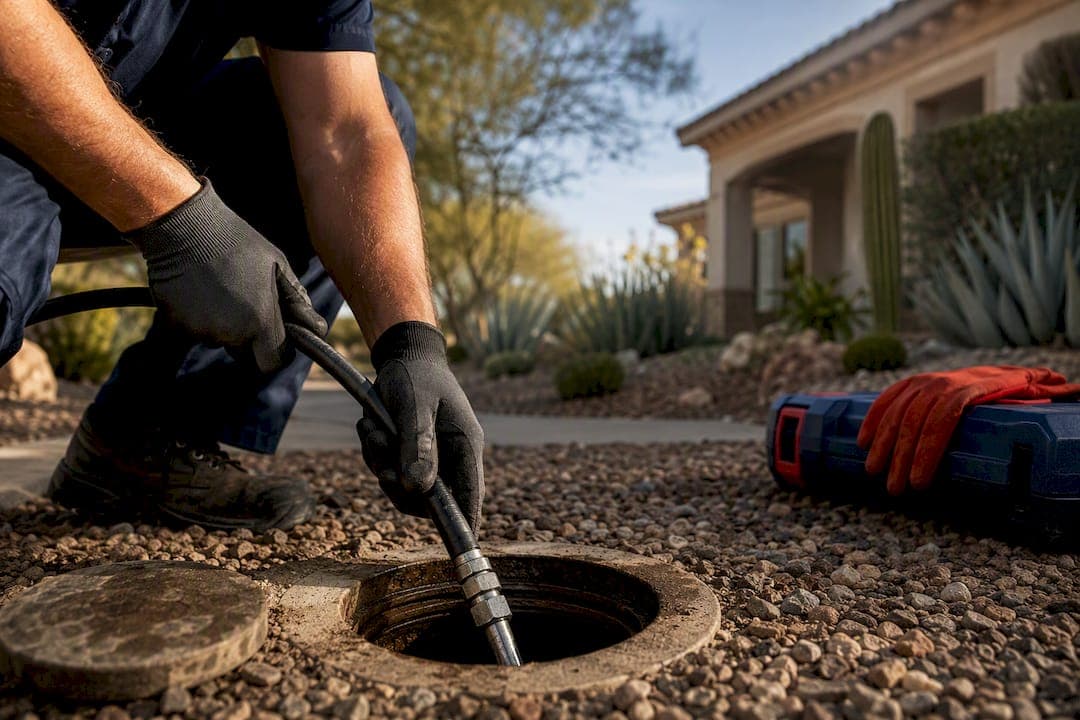
Hydro jetting typically costs $350 to $900 for a standard residential lateral, with simple single-drain jobs starting around $100 to $250 and severe root or scale problems running $1,200 or more. The biggest swing factors are blockage severity, pipe access, and timing of service calls. Camera inspections are often bundled into the price, but not always, so ask before you book.
TL;DR:
- Hydro jetting costs vary widely, with typical residential jobs ranging from $350 to $900, but severe blockages can exceed $1,200 depending on complexity.
- The total price depends on blockage type, pipe length and material, accessibility, labor structure, and whether camera inspections are included.
- Bundled services with a pre- and post-inspection camera often cost between $400 and $1,200, helping prevent pipe damage and hidden issues.
- Emergency or after-hours calls can add 25% to 75% to the base price, making scheduling routine maintenance more economical.
- Choosing a plumber should prioritize clear estimates, camera inclusion, and warranty coverage over just the lowest price quote.
Table of Contents
- How Much Does Hydro Jetting Cost by Job Type?
- What Factors Actually Drive Your Hydro Jetting Quote?
- What Extra Charges Should You Expect on the Invoice?
- What Do Real Hydro Jetting Jobs Actually Cost?
- How Do You Choose a Plumber Without Overpaying?
- What Actually Drives Costs on the Jobs We See
- Editorial Take: Why the Cheapest Quote Rarely Wins
- Ready to Book a Hydro Jetting Visit?
- Where This Pricing Data Comes From
- Sources
- FAQ
How Much Does Hydro Jetting Cost by Job Type?
The national average hydro jetting cost lands around $475, but that number hides a lot of ground. Angi's cost data puts the full range anywhere from $100 on the low end to $2,000 for the toughest jobs, and most homeowners land somewhere between $350 and $600 for a typical service call.
Here's how the pricing breaks down by scope of work:
- Single fixture or branch drain: $250 to $450, covering a clogged kitchen or bathroom line with easy access.
- Main residential lateral (house to street): $350 to $900, the most common job Usaplumbingseptic sees, according to AlertPlumber's cost guide.
- Root intrusion jobs: $600 to $1,500, since roots require slower passes and sometimes a specialized cutting nozzle.
- Commercial or multi-unit properties: often $800 to well over $2,000, driven by pipe diameter, grease buildup, and longer runs. How hydro jetting clears commercial drains fast breaks down why commercial equipment and labor time push costs higher.
- Emergency or after-hours calls: add a premium on top of any of the above, sometimes 25% to 75% more than a scheduled visit.
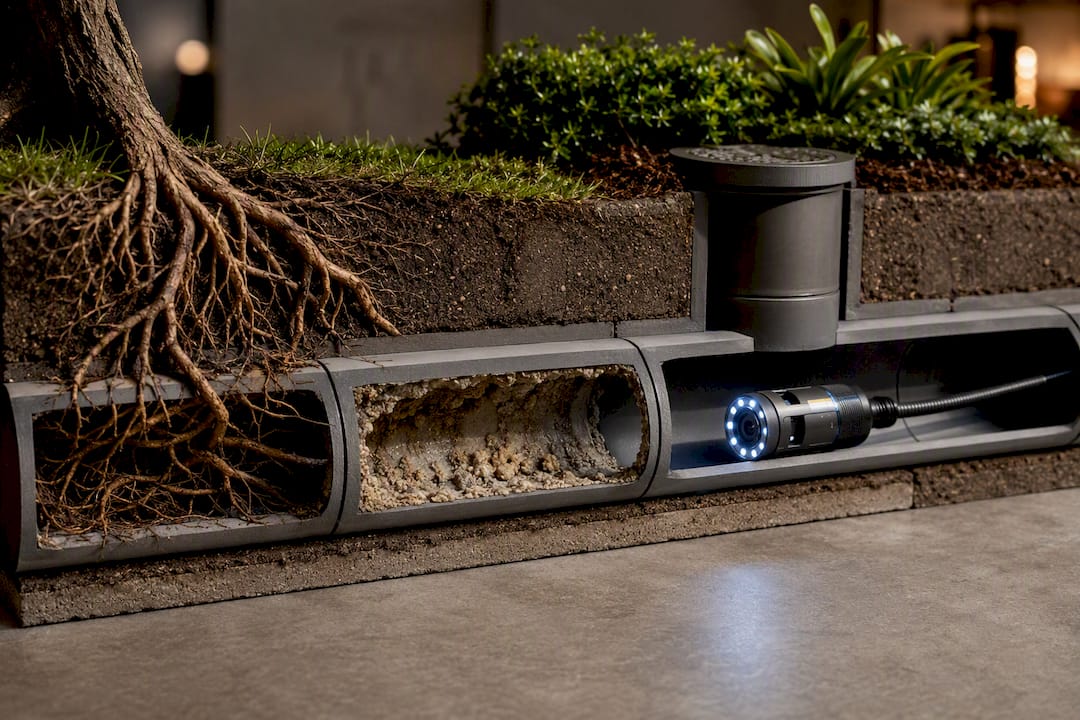
Bundled pricing, meaning camera inspection plus the jetting plus a post-clean camera pass to confirm the line is clear, usually runs $400 to $1,200 for a typical lateral. That bundle matters more than it sounds. A camera-first workflow lets the plumber see what's actually in the pipe before blasting it with pressurized water, which protects older or compromised sections from damage.
Regional labor rates and access conditions push prices in either direction, too. A property with an easy-to-reach cleanout costs less to service than one where the plumber has to dig one out or route around tight crawlspace access. Location affects labor costs more than it affects the equipment itself, since jetting rigs and technique stay fairly standard across the country.
What Factors Actually Drive Your Hydro Jetting Quote?
A quote that seems high or low usually makes sense once you understand what's being priced. Five factors do most of the work.
- Blockage type and severity. Grease clogs clear relatively fast with a standard nozzle. Roots take longer and may require a root-cutting nozzle attachment, which adds both time and a surcharge. Mineral scale in old cast iron pipe is the slowest to clear because the plumber has to make multiple passes at lower pressure to avoid damaging weakened pipe walls.
- Pipe length, diameter, and material. A 40-foot residential lateral clears faster and cheaper than a 150-foot commercial run. Older clay or cast-iron pipe often requires reduced PSI to avoid further stressing already-compromised joints, which means more passes and more labor time for the same result.
- Accessibility and cleanout condition. If there's no accessible cleanout, or if the existing one is buried under landscaping or paved over, expect an added charge for locating and exposing it. Pulling a toilet to access a line adds a separate line item too.
- Labor structure and timing. Some companies quote a flat fee per job; others bill hourly. Either can be fair, but hourly billing without a cap makes it harder to budget. Scheduling during business hours avoids the after-hours premium that emergency calls carry.
- Camera inspection. A standalone camera scope typically runs $150 to $350. When it's bundled with the jetting service, that cost usually drops or disappears into the total package price.
Residential jetting equipment typically runs 1,500 to 4,000 PSI, while commercial rigs push higher. The pressure and nozzle choice a plumber selects directly affects both job time and whether the pipe needs lining or repair work afterward. That's a technical detail worth asking about, since a rig running too hot on an old clay line can turn a cleaning job into a repair job.
Pro Tip: Ask your plumber what PSI setting they plan to use on your specific pipe material. A tech who can't answer that question, or who doesn't slow down for older cast iron or clay pipe, is a red flag worth walking away from.
What Extra Charges Should You Expect on the Invoice?
The quoted jetting price rarely tells the whole story. Several common add-ons show up on final invoices, and knowing them ahead of time keeps you from feeling blindsided.
- Camera inspection (if not bundled): $150 to $350 for a full scope of the line.
- Toilet removal and reinstall: $75 to $200 when the cleanout is only accessible through a bathroom fixture.
- Root-cutter or specialty nozzle surcharge: $50 to $150 added when standard nozzles won't cut it.
- Descaling passes for old cast iron: priced per additional pass, often $75 to $200 each.
- Post-clean camera verification: sometimes included in bundled pricing, otherwise $100 to $200.
- Sewer cleanout installation (if none exists): $600 to $1,500 depending on dig depth and pipe material.
- Sewer repair per linear foot, if jetting reveals a collapsed or cracked section: costs vary widely and belong in a separate conversation, covered in more detail in what sewer line replacement costs.
- Sewage cleanup or restoration: if a backup already flooded a basement or crawlspace, this can add several hundred to a few thousand dollars.
- After-hours or emergency fee: commonly 25% to 75% above standard rates.
Emergency backups almost always cost more than scheduled maintenance would have, and that gap is the statistic worth remembering: preventive jetting on a normal schedule is frequently cheaper than the combined cost of one emergency call plus water damage restoration. A pipe that backs up on a Saturday night doesn't wait for business hours, and neither does the bill.
What Do Real Hydro Jetting Jobs Actually Cost?
Numbers on a chart only go so far. Here's how five common scenarios play out in practice, based on typical line-item structures plumbers use.
- Simple kitchen sink clog, easy access. No camera needed if the clog is obvious and shallow. Jetting alone: $200 to $300. Total stays low because there's no crawling under the house or digging up a yard.
- Main lateral with light grease buildup, camera included. Camera scope confirms grease rather than a structural issue, then a single jetting pass clears it. Bundled total: $400 to $650.
- Root intrusion requiring multiple passes. Camera reveals roots at two joints. Root-cutting nozzle attachment adds time and a surcharge. Post-clean verification camera confirms clear flow. Total: $900 to $1,500.
- Emergency basement backup, after-hours call. Technician arrives same night, sewage cleanup needed before jetting can even start. After-hours premium applies on top of jetting and camera work. Total: $1,300 to $2,500, sometimes higher depending on restoration scope.
- Scheduled annual maintenance jet for an older home. No active clog, just preventive descaling on cast iron pipe. Lower pressure, single pass, camera check to monitor pipe condition over time. Total: $350 to $550.
Camera inclusion, time on site, and after-hours timing are the three levers that separate a $400 job from a $1,500 job doing roughly the same work. If a quote comes in far below these ranges, ask what's excluded. If it comes in well above, ask for the line-item breakdown and get a second estimate before you sign anything, especially for anything above $1,000.
How Do You Choose a Plumber Without Overpaying?
A little homework before you book saves real money later. Ask every plumber the same set of questions so you can compare quotes fairly:
- Is a camera inspection included, or billed separately?
- What PSI range will you use on my specific pipe material?
- Is this a flat fee or hourly rate, and is there a time cap?
- Do you offer any warranty or guarantee on the work?
- Can I get the estimate in writing before you start?
Watch for red flags: a plumber who skips the camera entirely, quotes vaguely without a written breakdown, can't produce a license or insurance on request, or bids dramatically lower than everyone else. Extremely low bids often mean shortcuts, like skipping the post-clean verification or using underpowered rental equipment not built for main laterals.
You can lower costs without cutting corners. Schedule during business hours whenever the clog isn't an emergency. Ask about bundled camera-plus-jet pricing rather than paying for each separately. And weigh the numbers over a longer window: hydro jetting removes buildup rather than just punching a channel through it like snaking does, so it often costs less than repeated snaking calls over three to five years.
Pro Tip: Get a warranty length in writing, not just a verbal promise. A 30 to 90 day guarantee on the cleared line tells you the company stands behind the work.
What Actually Drives Costs on the Jobs We See
Technicians often run into a familiar pattern: the estimate that grows isn't the one with a bad plumber, it's the one where nobody looked before jetting. Hidden root mats wrapped around old joints, decades of scale built up inside cast-iron sections, and cleanouts buried under a decade of landscaping all add hours a phone estimate can't predict. A camera pass upfront catches these before the crew shows up with the wrong nozzle. For homes with a history of slow drains, preventive jetting on an annual or biannual schedule usually costs less over time than calling for repeated snaking every few months.
Editorial Take: Why the Cheapest Quote Rarely Wins
The conventional advice on hydro jetting pricing treats it like a commodity: get three quotes, pick the lowest, done. That approach falls apart the moment you're comparing a $300 bid that skips the camera against a $550 bid that includes one. You're not comparing the same job.
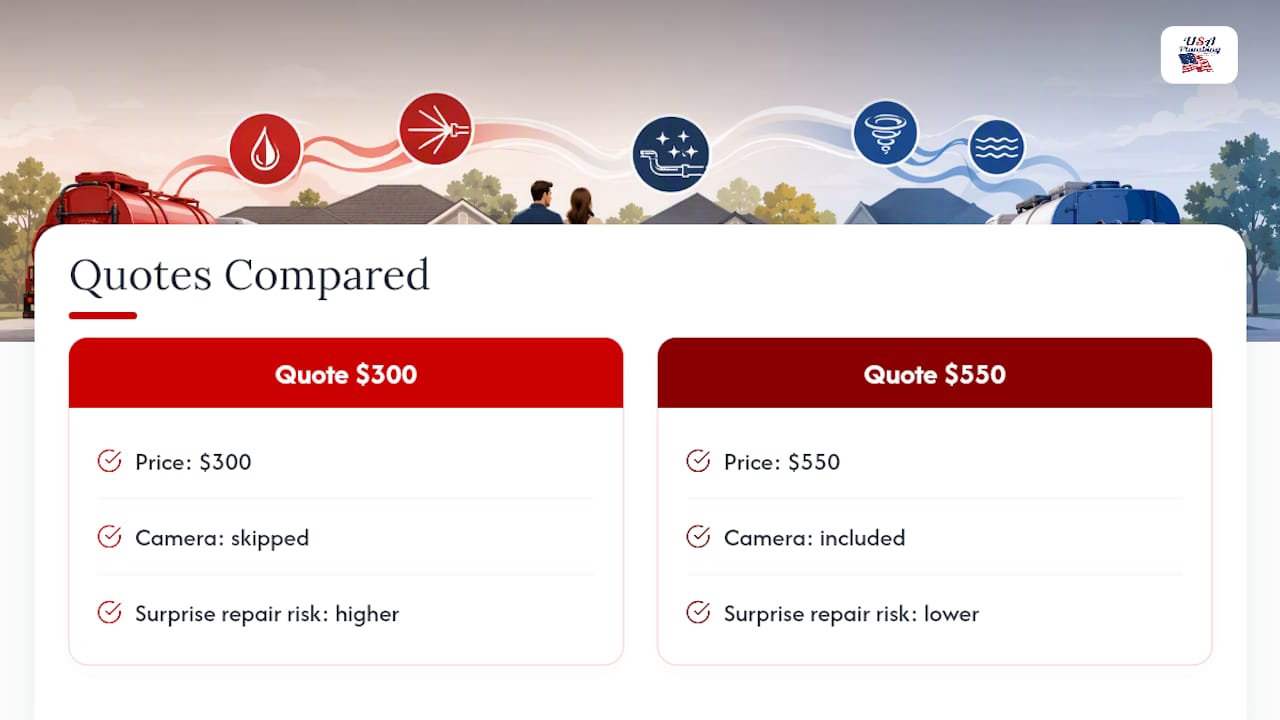
What the research actually supports is this: the camera is the value, not an upsell. A plumber who scopes the line before jetting and after is protecting your pipe from damage and protecting you from a surprise repair bill. That's worth paying for. The overrated factor is PSI as a marketing number. Higher pressure isn't automatically better. On old clay or cast iron, a plumber running lower pressure with more passes is doing the safer, smarter job, even if it takes longer.
Prioritize the written estimate, the camera inclusion, and the warranty terms over the raw dollar figure. Those three details predict whether you'll be happy with the outcome far better than the price tag alone.
— JOHN
Ready to Book a Hydro Jetting Visit?
Some plumbing services offer camera-first hydro jetting for homeowners and property managers, bundling a pre-jet inspection, the jetting itself, and a post-clean camera check into one visit instead of three separate bills. That means fewer surprise line items and a clearer picture of your pipe's actual condition before any pressurized water runs through it.
Experienced plumbing teams handle everything from single-drain clogs to full sewer lateral jobs, including emergency response when a backup can't wait until morning. If your line has already shown signs of trouble, our sewer line solutions page covers repair options for problems jetting alone can't fix. Ready for a straight answer on your situation? Request an estimate from USA Plumbing and Septic LLC and ask specifically for the bundled camera-and-jet visit.
Where This Pricing Data Comes From
- Angi's national hydro jetting cost breakdown for average and range figures.
- AlertPlumber's complete guide for PSI standards and bundled pricing.
- EPA storm drain cleaning guidance for safe practices on aging pipe.
- Drain Pros Ventura's cost analysis for multi-year value comparisons.
- WhatItActuallyCosts' scenario breakdowns for realistic line-item examples.
Sources
- EPA BMP: Storm Drain System Cleaning
- How Much Does Hydro Jetting Cost? 2026 Data — Angi
- Hydro Jetting: The Complete Guide — AlertPlumber
- Hydro Jetting Cost Explained – Pricing, Factors and Value — Drain Pros Ventura
- Hydro Jetting Cost (2026): When ‘Drain Cleaning’ Quietly Turns Into a Sewer Job — WhatItActuallyCosts
FAQ
Is Hydro Jetting Worth It?
For most clogs caused by grease, scale, or roots, yes. It clears the full pipe diameter rather than just boring a channel through the blockage, which is why it often costs less than repeated snaking over a three to five year window.
Can I Do Hydro Jetting Myself?
Renting a residential-grade jetter costs $1,500 to $5,000 to buy, or a daily rental fee, but most consumer units lack the inspection camera needed to avoid damaging older or compromised pipe, making DIY risky on main laterals.
Why Is Hydro Jetting So Expensive?
The cost reflects specialized equipment running at 1,500 to 4,000 PSI, technician labor time, and often a bundled camera inspection before and after the job to confirm the pipe is clear and undamaged.
What Are the Signs I Need Hydro Jetting?
Recurring clogs in the same drain, slow drainage across multiple fixtures, gurgling sounds, or a sewage smell near a floor drain all point to buildup that a simple snake likely won't fully clear.