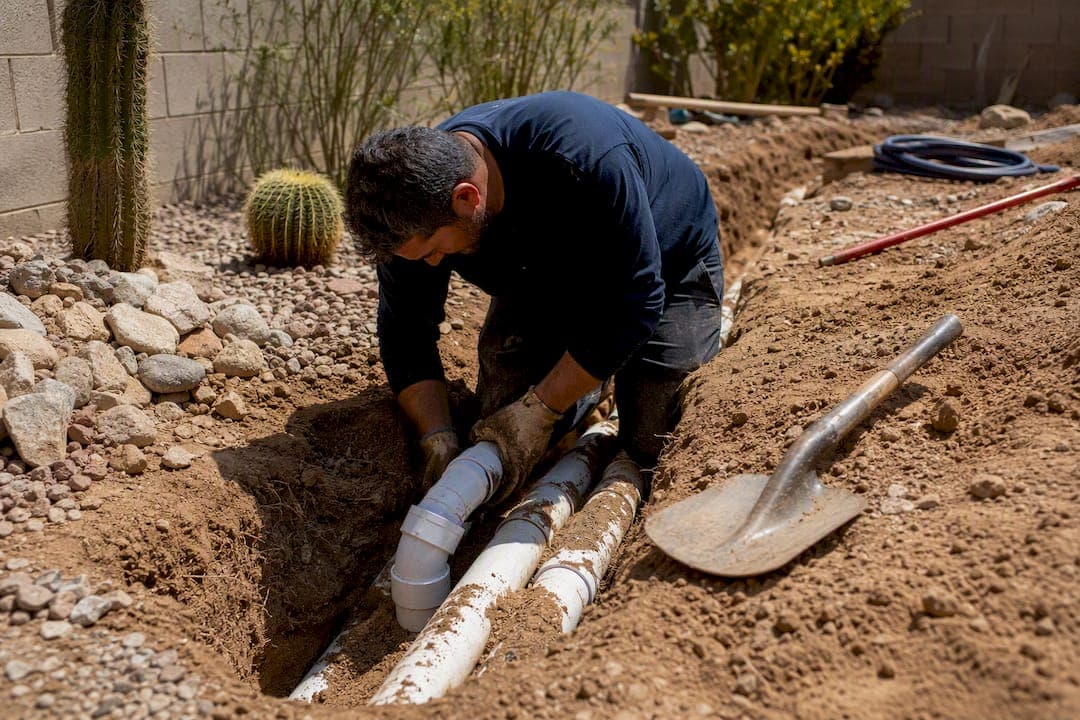
Most homeowners pay between $3,000 and $20,000 for sewer line replacement, with per-linear-foot pricing running $50 to $250 depending on the method a contractor uses. Installed rates vary widely depending on labor, materials, and site access, with costs for a standard 50-foot residential lateral reflecting these factors before permits or restoration.
Before you accept any quote, spend $200 to $500 on a professional camera inspection. This single step tells you whether you actually need full replacement or whether a spot repair or lining job will solve the problem for a fraction of the price.
Here's what the math looks like across common run lengths:
- 25 feet: roughly $1,250 to $6,250
- 50 feet: roughly $2,500 to $12,500
- 75 feet: roughly $3,750 to $18,750
- 100 feet: roughly $5,000 to $25,000
Pro Tip: Ask the contractor to show you the camera footage in real time, not just a written summary. Watching the pipe collapse or root intrusion on screen makes it much harder for anyone to upsell you on work you don't need.
TL;DR:
- A sewer line replacement typically costs between $3,000 and $20,000, with prices strongly influenced by the method used and restoration expenses.
- Conduct a camera inspection costing $200 to $500 before accepting any quote to verify whether full replacement is necessary or if a spot repair will suffice.
- Trenchless methods like pipe bursting or CIPP lining often become more cost-effective than open-trench replacement on runs longer than 30 feet under hardscape areas.
- Restoration costs such as lawn, driveway, or paver repairs can add $2,000 to $8,000 to the total, making a detailed bid with itemized restoration essential.
- Always require a written, line-item estimate with clear method, materials, permit details, and restoration scope before proceeding with the work.
Table of Contents
- How Much Does Sewer Line Replacement Cost by Method?
- What Factors Drive Up Sewer Line Costs?
- Is Trenchless Replacement Always Cheaper Than Digging?
- How Do You Get an Accurate Sewer Line Quote?
- How Long Does a Sewer Line Job Take?
- Who Pays for Permits and Does Insurance Cover Replacement?
- Should You DIY Sewer Line Replacement or Hire a Plumber?
- Ready for an Honest Sewer Line Estimate?
- Key Takeaways
- Sources
- FAQ
How Much Does Sewer Line Replacement Cost by Method?
The method your contractor recommends changes your total bill more than almost any other factor. Three approaches dominate residential jobs in the United States: traditional open-trench digging, pipe bursting, and cured-in-place pipe (CIPP) lining. Each has a different cost structure, and understanding the math behind them helps you sanity-check a bid instead of just trusting the number on the page.
Traditional open-trench replacement
Open-trench work runs $50 to $125 per linear foot installed, making it the cheapest method on a per-foot basis. Crews dig a continuous trench along the pipe's path, remove the old line, and lay new pipe, usually PVC. The catch is everything above the trench. If that trench runs under a driveway, patio, or mature landscaping, restoration costs can add $2,000 to $8,000 on top of the pipe work, according to Plumbing Sniper's cost analysis. A cheap per-foot rate can turn into an expensive total once concrete, sod, or pavers get factored back in.
Pipe bursting
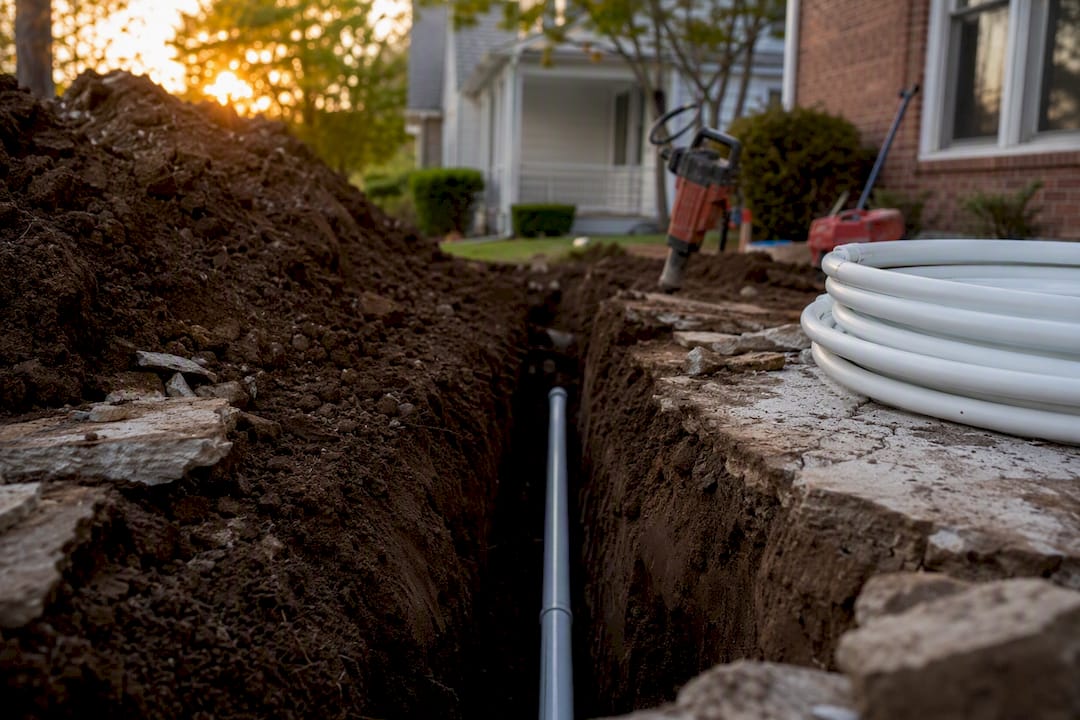
Pipe bursting costs $60 to $200 per linear foot. A contractor pulls a bursting head through the old pipe, fracturing it outward while simultaneously pulling a new pipe into place behind it. This method needs only two small access pits, an entry point and an exit point, instead of a continuous trench. That makes it a strong option when the line runs under hardscape you don't want to tear up. It requires a mostly intact path, though; a severely offset or collapsed pipe can defeat the bursting head entirely.
CIPP lining
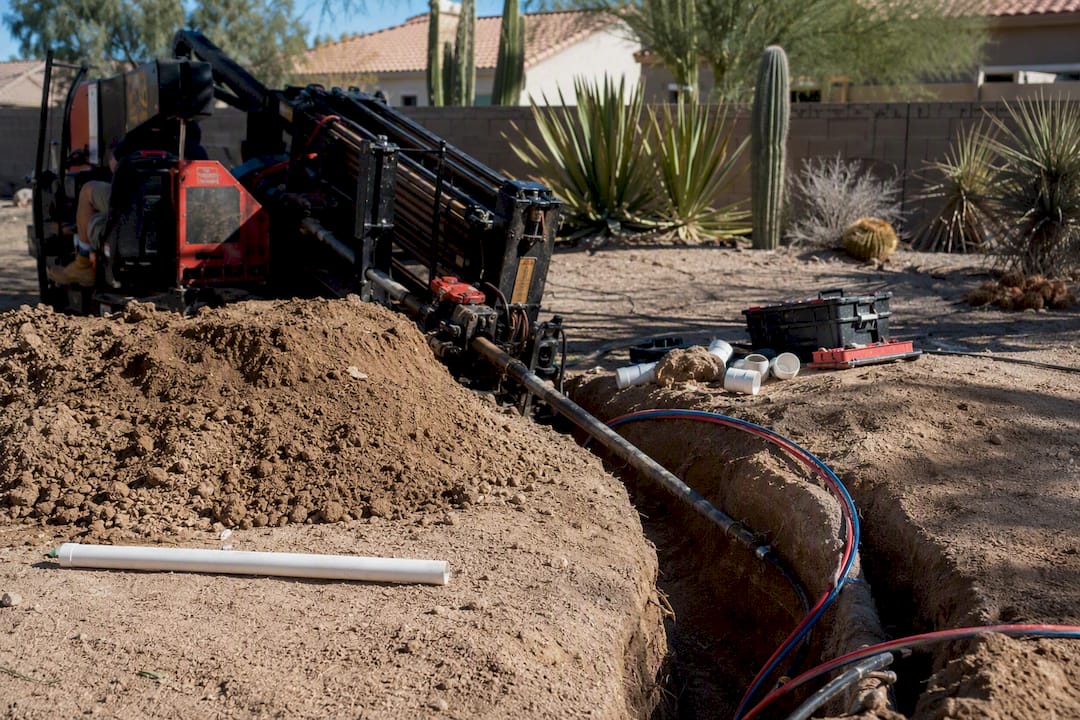
CIPP usually has the highest per-foot cost among common methods but requires minimal excavation, inserting and curing a liner inside the existing pipe. The tradeoff: CIPP reduces interior diameter by roughly 5 to 10 percent and cannot fix slope problems. If your line has a belly (a low spot where waste pools) or a structural collapse, lining won't solve it. The host pipe has to be sound enough to support the liner in the first place.
Here's how the three methods compare across common run lengths, using midpoint installed rates:
These figures cover pipe work only. They don't include permits, camera inspection, or restoration, which is exactly why two contractors can hand you wildly different totals for what sounds like the same job. One quote might bury restoration in the line-item total; another might list it separately, or skip it entirely and surprise you at the end.
What Factors Drive Up Sewer Line Costs?
Two homes on the same street can get sewer quotes thousands of dollars apart, and it almost always comes down to a handful of variables a contractor evaluates during the camera inspection. Knowing these ahead of time helps you understand which parts of your bid are negotiable and which ones are simply the cost of your specific property.
- Pipe length and depth. Longer runs cost more in a straight line, but depth matters just as much. A pipe buried 8 to 10 feet down requires more excavation, more shoring, and often specialized equipment compared to a line sitting 3 to 4 feet under the surface.
- Pipe material. Old clay or Orangeburg pipe (a tar-paper composite common in homes built before 1970) often crumbles during removal, adding labor time that PVC replacement doesn't require.
- Access and hardscape. A line running under a driveway, patio, or mature tree roots costs more to reach and more to restore than one running through open yard.
- Soil and rock conditions. Rocky or clay-heavy soil slows excavation significantly and can require specialized equipment, adding to labor hours regardless of which method you choose.
- Permits and right-of-way work. Municipal permit fees typically run $250 to $1,500 for residential work, but jobs that touch the public sewer main in a street or easement can add $1,000 to $5,000 more for traffic control, bonding, and inspection requirements.
Restoration costs deserve their own line item on any bid you review. Sod repair for lawn runs $4.50 to $12 per square foot. Concrete driveway repair or re-pour lands at $11 to $35 per square foot. Paver resetting is the priciest at $20 to $50 per square foot. If your contractor's bid doesn't break these out separately, ask them to. A vague "restoration included" line is one of the easiest places for costs to balloon after the trench is already open.
Is Trenchless Replacement Always Cheaper Than Digging?
Not always, and this is where a lot of homeowners get steered wrong by whichever method a contractor happens to specialize in. The real question isn't which method costs less per foot. It's which method costs less once you add up excavation, restoration, and risk of complications.
A practical break-even rule: if your sewer line runs more than 30 feet under a driveway, patio, or landscaping you care about, trenchless methods usually win on total cost even though the per-foot rate looks higher. The math is straightforward. Trenchless work often avoids $2,000 to $8,000 in restoration expenses that open-trench digging can't sidestep. A $9,750 pipe-bursting quote on a 75-foot run can beat a $5,625 open-trench quote once you add $6,000 in driveway restoration to the second number.
That said, trenchless methods have real technical limits, and any contractor who glosses over them is worth a second opinion:
- Collapsed sections leave no path for a bursting head to travel through.
- Bellies, low spots where the pipe has sagged and waste pools, can't be corrected by lining or bursting; only replacement fixes the slope.
- Structural offsets at joints, common with older clay pipe, can block a liner or bursting head partway through the run.
- Bends steeper than the method allows (most pipe bursting equipment struggles past roughly 45 degrees) may force a hybrid approach.
Pro Tip: If a contractor proposes trenchless work, ask them to point out the exact spot on your camera footage where the pipe path is clear enough to support it. If they can't do that, get a second opinion before signing.
Watch your bid for trenchless add-ons that inflate the total: entry and exit pit excavation, traffic control permits if pits sit near a street, and sometimes a bonding fee for right-of-way work. These aren't red flags on their own, but they should appear as separate line items, not folded into a single "trenchless replacement" number you can't verify.
How Do You Get an Accurate Sewer Line Quote?
Getting comparable bids starts with the same diagnostic step every contractor should perform first: a camera inspection. Without it, you're comparing guesses, not quotes.
- Get an independent camera inspection and ask to watch the footage alongside the technician rather than accepting a summary secondhand.
- Ask what method they're proposing and why, tied to something specific they saw on camera.
- Request the exact pipe specification, including material (PVC is standard) and diameter.
- Confirm the warranty length in writing, both on materials and labor.
- Get the restoration plan itemized separately from the pipe work.
- Verify permit status before work begins; a contractor who says permits aren't needed for main-line work is a warning sign.
- Ask for a written timeline with start and completion dates.
When you have two or three bids in hand, line them up item by item rather than comparing bottom-line totals. Multiple guides on sewer replacement, including CalcPro's construction cost analysis, recommend requiring a fixed-price restoration allowance rather than a "time and materials" estimate for that portion. Restoration is where costs tend to drift upward after the trench is already open and you have little leverage to push back.
How Long Does a Sewer Line Job Take?
Timelines vary widely based on method and how much restoration your yard needs. A spot repair on a short, accessible section typically takes 1 to 3 days. Trenchless full replacement, whether pipe bursting or CIPP, generally runs 1 to 4 days since it avoids extensive digging. Open-trench excavation with full restoration is the longest, often stretching 1 to 2 weeks or more once you account for backfilling, compaction, and rebuilding whatever sat on top of the trench.
Restoration itself carries its own cost bands worth planning around: lawn repair at $4.50 to $12 per square foot, concrete at $11 to $35 per square foot, and pavers at $20 to $50 per square foot, the same ranges that apply to the driveway and patio scenarios covered earlier. Asphalt driveway patching tends to fall in a similar range to concrete, though exact pricing depends heavily on local paving crews.
Two factors extend timelines beyond the pipe work itself: permit approval waits, which can add several days to a couple of weeks depending on your municipality, and material lead times if your contractor needs to special-order fittings or liner material. Scheduling around a dry season also matters. Wet soil slows excavation and can delay concrete curing on restoration work.
Who Pays for Permits and Does Insurance Cover Replacement?
Permit fees typically run $50 to $1,500 depending on your municipality and whether the work touches the public right-of-way. If your job requires traffic control near a street, that can add another $1,000 to $3,500 on top of the base permit cost. These fees usually show up as a separate line item on a proper bid, and a contractor should be able to tell you the exact permit cost for your city before work starts.
Homeowners insurance rarely covers straightforward sewer line replacement. Some policies cover cleanup or damage caused by a sudden, covered peril, like a tree root event that also causes flooding, but routine deterioration or age-related failure is almost never covered. Check your policy's specific language on "service line" or "water backup" endorsements before assuming you're protected.
- Confirm which portion of the line is your responsibility versus the municipality's; typically, homeowners own the lateral from the house to the property line or the public main tap.
- Ask your water utility directly if you're unsure where public responsibility ends.
- Get any permit and inspection paperwork in writing before excavation begins.
Should You DIY Sewer Line Replacement or Hire a Plumber?
Sewer line work isn't a weekend DIY project, and the risks go well beyond a botched repair. Trenches deeper than 5 feet legally require shoring under OSHA excavation standards, and without it, a collapse can bury or seriously injure whoever is standing in the hole. Most municipalities also require a licensed plumber to pull permits for work connecting to the public main, so an unpermitted DIY job can leave you liable if it fails or damages neighboring property.
Watch for these red flags when vetting a contractor:
- No camera inspection offered before quoting replacement.
- No written permit, or vague answers about permit status.
- Large cash-only payment demanded upfront.
- A restoration plan that isn't itemized or written down.
Pro Tip: A written bid should list pipe material, method, permit status, and restoration scope on paper. If a contractor won't put it in writing, that alone is reason enough to call someone else.
At Usaplumbingseptic, every sewer line assessment starts with a camera inspection and ends with a written, line-item bid, no surprises added after the trench is open.
What Should You Prioritize When Budgeting for This Repair?
The camera inspection is the whole ballgame here. Spend the $200 to $500, watch the footage, and let the actual condition of your pipe, not a contractor's sales pitch, determine which method you choose.
I'd add one thing the national averages don't emphasize enough: restoration cost, not pipe cost, is usually where a "reasonable" quote turns into a shock invoice. Homeowners fixate on the per-foot pipe rate because it's the number everyone quotes first, but a driveway or paver patio sitting on top of your line can cost more to rebuild than the pipe underneath it. Ask about restoration before you ask about pipe material.
If you're in Bullhead City, Fort Mohave, Mohave Valley, or Laughlin, request an inspection before you request a quote. It's the cheapest decision you'll make in this whole process.
— JOHN
Ready for an Honest Sewer Line Estimate?
If you've read this far, you already know the smartest first move: get your line on camera before anyone talks replacement method. Usaplumbingseptic builds every sewer estimate around that same principle, because a $300 inspection beats a $12,000 guess every time.

An on-site visit from our team includes the camera inspection itself, a written line-item quote covering pipe material and method, a realistic timeline, and a fixed restoration allowance so your driveway or landscaping costs don't turn into a surprise later. We handle permits and coordinate right-of-way work directly with your municipality, so you're not the one chasing down paperwork mid-project. Whether your line needs a targeted pipe bursting repair, CIPP lining, or full excavation, we walk you through the footage and the reasoning before you sign anything. Serving Bullhead City, Fort Mohave, Mohave Valley, and Laughlin, request your sewer line estimate today and get a real number instead of a guess.
Key Takeaways
Sewer line replacement cost depends far more on method, access, and restoration scope than on pipe length alone, and a camera inspection is the cheapest way to find out which variables apply to your home.
| Point | Details |
|---|---|
| National cost range | Most homeowners pay $3,000 to $20,000, with per-foot rates of $50 to $250 depending on method. |
| Get a camera inspection first | Spend $200 to $500 on a sewer scope before accepting any replacement quote. |
| Trenchless can cost less overall | Runs over 30 feet under hardscape often favor pipe bursting or CIPP once restoration is factored in. |
| Restoration drives final cost | Concrete, pavers, and lawn repair can add $2,000 to $8,000 to an open-trench job. |
| Usaplumbingseptic offers inspection-first bids | Every sewer estimate includes camera footage, written line-item pricing, and a restoration allowance. |
Sources
- Sewer Line Replacement Cost (2026) — Trenchless vs Dig Method Prices
- Sewer Line Replacement Cost Calculator — 2026 Trenchless vs Dig Method Prices
- Sewer Line Replacement Cost 2026: What Homeowners Actually Pay
FAQ
How Much Should a Sewer Line Repair Cost?
A spot repair, rather than full replacement, typically costs less than a full-length job since it targets a single damaged section. Full replacement runs $3,000 to $20,000 depending on length, method, and restoration needs.
Does Homeowners Insurance Cover Sewer Line Replacement?
Rarely. Most policies exclude routine deterioration and only cover damage tied to a specific covered peril, so check your policy's water backup or service line endorsement before assuming coverage.
Can a Homeowner Replace Their Own Sewer Line?
It's not recommended and often not legal without a licensed plumber pulling permits, since trenches deeper than 5 feet require shoring under OSHA standards and municipalities typically require licensed work on lines connecting to the public main.
Does Replacing a Sewer Line Increase Home Value?
A new sewer line removes a major red flag for buyers during a home inspection and can prevent a deal from falling through, though it's typically viewed as a necessary repair rather than a value-adding upgrade like a kitchen remodel.