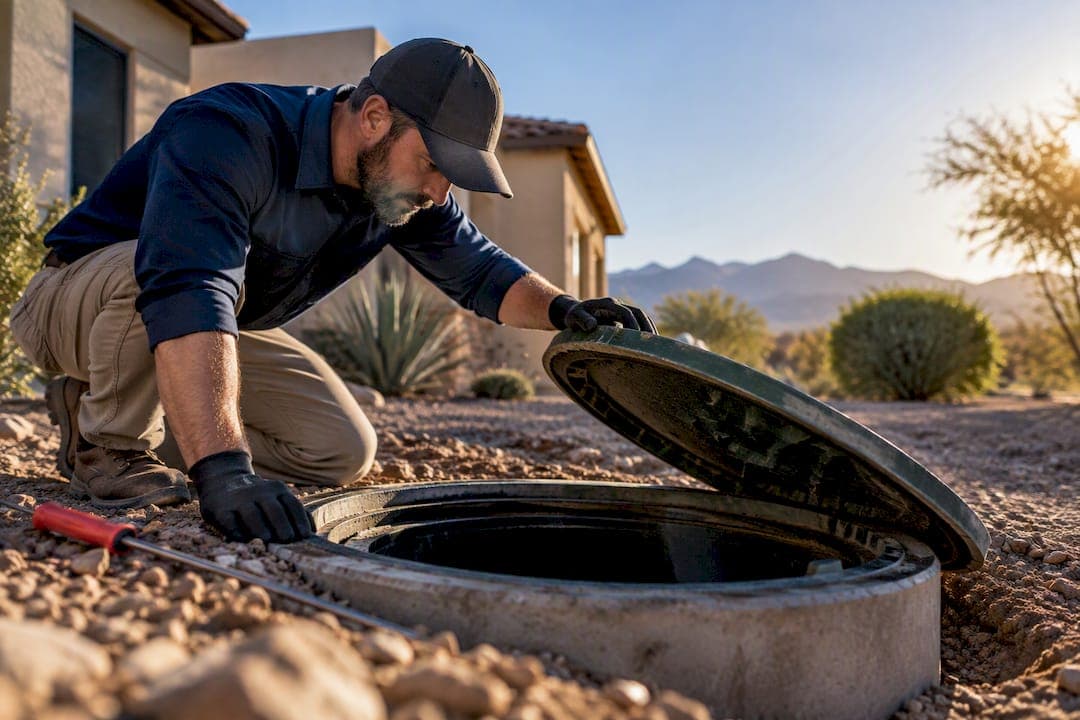
The EPA baseline is simple: inspect your septic system at least every 3 years and plan on pumping the tank every 3 to 5 years. That window shrinks fast if you have a smaller tank, a full house, a garbage disposal running daily, or an alternative system with pumps and mechanical parts. The right number for your home comes from a real inspection, not a calendar guess, and that's what the rest of this guide walks you through.
TL;DR:
- Regular inspections should be done every three years for conventional systems and annually for systems with pumps or mechanical parts, with pumping typically every three to five years.
- Smaller tanks, higher household water use, frequent garbage disposal use, or lax water habits can significantly shorten the pumping interval, sometimes to as few as one year.
- Pumping thresholds include scum within six inches of the outlet baffle or more than 25 to 30 percent of the tank occupied by solids, regardless of age since last service.
- Signs of urgent issues include slow drains, gurgling pipes, sewage odors, bright green patches over the drainfield, and standing water, prompting immediate professional assessment.
- Routine pumping costs $250 to $500 every few years, much less than repeated repairs or drainfield replacements, which can reach $15,000 or more.
Table of Contents
- What Is the Recommended Septic Pumping Frequency?
- What Factors Change How Often You Should Pump?
- Septic Tank Pumping Schedule by Tank Size and Household
- How Do Professionals Know It's Time to Pump?
- What Are the Warning Signs Your Septic System Needs Attention Now?
- How Much Does Septic Pumping Cost Versus Repairs?
- How Can You Stretch the Time Between Pumpings?
- What a Septic Pro Actually Checks and Why Records Matter
- Schedule an Inspection Before Small Signs Become Big Bills
- Sources
- FAQ
What Is the Recommended Septic Pumping Frequency?
The 3 to 5 year window is the standard most conventional gravity systems fall into, according to the EPA. That's the septic tank pumping schedule most extension services and plumbers quote as a starting point.
Alternative or engineered systems, the ones with aerobic treatment units, pumps, or electrical float switches, need annual inspection because they have more parts that can fail quietly. Inspection frequency and pumping frequency aren't the same thing, and that distinction trips up a lot of homeowners. An inspection every 3 years tells you whether the tank actually needs pumping now, in a year, or not for a while yet. Pumping without checking first means you might empty a tank that had another year of life left, or worse, wait too long between checks and let solids build past a safe threshold. The inspection is the trigger. The 3 to 5 year figure is just the average interval that trigger tends to land on for a typical household.

What Factors Change How Often You Should Pump?
Your ideal interval depends on how much waste your tank processes and how much room it has to hold it. A few variables move the number more than others:
- Tank capacity. A smaller tank fills with sludge and scum faster than a larger one serving the same household.
- Household size and daily water use. More people means more gallons flowing in every day, which means less time between pumpings.
- Garbage disposal use. Running a disposal regularly adds solid waste directly to the tank and can cut your pumping interval by roughly a third.
- Water-efficient fixtures and habits. Low-flow toilets and staggered laundry loads reduce the total volume moving through the system.
- Occasional use patterns. Vacation homes and houses with frequent guests see uneven loads that can throw off a simple yearly guess.
- System type. Aerobic and other engineered systems often carry different service intervals than a standard gravity tank.
Pro Tip: If you use a garbage disposal often, treat your "3 to 5 year" estimate as closer to 2 to 3.5 years until an inspection tells you otherwise.
Septic Tank Pumping Schedule by Tank Size and Household
Extension services publish estimated pumping intervals based on tank size and household count, and they're a useful starting point before your first professional inspection. The figures below come from Oregon State University Extension's septic tank maintenance guide and assume year-round residence with average daily water use.
| 1,000 | — | 3.7 years | 2.2 years | | — | — | — | 2 to 3.5 years | | — | — | — | 3 to 5 years | | — | — | — | 3 to 5 years |
If a garbage disposal runs regularly in your kitchen, shave roughly a third off whatever number your row and column point to. These figures are estimates, not guarantees. Some households need pumping more than once a year regardless of what the table says, which is exactly why a physical inspection remains the real decision point, not the chart.
How Do Professionals Know It's Time to Pump?
Pros don't guess. They measure. The signs your septic tank needs pumping come down to three concrete thresholds a technician checks with a measuring tool during inspection, per EPA guidance:
- The bottom of the scum layer sits within 6 inches of the outlet baffle.
- The top of the sludge layer sits within 12 inches of the outlet.
- Combined scum and sludge occupy more than 25 to 30% of the tank's total liquid depth.
Hit any one of those marks, and it's time to pump regardless of how many years have passed since the last service. A good service report records the exact levels found, notes any repair needs, and recommends a next inspection or pumping date based on those numbers rather than a fixed schedule.
Pro Tip: Ask your technician for a written copy of the measurements every visit. Two or three visits of records let you build a pumping frequency specific to your household instead of relying on a generic average.
For conventional systems, staying on the EPA's 3 year inspection cadence is enough. Alternative systems with pumps or mechanical components need that same check annually.
What Are the Warning Signs Your Septic System Needs Attention Now?
Some problems don't wait for your next scheduled inspection. If you notice any of the following, treat it as urgent:
- Drains that empty slowly throughout the house, not just in one sink.
- Gurgling sounds coming from pipes after you flush or run water.
- Sewage odors near the tank, drainfield, or inside the house.
- Unusually lush or bright green grass patches over the drainfield.
- Standing water or mud in the yard where the drainfield sits.
These are signs of a system malfunction that need professional attention, not just a routine pump. Cut back on water use immediately, stop running the garbage disposal, and keep vehicles off the drainfield until someone can assess it. Pumping the tank helps only if the problem is solids buildup in the tank itself. If the drainfield has already developed a clogged biomat layer, pumping alone won't fix it, and a pro may need to recommend field rest, aeration, or in worse cases, a partial rebuild.
How Much Does Septic Pumping Cost Versus Repairs?
Routine pumping is cheap insurance against a genuinely expensive failure. Homeowners typically pay $250 to $500 for a standard pump-out, with the exact number shifting based on tank access, distance from the road, and how much sludge has accumulated. Compare that to what happens when maintenance gets skipped:
- Routine pumping and inspection: $250 to $500 per visit, every 3 to 5 years for most households.
- Repairing a stressed drainfield or replacing a failed conventional system: $5,000 to $15,000 or more, with alternative systems often running higher.
A few hundred dollars every few years against a five figure repair bill isn't a close call. You can dig into local septic pumping cost breakdowns or septic tank replacement pricing for a fuller picture of what a neglected system can actually cost you.
How Can You Stretch the Time Between Pumpings?
A few habit changes reduce the solids and water load hitting your tank, which stretches out your realistic pumping interval:
- Limit or skip the garbage disposal. Extension guidance and the EPA both flag disposals as one of the fastest ways to fill a tank with solids. Compost food scraps instead where you can.
- Fix leaky faucets and running toilets promptly, and spread laundry loads across the week rather than running four in one day.
- Flush only septic-safe products. Skip wipes, grease, and harsh chemical drain cleaners.
- Schedule a pump-out before a planned long absence. Emptying the tank ahead of a vacation gives the drainfield time to rest and helps to exist biomat break down.
What a Septic Pro Actually Checks and Why Records Matter
On a real inspection visit, our team measures scum and sludge depth against the outlet baffle, checks tank and lid condition, and notes any signs of stress on the drainfield. Every one of those numbers goes into a written report along with a recommended date for the next inspection or pump.
That record matters more than most homeowners realize. One visit tells you where your tank stands today. Two or three visits, spaced a few years apart, tell you how fast your household actually fills the tank, which is the only real basis for a personalized septic tank maintenance schedule instead of a generic guess..
— JOHN
Schedule an Inspection Before Small Signs Become Big Bills
Homeowners in the Bullhead City area can get more precise septic system assessments from technicians who measure scum and sludge levels, rather than relying solely on a generic 3 to 5 year rule.

Our team handles septic system installation, routine pumping, and full inspections, plus the sewer line and drain work that often connects to a struggling system. We're available 24/7 for emergency plumbing and septic response, and every visit comes with transparent, upfront pricing so you know the cost before we start. If it's been more than 3 years since your last inspection, or you're seeing any of the warning signs covered above, book an inspection with our team and get a documented, personalized pumping schedule instead of a rough estimate.
Sources
- How to care for your septic system | US EPA
- Septic tank pumping | Penn State Extension
- Septic tank maintenance | Oregon State University Extension
FAQ
Is It Bad to Pump Your Septic Tank Too Often?
Pumping more often than needed isn't harmful to the system itself, but it does waste money on service calls that weren't necessary. The better approach is inspecting on schedule and letting measured scum and sludge levels, not a fixed calendar, decide when to actually pump.
How Often Does a 1,000 Gallon Septic Tank Need to Be Pumped?
For a household of four, a 1,000 gallon tank needs pumping roughly every 3.7 years based on extension-service estimates. A two-person household can often stretch that closer to 8 years, while six people in the same house may need it closer to every 2.2 years.
How Often Should a Septic Pump Actually Run?
For a standard gravity system, there's no pump running continuously. The "pumping" homeowners refer to is the service visit that empties the tank, which happens every 3 to 5 years for most conventional systems. Alternative systems with mechanical pumps operate more frequently as part of normal treatment, but that's separate from the tank pump-out schedule.
What Are the Signs Your Septic Tank Is Full?
Slow drains throughout the house, gurgling pipes, sewage odors, and unusually lush grass or standing water over the drainfield all point to a tank that needs attention. If you notice any of these, the EPA recommends calling a professional right away rather than waiting for your next scheduled inspection.
How Much Does Septic Tank Pumping Cost?
Most homeowners pay $250 to $500 per pump-out, depending on tank access and how much sludge has built up. Pricing details for septic pumping services are available on request through the main service page.