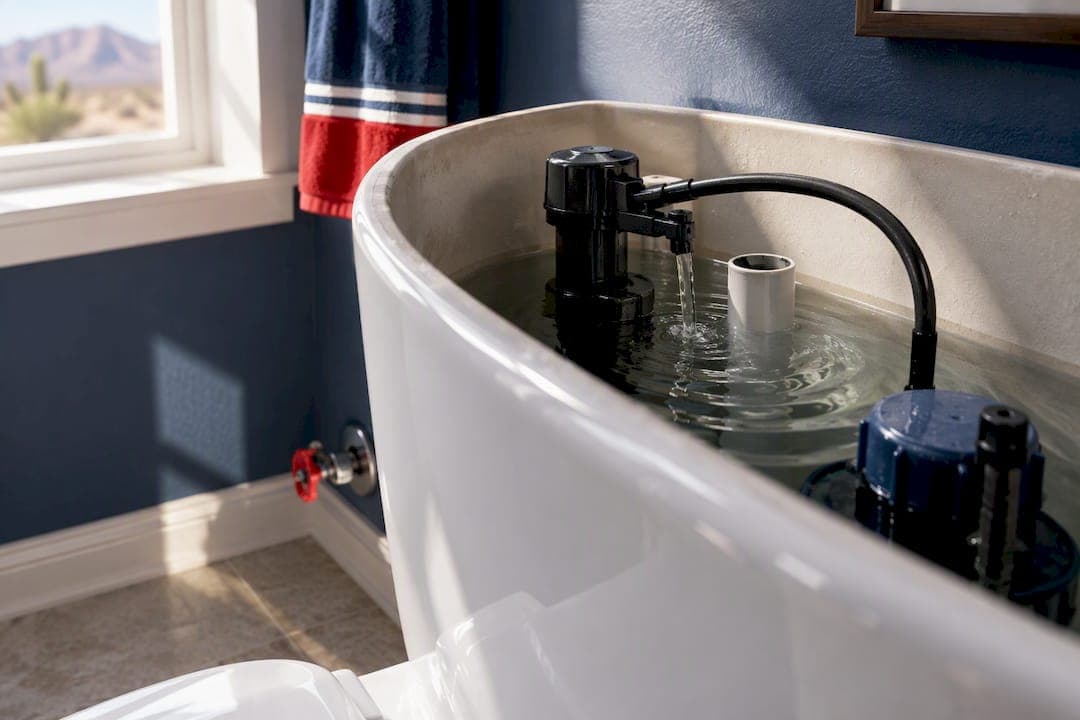
Toilet ghost flushing is almost always a leak-driven tank refill, not a supernatural event, and a five-minute dye test tells you whether the flapper is the problem. Your toilet's fill valve is topping off water that slipped past a worn seal, most often the flapper. If the tank keeps running nonstop while you read this, shut off the supply valve at the wall now, then work through the diagnostic steps below.
TL;DR:
- Most ghost flushing results from a worn, dirty, or warped flapper, or a mispositioned refill tube causing continuous internal leaks.
- Running the dye test confirms whether water leaks past the flapper or flush valve seal before purchasing replacement parts.
- Adjusting the flapper chain slack and water level are quick DIY steps that can often resolve phantom refilling issues.
- External leaks at supply lines, tank bolts, or cracks may require professional repair if the leak persists after basic DIY fixes.
- Regular maintenance, including quarterly inspections and dye tests, helps prevent small leaks from turning into significant water waste.
Table of Contents
- What causes a toilet to ghost flush?
- Prioritized DIY repair sequence: inspect, clean, replace, verify
- How to run the food-coloring dye test
- Parts and tools checklist for common toilet repairs
- Red flags: when DIY stops and a licensed plumber starts
- Routine checks that prevent ghost flushing and save water
- Why we treat ghost flushing calls seriously
- When a DIY fix is not enough, we are ready
- Sources
- FAQ
What causes a toilet to ghost flush
Phantom flushing means your toilet refills on its own every few minutes or every few hours with nobody touching the handle. According to Fluidmaster's troubleshooting guide, the usual suspects are:
- A worn, warped, or dirty flapper that no longer seals against the flush valve seat.
- A refill tube that has slipped down into the overflow pipe, siphoning water out continuously.
- A faulty fill valve that will not shut off completely or triggers refills on its own.
- A cracked tank or a failing tank-to-bowl gasket letting water escape internally.
- An external leak at the supply line, tank bolts, or base that mimics an internal problem.
The tank water level after a refill cycle is your best clue. If the water settles noticeably below the overflow tube's top and the bowl shows dye, the flapper or flush valve seal is likely the leak point. Slack in the flapper chain matters too: too little slack holds the flapper open a hair, and too much lets it drop crooked. Water on the floor points somewhere else entirely, often a supply line or an external gasket, and that changes your repair plan completely.
Prioritized DIY repair sequence: inspect, clean, replace, verify
Work through these steps in order. Skipping ahead usually means buying a part you did not need.
- Run the dye test first (full steps below) to confirm whether the leak is internal, before buying anything.
- Lift the tank lid and inspect the flapper for warping, grit, or a stiff, cracked rubber ring.
- Clean the flapper and the flush valve seat with a soft cloth. Sometimes mineral buildup is the whole problem.
- If the flapper still will not seal, replace it. Match the size: most toilets use a 2-inch flapper, but some newer low-flow models use a 3-inch flapper, so bring the old one to the store or check the flush valve opening.
- Check the refill tube. If it is jammed down inside the overflow pipe, pull it back out and clip it to the top edge so it discharges into the pipe, not down inside it, as Fluidmaster's guidance on self-refilling toilets recommends.
- Set the flapper chain to about a half inch of slack, enough to let the flapper close fully without holding it open.
- If the water level sits too high or the fill valve never shuts off cleanly, adjust it first. If adjusting does not fix it, replace the fill valve and set the water level to roughly half an inch below the top of the overflow tube as a general guideline, then check your toilet's owner manual for the exact spec.
- If you see water outside the tank, check the tank-to-bowl bolts, the gasket, and the supply line connection for wetness or corrosion, and towel-dry the area to watch for fresh drips.
- Re-run the dye test after any repair to confirm the leak is gone before you consider the job done.
Pro Tip: Keep the old flapper in hand at the hardware store. Matching it by sight beats guessing from a package label, since flush valve seats are not all shaped the same.
How to run the food-coloring dye test
This test takes five to ten minutes and needs nothing but food coloring, according to EPA WaterSense's leak detection checklist.
- Lift the tank lid and add several drops of food coloring directly into the tank water.
- Wait 5 to 10 minutes without flushing.
- Look in the bowl. Any color that shows up means water is leaking past the flapper or flush valve seal into the bowl.
- Flush right away once you have your answer, so the dye does not stain the tank or bowl.
A toilet leak can waste close to 10,000 gallons of water a year in an average household, and EPA WaterSense reports that roughly 20% of toilets leak to some degree. If dye shows in the bowl, you have your answer: focus on the flapper and seal. If the water level in the tank keeps climbing toward or over the overflow tube instead, the fill valve is more likely the culprit. Any puddling outside the tank means shutting off the supply valve immediately and checking the connections by hand.
Parts and tools checklist for common toilet repairs
A quick hardware run works best when you already know what to buy. Bring the old flapper with you and check the flush valve opening before choosing a replacement.
- Flappers come in two common sizes, 2 inch and 3 inch, along with universal adjustable models that fit most standard flush valves.
- Fill valves range from basic float-ball designs to modern adjustable models. Match the tank height and check for a shutoff that fully closes.
- Keep a small adjustable wrench, a sponge, a towel, and a flashlight on hand for inspection and cleanup.
- A refill clip, available with most flapper and fill valve kits, keeps the refill tube properly seated in the overflow pipe.
- Skip in-tank drop-in bleach tablets or cleaners. Manufacturer guidance warns these can corrode flappers, seals, and fill valve components over time.
Red flags: when DIY stops and a licensed plumber starts
Most ghost flushing problems are within reach of a confident homeowner with basic tools. Some symptoms mean it is time to call in a professional instead of pushing forward.
- Water pooling on the floor around the base of the toilet or seeping through a ceiling below.
- A visibly cracked tank or bowl, which can fail suddenly under water pressure.
- More than one fixture in the home showing the same symptoms at once, which can point to a supply-line or main-line issue.
- Repairs that require removing the tank, resetting the wax ring, or working on the closet flange.
- A leak that continues after you have replaced the flapper, repositioned the refill tube, and adjusted the fill valve correctly.
EPA guidance recommends bringing in a licensed plumber once a running toilet or failing supply line goes beyond simple fixes. Shut off the supply valve, take a few photos of the affected area, and note when the symptoms started before you call. Structural repairs, sealed joint work, and main-line issues carry real risk of water damage if handled without the right training, and our 24-hour plumbing emergency checklist walks through safe steps to take while you wait, including how to find your main water shutoff.
Routine checks that prevent ghost flushing and save water
A few minutes every few months keeps small leaks from turning into wasted water and surprise repairs.
- Lift the tank lid quarterly and glance at the flapper for warping or grit buildup.
- Check the chain slack. It should have about a half inch of give, no more and no less.
- Run the dye test every few months, even if nothing seems wrong.
- Watch the tank water level after each refill to catch a rising fill valve problem early.
- Replace supply lines older than about five years before they start seeping.
- Skip corrosive in-tank cleaners, since they shorten the life of flappers and seals.
- Consider a flow-monitoring device for rental units or properties where a slow leak could go unnoticed for weeks.
Pro Tip: Set a recurring reminder on your phone for the dye test. A five-minute habit twice a year catches most leaks before they show up on your water bill.
Why we treat ghost flushing calls seriously
I have walked into more than one home where a "just a little running sound" toilet turned out to be draining hundreds of gallons a month through a seal nobody had looked at in years. USA Plumbing and Septic LLC operates as a 24/7 plumbing expert across Bullhead City, Fort Mohave, Mohave Valley, and Laughlin, with a team of skilled plumbers equipped with the tools to handle everything from a stubborn flapper to a full toilet repair and replacement. Ghost flushing calls are usually quick, but they matter. A toilet that runs quietly in the background for months adds up in ways most homeowners never expect until the bill arrives.
— JOHN
When a DIY fix is not enough, we are ready
If you have run the dye test, swapped the flapper, and the toilet is still refilling on its own, it is time for a second set of eyes. Professional plumbing services in the Bullhead City and nearby regions include toilet repair and replacement, sewer line, water line, and gas line work, with emergency availability for issues beyond DIY fixes.
Homeowners who reach out after trying the steps above usually need one of two things: a fill valve replacement done right the first time, or a look at a tank-to-bowl seal that needs more than a home toolkit. Either way, you get a licensed plumber who already knows what to check first, without paying for guesswork. Contact USA Plumbing and Septic LLC to get a technician out to your home and stop the water waste for good.
Sources
- Toilet problems — how to install a flapper | Fluidmaster
- Detect and chase down leaks checklist | EPA WaterSense
- WaterSense labeled homes technical sheet — free of leaks | EPA
FAQ
How do I stop my toilet from phantom flushing?
Run a food-coloring dye test to confirm whether the flapper or flush valve seal is leaking, then clean or replace the flapper and check the refill tube position. Most phantom flushing stops once the flapper seals correctly and the chain has proper slack.
Can a phantom flush be fixed without calling a plumber?
Yes, in most cases a worn flapper, misplaced refill tube, or fill valve out of adjustment can be fixed with basic tools and a trip to the hardware store. Call a licensed plumber if you see water outside the tank, a cracked tank, or symptoms that continue after correct DIY repairs.
What causes a toilet to ghost flush?
A worn or dirty flapper, a refill tube sitting too far down in the overflow pipe, a faulty fill valve, or a cracked tank-to-bowl seal are the most common causes. External leaks at the supply line or tank bolts can also trigger repeated refill cycles.
Does toilet ghost flushing increase water bill?
Yes, a leaking toilet can waste close to 10,000 gallons a year in an average household, and that water shows up on your bill even though nobody used it. Fixing the flapper or fill valve promptly stops the waste before it adds up further.