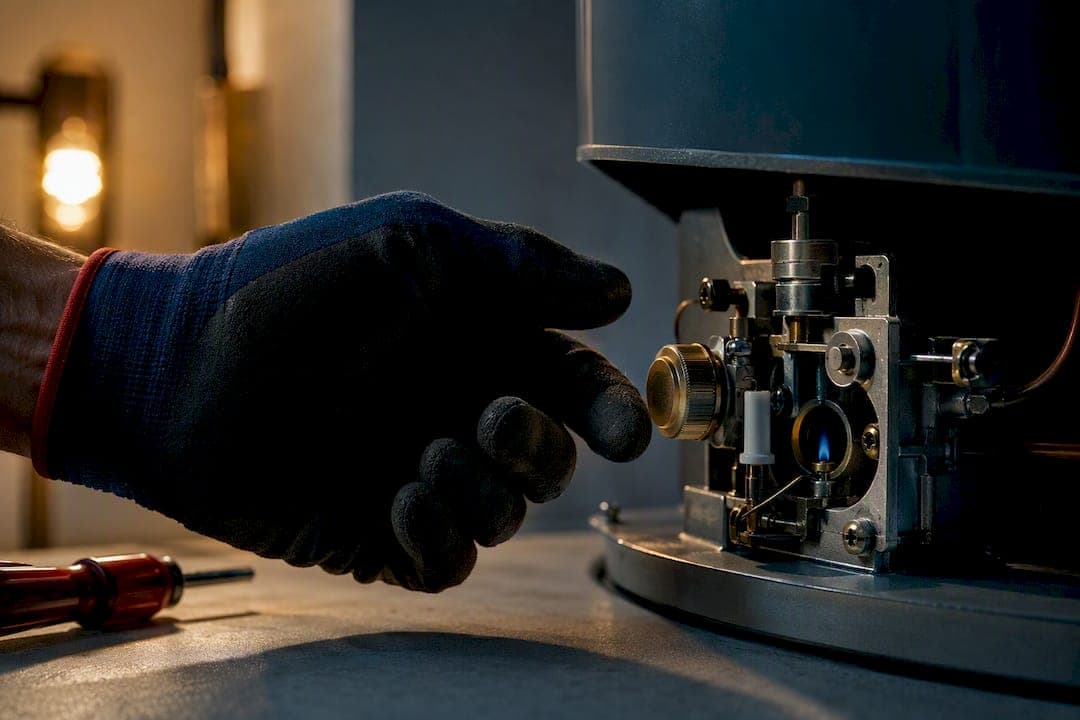
Yes, you can usually relight a water heater pilot light yourself, as long as you don't smell gas and the heater's own label allows it. If you smell gas anywhere near the unit, leave the house, don't touch switches or phones, and call your gas utility or 911 from outside. Otherwise, the manufacturer's label on the tank is your first and best instruction sheet, not a generic guide.
TL;DR:
- Most water heater pilots can be relit safely by homeowners if there is no smell of gas and the manufacturer's instructions are followed precisely.
- Repeated failed ignition attempts may indicate a faulty thermocouple, draft issues, or venting problems, and should not be ignored to avoid safety hazards.
- A pilot that keeps going out or won't stay lit often signals component failure or venting issues, requiring professional diagnosis and repair.
- Immediate professional help is necessary if there is any gas odor, flame color change, soot, or vent damage, especially if the pilot fails shortly after relighting.
- Regular maintenance, like keeping vents clear and testing CO alarms, can prevent pilot problems and catch dangerous conditions early.
Table of Contents
- How Do You Relight a Water Heater Pilot Light?
- How Do You Know the Pilot Light Is Out?
- Why Does the Pilot Light Keep Going Out?
- When Should You Stop and Call a Professional?
- What Maintenance Prevents Pilot Light Problems?
- What Should You Record Before Calling for Service?
- What Homeowners Get Wrong About Pilot Lights
- When It's Time to Call USA Plumbing and Septic LLC
- Sources
- FAQ
How Do You Relight a Water Heater Pilot Light?
Every water heater has its own quirks, and the data plate on the tank overrides anything written here. Whirlpool and A.O. Smith both stress that the relighting sequence printed on your heater's label takes priority over generic instructions, because hold times and control layouts vary by model. Standing-pilot units use a gas control knob and a small viewing window called a sight glass. Electronic-ignition units skip the sight glass entirely and rely on a status light that blinks in a code you'll need to decode from the manual.
Here's the sequence that applies to most standing-pilot gas water heaters:
- Find the gas control valve, the data plate, and the sight glass before doing anything else, and read the label completely.
- Turn the control knob to OFF and wait the time your label specifies, commonly around 10 minutes, so any residual gas clears.
- Turn the knob to PILOT and press it down fully.
- While holding the knob down, use the built-in igniter button (or a long fireplace lighter if there's no igniter) to ignite the pilot, watching through the sight glass for a small blue flame.
- Keep holding the knob down for the time your model specifies. Some manufacturer instructions allow up to 90 seconds of ignition attempts before you should stop and reassess.
- Release the knob slowly. If the flame stays lit, turn the control to ON. If it goes out, repeat once or twice, then stop.
Electronic-ignition models follow a similar logic but often use a mode switch and an igniter that sparks automatically once you select "pilot" or "start." There's no flame to watch through glass. You watch the status light instead, and you follow the blink pattern in the manual to confirm success or diagnose a fault.
Don't turn this into an endurance contest. If the pilot won't hold after a reasonable number of tries, following the label's stated limit, stop. Repeated failed ignition attempts can push an electronic system into a safety lockout, which requires a specific reset procedure or a service call to clear.
Pro Tip: A brand-new water heater, or one that just had gas line work done nearby, often needs a few extra ignition attempts because air trapped in the line has to work its way out before gas flows steadily. That's normal. A five-year-old heater needing the same extra attempts usually isn't.
How Do You Know the Pilot Light Is Out?
The most obvious sign is a cold shower where a hot one should be. Beyond that, the diagnosis differs depending on which type of ignition system your water heater uses.
On a standing-pilot unit, look through the sight glass. A lit pilot shows a small, steady blue flame. A dark sight glass with no flame at all means the pilot has gone out and the main burner has no way to ignite. On electronic-ignition units, check the status light. No blink pattern at all, or a fault code instead of the normal "ready" signal, tells you the same story without a flame to look at.
Before you touch anything, run through a short safety check:
- Smell first. If there's any hint of gas, a rotten-egg odor added to natural gas for exactly this reason, leave immediately. Don't flip light switches, don't use your phone inside, and don't try to relight anything. Call your gas utility or emergency services from outside the building.
- Clear the area. Move stored items, boxes, or laundry away from the heater so you can see and reach the controls safely.
- Check the combustion-air openings. Vents and louvers around the unit need to stay unobstructed for the burner to draw air properly.
- Confirm your CO alarms work. Test them now, not after a problem shows up.
The CO alarm point deserves emphasis. The Consumer Product Safety Commission recommends a working carbon monoxide alarm on every level of the home and outside each sleeping area, specifically because fuel-burning appliances like gas water heaters can produce CO when something goes wrong with combustion or venting. A pilot that keeps failing isn't just an inconvenience. It's often the first visible symptom of a venting or combustion problem that an alarm is designed to catch before you'd ever notice it yourself.
Why Does the Pilot Light Keep Going Out?
The pattern matters more than the fact that it happened once. How and when the pilot fails narrows down the likely cause considerably, and that pattern is exactly what a technician will ask you about first.
- The pilot never lights at all, even while you hold the knob down. This usually points to a gas supply problem, a clogged pilot orifice, or a completely dead thermocouple.
- It lights but goes out the instant you release the knob. This is the classic sign of a weak or misaligned thermocouple or thermopile, the small sensor that has to heat up enough to tell the gas valve it's safe to stay open.
- It stays lit fine, but goes out again once the main burner kicks on. That suggests a draft problem, improper venting, or a flame that's too small to survive the airflow change when the burner ignites.
- The pilot stays lit, but the main burner never fires. This often traces back to a gas-control valve fault rather than anything happening at the pilot itself.
Some of these you can address yourself. Clearing a draft source near the heater, making sure nothing is blocking the base of the unit, or gently cleaning dust from around the sight glass area (per your manual) are reasonable homeowner tasks. A weak thermocouple, a clogged pilot tube, or a gas-control fault are not. DOE guidance treats venting and combustion-air assessment as technician-level work for good reason: getting it wrong risks carbon monoxide exposure, not just a cold shower.
Here's the trap worth avoiding: relighting the same pilot five times over two weeks doesn't fix anything. It just delays the moment you find out what's actually broken, usually until the water heater fails completely or, worse, until a venting problem creates a real hazard. If you're seeing common water heater problems repeat on a schedule, that repetition is the diagnosis pointing you toward a technician, not toward trying again.
When Should You Stop and Call a Professional?
Some situations don't leave room for troubleshooting. Call for professional help immediately if you notice any of the following:
- Any smell of gas, at any point in the process.
- A carbon monoxide alarm that activates, even briefly.
- A pilot or burner flame that burns yellow or orange instead of blue.
- Visible soot around the burner compartment or the vent connection.
- Rust, corrosion, or physical damage on the vent pipe.
- A pilot that goes out again shortly after a proper relight, especially if this is the second or third time in recent weeks.
Beyond those immediate triggers, some fixes simply require a licensed technician regardless of urgency: thermocouple or thermopile replacement, gas-control valve replacement, professional cleaning of a clogged pilot orifice, vent repair, and gas pressure testing. None of these are reasonable weekend projects, and attempting them yourself can bypass the exact safety devices meant to protect your home from a leak or a fire.
When you do call, come prepared. Have the make and model number from the data plate, describe the failure pattern (never lights, lights but won't hold, or burner won't fire), note any status-light blink codes, and mention how many times you've already attempted a relight. That's often the difference between a technician diagnosing the problem over the phone and a technician showing up with the wrong part.
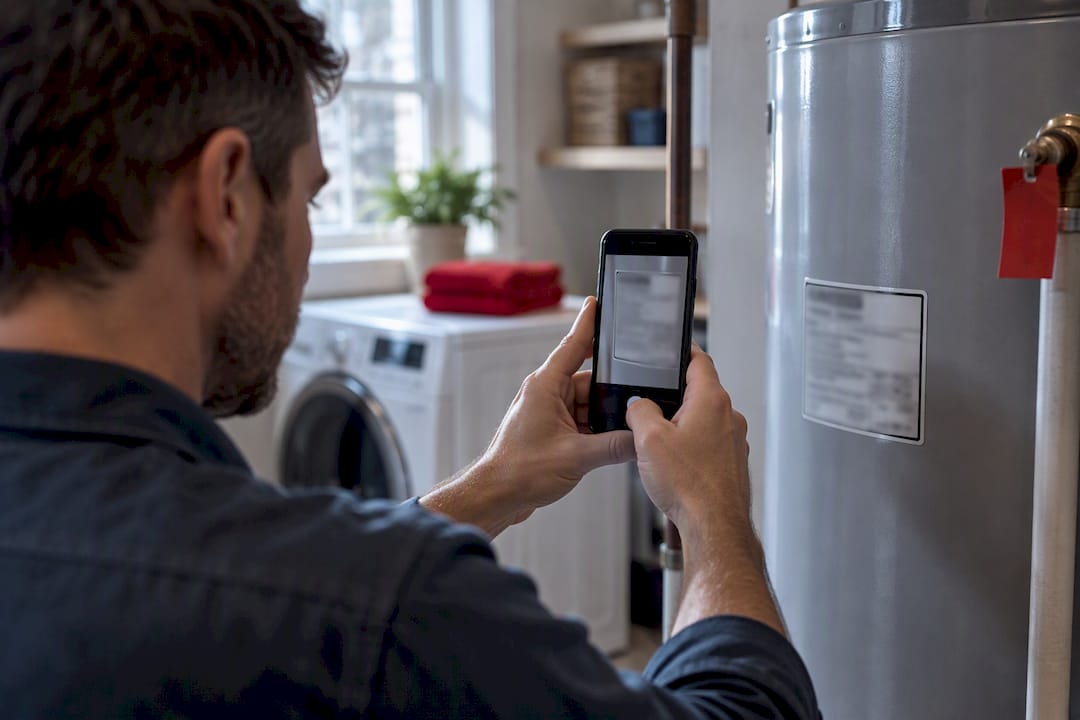
Pro Tip: Take a photo of the data plate with your phone the first time you inspect the heater. It saves you from crouching behind the tank hunting for a model number later when you're already on the phone with a plumber.
What Maintenance Prevents Pilot Light Problems?
Most pilot light failures trace back to neglect rather than bad luck, and the maintenance that prevents them is genuinely simple.
- Keep the combustion-air path clear. Don't stack storage boxes, paint cans, or laundry against or near the heater. The unit needs to draw air freely to burn gas cleanly.
- Check vent clearances against the manufacturer's spec. Vent pipes need specific clearances from combustible materials, and blocking or crimping a vent restricts airflow that the burner depends on.
- Test every CO alarm in the home monthly. Replace batteries on schedule and replace the alarm units themselves per the manufacturer's stated lifespan, usually printed on the back of the unit.
- Inspect the sight glass area for dust buildup, following the steps in your manual, and stop if you notice anything beyond light dust.
- Watch tank insulation and any insulating blanket you've added. Extra insulation can improve efficiency, but never cover the burner access panel, the control compartment, or the vent connection.
None of this requires opening the gas valve or touching the burner assembly. If a maintenance task in your manual mentions adjusting gas pressure or servicing the control valve, that's your signal to stop and schedule water heater repair instead of continuing on your own.
What Should You Record Before Calling for Service?
The details you gather in the five minutes after a pilot failure often matter more than anything a technician can observe once they arrive, especially if the problem is intermittent.
Write down the exact time the pilot went out, and whether it happened suddenly or after a period of the flame looking weak or flickering. Note whether this is the first occurrence or part of a pattern, and if it's a pattern, how many days apart the failures have been. If your unit has a status light, jot down the blink sequence exactly as it appeared, since these codes correspond to specific fault categories in the manufacturer's documentation.
Beyond timing, note the flame's color if you managed to see it before it went out, any unusual smell (beyond a normal gas odor at ignition), and whether anyone has done gas line work, plumbing work, or appliance installation nearby recently. List exactly what you tried: how many relight attempts, how long you held the knob, and whether the flame caught at all.
- Time and pattern of the failure
- Status-light blink code, if applicable
- Flame color and behavior before it went out
- Recent gas line, plumbing, or venting work nearby
- Number of relight attempts and how long each held
Keep the data plate information handy for this call too. Resist the urge to open the burner compartment or disassemble the gas control to "see what's wrong." A diagnosis built on accurate symptoms speeds up the service visit and often keeps the repair bill lower, since the technician arrives already knowing which parts to bring.
What Homeowners Get Wrong About Pilot Lights
The biggest misconception isn't about how to relight a pilot. It's about what a successful relight actually proves. Homeowners tend to treat a pilot that catches on the third or fourth try as a solved problem. In practice, a pilot that needs repeated attempts to hold is telling you something is marginal, whether that's a weak thermocouple, a partially restricted gas line, or a draft issue that only shows up under certain conditions.
I've seen the same pattern play out again and again in this line of work: someone relights a stubborn pilot once a week for a month, then calls only after the water heater fails outright or a CO alarm goes off. By that point, the repair is usually bigger and pricier than it would have been if they'd called after the second failure instead of the fifth. A pilot that goes out once is a nuisance. A pilot that goes out on a recurring schedule is a component telling you it's failing, just slowly enough that it's easy to ignore.
The other thing worth saying plainly: reading your heater's label first isn't a suggestion, it's the actual instruction manufacturers expect you to follow, because control layouts and hold times genuinely differ between a standing-pilot A.O. Smith unit and an electronic-ignition Whirlpool unit. Generic advice, including everything in this article, is orientation. The sticker on your tank is the authority.
— JOHN
When It's Time to Call USA Plumbing and Septic LLC
If you've followed the label, tried a reasonable number of relights, and the pilot still won't hold, that's the point to stop troubleshooting and call in a professional. Licensed plumbers can diagnose thermocouple, venting, and gas-control faults on-site, with 24/7 emergency availability for urgent water heater issues.

One distinction matters before you pick up the phone: if you smell gas, that call goes to your gas utility or 911 first, not to a plumber. Gas-line leak detection and water heater repair and installation are core plumbing services, and a technician can usually diagnose a recurring pilot fault faster than several rounds of DIY relighting ever will. Book a service visit through Usaplumbingseptic and get a technician looking at the actual cause instead of the symptom.
Sources
- How To Relight A Water Heater's Pilot Light | A.O. Smith
- Lighting the Pilot | Whirlpool
- Carbon-Monoxide-Questions-and-Answers | CPSC
- Standing-pilot light troubleshoot guide
FAQ
Can I Relight the Pilot Light Myself?
Yes, in most cases, as long as you don't smell gas and your heater's label permits homeowner relighting. Follow the manufacturer's exact sequence for your model, and stop after the number of attempts the label specifies rather than continuing indefinitely.
How Do I Know if My Pilot Light Is Out?
On a standing-pilot heater, look through the sight glass for a small blue flame. No flame means the pilot is out. On electronic-ignition units, check the status light for the normal "ready" pattern instead, since there's no flame to view directly.
Will My Water Heater Leak Gas if the Pilot Goes Out?
Safety controls are designed to stop gas flow to the pilot burner when no flame is detected, but a defective valve can't be ruled out without inspection. If you ever smell gas near the unit, leave immediately and call your gas utility rather than assuming the safety controls caught the problem.
How Do I Reset a Pilot Light on a Water Heater?
Turn the gas control to OFF and wait the time your label specifies, commonly around 10 minutes, then turn it to PILOT, hold the knob, and ignite the pilot while watching the sight glass. Hold the knob for the time your model specifies, release slowly, and turn to ON once the flame holds steady.
What if the Pilot Won't Stay Lit After Several Tries?
Stop attempting to relight it and call a plumber. A pilot that won't hold after a reasonable number of tries usually points to a thermocouple, gas-control, or venting fault that needs professional diagnosis, and Usaplumbingseptic handles exactly this kind of water heater repair throughout the Bullhead City area.