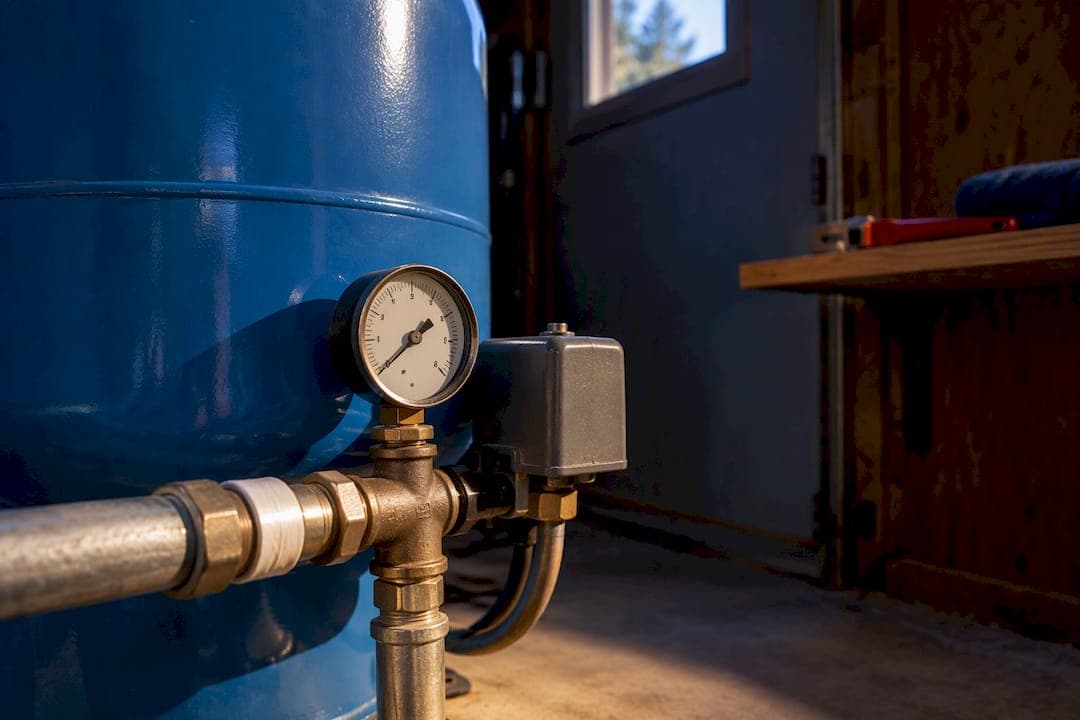
Short cycling is when your well pump kicks on and off every few seconds instead of running a normal one to two minute cycle. Nine times out of ten, the culprit is a waterlogged pressure tank that has lost its air charge, though a bad check valve, a failing pressure switch, or a hidden leak can cause the same symptom. If the pump is chattering rapidly right now, cut power at the breaker before you touch anything.
TL;DR:
- The primary cause of short cycling is a waterlogged pressure tank, which often results from a torn or failed bladder that needs replacement.
- Checking the Schrader valve on the tank can quickly confirm whether the bladder has failed, indicated by water spraying out instead of air.
- A healthy pressure cycle lasts one to two minutes, while rapid cycles every few seconds signify a system issue requiring prompt diagnosis.
- Fixing pre-charge, check valves, or cleaning the sensing tube can resolve many issues, but well water yield problems and in-well repairs demand professional help.
- Regular maintenance like annual pressure checks and inspection of filters and check valves can prevent cycling problems before they escalate.
Table of Contents
- What Well Pump Short Cycling Does to Your Equipment
- What Causes a Well Pump to Cycle On and Off Too Fast
- How to Diagnose Well Pump Cycling Issues Safely
- DIY Fixes for Short Cycling Problems, and Where They Stop Working
- Preventing Well Water System Problems Before They Start
- A Technician's Take on the Repair Order That Actually Works
- Get Your Well Pump Cycling Diagnosed Fast
- Sources
- FAQ
What Well Pump Short Cycling Does to Your Equipment
A healthy well system typically operates within a common pressure range such as 30/50 or 40/60 psi. The pump kicks on at the low number (cut-in) and shuts off at the high number (cut-out), and a properly charged pressure tank should stretch that run between roughly one and two minutes each time. That gap matters more than most homeowners realize.
Inside the tank sits a rubber bladder with a cushion of compressed air behind it. As water fills the tank, the air cushion compresses and stores pressure like a spring. When you open a faucet, that stored pressure pushes water out without the pump needing to fire immediately. Lose the air cushion and the tank can no longer buffer anything. It holds maybe a quart of usable water instead of several gallons, so the pump fires almost every time a toilet refills.
This isn't just an annoyance. Every motor start is an electrical event, and it's a rough one.
Each rapid start draws several times the motor's normal running current, according to field diagnostics from The Well Guide. A pump that starts 40 times a day instead of 6 is absorbing that surge dozens of extra times, every single day.
Over weeks, that stress adds up in predictable ways:
- Pressure switch contacts pit and burn from repeated arcing under load
- The motor windings overheat because starts generate far more heat than steady running
- Bearings and seals wear out faster from constant mechanical shock
- A pump designed for long service life can fail within months of unchecked short cycling
None of this is reversible once it happens. A scorched switch contact doesn't heal, and a motor that's been overheating for weeks doesn't reset itself when you finally fix the tank. That's why catching short cycling early, and understanding the mechanics of your plumbing system, saves real money down the line.
What Causes a Well Pump to Cycle On and Off Too Fast
Six problems account for nearly every case of well pump cycling issues. Ranking them by how often they show up in the field gives you a smart place to start looking.
-
Waterlogged pressure tank. This is the number one cause of well pump short cycling by a wide margin. The rubber bladder that separates air from water has torn or failed, so the tank fills with water instead of holding an air cushion. The tell is the Schrader valve on top of the tank, the same style valve found on a tire. With the pump off, press the valve pin. Air escapes on a healthy tank. Water spraying out means the bladder has failed, and the tank needs replacement, not a repair.
-
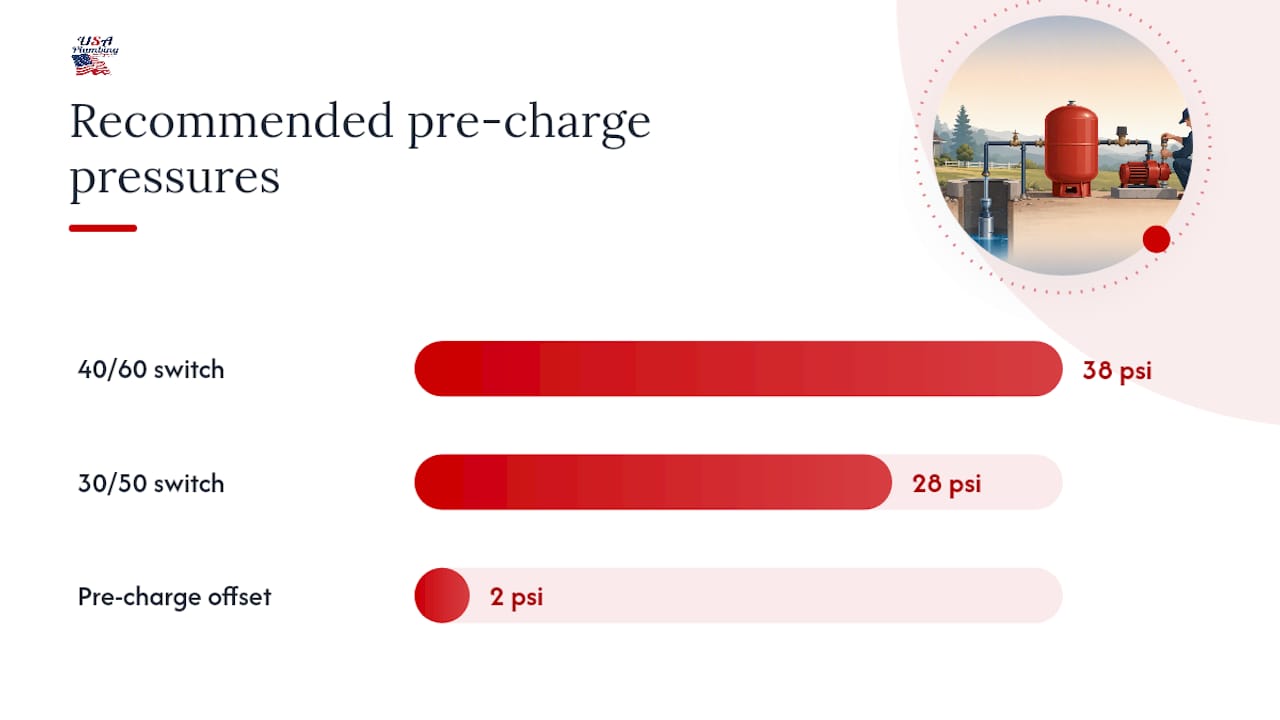
Low air pre-charge. The bladder is intact, but it's lost air pressure over time through the valve stem or a slow seep. This one is fixable. Correct pre-charge should sit 2 psi below your system's cut-in pressure, so a 40/60 switch wants 38 psi, and a 30/50 switch wants 28 psi.
-
Failed or leaking check valve. This valve sits near the pump or down in the well and keeps pressurized water from draining back once the pump shuts off. When it leaks, pressure bleeds away even though nothing in the house is using water, and the pump restarts to make up for water it never actually delivered.
-
Pressure switch problems. A clogged sensing port or worn, pitted contacts inside the switch can cause a rapid "chatter" pattern, where the pump snaps on and off in quick bursts rather than settling into a steady run. Tapping the switch housing sometimes triggers a temporary fix, which is itself a diagnostic clue.
-
Clogged filters, blocked piping, or trapped air. A whole-house filter packed with sediment restricts flow enough to fool the switch into thinking pressure has dropped. Air pockets left over from recent plumbing work behave the same way until they're bled out.
-
Undersized tank or pump for household demand. Older systems built for a smaller household sometimes can't keep up once fixture count grows. The tank drawdown capacity is simply too small for how fast the house draws water, so cycling looks constant even with healthy equipment.
Clogged filters and scaled treatment equipment deserve a special mention, since they're easy to overlook. A neglected water filtration system doesn't just reduce water quality. It restricts flow enough to mimic a tank or switch failure, sending homeowners chasing the wrong repair.
How to Diagnose Well Pump Cycling Issues Safely
Work through these steps in order. Each one rules something in or out before you move to the next, and the sequence keeps you from opening up components you don't need to touch.
-
Cut power at the breaker first. Never open a pressure switch cover, touch tank fittings, or work near the pump with power live. Well pump circuits carry enough current to cause serious injury, and a switch under fault conditions can arc unexpectedly.
-
Run the Schrader-valve tank test. With power off and system pressure relieved, press the valve pin on top of the pressure tank. Air only means the bladder is intact. Water spitting out confirms bladder failure and points you straight toward tank replacement.
-
Check the pre-charge with a gauge. If the tank passed the water test, drain it completely, then check air pressure with a standard tire gauge. Add or release air until you hit 2 psi below cut-in, matching the pressure regulation logic your switch is built around.
-
Tap and rock the tank. A waterlogged tank feels heavy and solid when you push against it, with almost no give. A properly charged tank has a slight hollow give near the top where the air cushion sits.
-
Run a bucket flow test. Time how long it takes to fill a 5 gallon bucket from an outdoor spigot at full flow, then convert to gallons per minute. Compare that number against your pump's rated output on its nameplate or spec sheet. A significant shortfall points to a struggling pump, a clogged inlet screen, or a well yield problem rather than a tank issue.
-
Run the two-hour pressure-hold test. Let the system reach cut-out pressure, then isolate the tank (or simply make sure no water is used anywhere in the house) and watch the gauge for two hours. A steady drop points to a leak somewhere in the plumbing or a check valve that isn't sealing.
-
Tap the pressure switch and inspect the sensing port. With power off, remove the switch cover and look for scale buildup, corrosion, or pitted contacts. A small brass tube connects the switch to the water line, and mineral buildup inside it is a common, easy-to-miss cause of erratic cycling.
Pro Tip: Write down your cut-in and cut-out readings, plus how many seconds each cycle runs, before you touch anything. That baseline tells you immediately whether a fix actually worked or just changed the symptom.
DIY Fixes for Short Cycling Problems, and Where They Stop Working
If your tank passed the Schrader-valve test and just needs air, recharging it is genuinely a homeowner job. Drain the tank, connect a standard air compressor to the valve, and pump it up to 2 psi below your cut-in setting. Then leave it alone for 24 to 48 hours and watch. If the pressure holds and cycling normalizes, you're done.
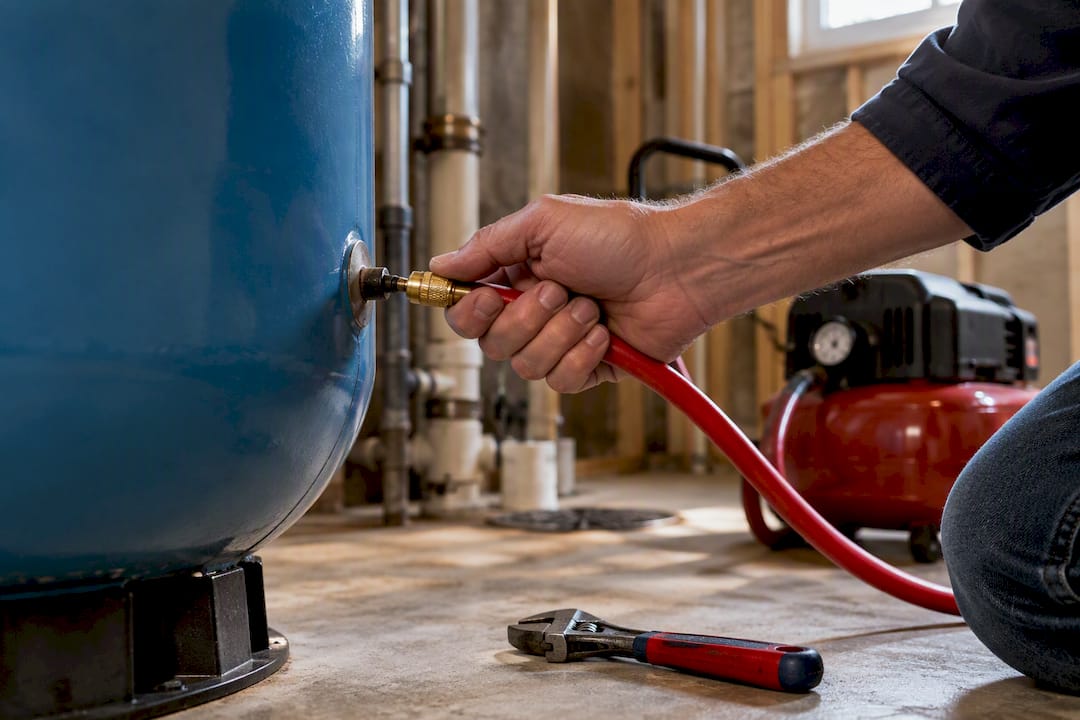
If pressure disappears again within that window, the bladder itself has split, and no amount of recharging fixes a torn bladder. That tank needs replacing.
Other jobs within reasonable DIY range:
- Bleeding trapped air from discharge lines after any plumbing work, usually by opening the highest fixture in the house until the sputtering stops
- Cleaning a clogged pressure-switch sensing tube with a stiff wire, power off, after removing the switch cover
- Swapping a worn pressure switch outright, a low-cost part that most confident homeowners can install in under an hour
- Reducing water use and shutting the system down at the breaker as a temporary stopgap while you wait for parts or a service call
Some jobs are not DIY territory. A failed check valve mounted down inside the well casing, a pump that needs to be pulled and inspected, or a well with genuinely low water yield all call for a licensed well contractor. Working inside a well casing or diagnosing yield problems requires equipment and training most homeowners don't have, and EPA private well guidance specifically recommends professional help for in-well repairs.
Preventing Well Water System Problems Before They Start
A short annual routine catches most of the issues that cause pump cycling issues before they turn into an emergency call.
- Check tank pre-charge once a year, and always recheck it after any plumbing work near the pressure system
- Keep pre-charge 2 psi below cut-in (38 psi for a 40/60 switch, 28 psi for a 30/50 switch)
- Inspect or replace whole-house filters on schedule so sediment buildup doesn't fool the pressure switch
- Check the check valve and pitless adapter for wear during any well service visit
- Log baseline pressure readings and cycle-run times so a future problem is easy to spot against normal behavior
Tank replacement becomes the smarter call once a bladder has failed outright or once a tank has needed two or more recharges within a single year. Patch repairs on a tank that keeps losing air are a losing trade against the cost of a new one.
Pro Tip: Keep a small notebook or phone note with your system's cut-in and cut-out numbers taped to the pressure tank itself. When cycling shows up years from now, whoever diagnoses it, you or a technician, starts from a known baseline instead of guessing.
A Technician's Take on the Repair Order That Actually Works
Field experience backs a simple rule: test the tank first, then the switch, then check for leaks, and only consider the pump itself last. Replacing a pump without fixing a waterlogged tank or a leaking check valve just repeats the failure within weeks. Typical repairs run from a low-cost switch swap up through a full tank replacement, with a pump pull representing the most expensive and least common outcome.
— JOHN
Get Your Well Pump Cycling Diagnosed Fast
A standard test sequence, including Schrader-valve check, pre-charge gauge test, and a two-hour pressure hold, is run on well pump calls to ensure the repair matches the failure instead of guessing at a pump replacement first.

Before you call, have three things ready: how often the pump is cycling (count the seconds between starts), whether any plumbing work happened recently, and whether the Schrader valve on your tank sprays air or water. That information alone often narrows the diagnosis before a technician even arrives. USA Plumbing and Septic LLC offers 24/7 emergency diagnostics for pressure tank and well pump equipment throughout the Bullhead City area, including Fort Mohave, Mohave Valley, and Laughlin. If a tank needs replacement rather than a recharge, that can be addressed promptly to avoid scheduling additional appointments. Reach out through the main service page to get a visit on the calendar.
Sources
For deeper technical detail beyond this guide, the EPA's private well resource hub covers general safety and system maintenance. InspectApedia's short-cycling diagnostics and Water Well Owners' cause breakdown both go deeper into edge cases this article doesn't cover.
- Well Pump Short Cycling: Causes, Diagnosis, and How to Fix It | The Well Guide
- Causes of Water Pump Short Cycling | InspectApedia
- Well Pump Short Cycling 2026: 8 Causes and Quick Fixes - Water Well Owners
- Private Drinking Water Wells | US EPA
FAQ
How Do You Fix a Short Cycling Well Pump?
Start with the Schrader-valve test on the pressure tank. Water instead of air means the bladder failed and the tank needs replacing, while air with low pressure usually means a simple recharge to 2 psi below cut-in solves it. If the tank checks out fine, move on to testing the check valve and pressure switch before assuming the pump itself is bad.
Is Short Cycling Bad for a Well Pump?
Yes, and it's one of the fastest ways to destroy an otherwise healthy pump. Each rapid start draws several times the motor's normal running current, which burns switch contacts and overheats the motor far faster than normal use. A pump rated for 10 to 15 years can fail within months if cycling goes unaddressed.
What Causes a Well Water Pump to Short Cycle?
The most common cause is a waterlogged pressure tank from a failed bladder, followed by low air pre-charge, a leaking check valve, and pressure switch problems like a clogged sensing port. Clogged filters, trapped air in the lines, and an undersized tank for your household's demand round out the usual suspects.
How Long Should a Well Pump's Cycle Last?
A healthy cycle should run at least one to two minutes from start to shutoff, not seconds. If your pump is starting and stopping every 10 to 30 seconds, that's the classic signature of a waterlogged tank, and it warrants immediate diagnosis rather than waiting it out.
Does USA Plumbing and Septic LLC Handle Pressure Tank Replacement?
Yes, USA Plumbing and Septic LLC diagnoses and repairs pressure tanks, pressure switches, and well pump equipment throughout the Bullhead City service area. Pricing depends on the specific repair needed, and current rates are available by contacting the company directly.