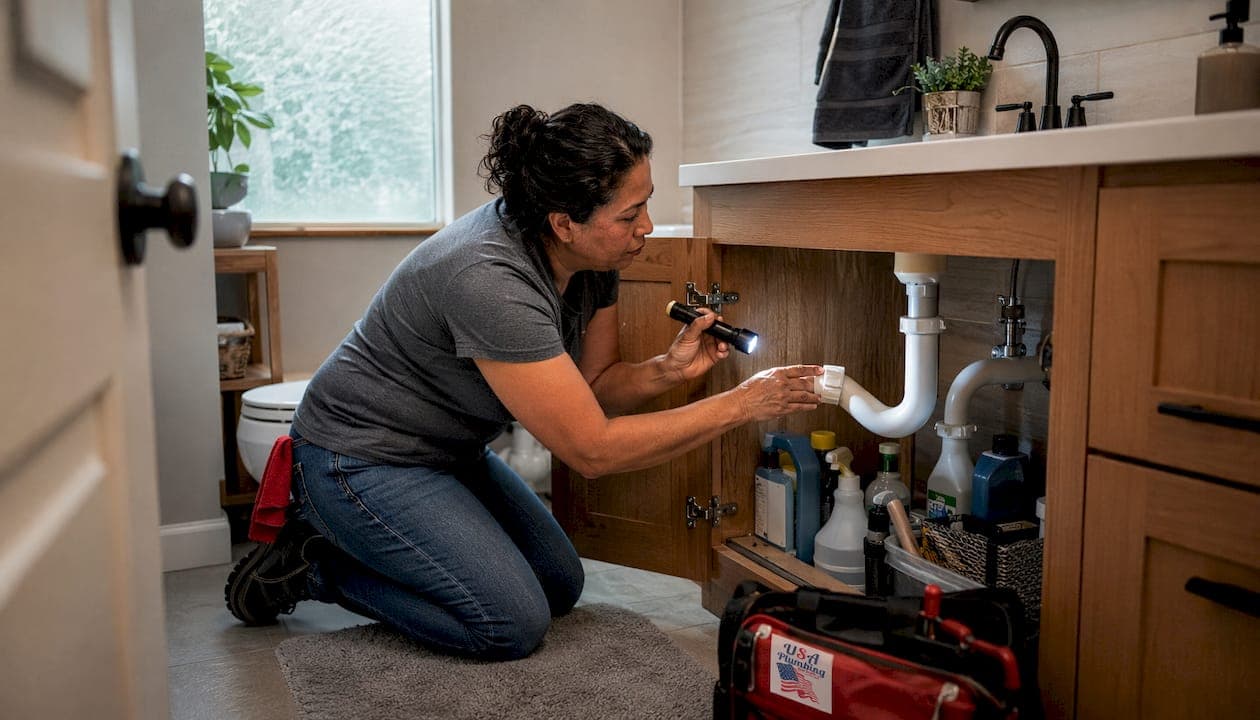
Drain odors are caused by specific plumbing failures: a dry P-trap, decomposing organic biofilm, or a blocked vent pipe that lets sewer gas escape into your living space. Plumbers call this category of problem "sewer gas intrusion," and it covers everything from a faint musty smell in the bathroom to a full rotten-egg stench rising from the kitchen sink. The good news is that most cases of why drains smell bad trace back to one of three fixable sources. Knowing which one you are dealing with cuts your repair time in half and tells you whether a $0 DIY fix or a professional inspection is the right call.
Why do drains smell bad? The three root causes
Bad smells from drains fall into three categories: a broken water seal, organic buildup inside the pipe, and a venting failure. Each one produces a distinct odor pattern and responds to a different fix. A dry P-trap smells like raw sewage and appears suddenly, often in a guest bathroom or vacation home that sat unused. Biofilm buildup produces a sour, musty, or rotten smell that gets worse when you run water. A vent blockage creates a widespread sewage odor that hits multiple rooms at once, often paired with gurgling sounds from the drain.
Understanding the difference matters because the wrong fix wastes time and money. Pouring baking soda into a drain with a vent problem does nothing. Running water into a drain with heavy biofilm only spreads the smell temporarily.
What is a P-trap, and why does a dry one cause odors?
The P-trap is the curved pipe section directly beneath every drain in your home. It holds a small amount of standing water that physically blocks sewer gases from traveling up through the drain opening. When that water evaporates or drains away, the seal breaks and sewer gas flows freely into the room.
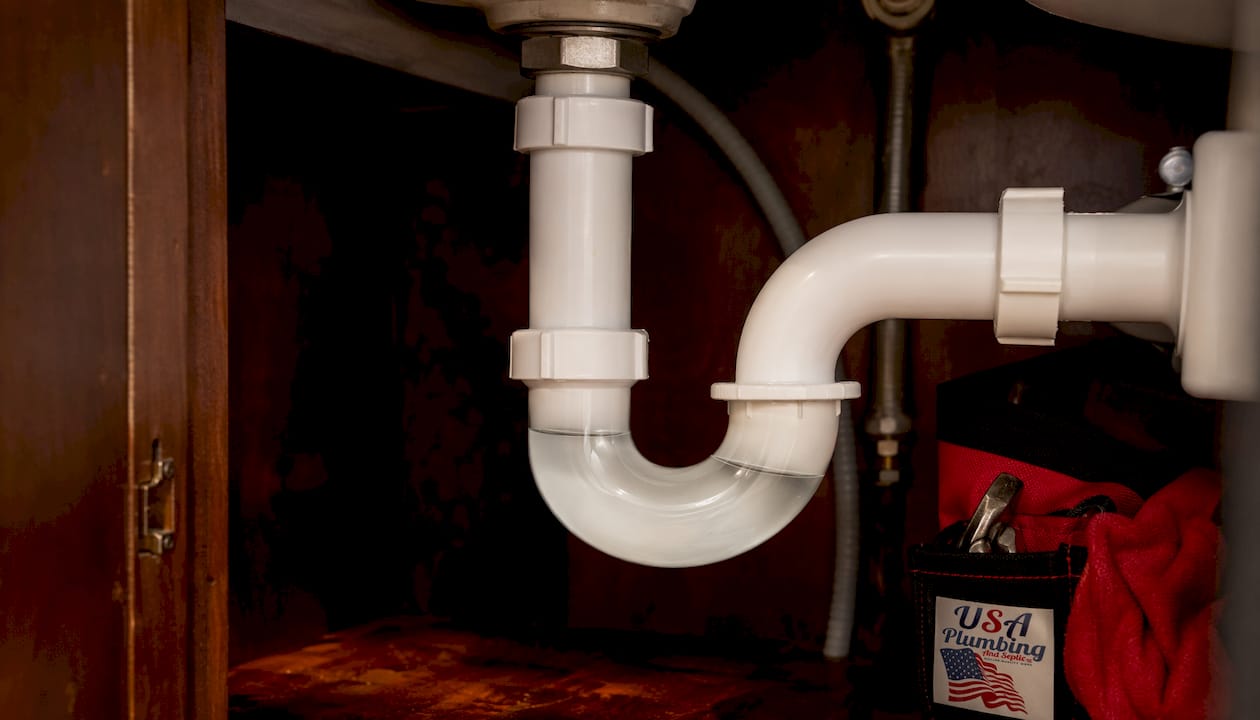
A dry P-trap is the leading cause of smelly drains in homes. Restoring the seal takes 30–60 seconds and costs nothing. You simply run the faucet until water refills the curve.
Common reasons a P-trap dries out
- Infrequent use. Guest bathrooms, basement sinks, and vacation properties go weeks without water flow. Evaporation empties the trap.
- Slow seepage. A worn trap gasket can allow water to drip out gradually, even when the drain is used regularly.
- Venting problems. Negative pressure in the drain line can siphon water out of the trap, a problem covered in detail below.
- Improper installation. A trap installed with too steep an angle drains itself after every use.
To confirm a dry trap, pour a cup of water directly into the drain. If the smell disappears within a few minutes, the trap was dry. For drains that sit unused for long periods, adding mineral oil after refilling slows evaporation and prevents the odor from returning. The oil floats on top of the water and forms a barrier that lasts weeks longer than water alone.
Pro Tip: For a vacation home or seasonal property, pour two cups of water and a tablespoon of mineral oil into every floor drain and sink before you leave. You will come back to a fresh-smelling house.
Learn more about how drain traps work and what to check when they fail.
How does biofilm cause persistent drain odors?
Biofilm is a sticky layer of bacteria, hair, soap scum, skin oils, and toothpaste that coats the inside of your drain pipe. Bacteria in this layer break down organic material continuously, releasing hydrogen sulfide and other odor compounds. The smell is typically sour or musty and gets stronger when warm water disturbs the biofilm.
Bathroom sinks are the most common location because they collect hair, toothpaste, and soap every single day. Shower drains accumulate body oils and shampoo residue. Kitchen sinks trap food particles and grease. All three create the same result: a persistent odor that water alone cannot wash away.
How to remove biofilm from a drain
- Remove and clean the stopper. Pull out the drain stopper and scrub it with an old toothbrush. Stoppers collect the densest layer of biofilm and are often the primary odor source.
- Use a plastic barbed zip tool. Insert the zip tool into the drain and pull out hair and debris. Mechanical cleaning is twice as effective as chemical deodorizers for organic buildup, and the process takes 10–20 minutes.
- Flush with hot water. Run the hottest tap water for two minutes to loosen remaining residue after mechanical removal.
- Apply an enzyme cleaner. Enzyme-based cleaners with protease, lipase, and amylase digest organic material at the molecular level. One application lasts up to three months before reapplication is needed.
- Clean the overflow channel. The small oval hole near the top of your bathroom sink basin connects to a hidden channel that drains directly into the drain pipe. Biofilm builds up there and standard treatments miss it entirely. Fill the basin with a diluted bleach solution and let it overflow into that channel to flush it out.
Aggressive chemical drain openers can damage pipes and pose safety hazards. They are not a first-line treatment for odor issues. Enzyme cleaners and mechanical tools are safer and more effective.
Pro Tip: Set a monthly reminder to run a zip tool through your bathroom sink and shower drains. Five minutes of mechanical cleaning prevents months of odor buildup. Pair it with an enzyme cleaner every quarter for best results.
For a full breakdown of safe drain cleaning methods, the Usaplumbingseptic guide covers plumber-approved techniques in detail.
You can also find practical guidance on clearing slow drains safely without risking pipe damage.
What plumbing vent problems cause drain smells?
Every drain in your home connects to a vent pipe that runs through the roof. This pipe equalizes air pressure in the drain system so water flows smoothly and P-trap seals stay intact. When the vent pipe gets blocked by a bird nest, leaves, or ice, the pressure balance breaks.
Negative pressure builds up in the drain line and literally siphons water out of nearby P-traps. Once the trap seal is gone, sewer gas enters the home. The result looks like a dry trap problem, but refilling the trap only provides temporary relief because the pressure imbalance empties it again.
Signs that point to a vent blockage
- Gurgling sounds from one or more drains, especially after flushing a toilet
- Odors that appear in multiple rooms or spread across the house
- Slow drains in several fixtures at the same time
- Smell that returns within hours of refilling a P-trap
Gurgling noises accompanying drain odors indicate vent pipe blockages siphoning water from P-traps. This is a diagnostic sign that DIY methods cannot fix. A plumber needs to inspect and clear the vent stack from the roof.
Multiple smelly or slow drains with gurgling signal a system-wide venting or sewer line problem, not a fixture-level issue. Treating individual drains while a vent blockage exists is a cycle that never ends. A professional inspection identifies the blockage location and clears it correctly.
The key distinction is scope. A single smelly drain with no gurgling is almost always a local trap or biofilm issue. Odors in multiple rooms with gurgling sounds point to the vent system or the main sewer line.
When do drain smells signal a serious plumbing problem?
Some drain odors point to structural failures that go well beyond a dirty stopper or a dry trap. These situations require professional diagnostics, not DIY fixes.
| Warning sign | What it likely means | Urgency |
|---|---|---|
| Sewage smell from multiple drains | Main sewer line blockage or vent failure | High. Call a plumber. |
| Odor from basement floor drain | Sewer line backup or dry trap in floor drain | High. Inspect immediately. |
| Smell persists after all DIY fixes | Cracked pipe or failed wax ring seal | High. Camera inspection needed. |
| Damp smell with visible mold near pipes | Active pipe leak feeding mold growth | High. Leak detection required. |
| Rotten egg smell throughout the house | Sewer gas from cracked sewer line | Urgent. Health risk present. |
Sewer gas contains hydrogen sulfide and methane. Exposure to these gases in an enclosed space is a serious health hazard. A persistent sewage smell that you cannot trace to a single fixture is a signal to call a professional the same day, not next week.
Water damage and mold near drain pipes often indicate a slow leak that has been feeding moisture into the wall or subfloor for weeks. A leak detection inspection can locate the source without tearing open walls unnecessarily.
How to diagnose and fix drain odors: a practical routine
A systematic approach saves time and avoids the common mistake of treating the wrong cause. Work through these steps in order before calling a plumber.
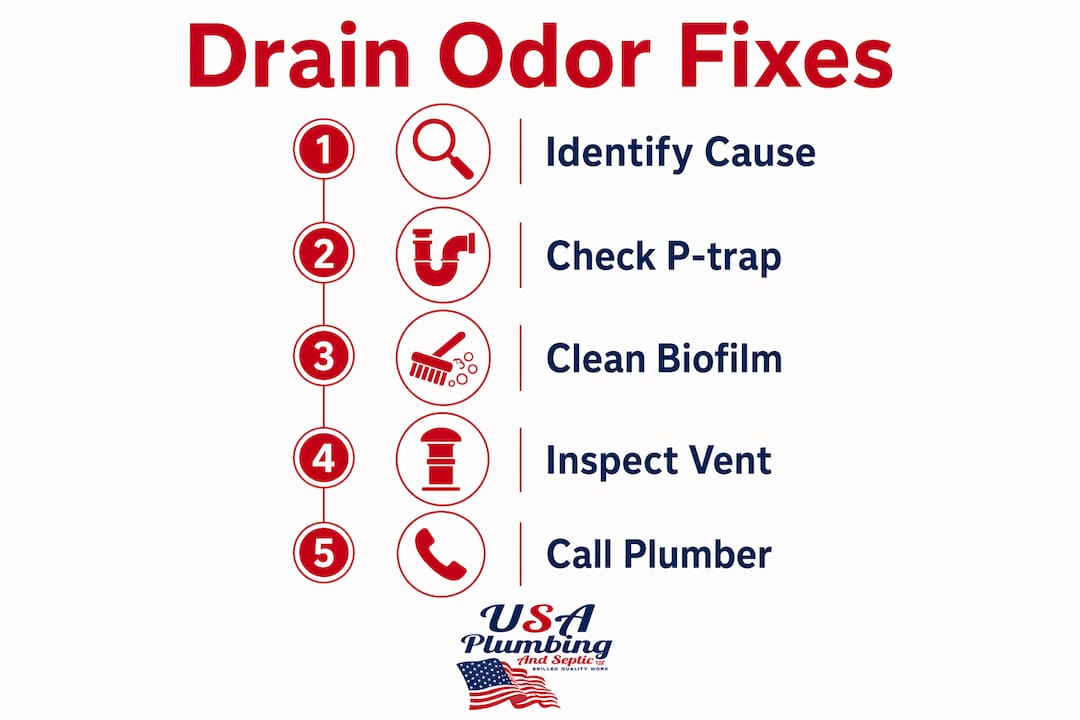
- Identify which drains smell. One drain points to a local issue. Multiple drains point to a vent or sewer line problem. Stop here and call a plumber if several drains are involved.
- Test for a dry P-trap. Pour one cup of water into the suspect drain. Wait five minutes. If the smell clears, the trap was dry. Refill it and add mineral oil for drains that sit unused.
- Remove and clean the stopper. Pull the stopper and scrub it thoroughly. This step alone resolves a large share of bathroom sink odors.
- Run a zip tool. Insert a plastic barbed zip tool 6–8 inches into the drain and pull out debris. Repeat until the tool comes out clean.
- Apply an enzyme cleaner. Pour the recommended dose into the drain at night so it sits undisturbed for several hours. Repeat quarterly.
- Check for gurgling. Flush a nearby toilet or run a second fixture while watching the drain. Gurgling confirms a vent issue and means it is time to call a professional.
- Call a plumber if the smell returns within 48 hours. Recurring odors after a complete cleaning routine indicate a problem the homeowner cannot fix alone.
Pro Tip: Never mix chemical drain cleaners with enzyme cleaners. The chemicals kill the bacteria in enzyme products, making both treatments useless. Choose one approach and stick with it.
Knowing when to call a professional is as valuable as knowing how to clean a drain yourself.
Key Takeaways
Drain odors trace back to three fixable causes: a dry P-trap, organic biofilm, or a blocked vent pipe, and identifying the right one determines whether a DIY fix or a professional call is the correct next step.
| Point | Details |
|---|---|
| Dry P-trap is the top cause | Run water for 30–60 seconds to restore the seal; add mineral oil for unused drains. |
| Biofilm needs mechanical removal | A zip tool and enzyme cleaner outperform chemical deodorizers for lasting odor control. |
| Gurgling means a vent problem | Gurgling sounds with odors signal a vent blockage that requires professional repair. |
| Multiple drains equal a bigger issue | Odors across several fixtures point to the main sewer line or vent system, not a single drain. |
| Sewer gas is a health risk | Persistent sewage smell throughout the home requires same-day professional inspection. |
What most homeowners miss about smelly drains
I have seen a lot of drain odor calls over the years, and the pattern is almost always the same. The homeowner has already poured something down the drain, the smell came back, and now they assume the problem is serious. Most of the time, it is not. The real issue is that they treated the symptom instead of the source.
The single most overlooked spot in any bathroom is the sink overflow channel. That small hole near the top of the basin looks harmless, but it collects years of biofilm that no amount of drain cleaner touches. I have cleared overflow channels that smelled worse than the drain itself. A diluted bleach flush through that channel, done once a month, eliminates a major odor source that most guides never mention.
My other consistent observation is that homeowners reach for chemical drain openers first. Those products are not designed for odor control. They can soften pipe joints over time and create a bigger problem than the smell they were meant to fix. A zip tool costs a few dollars and does the job better in 15 minutes.
The one situation where I always tell people to call immediately is gurgling. Gurgling is not a clog symptom. It is a pressure symptom, and pressure problems in a drain system mean the vent stack or the sewer line needs attention. Waiting on that call usually turns a $200 vent cleaning into a $2,000 sewer repair.
— JOHN
Persistent drain odors? Usaplumbingseptic is ready to help
Foul drain smells that return after cleaning, spread to multiple rooms, or come with gurgling sounds are not a DIY problem. They are a plumbing system problem.
Usaplumbingseptic provides 24/7 professional plumbing services across Bullhead City, Fort Mohave, Mohave Valley, and Laughlin. Our team uses sewer camera inspections to locate cracked pipes, vent blockages, and sewer line failures with precision. We handle everything from drain cleaning to full sewer line diagnostics so you get a real fix, not a temporary patch. For a full overview of residential plumbing services in the area, visit our Mohave County plumbing guide. Call us today and we will get your drains smelling clean again.
FAQ
What is the most common cause of a smelly drain?
A dry P-trap is the leading cause of drain odors. Running water for 30–60 seconds refills the trap and restores the sewer gas barrier at no cost.
Why does my drain stink even after cleaning it?
Biofilm in the overflow channel or a vent pipe blockage can cause odors to persist after standard cleaning. Check the overflow channel and listen for gurgling sounds to identify the real source.
Are bad drain smells a health risk?
Sewer gas contains hydrogen sulfide and methane, both of which are hazardous in enclosed spaces. A persistent sewage smell throughout the home requires professional inspection the same day.
How do I prevent drain odors from coming back?
Run a zip tool through bathroom drains monthly and apply an enzyme-based cleaner with protease, lipase, and amylase every three months. For rarely used drains, add mineral oil after refilling the trap to slow evaporation.
When should I call a plumber for drain smells?
Call a plumber when odors appear in multiple drains, gurgling sounds accompany the smell, or the odor returns within 48 hours of a thorough cleaning. These signs point to vent or sewer line problems that require professional tools to fix.