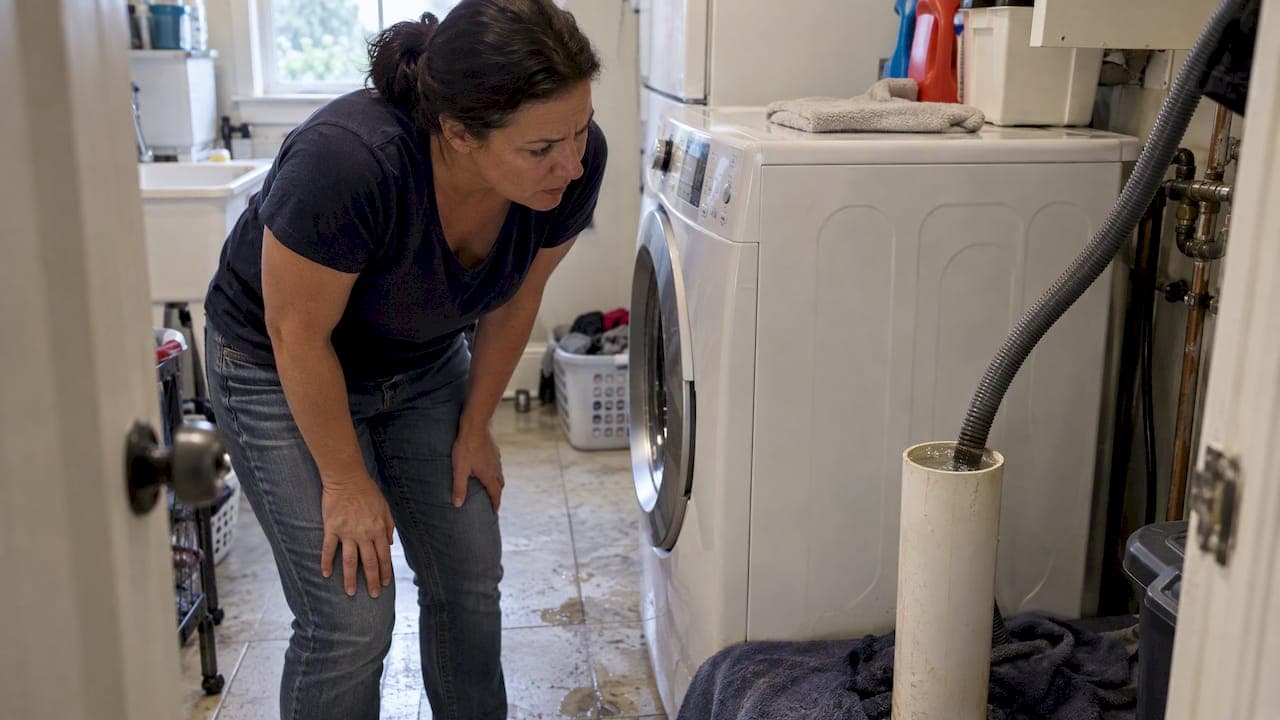
If your washing machine drain is backing up, the culprit is usually a clog in the standpipe or a deeper shared drain line, with a kinked hose or faulty check valve less often to blame. Stop the washer, cut the power, and bail or block any further flow right away. If you see sewage, other fixtures backing up, or overflow that takes more than a minute, call a plumber.
TL;DR:
- Stop the washer and cut power without stepping into standing water; shut off supply valves if water is still entering, and wear gloves and boots.
- Overflow within seconds usually points to the standpipe or hose; a delay of 30 seconds to one minute suggests a deeper branch line.
- For a surface clog, loop the hose up to the standpipe top, insert only a few inches, and use a hand snake gently.
- Call a plumber for sewage, multiple affected fixtures, hard snake resistance, recurring clogs, or overflow that takes over a minute; avoid rental power augers.
- Vinegar may loosen light residue but will not clear a solid lint plug; never pour chemical drain cleaner into the washer tub.
Table of Contents
- What should you do in the first 10 minutes?
- How do you tell where the clog is?
- Which DIY fixes are safe to try?
- When is it time to call a licensed plumber?
- How do you prevent the next backup?
- How do you clean up safely after a backup?
- Why does a washer drain back up when other drains do not?
- How do professionals clear a stubborn washer drain?
- What do plumbing codes require for a washing machine drain?
- What signs mean a drain part needs replacing, not cleaning?
- A field plumber's view: the clog is rarely the whole story
- Need help with a backed-up washer drain right now?
- FAQ
- Sources
What should you do in the first 10 minutes?
Water on the floor is the emergency. Finding the cause comes second. Work through these steps in order and you will limit damage and keep yourself safe while you decide what comes next.
- Stop the wash cycle, then unplug the washer or switch off its breaker. Never stand in standing water to reach an outlet.
- Close the hot and cold supply valves behind the machine if water is still flowing in or leaking from the hoses.
- Move rugs, laundry baskets, cardboard boxes and anything else off the floor.
- Put on rubber gloves and waterproof boots before you touch the water. Backed-up drain water can carry bacteria, so keep it off bare skin.
- Bail or soak up surface water with a wet vac, mop and bucket, or towels. Work toward a floor drain or outside, never toward carpet.
- Pull the drain hose out of the standpipe and aim it into a deep sink or bucket if you must finish a load. Otherwise leave the machine off until you know where the clog sits.
- Open a window or run a fan, especially if you notice a sewage smell.
- If sewage is rising, other fixtures are filling, or you cannot stop the flow, call us. Our team handles emergency plumbing.
Pro Tip: Snap a few photos of the water line, the standpipe and any wet walls before you clean up. They help your plumber and your insurance adjuster later.
How do you tell where the clog is?
Your drain tells you where the problem lives if you pay attention to what backs up and how fast. Fixtures near the washer that stay dry point to a local clog. Other fixtures reacting points deeper.
Start by noting what else is affected:
- Only the washer standpipe overflows: the clog is probably in the standpipe, the trap below it, or the drain hose.
- The kitchen or bathroom sink bubbles or fills when the washer drains: the washer shares a branch line with that fixture, and the restriction sits downstream of both.
- A toilet gurgles or a shower tub gains water: the blockage may be in the main line. Our guide on why a toilet gurgles when the shower drains walks through that pattern.
- A sewage or rotten-egg smell near the standpipe: a dry or blocked trap, or a line that is not venting properly.
Then use timing as a decision tool. This Old House outlines diagnostic timing for washer overflows, and the rule of thumb works like this. If water rises and overflows within seconds of the pump starting, the blockage sits near the surface, in the standpipe or hose. If it takes roughly 30 seconds to a minute, the clog is likely deeper in the branch line. If the standpipe holds before it creeps up, think main sewer line, especially if other fixtures show symptoms too.
To run a safe test, make sure the floor is protected, set the washer to a drain or spin cycle with a small load, and stand beside it with a bucket and towels ready. Watch the standpipe while the pump runs and note how fast the water climbs. Stop the machine the moment it nears the rim.
Finally, check the basics before you assume the worst. Look for kinks or crushed sections in the hose, make sure it is not pushed too far down the standpipe, and shine a flashlight into the opening for visible lint buildup.
Which DIY fixes are safe to try?
Near-surface clogs often respond to simple fixes. If your timing test pointed to the standpipe or hose, work through these steps. If you saw signs of a deeper or shared blockage, skip ahead to the next section.
Fix hose placement first
The drain hose should loop up to the top of the standpipe, then drop in no more than a few inches. Pushing it all the way down or sealing it tight creates a siphon that pulls water out of the tub, and it leaves no air gap, so water has nowhere to go if the pipe slows down. Secure the hose with a hose clamp or hanger so the pump's surge does not whip it loose. This Old House also notes that undersized pipes can cause overflows, so if the standpipe looks narrow, make a note for your plumber.
Clear the standpipe and trap
- Turn off and unplug the washer, then pull the drain hose out of the standpipe.
- Shine a light down the pipe and remove any visible lint or debris by hand, wearing gloves.
- Feed a hand snake or short drain auger into the standpipe. Turn the handle slowly as you advance it.
- When you feel resistance, keep turning to break through or hook the clog, then pull the snake back out. Expect lint and grime on it.
- Flush with hot tap water from a bucket and watch how quickly it drains.
- Reconnect the hose and run a short rinse cycle while you stand by.
Only push the snake as far as you can feel it moving freely. Hard, unyielding resistance usually means a pipe bend, a root, or a damaged line, and forcing it risks scratching or cracking the pipe. Stop there and call a pro.
Cleaning options that are safe at home
Hot water works well on soap scum and fabric-softener buildup. Pouring white vinegar down the standpipe, letting it sit, and flushing with hot water may loosen light residue. Enzyme-based drain cleaners are gentler on pipes and can help maintain a drain between deeper cleanings.
Be careful with harsh chemicals. This Old House warns against pouring chemical drain cleaners into the washer tub, and we agree: they can damage the pump, seals and hoses. If you use a chemical cleaner in the standpipe at all, follow the label exactly, never mix products, and do not run the washer until the pipe has been thoroughly flushed with water.
Know when to skip the power auger
Rental power augers can chew through lint plugs, but they can also crack old pipe, scrape the inside of the line, and push a clog deeper into the branch where it is harder to reach. Roots, broken pipe, collapsed sections and clogs near the main line are jobs for a plumber with the right equipment and a camera.
A few firm warnings:
- Do not put drain cleaner in the washer tub.
- Do not force tools into the washer's pump or drain opening.
- Do not keep running the washer through repeated overflows. Each cycle risks more water damage.
Pro Tip: Run your clearing test with a small bucket of water first. If the standpipe still drains slowly, the clog is not fully gone, and starting a full wash load will just cause another overflow.
When is it time to call a licensed plumber?
Some blockages are not worth wrestling with. If any of these show up, stop and call:
- Sewage or a strong sewer smell near the standpipe or floor drains.
- Backups in more than one fixture, such as a gurgling toilet or a filling shower tub.
- Overflow that takes time to appear, which may point to the main line.
- A clog that returns within days or weeks of clearing.
- Hard resistance when you snake the standpipe.
- Water damage spreading to walls, subfloor or a finished basement.
A professional visit solves problems DIY tools cannot reach. We run longer cables through the branch and main lines, inspect the pipe with a camera to see exactly what is wrong, and clear the line with the right equipment for the blockage. We can also service the main line, locate and use a cleanout, and repair or replace a failing check valve or damaged section. Our homeowner guide to how drain cleaning works explains these options in more detail, and our look at the signs your drains need professional cleaning can help you decide.
To get the most from the visit, find your main cleanout before we arrive if you can, write down which fixtures backed up and how long the washer took to overflow, and note any odors or gurgling. Our main sewer line clog guide shows how to locate it and when the city may need to be involved.
An emergency call also pays off, especially when it comes to driveway washout repair and related property issues. A sewage backup can soak into drywall and flooring, becoming more expensive and hazardous over time. Our emergency line exists so you do not have to wait to stop it.
How do you prevent the next backup?
Most repeat washer backups come from slow buildup, so a few habits make a big difference.
- Install a lint trap or mesh strainer on the end of the discharge hose, and empty or rinse it often.
- Use the right amount of detergent. Too much leaves scum that coats pipe walls over time.
- Do not overload the machine. Large, heavy loads dump more water and lint at once.
- Rinse pockets and shake out lint-heavy items like towels, fleece and blankets before they go in.
- Schedule periodic professional drain cleaning if you have older pipes, a long run to the main, or a history of slow drains.
- Have your standpipe checked for proper diameter and venting if backups keep returning after cleaning.
Pro Tip: Once a month, run a hot-water rinse cycle with the machine empty. It flushes loose residue before it hardens into a clog.
How do you clean up safely after a backup?
A washer backup that reaches the drain line may contain more than soapy water, so treat the cleanup seriously. Ventilate the area, wear gloves and waterproof boots, and keep children and pets out until you are done.
- Remove standing water with a wet vac or mop and bucket.
- Throw away saturated porous items like carpet padding, cardboard and fabric that cannot be washed hot, because they cannot be reliably disinfected.
- Scrub nonporous surfaces such as concrete, tile and vinyl with hot water and detergent.
- Disinfect those surfaces with the bleach solution below, let it sit for the contact time on the label, then rinse.
- Dry the space thoroughly with fans or a dehumidifier.
Bleach solution for nonporous surfaces: NDSU recommends 1/2 cup chlorine bleach per gallon of water after sewage backflow, which carries bacteria and pathogen risk.
Never mix bleach with ammonia or other cleaners. If sewage covered a large area, soaked into drywall or flooring, or reached a finished space, bring in professional remediation instead of tackling it alone.
Why does a washer drain back up when other drains do not?
A washing machine empties a tub of water in a short, fast surge. The pump pushes that flow through the hose into the standpipe, which leads to a trap and then the home's drain system, as the general description of a washing machine outlines. A sink drains a thin trickle by comparison, so a pipe that handles daily dishes can still choke on a spin-cycle discharge.
Plumbing professionals also point to slow buildup. Lint, detergent scum and fabric-softener residue accumulate for years and narrow the standpipe from the inside, until a partially blocked pipe cannot keep pace with the pump. That is why backups can seem to appear suddenly after a stretch of no trouble.
The clues you collected earlier fit right in. If the overflow happens in seconds, the narrowing is near the standpipe. If a sink or tub reacts, the washer shares a branch with it, and the restriction is downstream. If backups only occur while the washer runs, the surge is exposing a partial blockage in the shared branch or main line, not just a surface clog. Pros need different tools for each case, which is why a bucket-and-snake fix sometimes only buys you a few weeks.

How do professionals clear a stubborn washer drain?
When a clog resists a hand snake, we use heavier methods. Here is how a typical visit works.
- Inspect first. We confirm symptoms, check the standpipe and trap, and locate the nearest cleanout.
- Camera inspection. A small camera on a flexible line shows the clog, a belly in the pipe, roots or a crack, so we choose the right method instead of guessing.
- Power rodding. A motorized cable with a cutting head spins through the line to break up lint, grease and soft roots. It works well on thick but localized blockages.
- Hydro jetting. A high-pressure water jet scours the pipe walls and flushes debris out. It cleans buildup that a cable would only punch a hole through.
- Re-inspect. We run the camera again to confirm the line is clear and check for damage.
- Test. We run the washer's discharge to prove the drain keeps up with the surge.
Not every pipe is right for every method. Hydro jetting is not appropriate for fragile or broken lines, which is another reason the camera comes first.
What do plumbing codes require for a washing machine drain?
Codes vary by city and county, so we always confirm local rules before installation or repair. Still, a few requirements are common across much of the country. Washer standpipes are typically required to be a specific minimum diameter, to rise to a set height above the trap, and to connect to a properly vented trap so the pump's surge does not siphon the trap dry or push sewer gas into the room. The drain hose usually needs an air gap rather than a tight seal at the standpipe.
Installations that skip these details are a frequent hidden cause of repeat overflows. A standpipe that is too narrow or poorly vented can behave like a permanent partial clog no matter how often you clean it. Some jurisdictions also require permits for new or relocated drain lines. If you are remodeling a laundry room or moving the washer, check with your local building department, or have a licensed plumber confirm the work will pass inspection.

What signs mean a drain part needs replacing, not cleaning?
Cleaning fixes buildup. It cannot fix broken parts. Watch for these signs that something needs to be replaced:
- A drain hose that is cracked, bulging, brittle or permanently kinked.
- A standpipe or trap that is corroded, leaking, loose or visibly misaligned.
- A damaged or failing check valve, which can allow wastewater to flow back toward the machine.
- Standing water or damp spots around the pipe connection even after the clog is cleared.
- A camera inspection that reveals a cracked, sagging or collapsed section of pipe, or roots pushing through a joint.
- Clogs that return within days no matter how thoroughly the line is cleared.
If cleaning keeps failing, the pipe itself is the problem. Replacing the damaged section is cheaper and less disruptive than repeated emergency visits.
A field plumber's view: the clog is rarely the whole story
Most homeowners treat a backed-up washer as a one-time clog, snake it, and move on. In my experience, that is where people go wrong. The overflow is a symptom, and the line that let it happen usually has a reason, whether that is years of buildup, a poorly vented standpipe or a shared branch that was never sized for a modern washer. Clearing the clog without asking why it formed is a good way to meet it again. Use the timing and the pattern of affected fixtures as your guide, and be honest about when a job is beyond a hand snake. When you call us, we diagnose with a camera, clear the line, and repair what is failing so the fix lasts.
Need help with a backed-up washer drain right now?
When the water is rising and you do not want to gamble with a rental auger, we are ready. Our licensed plumbers handle drain cleaning, camera inspections, main-line snaking and repairs, and our emergency response runs around the clock. On a service visit we find the cause, give you a clear quote, and lay out the repair plan before any work begins.

Call us now or book through our emergency plumbing page and we will get a plumber headed your way.
FAQ
Can a washing machine drain go up?
Yes. A washing machine drain can back up through the standpipe when the line is clogged or when the drain hose is pushed too far into the pipe. The washer's pump discharges quickly, so even a partial clog can force water upward, as This Old House explains.
Can I pour vinegar down the drain to unclog it?
Vinegar can loosen light soap scum and residue in the standpipe, but it will not clear a solid lint plug or a deep blockage. Pour it into the standpipe, not the washer tub, let it sit, and flush with hot water. If the drain is still slow, snake the pipe or call a plumber.
How do I empty the washing machine drain?
Turn off and unplug the washer, then place a shallow pan or towels under the drain filter or hose. Lower the hose into a bucket and let the water flow out. Check the filter for lint and coins, rinse it, and put everything back before running another cycle.
Why is water coming out of my kitchen sink when my washing machine is on?
Your kitchen sink and washer likely share a drain line, and a clog downstream is forcing washer water back up the nearest opening. That points to a branch or main-line blockage, not just the standpipe. Stop using the washer and call a plumber to clear the line.
Sources
- Plugging Home Drains to Prevent Sewage Backup | NDSU Agriculture
- How To Fix Washing Machine Drain Overflows