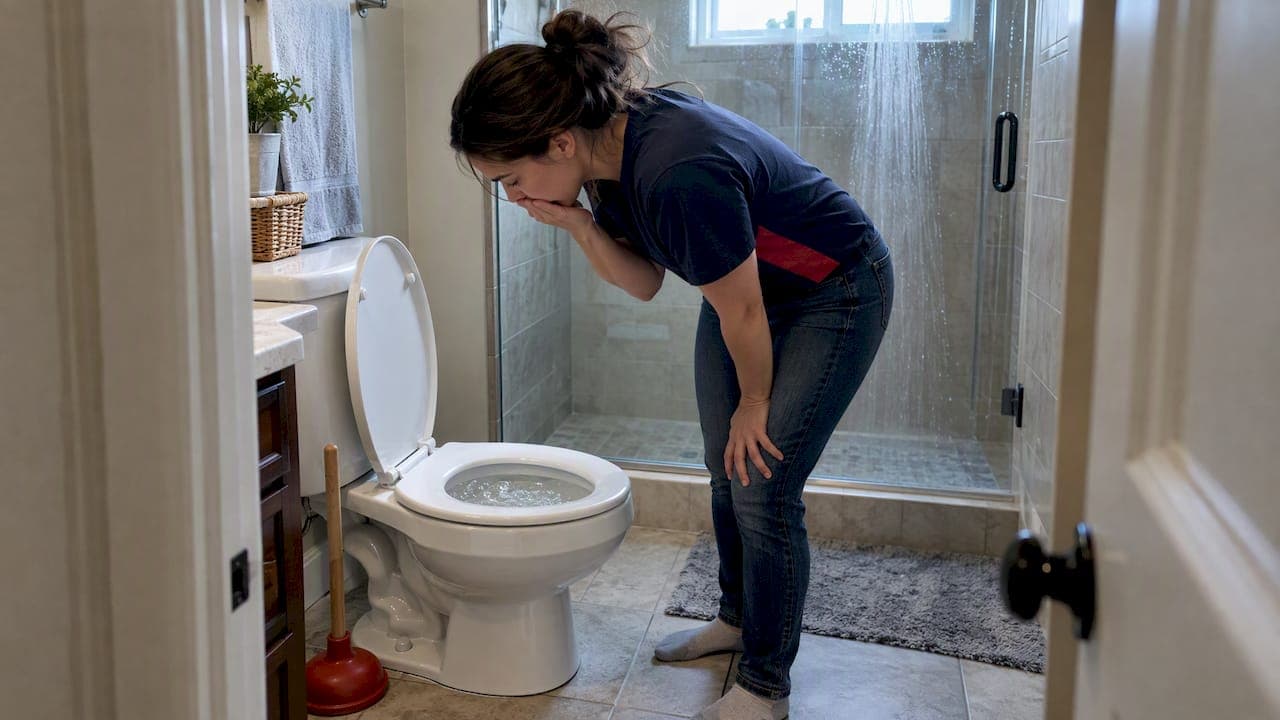
If your toilet gurgles when the shower drains, the most likely cause is a vent or partial drain blockage creating an air-pressure imbalance. Try plunging the toilet and sealing nearby drains as a first step. Stop using water right away and call a professional if you notice sewage odors or any backup.
TL;DR:
- Gurgling in toilets or showers typically results from vent blockages, partial drain clogs, or septic system issues that disturb airflow and pressure balance.
- Localized problems often involve blocked roof vent stacks or partial clogs in shared branch lines, which can sometimes be cleared with plungers or snakes.
- Signs of more severe issues include sewage backup, persistent odors, soggy drainfield areas, and slow drainage across multiple fixtures, indicating main line or septic failure.
- DIY fixes like sealing drains and snaking or plunging are effective if the problem is confined to a single fixture or branch, but not if symptoms affect the entire system.
- Professional inspection using cameras and advanced tools is necessary when DIY methods fail or signs point to a main sewer or septic system malfunction requiring urgent repair.
Table of Contents
- Most common causes: blocked vent stack, partial clog, or septic trouble
- How to diagnose: prioritized, safe checks that localize the problem
- DIY fixes that often stop toilet gurgling when the shower runs
- Main sewer line and septic warnings: urgent signs and immediate steps
- When to call a plumber and what to expect from professional diagnosis
- Why this guidance holds up
- How we can help when DIY fixes don't stop the gurgling
- FAQ
- Sources
Most common causes: blocked vent stack, partial clog, or septic trouble
Your plumbing system relies on vent pipes to let air in and out as water moves through the drains. Without that airflow, water rushing down the shower drain pulls air from the nearest path of least resistance, which is often the toilet trap. That pull creates the bubbling or gurgling sound you hear.
The International Plumbing Code sets a pressure differential limit of 1 inch of water column, about 249 Pa, across a trap before the seal starts to fail. When a vent stack is blocked by debris, a bird's nest, or ice, or when a branch drain is partially clogged with hair and soap scum, the system can't equalize pressure fast enough. The result is bubbling, gurgling, or even a brief loss of water from the toilet's trap seal.
A few patterns show up again and again in homes with this complaint:
- A blocked vent stack on the roof restricts airflow to the whole branch, so several fixtures may gurgle together.
- A partial clog in the shared branch line between the shower and toilet creates a bottleneck that only shows up when water moves fast.
- Septic-system problems, like a saturated drainfield or a clogged outlet baffle at the tank, can cause backpressure that mimics a simple vent issue.
Shared drains and blocked vent stacks are a common and well-documented reason toilets bubble when a shower or tub runs, and straightforward tools like a plunger or drain snake often resolve the localized version of this problem. Septic failures are a separate animal entirely, and we'll cover those warning signs on their own further down. If you want more background on how traps hold water and block sewer gas, our guide on how drain traps work walks through the basics.
How to diagnose: prioritized, safe checks that localize the problem
Before you grab a plunger or call for help, a few minutes of observation can save you a wasted trip or a bigger mess. Work through these checks in order.
- Run the shower alone and watch the toilet. If only the toilet connected to that shower's branch gurgles, you're likely dealing with a localized clog or vent issue, not a main-line problem.
- Flush every toilet in the house and run every sink. If multiple fixtures gurgle, drain slowly, or back up together, the blockage is probably downstream in the main line or the septic system.
- Sniff for sewage odors near drains, the yard, or a septic tank area. Persistent odor combined with gurgling is one of the signs the EPA lists for septic system failure.
- Check your yard for soggy, unusually green patches over the drainfield, especially after recent rain. The Washington State Department of Health lists this alongside gurgling and slow drains as a sign of a failing drainfield.
- Locate your home's cleanout, usually a capped pipe near the foundation or in the yard, and check whether water is backing up there. Our post on finding your cleanout before calling the city explains what to look for.
- Ask neighbors on the same municipal line whether they've noticed similar slow drains or gurgling. Shared trouble across multiple homes usually points to a municipal sewer issue rather than something inside your house.
Pro Tip: Keep a simple log of which fixture gurgles and when it happens. That pattern is often the fastest way for a plumber to pinpoint the problem without unnecessary digging.
If at any point you see sewage backing into a tub, sink, or toilet, stop using water in the house immediately. Running more water through a blocked or failing line only pushes waste further into fixtures and increases the risk of contamination inside your home.
DIY fixes that often stop toilet gurgling when the shower runs
Once you've localized the problem to a single fixture or branch, several safe, practical fixes are worth trying before calling a plumber.
- Seal nearby drains with a wet rag or duct tape before you plunge. This keeps pressure concentrated on the clog instead of escaping through another opening, which makes the plunge far more effective.
- Use a flanged plunger on the toilet, not a flat cup plunger, since the flange seals better against the bowl's curve and moves more water with each push.
- Plunge with firm, steady strokes for 15 to 20 seconds, then flush to see if drainage improves. Repeat two or three times before moving to a different tool.
- Snake the shower or tub drain with a handheld drain auger to clear hair and soap buildup directly from that line, since this is usually the quicker fix compared to working from the toilet side.
- Reach for a toilet auger, not a standard drain snake, when the clog seems to be inside the toilet itself rather than the shared branch line.
- Check your roof vent terminal for visible debris, leaves, or a bird's nest if you can safely see it from the ground or a stable ladder.
Pro Tip: In cold climates, frost can seal off a roof vent terminal and cause the same gurgling symptoms as a clog. Pouring hot water into the vent opening from a stable ladder with a helper can clear light ice as a temporary fix, but a professional should confirm the vent is properly sized and undamaged.
Climbing onto a roof carries real fall risk, especially on multi-story homes or steep pitches, so this is one DIY step where hiring a professional is often the safer call. If plunging and snaking don't resolve the gurgling after a couple of attempts, that's a reliable sign the blockage sits further down the line than these tools can reach. For more on tackling slow bathroom drains before they turn into full clogs, see our guide on why bathroom drains slow and how to fix them.

Main sewer line and septic warnings: urgent signs and immediate steps
Some gurgling isn't a simple vent or branch clog. It's an early warning of a main sewer line obstruction or a failing septic system, and both carry real risk to your home and health if ignored.
Watch for these specific signs:
- Multiple drains throughout the house gurgling or running slowly at the same time, not just one fixture.
- Sewage backing up into a tub, shower, or the lowest fixture in the house, often the basement floor drain or a downstairs toilet.
- Persistent sewage odor indoors or near the yard, especially close to a septic tank or drainfield.
- Standing water or unusually lush, spongy grass over the drainfield area.
EPA guidance identifies gurgling drains, sewage odors, and wet spots near the drainfield as signs that a septic system requires professional assessment. These symptoms together usually mean the issue is bigger than a single clogged branch line.
If you notice any combination of these signs, stop using water in the house right away. Every flush, shower, or load of laundry adds more volume to a system that's already struggling to drain, which raises the odds of a backup inside your home. If you share a municipal sewer connection and suspect the problem extends beyond your property, contacting your local sewer authority alongside a plumber can help determine whether neighboring homes are affected too. Left unaddressed, a main-line or septic failure risks property damage from backed-up sewage and genuine health hazards from exposure to wastewater, which is why these particular symptoms call for a faster response than a routine slow drain.
When to call a plumber and what to expect from professional diagnosis
Call a plumber if plunging and snaking haven't resolved the gurgling, or if you've noticed any of the main-line or septic warning signs above. At that point, trying more DIY fixes usually just delays a repair that needs proper equipment.
A professional visit typically follows a predictable sequence:
- Locating and opening the home's main cleanout to access the line directly, rather than working blind through fixtures.
- Running a camera inspection through the line to identify the exact location and cause of the blockage, whether it's tree roots, a collapsed section of pipe, or scale buildup.
- Clearing the line with a mechanical auger for smaller clogs, or hydro-jetting for heavier buildup and root intrusion.
- Recommending excavation or pipe repair when the camera reveals structural damage that cleaning alone can't fix.
Costs and timelines vary widely depending on what the camera finds. A straightforward clog cleared with an auger or jetting is usually a same-day fix, while root intrusion, a collapsed pipe, or septic tank repairs can take longer and cost more, since they may involve excavation or specialized equipment. Before calling, it helps to have a few details ready: which fixtures gurgle or back up, whether you're on a municipal sewer or a septic system, and when the symptoms started. That information lets a plumber plan the right diagnostic approach before ever touching a wrench, and it often shortens the visit considerably.
Why this guidance holds up
This guide draws on established plumbing code standards, EPA septic guidance, and the diagnostic patterns licensed plumbers use every day in the field, including camera inspections and cleanout access. We've written it to help you tell a simple fix from an urgent one before you pick up the phone.
For related reading, see our posts on signs your drains need professional cleaning and stopping ghost flushing. We serve several local communities with licensed plumbers ready around the clock.
— JOHN
How we can help when DIY fixes don't stop the gurgling
When plunging and snaking haven't solved it, or you suspect a main sewer or septic problem, a licensed plumber can locate the blockage and fix it properly instead of leaving you to guess. We handle the full range of issues behind a gurgling toilet, from vent obstructions to septic backups, with the equipment to diagnose and repair the cause rather than just the symptom.
Our team offers emergency plumbing service available 24/7, drain cleaning with mechanical augers and hydro-jetting, camera inspection to pinpoint blockages, and septic system solutions including inspection and repair.
A licensed plumber can clear a blocked vent, resolve a main-line clog, or address a failing septic system in one visit rather than several rounds of trial and error. If you're dealing with a toilet that keeps gurgling, schedule a service visit with USA Plumbing and Septic LLC and we'll get a technician out to track down the cause.
FAQ
Why do my toilet and shower drain gurgle after I flush?
Gurgling right after a flush usually means air is struggling to move through the vent system as water rushes down, often because of a partial clog in the shared branch line or a blocked vent stack. If it happens with every flush, try plunging first, and if it continues, the vent or branch likely needs a closer look.
Why do I hear noises coming from my shower drain?
Noises from a shower drain, like gurgling or bubbling, typically point to a venting problem or a partial clog somewhere in the branch line it shares with other fixtures. Shared drains and blocked vent stacks are a common cause, and clearing debris from the drain or vent often resolves it.
Why is my shower drain gurgling even though there's no visible blockage?
A blockage doesn't have to be visible to cause gurgling. It can sit further down the branch line or in the vent stack on the roof, out of sight but still restricting airflow enough to cause the pressure imbalance that produces the sound.
Is a plumber needed for a gurgling toilet?
Not always. Basic plunging or snaking resolves many localized clogs on your own, but a plumber is worth calling if the gurgling continues, affects multiple fixtures, or comes with sewage odor or backups, which are signs of a main-line or septic problem that need professional assessment.
How much does it cost to fix a gurgling toilet caused by a main sewer line issue?
Cost depends entirely on what a camera inspection finds, since a simple clog cleared by jetting costs far less than a repair involving root intrusion or a collapsed pipe section. A licensed plumber can give you an accurate quote once the cleanout access and camera inspection identify the actual cause.
Sources
- Code Corner: 2024 International Plumbing Code Chapter 9: Vents - ICC
- Resolving septic system malfunctions | US EPA
- Why Is My Toilet Bubbling When the Shower Is Running? - The Spruce
- Signs of septic system failure | Washington State Department of Health