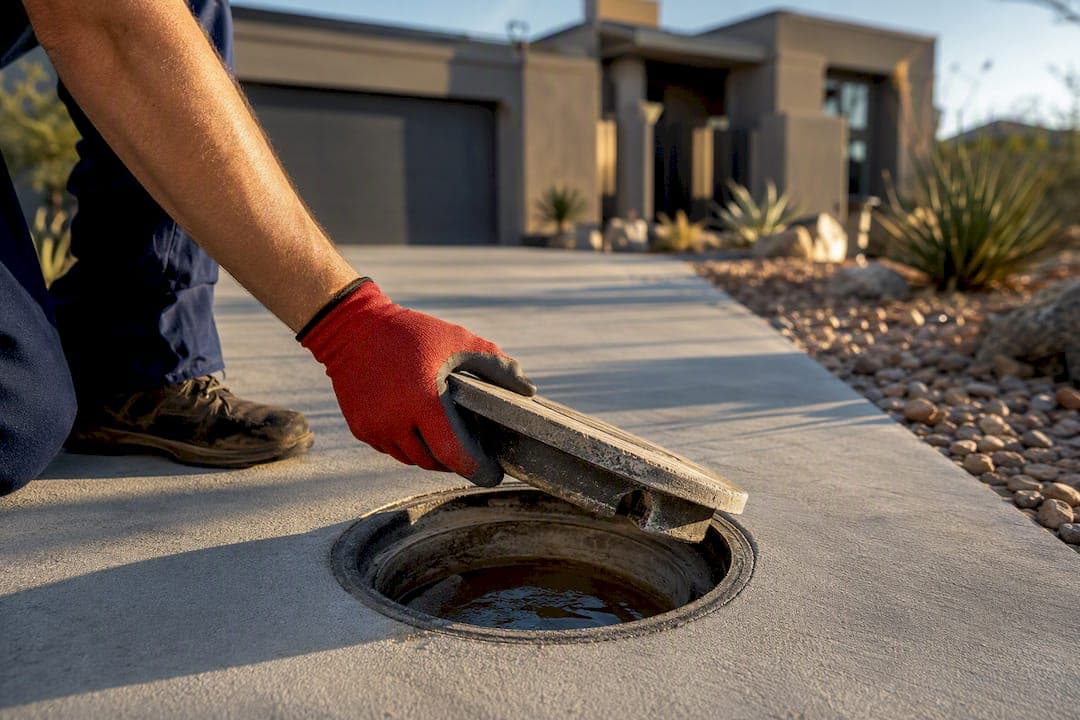
If more than one drain in your house is slow, gurgling, or backing up at the same time, you're likely dealing with a main sewer line clog, not a single clogged fixture. Stop using water in the house immediately, locate your sewer cleanout, and call your municipal utility if you suspect the public main is involved or a licensed plumber if the problem sits on your private lateral. Avoid any contact with sewage, and if backups are heavy, keep family members and pets away from affected areas.
TL;DR:
- Most main sewer line clogs cause multiple drains to back up and produce gurgling sounds, sewage surfaceing at cleanouts, or persistent odors.
- Locating and inspecting the main cleanout can confirm if the issue is downstream of the house, with municipal utilities often inspecting public mains at no cost.
- DIY efforts like snaking or enzyme treatments are limited; avoid chemical drain cleaners and digging without utility locates to prevent damage or hazards.
- Camera inspections help identify if the problem is due to roots, grease, pipe collapse, or cracks, guiding precise and cost-effective repairs.
- Regular inspections, avoiding flushable wipes and grease disposal down drains, and prompt professional diagnosis can prevent future main line backups.
Table of Contents
- Signs Of A Main Sewer Line Clog Vs. A Single Drain Problem
- Where Is The Cleanout And Who's Responsible For The Repair?
- What Can You Safely Try Before Calling A Plumber?
- Professional Repair Options, Costs, And How Long They Take
- How Do You Keep This From Happening Again?
- Why We Push Homeowners Toward An Inspection Before Guessing
- Book A Sewer Line Inspection With Usaplumbingseptic
- Where To Learn More
- Sources
- FAQ
Signs Of A Main Sewer Line Clog Vs. A Single Drain Problem
A clog in one sink or tub stays isolated. A main sewer line clog announces itself everywhere at once, because every fixture in the house drains into that one shared pipe before it leaves the property.
Here's what tends to show up when the main line, not a branch line, is the problem:
- Multiple drains slow down or back up together — a bathtub gurgles when you flush the toilet, or the kitchen sink backs up when the washing machine drains.
- Gurgling or bubbling sounds from toilets, tubs, or floor drains, caused by trapped air pushing back through the system as water searches for another way out.
- Sewage surfacing at the cleanout or a basement floor drain, which is one of the clearest signs the blockage sits downstream of the whole house.
- Toilet water rises or drains slowly when another fixture runs, a classic sign of a shared-pipe obstruction.
- Sewage odor near drains or unusually soggy, spongy patches in the yard, which can point to an underground break or blockage that's letting wastewater escape before it reaches the street.
This pattern matches what plumbing and restoration professionals flag as the core warning signs of a main sewer line clog: slow drains, gurgling, sewage at cleanouts, and persistent odor, all appearing together rather than in one isolated fixture.
Where Is The Cleanout And Who's Responsible For The Repair?
The cleanout is a capped pipe, usually a few inches wide, that gives direct access to your main line. Most homes have one in the basement, in a utility room, or along the side of the house near where the water line enters the property. Some older homes have one near the foundation instead. Finding it before you have a backup saves you time when things go wrong.
Once you've located it, here's how to check it safely:
- Put on gloves and eye protection before touching the cap. Sewage exposure carries real health risk.
- Loosen the cap slowly, standing to the side, since built-up pressure behind a clog can release wastewater fast.
- Watch what happens. If water rushes out and the level drops, the blockage is likely downstream, toward the street. If nothing moves, the clog may be between the cleanout and the house.
- Never insert your hand, a tool, or anything else blind into the pipe. You can't see what's causing the obstruction, and reaching in risks injury and contamination.
Before hiring a private plumber, call your municipal water or sewer utility. Many cities will inspect and rod the public sewer main at no cost to determine whether the blockage sits on the city's side or on your private lateral. That call alone can save you a service fee if the problem turns out to be public.
Pro Tip: Take a photo or video of your cleanout location and water level before you call anyone. It helps the utility or plumber diagnose faster over the phone and gives you a record if the backup causes damage.
If the city clears the public main and your home still backs up afterward, the issue is almost certainly on your private lateral, and repair responsibility shifts to you as the homeowner.
What Can You Safely Try Before Calling A Plumber?
Stop using every drain, toilet, and appliance that sends water into the sewer line the moment you notice multiple fixtures acting up. If water is actively flooding a lower level, shut off the main water supply to the house.
From there, a few limited steps are reasonable for homeowners to try:
- Plunge a single fixture if only one drain is affected. This won't help a true main line clog, but it rules out a simpler problem first.
- Run a hand auger a short distance into the cleanout, gently, if you're comfortable doing so. Stop the moment you feel resistance you can't clear.
- Use an enzyme-based drain treatment for organic buildup like grease or soap scum. These work slowly but won't damage pipes.
Now here's what to avoid, because these mistakes turn a bad day into an expensive one:
- Don't pour caustic, store-bought drain chemicals down a main line clog. They rarely reach the actual blockage and can damage pipe materials or create hazardous fumes when they mix with standing sewage.
- Don't dig near your sewer line without calling for utility locates first. Hitting a gas or water line while chasing a sewer problem creates a second emergency.
- Don't keep snaking repeatedly on your own if you're not making progress. Forcing a cable against a root mass or a cracked pipe can cause more damage than the original clog.
If you see sewage at the cleanout, backups keep returning, or this has happened more than once this year, stop the DIY attempts and call a licensed plumber. Common causes like tree roots, grease buildup, and aging pipes usually need mechanical or camera-based diagnosis to fix for good.
Professional Repair Options, Costs, And How Long They Take
Once a licensed plumber is on site, the first move is almost always diagnostic, not mechanical. A camera inspection sends a waterproof lens through the line to show exactly where the blockage sits and what's causing it, whether that's roots, grease, a bellied pipe, or a collapsed section. Video inspection is often the most cost-effective first step because it prevents unnecessary replacement or excessive mechanical clearing that wouldn't have fixed the real problem anyway.
From there, the repair method depends on what the camera finds:
- Snaking or rodding breaks up soft clogs and cuts through minor root intrusion using a motorized cable.
- Hydro-jetting blasts high-pressure water through the line, scouring grease, sludge, and root hair off the pipe walls far more thoroughly than a cable alone.
- Root cutting removes root intrusion at the source, though it's often a temporary fix if the roots are exploiting a crack rather than growing near an intact pipe.
- Spot repair or trenchless lining fixes a damaged section without digging up the whole yard.
- Full replacement becomes necessary when a pipe has collapsed, shifted, or cracked extensively along its length.
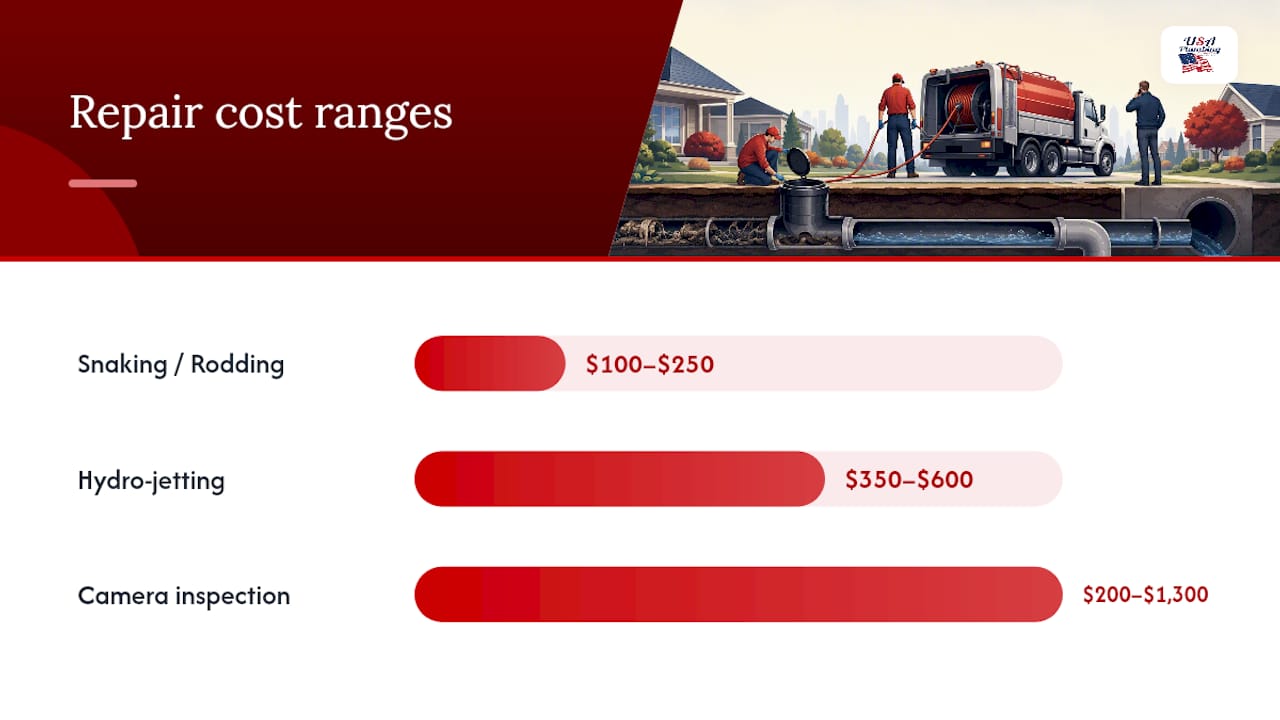
Cost ranges vary by region and severity, but national averages run roughly $100 to $250 for snaking, $350 to $600 for hydro-jetting, and $200 to $1,300 for a camera inspection. Full replacement runs considerably higher depending on pipe length, depth, and whether landscaping or driveways need to be excavated. After any sewage backup, cleanup and sanitizing affected surfaces matters as much as the repair itself. Standing sewage carries bacteria that ordinary household cleaners won't fully address, so treat the area as a biohazard until it's properly disinfected.
How Do You Keep This From Happening Again?
Most main line clogs are preventable. Wipes, paper towels, sanitary products, and cooking grease are the biggest repeat offenders, and none of them belong in a toilet or drain, even ones labeled "flushable."
A few habits go a long way toward keeping your line clear:
- Pour grease into a container and throw it away, not down the sink, since it hardens and traps other debris as it cools inside the pipe.
- Schedule a camera inspection every couple of years, especially in homes over 20 years old or with mature trees near the yard.
- Watch for recurring root intrusion. If roots keep coming back after cutting, a cracked pipe is usually the real cause, and trenchless repair or replacement is the longer-term fix.
- Avoid planting trees with aggressive root systems directly over or near your sewer line.
- Keep inspection records and check your homeowner's insurance for sewer backup coverage, since standard policies often exclude it unless you've added it separately.
Why We Push Homeowners Toward An Inspection Before Guessing
In our service calls, the most common mistake homeowners make is assuming a clog is a "one and done" problem after a single snaking. Roots, grease, and old clay pipe don't fix themselves. They come back, usually at the worst possible time.
I've seen too many people spend money on repeated DIY attempts before ever calling for a camera inspection, when that one diagnostic step would have told them exactly what they were dealing with from the start. If your drains are backing up more than once, don't keep guessing. Get eyes on the actual pipe.
— JOHN
Book A Sewer Line Inspection With Usaplumbingseptic
Usaplumbingseptic gets you a definitive answer instead of another round of guesswork. Where a DIY snake or a bottle of drain cleaner only tells you the water moved, our camera inspections show you exactly what's blocking your line and where, so you're not paying to fix the same clog twice.
On a typical service call, a camera inspection is run first, and customers are walked through what it found with a straightforward quote before any work begins. If the line needs more than a quick clear, we handle it end to end:
- Camera (CCTV) inspection to pinpoint the exact cause and location
- Snaking and rodding for straightforward blockages
- Hydro-jetting for grease buildup and root hair
- Spot repairs, trenchless lining, or full replacement when the pipe itself is damaged
- emergency response for active backups
If you're seeing multiple slow drains, sewage at your cleanout, or a soggy patch in the yard, don't wait for it to get worse. Check out our sewer line solutions in Bullhead City or contact our team directly to schedule an inspection and get a real answer instead of another guess.
Where To Learn More
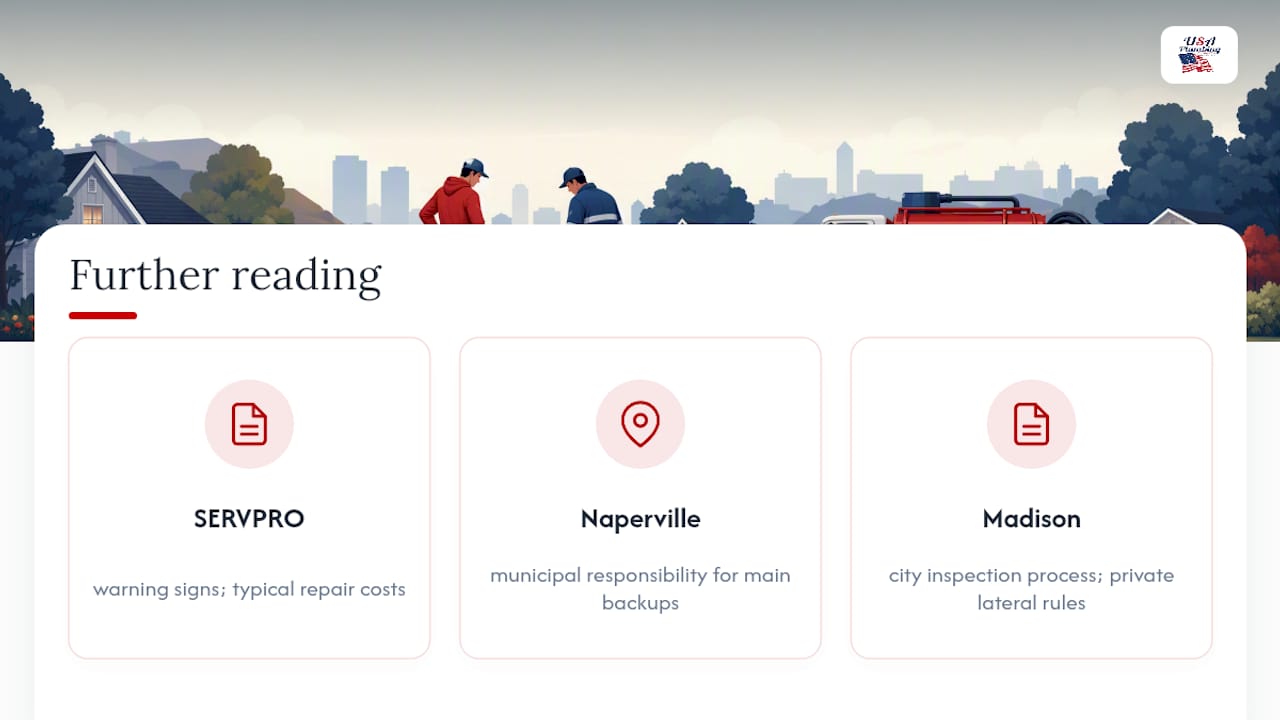
A few sources back the guidance in this article and are worth bookmarking if you want more detail. SERVPRO's sewer line guide covers warning signs and typical repair costs. The City of Naperville's utility page explains municipal responsibility for public main backups. The City of Madison's sewer backup guide details what happens after a city crew checks your line and when the private lateral becomes your responsibility.
Sources
- How to Unclog a Main Sewer Line | SERVPRO
- Sanitary Sewer Back-ups | The City of Naperville
- Sewer Backups | City of Madison, WI
FAQ
How Do I Unclog My Main Sewer Line?
Start by locating your cleanout and checking whether water drains through it when you open the cap. Call your municipal utility first, since many will inspect and rod the public main at no cost, and bring in a licensed plumber for camera inspection, snaking, or hydro-jetting if the blockage turns out to be on your private lateral.
What Causes The Main Sewer Line To Clog?
Tree roots, grease buildup, flushed wipes and other nonflushable items, and aging or damaged pipes are the most common causes of a main sewer line clog. Roots exploiting small cracks in older pipe are especially common in homes over a few decades old.
How Long Does It Take To Unclog A Main Sewer Line?
A straightforward snaking or hydro-jetting job usually takes a few hours from arrival to a clear line, while camera inspection alone can take under an hour. Jobs requiring spot repair, trenchless lining, or full replacement take considerably longer, often a full day or more depending on pipe length and access.
What Chemical Can Unclog A Main Sewer Line?
Enzyme-based treatments can help with organic buildup like grease or soap scum, but caustic store-bought drain chemicals are not recommended for main line clogs. They rarely reach the actual blockage, can damage pipe materials, and create hazardous fumes when mixed with standing sewage.
Is A Municipal Inspection Really Free?
Many city utilities inspect and rod the public sewer main at no charge to determine whether a backup originates on public or private property. Calling the city before a private plumber can save you the cost of a service call if the blockage sits in the public main.